
Central America
Strike continues to demand respect for democracy in Guatemala
October 4 |
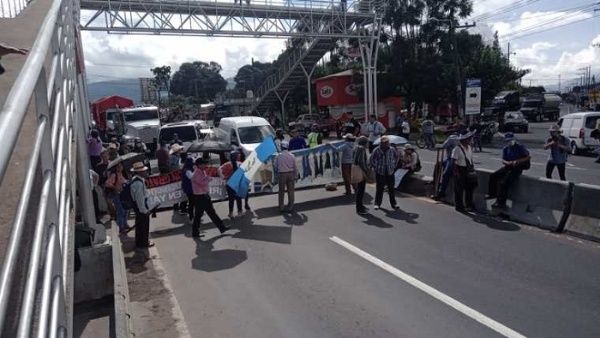
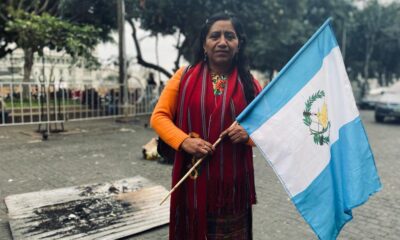
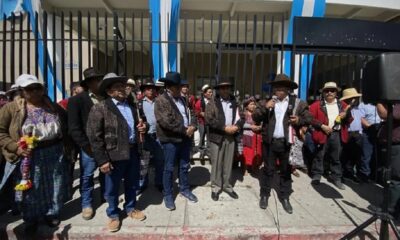
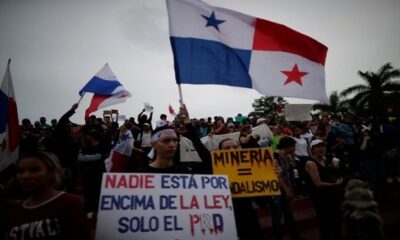
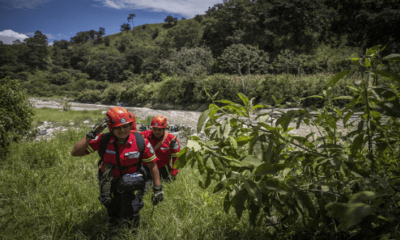
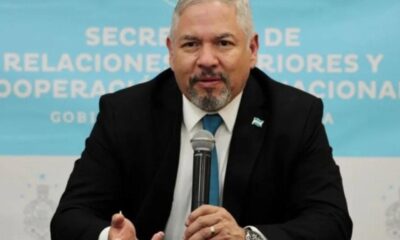
The national strike and demonstrations in Guatemala continue in several regions of that Central American country, to demand respect for democracy.
Likewise, the demonstrators demand the resignation of the authorities who have tried to intervene in the past elections.
The correspondent of teleSUR in that nation, Santiago Botón, reported that the most numerous protests took place in Cuatro Caminos, department of Totonicapán.
In that region, protesters blocked the Interamerican highway and in the Franja Transversal del Norte they spent the night on a bridge that divides two departments of the northern region.









Likewise, in the department of Quetzaltenango numerous protests took place.
Several people also gathered at the headquarters of the Public Prosecutor’s Office to demand respect for democracy and the rule of law.


















































International
Trump Says Iran Is Welcome at 2026 World Cup but Warns of Security Concerns
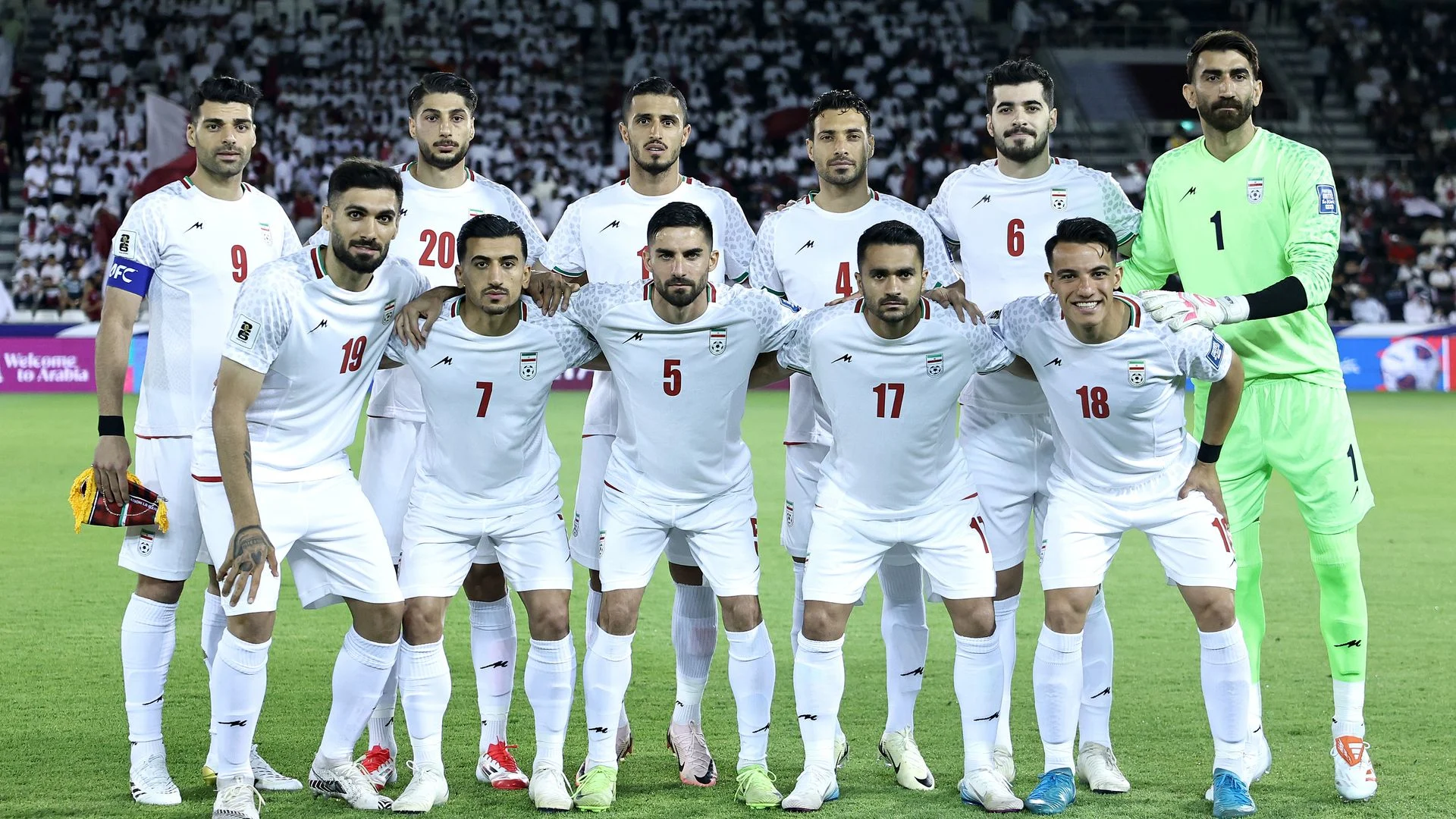
The President of the United States, Donald Trump, said Thursday that the national football team of Iran is “welcome” to participate in the 2026 World Cup, although he suggested it might be safer for the team not to take part in the tournament.
“The Iranian national soccer team is welcome at the World Cup, but I really don’t think it’s appropriate for them to be there, for their own safety,” Trump wrote on his social media platform Truth Social.
His comments came a day after Iran’s sports minister, Ahman Donyamali, said that there are currently no conditions for the country to participate in the tournament following the killing of Iran’s Supreme Leader, Ali Khamenei, during a military offensive launched on February 28 by Israel and the United States.
“After the corrupt government killed our leader, there are no conditions that allow us to take part in the World Cup,” the Iranian official said. He added that the country has faced two wars in the past eight or nine months, resulting in thousands of civilian deaths, making participation in the tournament unlikely.
On Tuesday, the president of FIFA, Gianni Infantino, met with Trump at the White House.
Following the meeting, Infantino said that Trump reiterated that Iran’s national team would be allowed to compete in the FIFA World Cup 2026.
“We discussed the current situation in Iran and the fact that the Iranian team has qualified to participate in the FIFA World Cup 2026. During the conversation, President Trump reiterated that the Iranian team is, of course, welcome to compete in the tournament in the United States,” Infantino wrote on Instagram.
Central America
UN Rapporteur Warns of “Deep Crisis” in Guatemala’s Judicial System
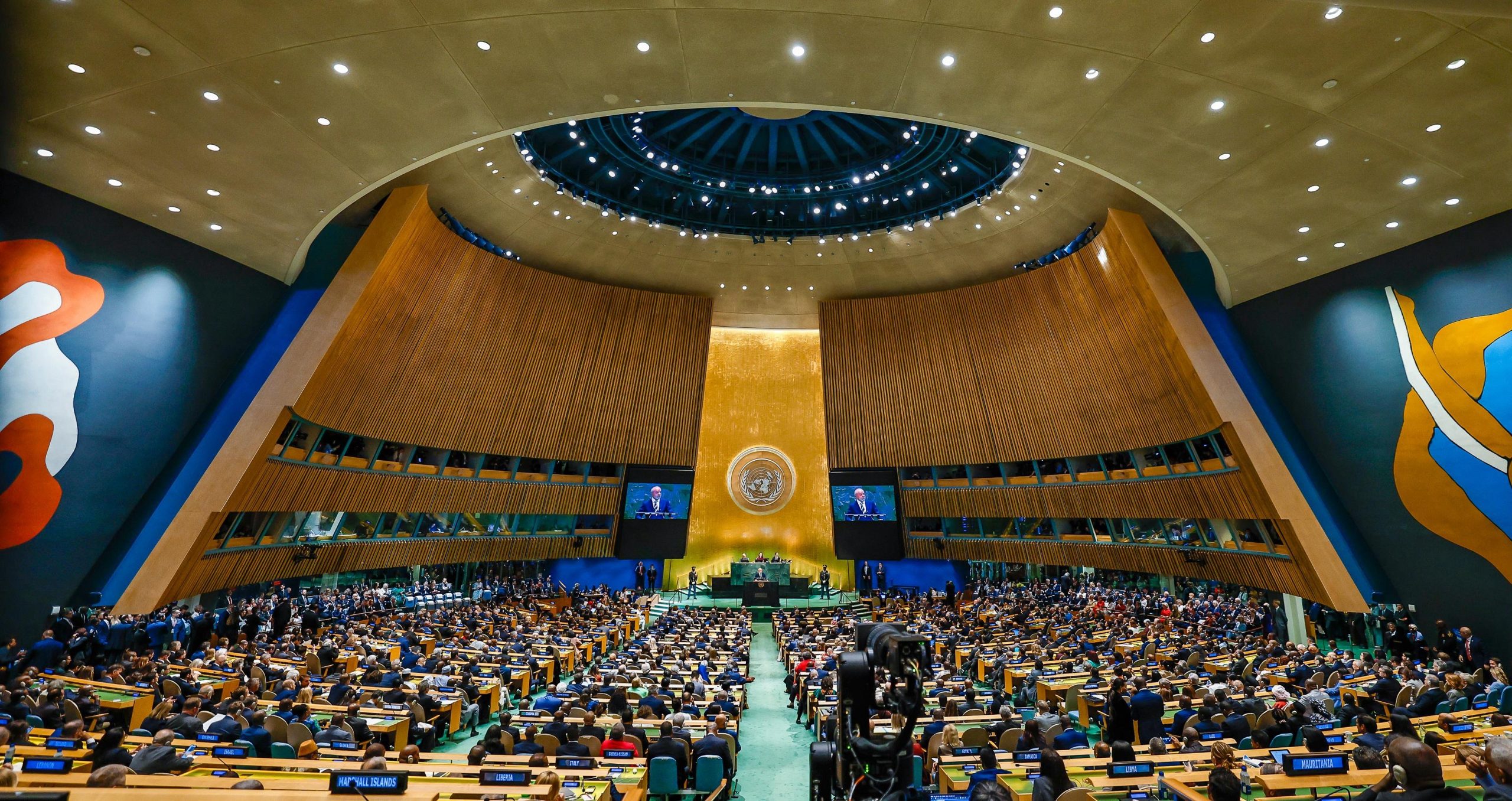
The United Nations Special Rapporteur on the Independence of Judges and Lawyers, Margaret Satterthwaite, said Monday that Guatemala’s judicial system is facing a “deep crisis” after evaluating the country’s institutional situation.
Speaking at a press conference in Guatemala City, the UN official explained that several factors have weakened judicial independence and placed the justice system in a “critical” situation.
Among the main problems identified were the “instrumentalization of justice,” concentration of power, and persecution of judicial officials, elements that, according to Satterthwaite, undermine the functioning of the rule of law in the country.
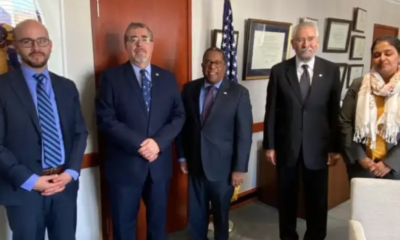
Satterthwaite presented these conclusions while releasing her final report on the visit she carried out in May 2025, when she spent 12 days in Guatemala assessing the performance of the judicial system.
During her stay, she met with judges, prosecutors, public defenders, lawyers, lawmakers, civil society organizations, and representatives of Indigenous communities, as well as officials from the executive, judicial, and legislative branches. These meetings took place in Guatemala City and in the departments of Quetzaltenango and Alta Verapaz.
The rapporteur also reiterated her concern about the role of the Public Ministry of Guatemala, noting that the information collected points to the existence of a policy of criminalization against justice operators.
Despite this scenario, Satterthwaite expressed confidence that Guatemala can reverse the situation, highlighting that the country’s Constitution has previously demonstrated the ability to guarantee respect for the rule of law.
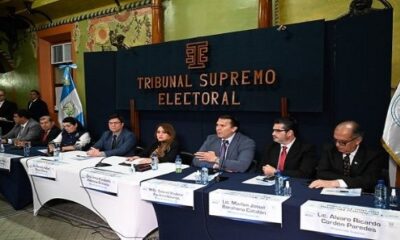
She also stressed that key appointments expected in the coming months will be decisive for the future of the judicial system, including the selection of a new Constitutional Court of Guatemala, a new Supreme Electoral Tribunal of Guatemala, and a new attorney general to replace the current head of the Public Ministry, Consuelo Porras.
“The appointments scheduled for 2026 to the Constitutional Court, the Supreme Electoral Tribunal, and the Public Ministry will be decisive in determining whether the current patterns of institutional capture and impunity will be consolidated or reversed,” the rapporteur concluded.
Central America
UN Report Warns of Nicaragua’s “Transnational” Surveillance Network Targeting Dissidents
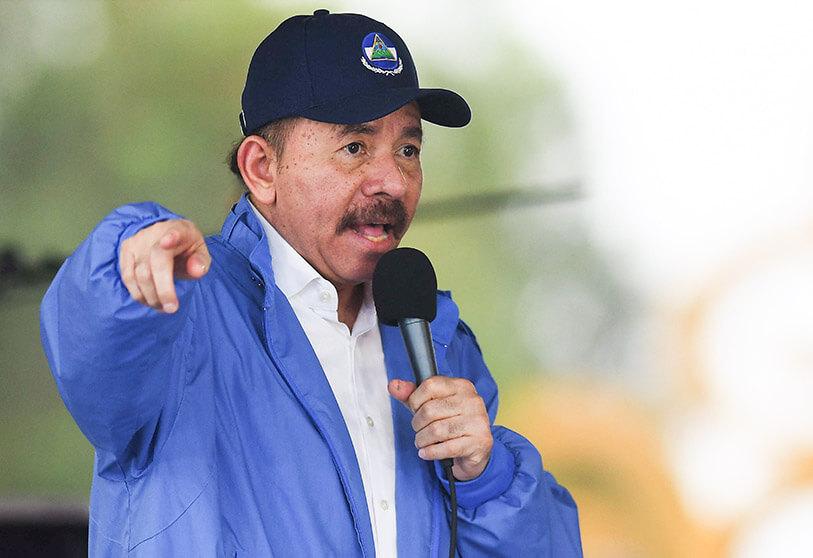
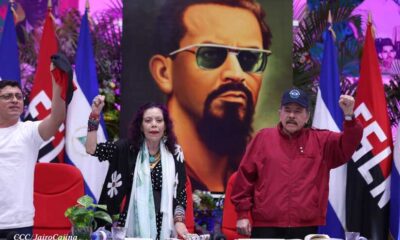
A special panel of the United Nations accused the government of Nicaragua on Tuesday of diverting public funds to finance the repression of political opposition both inside and outside the country, including through what it described as a “transnational network” of surveillance and intelligence.
The panel presented a new report to the press on the situation in the Central American nation, which has been governed since 2007 by President Daniel Ortega and his wife and vice president Rosario Murillo.
Based on dozens of interviews and extensive documentary evidence, the report states that since 2018—the year when student protests erupted and were violently suppressed—public funds have been diverted to support repression, including money originally allocated for social assistance programs and public sanitation projects.
According to the report, a “parallel structure” was created within the ruling Sandinista National Liberation Front to channel resources toward security operations, pro-government armed groups, and party activities.
The investigation was carried out at the request of the United Nations Human Rights Council.
Another key finding of the report concerns the existence of a surveillance and intelligence network that extends far beyond Nicaragua’s borders, allegedly used to monitor, intimidate, and target hundreds of thousands of Nicaraguans living abroad.
The report documents an intelligence structure involving the military, police, migration authorities, the telecommunications regulator TELCOR, diplomatic missions, and operators linked to the FSLN.


Peruvian presidential candidate Napoleón Becerra dies in campaign road accident

Noboa intensifies anti-cartel crackdown as violence persists in Ecuador

Peruvian presidential candidate proposes death penalty amid crime surge
Tec de Monterrey honors one of its students for his contribution to nanotechnology in medicine

Defense Minister commends salvadoran soldier for Central American Cross Country victory

Extension of the state of emergency approved in southern Chile
-
 International3 days ago
U.S. Confirms Death of Six Crew Members in KC-135 Crash in Western Iraq
-
 International3 days ago
Trump Says Iran Is Welcome at 2026 World Cup but Warns of Security Concerns
-
 International4 days ago
Iran issues threat to Trump as conflict escalates over Strait of Hormuz
-
 International3 days ago
FBI Warns of Possible Iranian Drone Attack on U.S. West Coast
-

 International3 days ago
Ecuador Declares 60-Day National Emergency After Deadly Floods and Landslides
-

 International3 days ago
Mexican Navy Ships Deliver Third Shipment of Humanitarian Aid to Cuba
-
 International4 days ago
Driver detained after suspicious vehicle incident near the White House
-
 Sin categoría4 days ago
UN experts warn Nicaragua runs vast transnational network to monitor exiled dissidents
-
 International3 days ago
Trump Pushes for Regime Change in Cuba as Havana Confirms Talks With Washington
-
 International2 days ago
FBI: Man who attacked Michigan synagogue died from self-inflicted gunshot
-
 International2 days ago
Peruvian presidential candidate proposes death penalty amid crime surge
-
 International9 hours ago
Peruvian presidential candidate Napoleón Becerra dies in campaign road accident
-
 International9 hours ago
Noboa intensifies anti-cartel crackdown as violence persists in Ecuador
-
 Sin categoría3 days ago
FBI Most Wanted Fugitive Arrested in Mexico and Deported to U.S.