
Central America
Young person will represent El Salvador at International Chemistry Olympiad in Switzerland
May 29 |
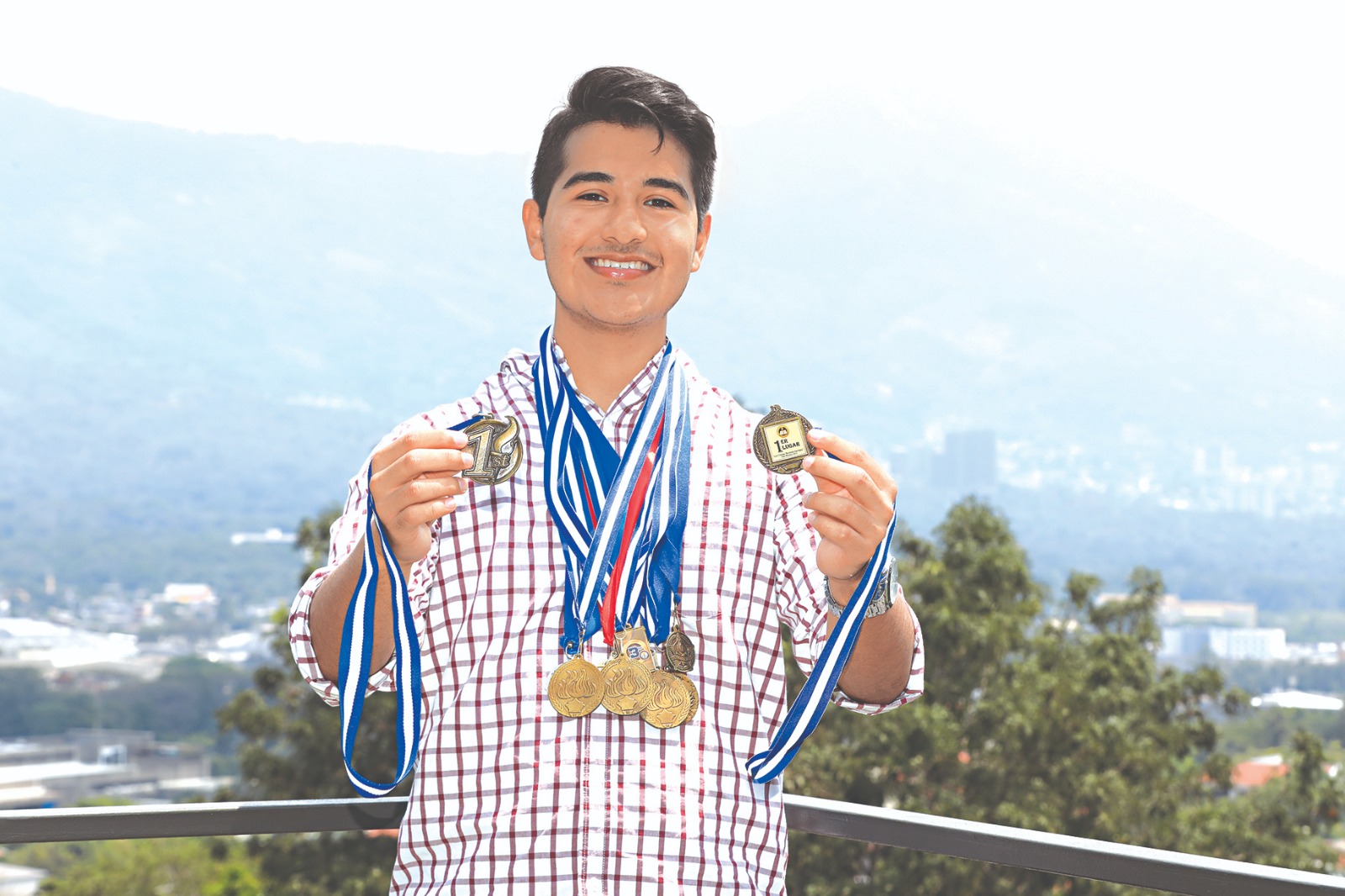
At the age of 18, Luis Ronaldo Chávez Escamilla is one of the three young people in the delegation that will represent El Salvador at the International Chemistry Olympiad.
The 55th edition of the international competition will take place from July 16 to 25 in Zurich, Switzerland.
“For me it is one of the most important things in my life. I see it not only as an academic achievement, but as a life experience. They have been shaping me as a person and have helped me discover what I am passionate about and what I want for my future,” she said.
He added that around 84 countries will participate in the Olympics, with approximately three to four representatives per country. There will be an average of 300 contestants in total.









This represents a challenge for the young man, who since he applied for the competition has dedicated himself to preparing for it. Luis is part of the Jóvenes Talento program, where he receives “training”, as he calls the classes. At home he also spends time solving math problems.
“It is the most difficult and needs many months of preparation, but this year, as I have already finished high school, I have dedicated myself to prepare for this; it is quite demanding,” he said.
His participation in the Olympics is part of his academic record. Luis, who since he was a child was very diligent in his studies, has competed in three more Olympiads, two of which are international and one national.
“Since I was a child I liked mathematics very much, but I had never discovered my passion as such, until fifth grade, when my dad came with the newspaper. Before, the National Math Olympiad was published in the newspaper and people who wanted to participate in the program had to solve certain problems and exams,” he told “Diario El Salvador”.
When he was 12 years old, his father came with the newspaper and proposed it to him as a challenge. With some trepidation she took the exams. “I passed the first stage and that’s when it caught my attention even more. I passed the second stage and qualified. That’s when I realized that I really had talent in the area of numbers,” he added.
In seventh grade, the young man took the exams for the Salvadoran Chemistry Olympiad (OSQ) for the first time. After his participation, he was able to enter the chemistry group in the Jóvenes Talento program.
“From seventh grade onwards, they allow participation in certain Olympic groups in each area of science. I was always interested in chemistry. My first class in the program was chemistry. In that group there are three levels: elementary, intermediate and advanced. Over the years I have moved up through the levels. Now I am in the advanced level, which is the highest level. Being part of these groups gives you the opportunity to take selective exams of all the classmates classified to participate in these international olympiads,” he said.
In 2021 and 2022 he had the opportunity to participate in the Salvadoran Olympiad and the Ibero-American Chemistry Olympiad. Although everything was virtual, due to the COVID-19 pandemic, he won two bronze medals. A third silver medal was obtained by participating in the World Applied Chemistry Olympiad (WAChO), organized by the Indonesian scientific society.
According to the young man, he participated in the last Olympiad with a research project: “I won my silver medal with the sustainable chemistry project, which is the generation of electricity from wastewater,” he said.
In 2022, Luis won a half scholarship to study at the Monterrey Institute of Technology, a prestigious study center in Mexico, after obtaining a high score in the academic aptitude test.























































Central America
Guatemala narrows emergency measures to hardest-hit gang violence areas
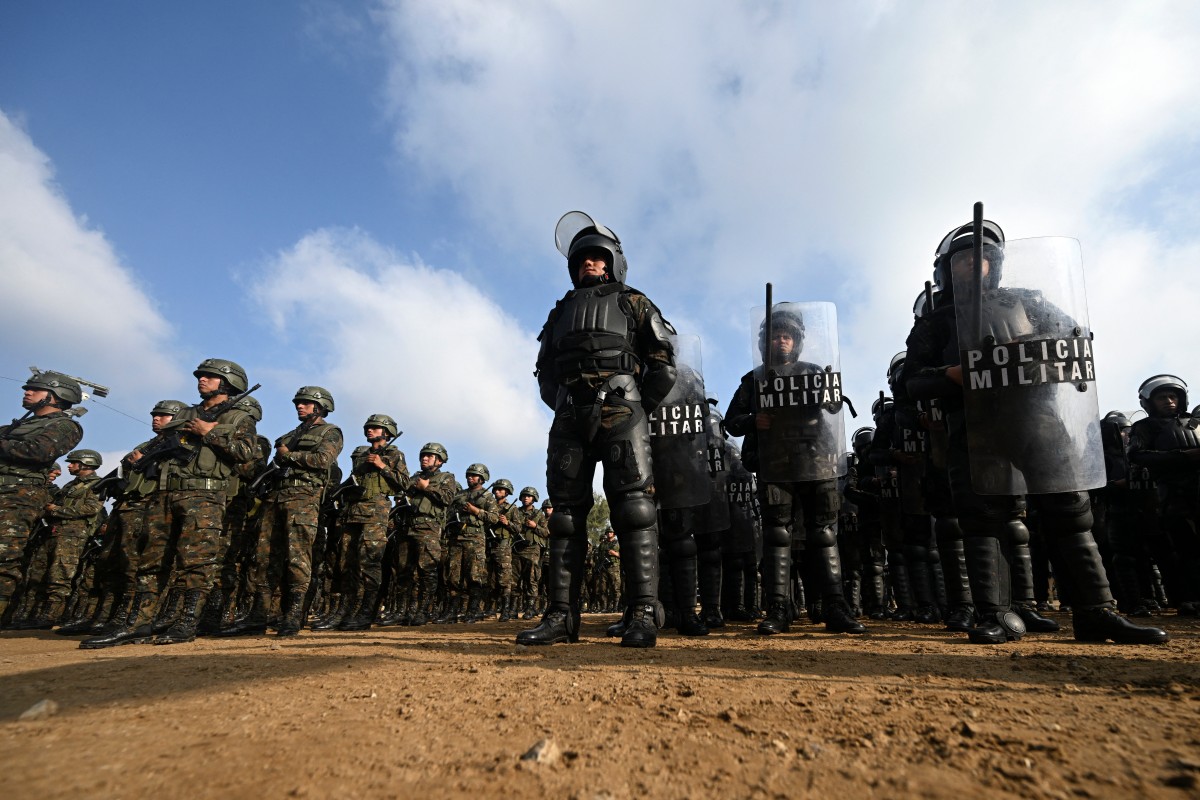
The government of Guatemala has narrowed the scope of its state of emergency to the areas most affected by gang violence, Interior Minister Marco Antonio Villeda announced on Thursday.
The measure comes two months after coordinated attacks attributed to the Barrio 18 left 11 police officers dead.
President Bernardo Arévalo initially imposed a state of siege in mid-January following the violence, which was reportedly in retaliation for government intervention in three prisons where gang leaders had staged uprisings.
That measure, which allowed arrests without a warrant, expired after one month. It was then replaced by a less restrictive “state of prevention,” alongside an increased security deployment in Guatemala City and surrounding areas.
According to Villeda, the state of prevention has been extended for two additional weeks but will now apply primarily to the central department of Guatemala — home to the capital — and Escuintla, which have recorded the highest levels of homicides and criminal activity.
“We need to continue these joint operations between the police and the military to maintain control,” the minister said.
The measure will also remain in effect in border departments including Petén, San Marcos and Huehuetenango, which border Mexico, as well as Izabal, which borders Honduras and Belize, in an effort to prevent the entry of criminal groups linked to drug trafficking.
Villeda added that in the past two weeks, homicides have dropped by 25% and extortion cases by 33% compared to the same period in 2025.
Central America
Costa Rica closes embassy in Cuba, citing human rights concerns
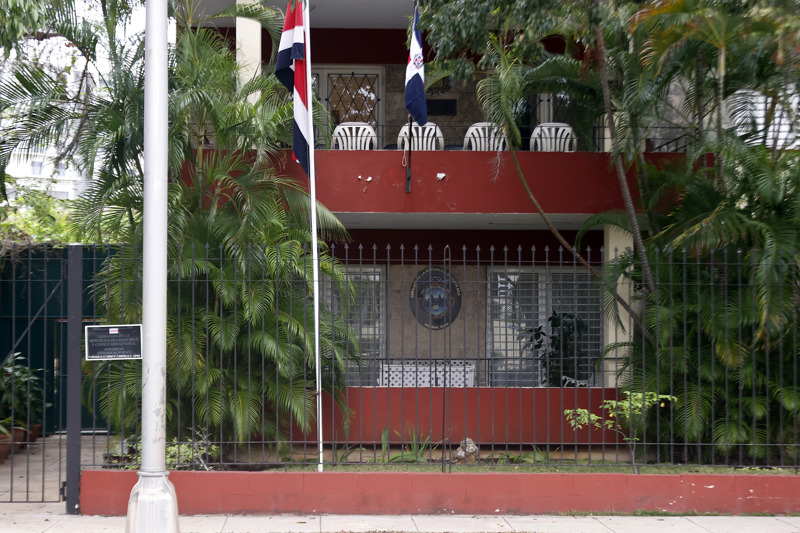
The government of Costa Rica announced on Wednesday the closure of its embassy in Cuba, a move that signals a further deterioration in diplomatic relations between the two nations.
Foreign Minister Arnoldo André confirmed that Costa Rica has also requested the withdrawal of Cuban diplomatic personnel from San José, leaving only consular representation in place.
According to André, the decision is driven by concerns over the worsening human rights situation on the island, including increased repression against citizens and opposition figures.
He also noted that Cuba’s ongoing economic and social crisis—marked by shortages of food, medicine, and basic services—has made the operation of the embassy increasingly difficult.
President Rodrigo Chaves backed the measure, stating that his administration does not recognize the legitimacy of Cuba’s political system.
In response, the Cuban government rejected the decision, calling it a “unilateral” move taken under pressure from United States.
“Under pressure from the United States, Costa Rica has limited its relations with Cuba to consular matters,” Cuba’s Foreign Ministry said, describing the action as “arbitrary.”
Despite the diplomatic setback, Cuban authorities stated that historical ties between the two nations would endure.
Central America
Costa Rica closes Cuba embassy as president escalates rhetoric
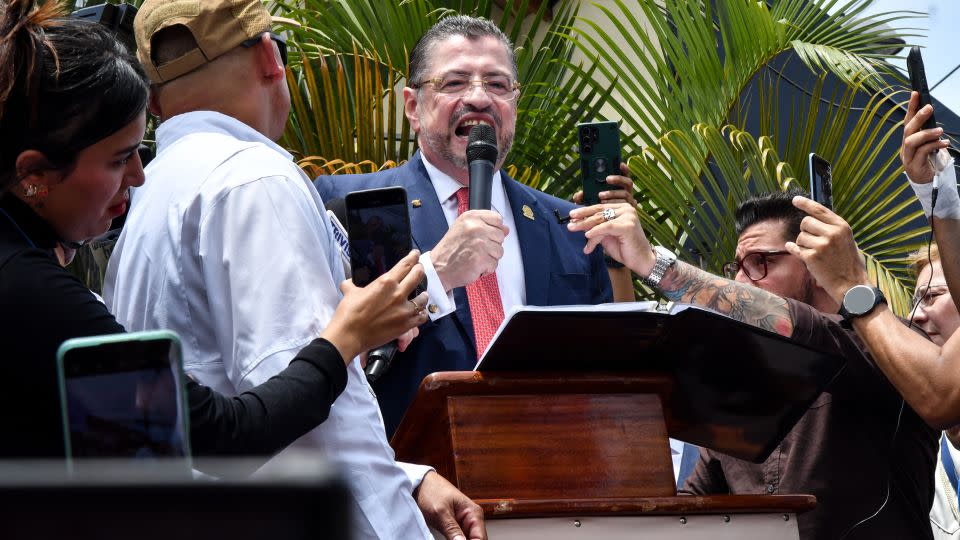
The president of Costa Rica, Rodrigo Chaves, escalated political rhetoric on Wednesday, stating that “the hemisphere must be cleansed of communists,” following his government’s decision to close its embassy in Cuba.
The remarks come as Costa Rica moves to downgrade diplomatic relations with the island, citing a sustained deterioration in human rights. Chaves reiterated that his administration does not recognize the legitimacy of the Cuban government, accusing it of repression and of maintaining poor living conditions for its population.
“We do not recognize the legitimacy of that government. We will not maintain a consulate there; services will be handled from Panama,” Chaves said during a press conference.
The president also argued that the communist model has “failed” not only in Cuba but in every country where it has been implemented, emphasizing that freedom is essential for development.
The decision was made in coordination with president-elect Laura Fernández, who is set to take office on May 8 and is expected to maintain the same foreign policy stance.
Foreign Minister Arnoldo André confirmed the closure of the embassy in Havana and requested that Cuba withdraw its diplomatic personnel from San José, while maintaining limited consular functions.
Costa Rican authorities justified the move by pointing to increased repression against citizens, activists, and opposition figures, as well as restrictions on fundamental freedoms.
The closure marks a new point of tension in bilateral relations and comes amid growing international pressure on Cuba.


Paris prosecutors alert U.S. over alleged deepfake strategy linked to Elon Musk

Netanyahu vows to target Iran’s leadership after missile strikes in southern Israel

Guatemala narrows emergency measures to hardest-hit gang violence areas
Tec de Monterrey honors one of its students for his contribution to nanotechnology in medicine

Defense Minister commends salvadoran soldier for Central American Cross Country victory

Extension of the state of emergency approved in southern Chile
-
 Central America4 days ago
Costa Rica closes embassy in Cuba, citing human rights concerns
-
 Central America3 days ago
Guatemala narrows emergency measures to hardest-hit gang violence areas
-

 International4 days ago
Meningitis outbreak in England rises to 27 cases with two deaths reported
-
 International4 days ago
U.S. lowers travel advisory for much of Venezuela but keeps high-risk zones under warning
-
 International3 days ago
US panel backs Trump-themed coin amid controversy
-

 International4 days ago
EU lawmakers move to ban AI tools that generate non-consensual nude images
-
 International4 days ago
Brazil offers to mediate Colombia-Ecuador tensions, calls for restraint
-
 International4 days ago
Hiroshima survivor who embraced Obama dies at 88
-
 International3 days ago
Fed’s Waller warns of rising inflation risks amid Middle East conflict
-
 International5 days ago
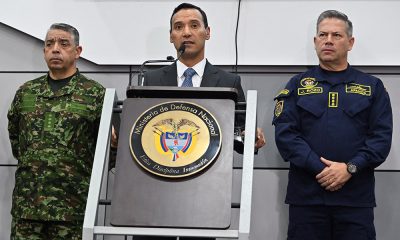
Colombia seeks ‘total suffocation’ of armed groups with regional support
-
 Central America4 days ago
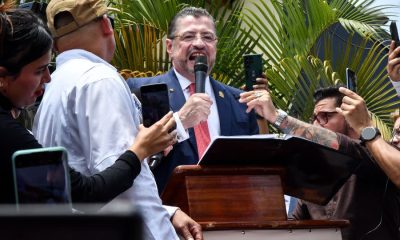
Costa Rica closes Cuba embassy as president escalates rhetoric
-
 International17 hours ago
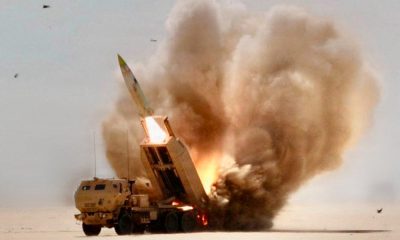
Netanyahu vows to target Iran’s leadership after missile strikes in southern Israel
-
 International17 hours ago
Paris prosecutors alert U.S. over alleged deepfake strategy linked to Elon Musk