
International
The Israeli Prime Minister is “successfully” operated on for a hernia
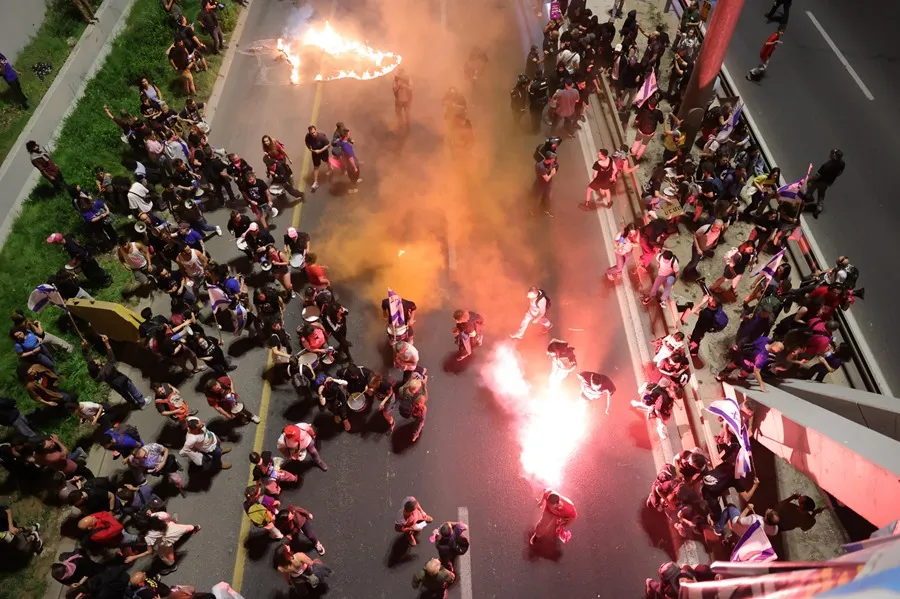
The Israeli Prime Minister, Benjamin Netanyahu, underwent surgery last night for a hernia, which “concluded successfully.”
According to a statement from the government office, Netanyahu is “fully aware, his condition is good and has been transferred for further recovery.”
For his part, the Prime Minister thanked the medical staff of the Hadasah Ein Kerem Hospital for their work, where the intervention took place, for which general anesthesia was required.
Netanyahu’s office announced on Sunday afternoon that the prime minister would be intervened at night and he offered a press conference minutes before going to the hospital, in parallel to a massive protest in front of the Knesset (Israeli Parliament) in which more than 100,000 people demanded early elections for his management of the war and an immediate agreement to free the hostages.
In his speech, Netanyahu made it clear that he does not intend to call elections “because they would paralyze the country in times of war,” and insisted that Hamas’ demands for a hostage release agreement are excessive.









While he is on medical leave, which has not been specified how long it will be, the Deputy Prime Minister and Minister of Justice of Israel, Yariv Levin, will carry out his work.
The Israeli Prime Minister, 74, already had to undergo surgery last July to have a pacemaker implanted, after detecting a heart problem in a medical check-up when he was admitted for a fainting.
As at that time, Netanyahu faces a complicated political situation, now aggravated by the war between Israel and Hamas and the renewed tensions on the border with Lebanon.








International
Sheinbaum highlights anti-drug gains after U.S. says challenges remain
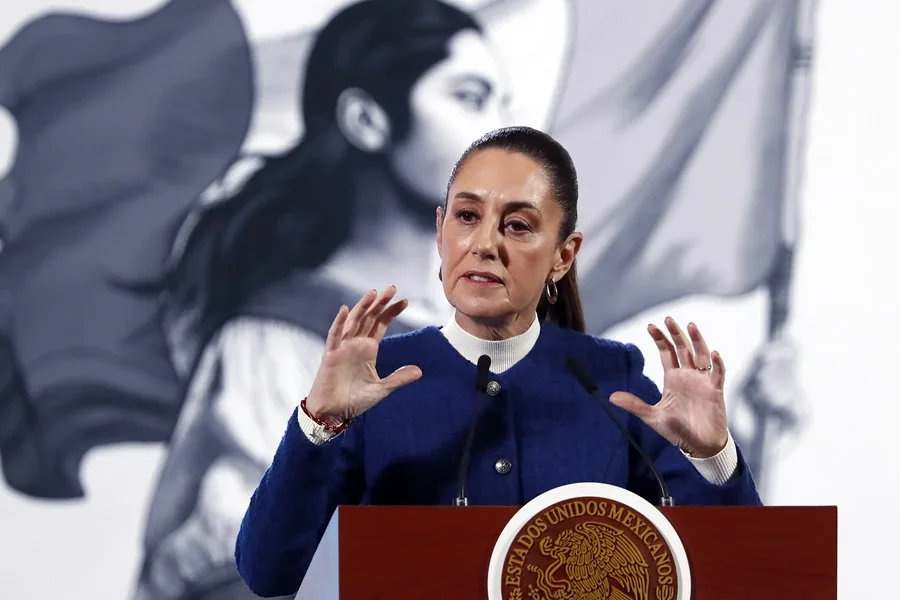
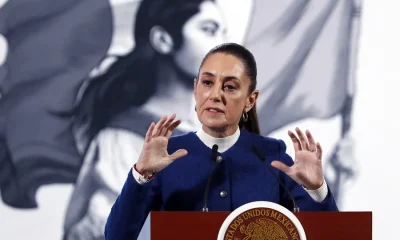
Mexican President Claudia Sheinbaum on Friday highlighted her government’s achievements in the fight against drug trafficking, after the United States said challenges remain in combating organized crime.
On Thursday, Mexican Foreign Minister Juan Ramón de la Fuente held talks with his U.S. counterpart, Secretary of State Marco Rubio. Following the meeting, the U.S. State Department said in a statement that “despite progress, challenges still exist” in addressing organized crime.
“There are very strong results from joint cooperation and from the work Mexico is doing: first, a 50% reduction in fentanyl seizures at the U.S. border,” Sheinbaum said during her regular morning press conference.
The president also said that authorities have seized nearly 320 tons of drugs and that there has been a “40% decrease in intentional homicides in Mexico” since the start of her administration on October 1, 2024.
Sheinbaum added that the United States should implement campaigns to reduce drug consumption within its territory and curb the flow of weapons into Mexico.
“There are many results and there will be more, but there must be mutual respect and shared responsibility, as well as respect for our sovereignties,” she said.
On Monday, Sheinbaum held a phone call with U.S. President Donald Trump to discuss security issues. She said she once again ruled out the presence of U.S. troops in Mexico to fight drug cartels.
Security has been a recurring issue used by Trump to threaten tariffs on Mexico and to pressure negotiations over the USMCA (T-MEC) free trade agreement, which are scheduled for 2026.
The agreement is crucial for Mexico’s economy, as about 80% of the country’s exports are destined for the United States.
International
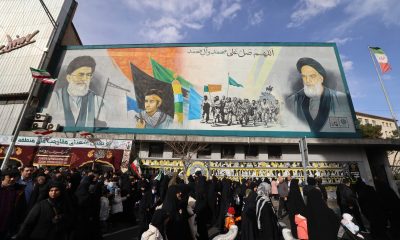
Canada accuses Iran of killing its citizen during anti-government unrest
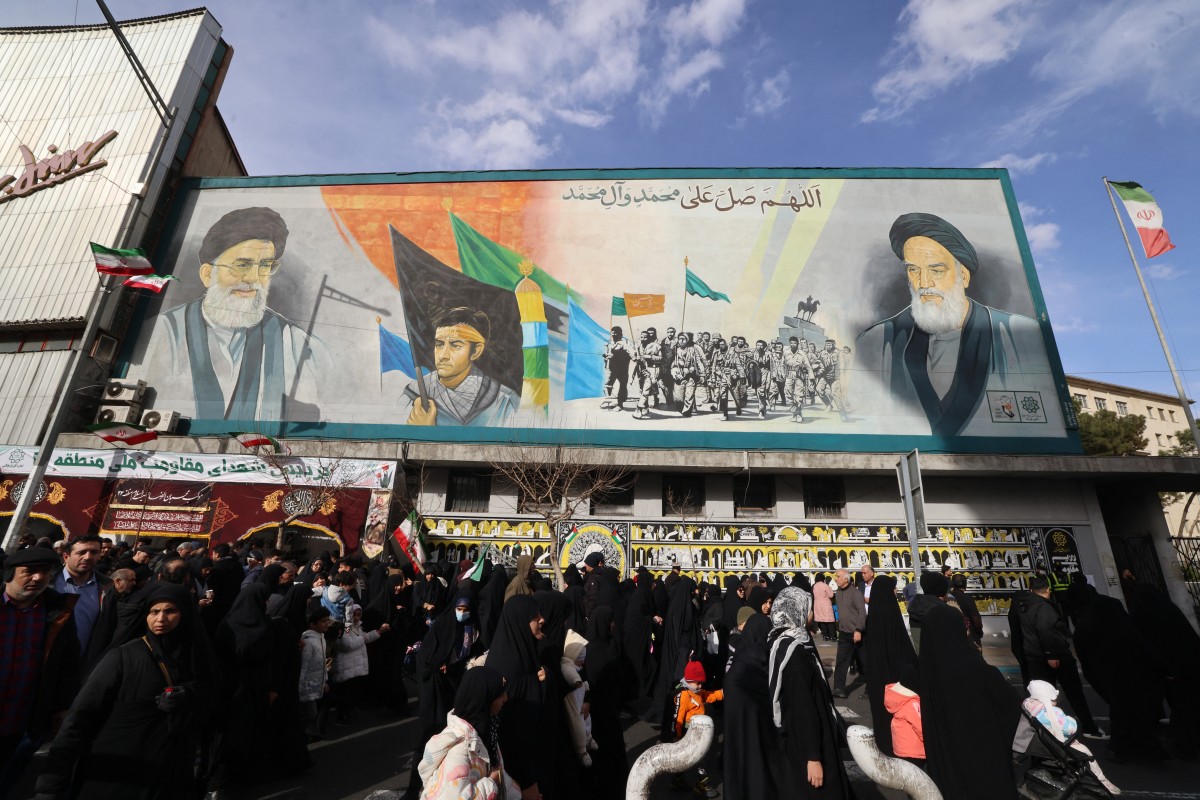
A Canadian citizen has died “at the hands of Iranian authorities,” the Canadian government said on Thursday, amid ongoing protests against the government in Tehran.
“I have just learned that a Canadian citizen has died in Iran at the hands of Iranian authorities,” Canada’s Minister of Foreign Affairs, Anita Anand, said, without providing further details. She added that Tehran’s response to what she described as “peaceful protests” has “led the regime to show a blatant disregard for human life.”
On Thursday, the United States imposed sanctions on Iranian security officials and individuals linked to the country’s banking networks, accusing them of orchestrating a violent crackdown on peaceful demonstrations and laundering billions of dollars in oil revenues. U.S. Treasury Secretary Scott Bessent announced the measures following what were described as the largest anti-government protests in the history of the Islamic Republic, although demonstrations have reportedly eased in recent days amid heavy repression and a near week-long internet shutdown.
“The United States stands firmly with the Iranian people in their pursuit of freedom and justice,” Bessent said in a statement, adding that the sanctions were imposed at the direction of President Donald Trump.
Those sanctioned include Ali Larijani, secretary of Iran’s Supreme National Security Council, whom Washington accused of coordinating the repression and the use of force against protesters.
International
Ukraine declares nationwide energy emergency amid russian attacks and extreme cold
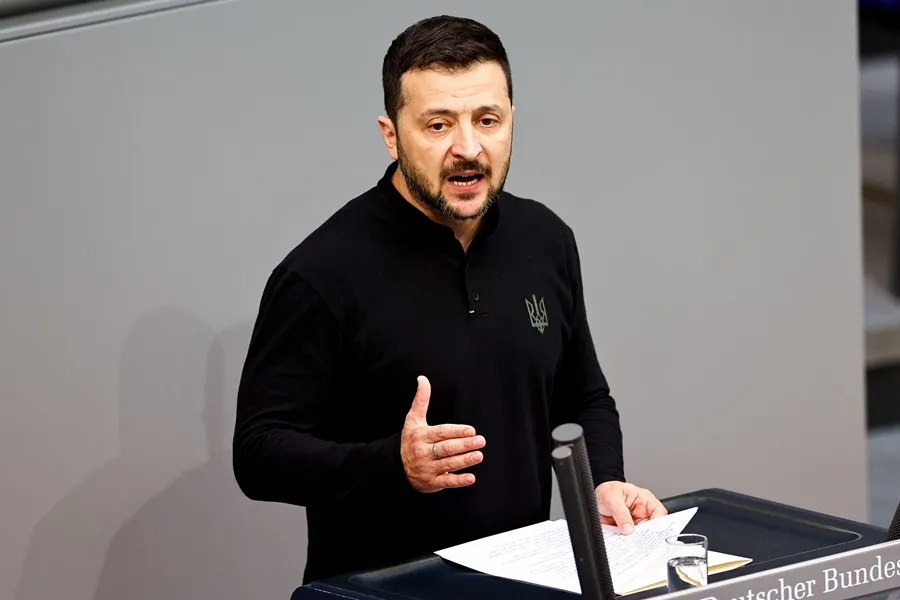
The Ukrainian government on Wednesday declared a nationwide energy state of emergency amid continued Russian military attacks and extreme winter weather, with nighttime temperatures dropping as low as minus 18 degrees Celsius.
“The consequences of Russian attacks and worsening weather conditions are severe (…) Overall, a state of emergency will be declared for Ukraine’s energy sector,” Ukrainian President Volodymyr Zelensky said in a statement posted on social media following a meeting with senior officials.
Zelensky announced the creation of a “permanent coordination headquarters” to manage the crisis in the capital, Kyiv, and tasked former defence minister and current energy chief Denys Shmyhal with overseeing support efforts for affected individuals and communities, including addressing power outages, heating shortages and other “practical issues.”
“There are many problems that require urgent solutions,” the president said, noting that repair crews, energy companies, municipal services and the State Emergency Service are working “around the clock” to restore electricity supplies. Kyiv has been particularly affected after Russian strikes last Friday disabled key parts of the power grid, as daytime temperatures hover around minus 12 degrees Celsius and plunge to minus 18 at night.
Zelensky added that public authorities will “maximize efforts with partners to obtain the necessary equipment and additional support,” while the government will ensure “maximum deregulation of all processes” to speed up the connection of backup power equipment to the grid. He also confirmed that work is underway to significantly increase electricity imports into Ukraine.
The Ukrainian leader further instructed his Cabinet to review curfew regulations in light of the extreme cold, arguing that citizens must have the greatest possible access to assistance centers, while businesses should be given flexibility to plan their operations according to the state of the energy system.


Sheinbaum highlights anti-drug gains after U.S. says challenges remain

Canada accuses Iran of killing its citizen during anti-government unrest

Ukraine declares nationwide energy emergency amid russian attacks and extreme cold
Tec de Monterrey honors one of its students for his contribution to nanotechnology in medicine

Defense Minister commends salvadoran soldier for Central American Cross Country victory

Extension of the state of emergency approved in southern Chile
-
 International4 days ago
Deadly van accident near Brazil border leaves 11 dead in Bolivia
-
 International4 days ago
U.S. to host Danish and Greenlandic Foreign Ministers at the White House
-
 Central America4 days ago
U.S. and El Salvador maintain close partnership, embassy says
-
 Central America4 days ago
Taiwan’s $10 million donation after 2001 earthquakes allegedly diverted in El Salvador
-
 International4 days ago
Dominican court postpones hearing in deadly nightclub collapse case
-

 International4 days ago
Police hunt gunmen after fatal shooting in Corsica
-
 International4 days ago
Ex-President accused of bid to establish dictatorship as verdict nears in South Korea
-
 International4 days ago
Venezuelan opposition leader dedicates Nobel Prize to Trump
-
 International3 days ago
Colombian Defense Chief Meets U.S. Officials to Advance Bilateral Narcotics Strategy
-
 International2 days ago
Iran closes airspace amid U.S. threats and deadly nationwide protests
-
 International2 days ago
Ukraine declares nationwide energy emergency amid russian attacks and extreme cold
-

 Central America2 days ago
Bukele warns crime can become a ‘parallel government’ during visit to Costa Rica
-

 International2 days ago
X moves to block Grok from creating sexualized images of real people amid legal scrutiny
-
 International3 days ago
Peruvian Court Orders Definitive Dismissal of Money Laundering Case Against Keiko Fujimori
-
 International2 days ago
France joins Denmark’s ‘Operation Arctic Resistance’ in Greenland amid U.S. tensions
-
 International2 days ago
Swiss Canton of Valais Grants Emergency Aid to Victims of Crans-Montana Bar Tragedy
-
 International2 days ago
U.S.–Denmark tensions escalate as Trump pushes NATO to back U.S. claim on Greenland
-
 International2 days ago
UK Intelligence estimates russian casualties in Ukraine at over 1.2 million
-
 International2 days ago
Hillary Clinton skips Epstein inquiry as house panel threatens contempt charges
-
 International2 days ago
U.S. to suspend visa processing for applicants from 75 countries
-
 International10 hours ago
Canada accuses Iran of killing its citizen during anti-government unrest
-
 International10 hours ago
Sheinbaum highlights anti-drug gains after U.S. says challenges remain