
International
Deadly van accident near Brazil border leaves 11 dead in Bolivia

At least 11 people were killed on Monday in a road accident in eastern Bolivia, near the border with Brazil, when a van driven by a teenager crashed, police said.
The crash occurred on a road near the town of Puerto Quijarro, in the department of Santa Cruz, about 1,470 kilometers east of La Paz, when the vehicle slammed into a tree.
“At this moment, we are reporting 11 fatalities,” said Miguel Lipe, the police officer leading the investigation, in statements to private television network Unitel.
According to preliminary findings, the driver of the vehicle was a minor between 13 and 14 years old, who also died as a result of the impact. Authorities are currently collecting evidence to determine the exact cause of the accident, Lipe added.
A preliminary list of victims indicates that four minors and seven adults were among those killed. Police also reported that some of the passengers appeared to have been under the influence of alcohol.











Additional police reports said that four injured people were taken to a local hospital.
Traffic accidents remain a serious problem in Bolivia, where an estimated 1,400 people die each year on the country’s roads, mainly due to driver recklessness and mechanical failures, according to figures from the Ministry of Government.



























International
Marco Rubio launches U.S. campaign to “dismantle” the International Criminal Court
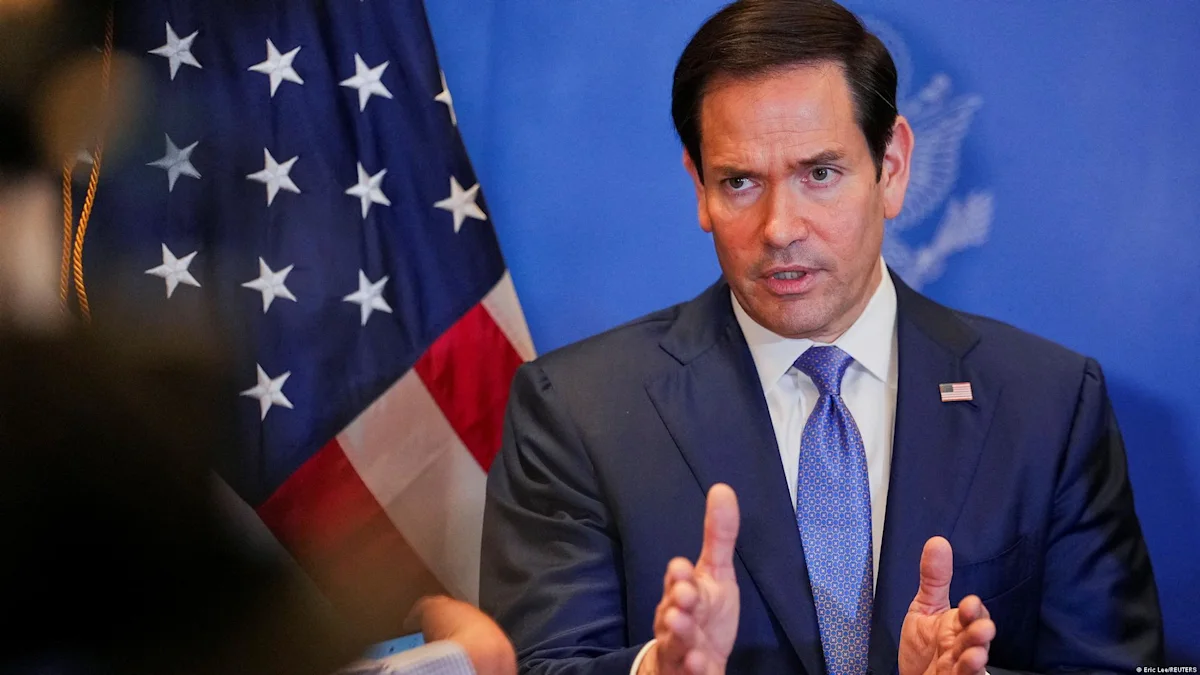
U.S. Secretary of State Marco Rubio announced Monday (July 13, 2026) the launch of a diplomatic campaign aimed at “dismantling” the International Criminal Court (ICC), a key institution in the global justice system, while pressuring Washington’s allies to withdraw from the organization, which he accused of interfering in U.S. affairs.
“The ICC represents an intolerable threat to American sovereignty: it claims the authority to prosecute and even imprison military personnel and officials acting in defense of the national interests of the United States,” Rubio said.
He also accused the court of waging “a war against our country, not with bullets or missiles, but with statutes, agreements and the power of what they call international law.”
The United States is not a signatory to the Rome Statute, the treaty that established the ICC. The Trump administration has previously imposed sanctions on senior court officials over investigations into alleged war crimes committed by U.S. personnel in Afghanistan and actions targeting Israeli officials, a key U.S. ally.
“Step by step, if necessary”
The new State Department initiative proposes banning ICC personnel from entering the United States and expanding sanctions against court members and affiliated organizations.
The plan also includes increasing pressure on Washington’s allies, particularly countries that “benefit from the U.S. security umbrella,” to publicly reject ICC actions and distance themselves from the institution.
The Trump administration will summon foreign ambassadors and senior officials to highlight what it describes as “ICC abuses” and encourage them to withdraw from the court.
Washington also plans to increase scrutiny of countries that refuse to reject what the administration calls the ICC’s “claimed authority” while continuing to rely on U.S. assistance.
Rubio said the ICC seeks to become “a global unaccountable arbiter.” In an opinion piece published Monday in The Wall Street Journal, the secretary of state said that with the support of its allies, the United States would dismantle the ICC “step by step, if necessary.”
International
ICE reverses course and moves forward with New Jersey migrant detention facility project

The administration of President Donald Trump has reversed course and resumed plans to convert a warehouse in New Jersey, purchased for $129.3 million, into a migrant detention facility with capacity for up to 1,500 people, according to a court filing in the state.
U.S. Immigration and Customs Enforcement (ICE) submitted a document Friday to a federal court in New Jersey stating that it will continue moving forward with plans to establish the facility in the township of Roxbury.
According to the court filing, ICE had previously informed the court on June 29 that it had decided to abandon the plan to convert the property into a detention center.
However, on July 8, Department of Homeland Security (DHS) officials notified attorneys that, “after reconsideration,” the agency intended to continue evaluating the renovation of the warehouse for use as a migrant detention facility.
“DHS officials further informed counsel that, as of July 10, the agency’s deliberations remain ongoing,” the document stated.
The decision to revive the project comes two weeks after The New York Times reported that ICE had decided not to proceed with plans to establish new detention facilities as part of the Trump administration’s immigration detention and deportation strategy.
According to that report, the agency had planned to sell seven warehouses, including the Roxbury property, for more than $700 million or transfer them to other federal agencies.
The New Jersey facility proposal is part of broader efforts by the Trump administration to expand immigration enforcement infrastructure amid its push to increase detention capacity and accelerate deportations of undocumented immigrants.
International
Judge rules Trump’s IRS lawsuit was a “bad faith” attempt to manipulate the judicial process
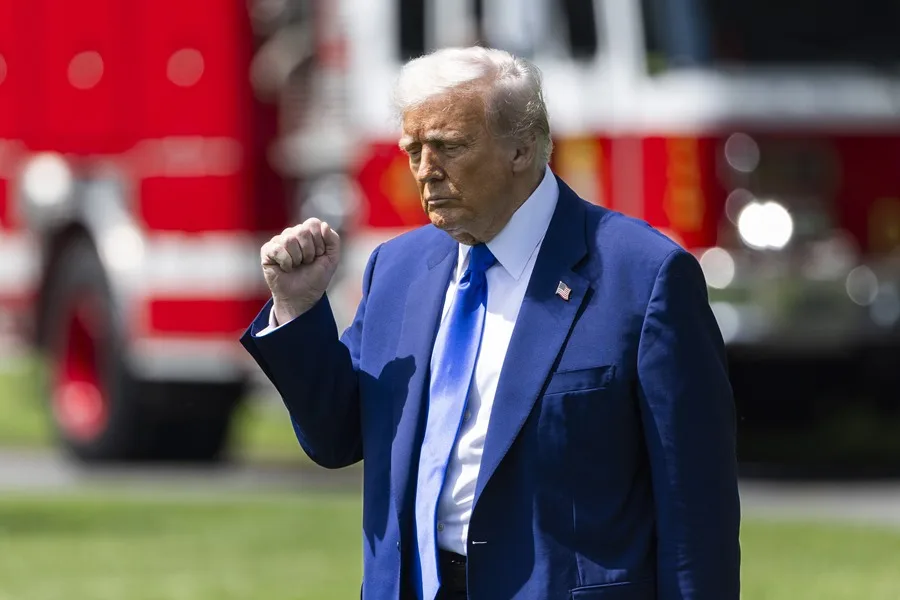
A federal judge ruled Monday that a lawsuit filed by President Donald Trump against the Internal Revenue Service (IRS) was an attempt to “manipulate the judicial process” and determined that the case was brought in bad faith.
U.S. District Judge Kathleen Williams ordered sanctions against the attorneys involved in the lawsuit, which led to an effort to create the now-defunct $1.8 billion “anti-weaponization” fund aimed at addressing alleged political targeting by government institutions in favor of Trump allies.
The lawsuit was also used to justify a government order that sought to provide Trump and his companies with immunity from any past tax-related matters.
In a 56-page opinion, Williams sharply criticized both the Department of Justice (DOJ) — saying the government’s response to the case disregarded agency policies and may have violated the law — and the private attorneys who filed the lawsuit on Trump’s behalf.
“The very nature of the lawsuit and the conduct of the parties and counsel since its filing make clear that this was an attempt to use the court to provide legitimacy to an agreement designed to grant immunity to individuals and entities connected to the president and to allocate billions of taxpayer dollars to remedy grievances that the law does not recognize,” Williams wrote.
The judge also ordered that her opinion be referred to attorney disciplinary authorities in New York and Washington, which are already reviewing previous ethics complaints involving Acting Attorney General Todd Blanche and Deputy Attorney General Stanley Woodward.
Williams criticized the Justice Department for abandoning its responsibility to defend the interests of the United States, arguing that the government entered into an agreement that departed from its position in similar legal cases, ignored DOJ policies and pursued objectives beyond what is permitted by law.
“By abandoning its responsibility to vigorously defend the interests of the United States, the government entered into an agreement that deviated from its litigation position in similar cases, ignored Department of Justice policies and achieved objectives that exceeded those authorized by law, as well as others expressly prohibited,” Williams wrote.
The judge also referred one of Trump’s private attorneys to the Florida Bar for possible disciplinary action and barred another lawyer representing the president from appearing before the U.S. District Court for the Southern District of Florida for one year.
The ruling adds another legal setback for attorneys involved in cases connected to Trump’s administration and raises new questions about the conduct of government lawyers and private counsel involved in the IRS lawsuit.


Marco Rubio launches U.S. campaign to “dismantle” the International Criminal Court

ICE reverses course and moves forward with New Jersey migrant detention facility project

Judge rules Trump’s IRS lawsuit was a “bad faith” attempt to manipulate the judicial process
Tec de Monterrey honors one of its students for his contribution to nanotechnology in medicine

Defense Minister commends salvadoran soldier for Central American Cross Country victory

Extension of the state of emergency approved in southern Chile
-
 Central America3 days ago
Panama launches anti-drone measures as prison security crisis deepens
-
 International8 hours ago
ICE reverses course and moves forward with New Jersey migrant detention facility project
-

 International4 days ago
Deadly Drug Trade Rivalry Suspected After Eight Bodies Discovered in Southern Mexico
-

 Central America4 days ago
Regional Naval Operations Strike Drug Cartels, Disrupting Cocaine and Weapons Trafficking Routes
-

 International4 days ago
Tensions Escalate in Middle East as U.S. Bombs Iran After Maritime Attacks
-

 International1 day ago
Venezuela Earthquake Death Toll Rises to 4,490 as Rescue Efforts Continue
-
 International10 hours ago
Judge rules Trump’s IRS lawsuit was a “bad faith” attempt to manipulate the judicial process
-
 International8 hours ago
Marco Rubio launches U.S. campaign to “dismantle” the International Criminal Court