
International
The presidential candidates in Uruguay promised in a debate not to raise taxes
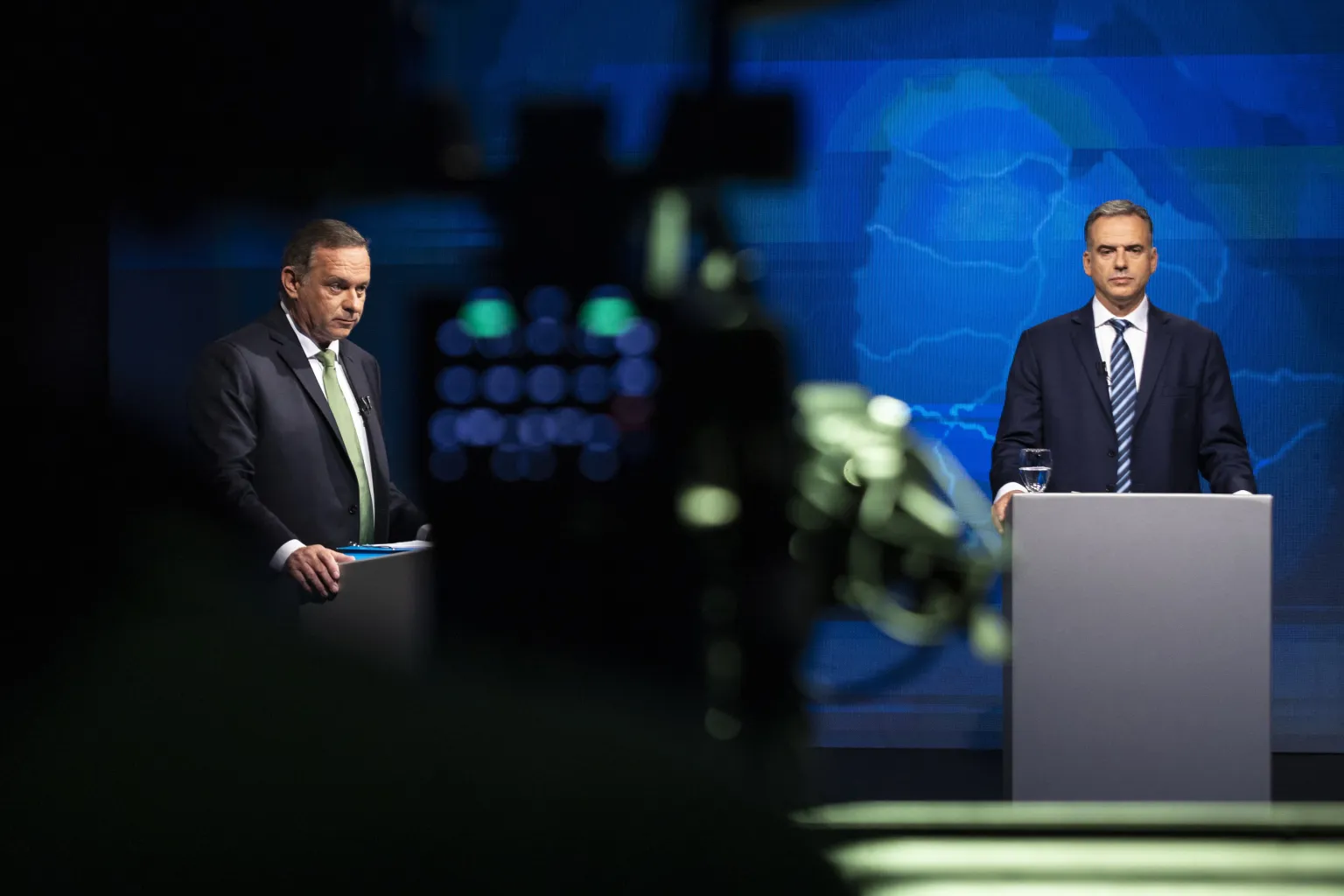
The candidates for the Presidency of Uruguay for the ruling National Party, Álvaro Delgado, and the opposition Frente Amplio, Yamandú Orsi, presented their proposals in a televised debate, in which both politicians promised that they would not raise taxes.
The debate between the candidates prior to the second round next Sunday, was broadcast on national radio and television, and is stipulated by Law 18,827, promulgated in September 2019.
A debate in Uruguay with counterpointing
It began with opposing messages from the aspirants. While Orsi pointed out that Uruguay is “a stagnant country,” Delgado pointed out that the government model ensures “future and development.”
“Next Sunday we will have to choose between two options: that of a stagnant country, that of unfulfilled promises or that of a sure change. A change that will certainly not be radical and that involves the well-being of our people,” said the Frenteamplista.
Delgado stressed: “Here two models of country are compared, a model that retreats with ideology and with uncertainties. And a model – ours – that ensures guarantee, certainties, future and development.”











From human development to work
In the 90-minute debate, the candidates presented their views on five thematic blocks: human development, security, economy, knowledge and work.
In the first of these, both agreed on the importance of giving “quality of life to citizens.”
In terms of security, Delgado pointed out that the current government will leave the next, for the first time since 1984, fewer crimes reported, something that was achieved, he said, by trust in the police.
Although he said that they are not satisfied with what has been achieved, he reviewed with a graph numbers in the decrease in robberies (42%), thefts (22%), abigeato (57%) and homicides (3%); he said that “is the way.”
In addition, he mentioned the importance of repression, rehabilitation and reintegration.
Orsi, for his part, spoke of the victims “fruit of violence” in Uruguay, and gave as an example that every 15 days a child enters a hospital for a gunshot wound.
In that sense, he said that the pillars of his security policy will be the active exercise of authority, the defense of victims of crime and crime, in addition, he supported the police and the incorporation of more technology.
When talking about the economy, the Frente Amplio candidate recalled that when that party governed, between 2005 and 2020, the Gross Domestic Product increased by 73.2%.
Taxes: key point
“We are not going to increase taxes. In this period in which I will have to be Government, we are especially going to support small and medium-sized enterprises,” Orsi said.
On the contrary, Delgado said that the Government of the Frente Amplio gave the country with an inflation “of almost two digits” and that currently this is half, while pointing out that the real salary “is the highest in 49 years.”
He also said that an eventual government headed by Orsi will raise taxes, since, he said, this is what the Frente Amplio program says, and that on the contrary the ruling coalition will not do it.
“We are not going to raise taxes, we are going to generate investment incentives and we are going to open Uruguay to the world with pragmatism and without ideology,” Delgado said.
Delgado added that he intends “a cheaper Uruguay to live and to produce.”
When Orsi intervened again, he reiterated that he will not raise taxes.
He spoke of unemployment in the country, detailed that unemployment at the level of young people is close to 26%, the highest in the region, he said.
The National Party candidate said, on the contrary, that the unemployment rate in the country is 8.1% and among young people it is almost 2.5% higher.
The final message
The debate, carried out exactly one week before the second round of the elections, closed with a final message from each of the candidates.
“Here people can buy two country models and two leaderships. Our model that is a model of certainties, with economic growth, with security, with guarantees and with freedom. And the other model that is to return to the past with a lot of ideology, with more uncertainty, with surely more taxes, but surely with less freedom and with many more risks,” Delgado said.
He offered his experience and added that he is prepared and tested to govern the country.
“There’s one week to go. You will all have to choose between two proposals, two projects: the one of broken promises or the country of commitments. The country of commitments is one that implies a sure change,” emphasized the opponent Orsi.
He reiterated that he wants to become the next president of the Uruguayans and that, just as he knew how to do it when he governed the department (province) of Canelones (2015-2024), he will know how to do it at the head of all of Uruguay.










International
Mexico and Guatemala Agree on Five-Point Binational Plan for 2027
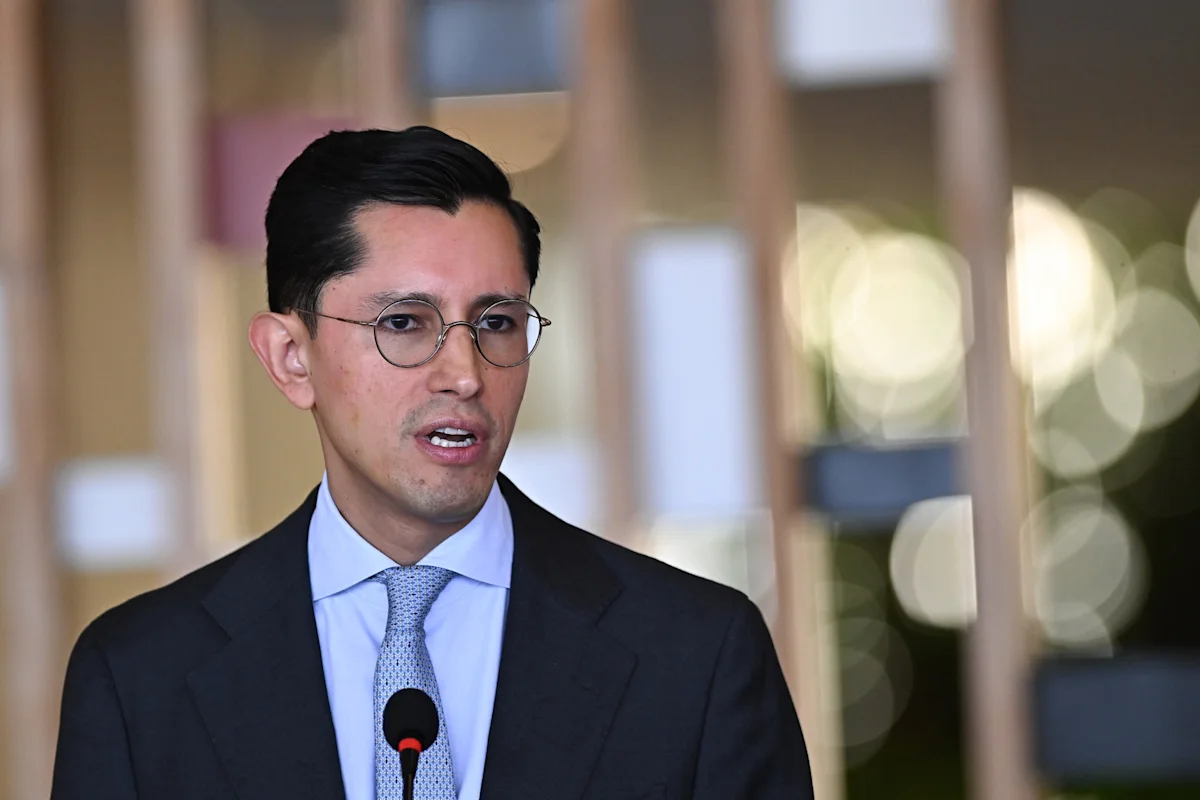
Mexico and Guatemala agreed Tuesday on a 2027 Binational Plan built around five areas of cooperation, along with a schedule of meetings and initiatives aimed at making progress by the end of 2026 on security, border infrastructure, human mobility, development and technical and social cooperation.
The agreement was announced by the foreign ministers of both countries following a meeting in Mexico City.
Mexican Foreign Minister Roberto Velasco said the plan will establish the “direction and priorities” of bilateral relations for next year. His Guatemalan counterpart, Carlos Ramiro Martínez, said the meeting allowed both governments to make decisions, schedule activities and revitalize bilateral cooperation mechanisms.
Security and border infrastructure
In the area of security, the two governments have nearly completed negotiations on a new memorandum of understanding for the Mexico-Guatemala High-Level Security Group (Ganseg), which was reactivated in 2025.
The countries expect to sign the agreement in the coming months to strengthen coordination and their ability to respond to shared security threats.
Regarding their nearly 1,000-kilometer shared border, Mexico and Guatemala agreed to advance infrastructure improvements at border crossings and continue work on a joint cargo clearance program between Ciudad Hidalgo and Tecún Umán, two border areas separated by the Suchiate River.
The measures are intended to facilitate bilateral trade while making cross-border exchanges safer and more efficient.
The two governments will also continue defining a route toward a railway connection between their countries through Line K of Mexico’s Interoceanic Corridor of the Isthmus of Tehuantepec (CIIT), with the aim of strengthening economic and community ties.
Migration and development
On human mobility, Mexico and Guatemala will maintain coordination to ensure safe, orderly and dignified returns, while strengthening protection for people in transit.
The bilateral agenda also includes a second phase of the Sembrando Vida program in Guatemala, which is expected to benefit 10,000 people across 15 departments.
Both countries will also advance initiatives under Juntos para el Bienestar, as well as six technical, scientific and energy cooperation projects approved by the Joint Commission.
The agreements seek to strengthen bilateral ties and establish concrete priorities for cooperation between Mexico and Guatemala during 2027.
International
France to Expel Two Iranian Diplomats Over Alleged Attack on French Officials
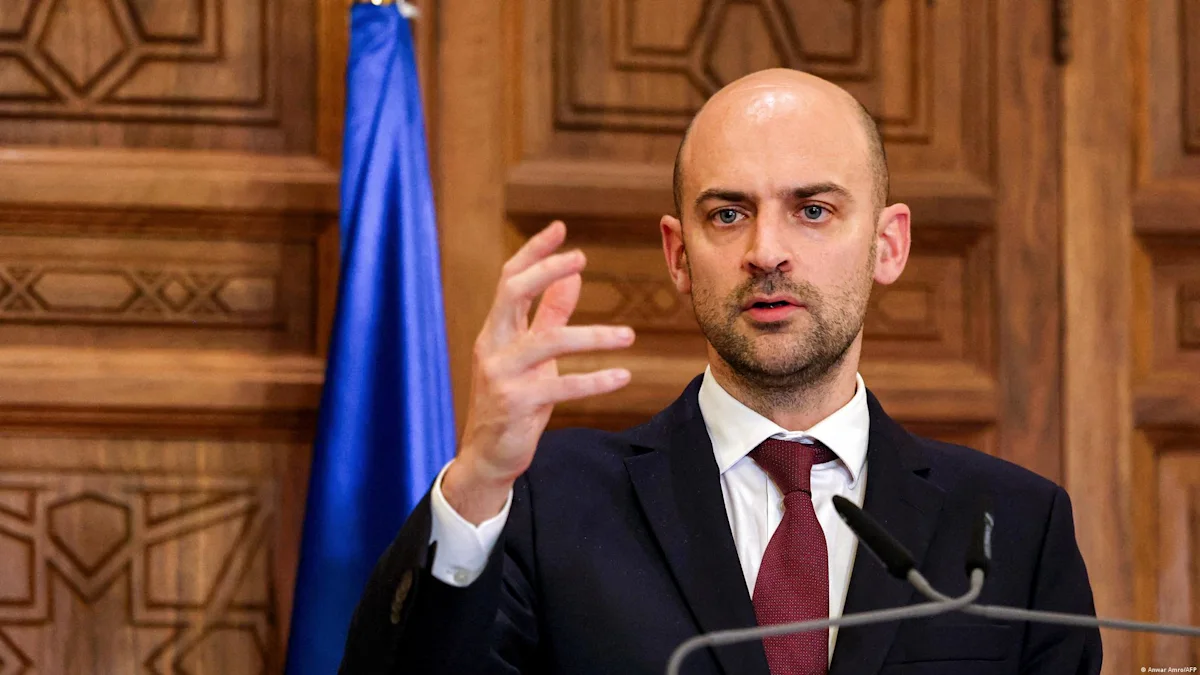
French Foreign Minister Jean-Noël Barrot announced Tuesday, August 18, 2026, that France will expel two Iranian diplomats in response to what Paris described as an attack on two French representatives in Iran last month.
“Two French diplomats were scandalously and deliberately assaulted on July 19. I had announced that this intolerable act would have consequences. It has now happened. Two Iranian diplomats in France will be expelled in the coming days,” Barrot said in a message posted on X.
The two Iranian diplomats have been declared persona non grata and will be required to leave France within the coming days, according to the French foreign minister.
About a month ago, Barrot said that two members of the French diplomatic staff had been detained by Iranian security forces for several hours. One of them was also subjected to harassment, he said.
The French government described the incident as an “extremely serious act of intimidation” that violated diplomatic immunity.
The two French embassy staff members were working on programs supporting Iranian civil society, particularly initiatives involving artists and researchers.
Iran has denied France’s allegations regarding the incident. The diplomatic dispute comes amid already strained relations between Paris and Tehran.
International
Heat wave puts more than 70 million Americans under alerts as temperatures near 46°C
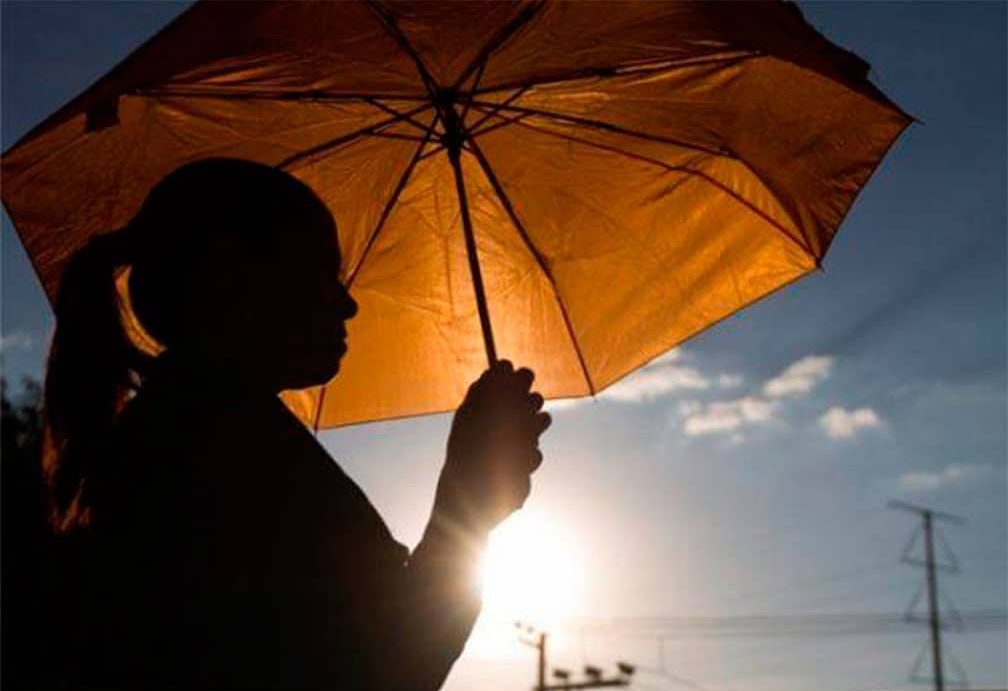
More than 70 million people remained under heat alerts Monday as an intense heat wave continued across the southern United States, particularly Florida and states along the Mexican border, where temperatures and heat indexes could reach as high as 46 degrees Celsius, according to the National Weather Service (NWS).
Several cities recorded or tied temperature records over the weekend and into Monday, including Miami and Fort Lauderdale in Florida; Laredo, Borger and Austin’s airport in Texas; Atlanta, Georgia; Raleigh and Charlotte, North Carolina; and Memphis, Tennessee.
The NWS warned that the heat wave will continue affecting the southern and southeastern United States, with maximum temperatures expected to remain near 38°C to 40°C for several days. The heat index, which combines temperature and humidity to estimate how hot conditions feel, could reach 46°C.
The extreme heat is also spreading into the Southwest, where temperatures began rising again between Monday and Tuesday. Forecast highs in the region range from about 38°C to 43°C.
Heat alerts remain in effect across Nevada, Arizona and California, including areas in southern Arizona and California near the Mexican border, as authorities warn of the risks posed by prolonged extreme temperatures.
The NWS urged residents to limit outdoor activity, stay hydrated, ensure access to air conditioning or cooling centers, and check on vulnerable friends, neighbors and family members.
The United States is experiencing a summer marked by above-average temperatures and repeated heat waves. One of the most intense episodes occurred during the July 4 weekend, when extreme heat was blamed for roughly 30 deaths.
July was the hottest month ever recorded in the United States since measurements began, with the average temperature across the contiguous country approaching 25°C, according to the National Oceanic and Atmospheric Administration (NOAA).
The combination of extreme heat and drought conditions has also fueled wildfires. Nearly 3 million hectares have burned across the country so far in 2026, making it the largest area affected by wildfires in a decade.

Mexico and Guatemala Agree on Five-Point Binational Plan for 2027

France to Expel Two Iranian Diplomats Over Alleged Attack on French Officials

Heat wave puts more than 70 million Americans under alerts as temperatures near 46°C

Trump warns Iran over nuclear ambitions as U.S.-Iran ceasefire deadline passes

Brazil’s Lula and Flávio Bolsonaro kick off election campaigns amid focus on crime

Actress Hayden Panettiere Dies at 36, Representative Confirms

Luigi Mangione Pleads Guilty to Killing UnitedHealthcare CEO Brian Thompson

ICE Plan to Equip Agents With Electric Shock Gloves Raises Abuse Concerns
France to Expel Two Iranian Diplomats Over Alleged Attack on French Officials
Actress Hayden Panettiere Dies at 36, Representative Confirms
Trump warns Iran over nuclear ambitions as U.S.-Iran ceasefire deadline passes
Heat wave puts more than 70 million Americans under alerts as temperatures near 46°C
Brazil’s Lula and Flávio Bolsonaro kick off election campaigns amid focus on crime
Mexico and Guatemala Agree on Five-Point Binational Plan for 2027
Luigi Mangione Pleads Guilty to Killing UnitedHealthcare CEO Brian Thompson
ICE Plan to Equip Agents With Electric Shock Gloves Raises Abuse Concerns
-
 International14 hours ago
France to Expel Two Iranian Diplomats Over Alleged Attack on French Officials
-
 International3 days ago
Actress Hayden Panettiere Dies at 36, Representative Confirms
-
 International2 days ago
Trump warns Iran over nuclear ambitions as U.S.-Iran ceasefire deadline passes
-
 International2 days ago
Heat wave puts more than 70 million Americans under alerts as temperatures near 46°C
-
 International2 days ago
Brazil’s Lula and Flávio Bolsonaro kick off election campaigns amid focus on crime
-
 International14 hours ago
Mexico and Guatemala Agree on Five-Point Binational Plan for 2027
-
 International5 days ago
Luigi Mangione Pleads Guilty to Killing UnitedHealthcare CEO Brian Thompson
-
 International5 days ago
ICE Plan to Equip Agents With Electric Shock Gloves Raises Abuse Concerns