
International
Hezbulá regrets the death of its spokesman in an Israeli bombing in Beirut

The Lebanese Shiite group Hezbollah regretted the death of its spokesman, Mohamed Afifi, in a bombing of Israel on Sunday against the headquarters of the Baath Arab Socialist Party in Beirut, the first time in a month that the Israeli army directly attacks the Lebanese capital.
Hizbulá praised Afifi as a “leader” in his role as a media spokesman and said that he joined his comrades and his “father” as a “martyr”, Hasán Nasrala, the top person responsible for the political and military formation of the movement, who died in another bombing in Beirut in September, according to a statement from the group released on Sunday night.
Afifi was among the dead in the attack
The general secretary of the Baath Arab Socialist Party in Lebanon, Ali Yusef Hegazy, confirmed that Afifi was identified as one of the seven dead in the Israeli attack on the headquarters of his formation in Beirut, in a television intervention on the Al Mayadin channel.
The bombing destroyed the headquarters of the Lebanese branch of the Pan-Araba party that maintains power in Syria with Bashar Al Asad.
For its part, the Islamist organization Hamas regretted the death of Afifi in a statement in which it highlighted his “bold media appearances” from Dahye, the suburbs south of Beirut under constant Israeli attacks, and said that it was “a voice of strong and defiant resistance that disturbed the (Israeli) occupation.”











The attack occurred in the Beirut neighborhood of Ras al Nabaa, a peripheral area in the south of the capital considered part of its metropolitan area.
On Sunday afternoon, another Israeli bombing hit the center of the Lebanese capital again, in an unusual day with attacks beyond the Dahye, a daily siege target.
Israel detects the arrival of 60 projectiles from Lebanon
The Israeli Army detected the arrival of at least 60 projectiles launched between the morning and afternoon of Monday, which it attributed to the Lebanese Shiite organization Hezbollah, and indicated that most of them were intercepted.
“At 3:00 p.m. (13 GMT), approximately 60 projectiles fired by the terrorist organization Hezbulá crossed from Lebanon to Israel today,” the military body reported in a statement.
Israel’s Emergency Service, the Maguen David Adom (MDA), reported that two women, aged 34 and 65, were injured by the remains of these devices after being intercepted by the Israeli air defense system.
The Army also announced today the destruction of a Shiite arsenal and a tunnel in a mountainous area of southern Lebanon.
In the same statement, he detailed that militants of Hizbulá planned attacks against Israel from that place located in southern Lebanon – whose name was not specified.
Balance of the war between Israel and Hezbullah
More than a year of fire exchange between Israel and Hizbulah around the border with Lebanon has ended the lives of almost 3,500 people in this country, most of them since the Israeli Army intensified its bombing campaign on September 23. The armed forces estimate that about 2,500 were militiamen of the Shiite group.
On the Israeli side, 76 people have died from attacks launched from Lebanon, of which 45 were civilians (6 of them foreigners). In addition, 42 soldiers have died in combat in the south of the neighboring country, where they have maintained a land invasion since last October 1.
Israel confirms that a “precise” bombing in Beirut
The Israeli Army confirmed that it killed Hezbulah spokesman Mohamed Afifi in a “precise” bombing on Sunday in Beirut, who was condemned by Iran and the Lebanese Shiite group.
Afifi was in direct contact with senior officials from Hezbula to carry out “terrorist activities” of the group against Israel, according to a statement from the Israeli Army released early Monday morning.
He points out that Afifi directed Hezbullah’s operations from the field to promote the “propaganda and psychological terror campaign” of the Shiite movement, and accuses him of “glorifying” and “inciting” “terrorist activities” against the State of Israel.










International
Mexico and Guatemala Agree on Five-Point Binational Plan for 2027
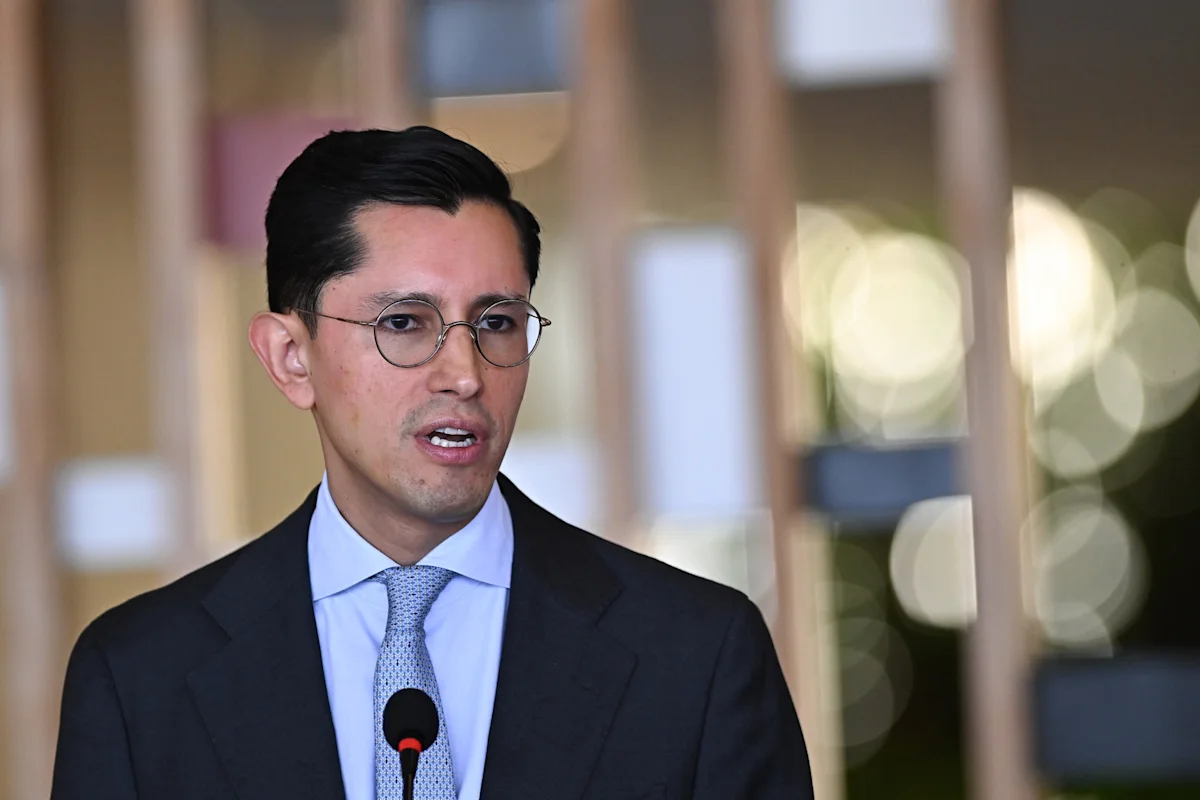
Mexico and Guatemala agreed Tuesday on a 2027 Binational Plan built around five areas of cooperation, along with a schedule of meetings and initiatives aimed at making progress by the end of 2026 on security, border infrastructure, human mobility, development and technical and social cooperation.
The agreement was announced by the foreign ministers of both countries following a meeting in Mexico City.
Mexican Foreign Minister Roberto Velasco said the plan will establish the “direction and priorities” of bilateral relations for next year. His Guatemalan counterpart, Carlos Ramiro Martínez, said the meeting allowed both governments to make decisions, schedule activities and revitalize bilateral cooperation mechanisms.
Security and border infrastructure
In the area of security, the two governments have nearly completed negotiations on a new memorandum of understanding for the Mexico-Guatemala High-Level Security Group (Ganseg), which was reactivated in 2025.
The countries expect to sign the agreement in the coming months to strengthen coordination and their ability to respond to shared security threats.
Regarding their nearly 1,000-kilometer shared border, Mexico and Guatemala agreed to advance infrastructure improvements at border crossings and continue work on a joint cargo clearance program between Ciudad Hidalgo and Tecún Umán, two border areas separated by the Suchiate River.
The measures are intended to facilitate bilateral trade while making cross-border exchanges safer and more efficient.
The two governments will also continue defining a route toward a railway connection between their countries through Line K of Mexico’s Interoceanic Corridor of the Isthmus of Tehuantepec (CIIT), with the aim of strengthening economic and community ties.
Migration and development
On human mobility, Mexico and Guatemala will maintain coordination to ensure safe, orderly and dignified returns, while strengthening protection for people in transit.
The bilateral agenda also includes a second phase of the Sembrando Vida program in Guatemala, which is expected to benefit 10,000 people across 15 departments.
Both countries will also advance initiatives under Juntos para el Bienestar, as well as six technical, scientific and energy cooperation projects approved by the Joint Commission.
The agreements seek to strengthen bilateral ties and establish concrete priorities for cooperation between Mexico and Guatemala during 2027.
International
France to Expel Two Iranian Diplomats Over Alleged Attack on French Officials

French Foreign Minister Jean-Noël Barrot announced Tuesday, August 18, 2026, that France will expel two Iranian diplomats in response to what Paris described as an attack on two French representatives in Iran last month.
“Two French diplomats were scandalously and deliberately assaulted on July 19. I had announced that this intolerable act would have consequences. It has now happened. Two Iranian diplomats in France will be expelled in the coming days,” Barrot said in a message posted on X.
The two Iranian diplomats have been declared persona non grata and will be required to leave France within the coming days, according to the French foreign minister.
About a month ago, Barrot said that two members of the French diplomatic staff had been detained by Iranian security forces for several hours. One of them was also subjected to harassment, he said.
The French government described the incident as an “extremely serious act of intimidation” that violated diplomatic immunity.
The two French embassy staff members were working on programs supporting Iranian civil society, particularly initiatives involving artists and researchers.
Iran has denied France’s allegations regarding the incident. The diplomatic dispute comes amid already strained relations between Paris and Tehran.
International
Heat wave puts more than 70 million Americans under alerts as temperatures near 46°C

More than 70 million people remained under heat alerts Monday as an intense heat wave continued across the southern United States, particularly Florida and states along the Mexican border, where temperatures and heat indexes could reach as high as 46 degrees Celsius, according to the National Weather Service (NWS).
Several cities recorded or tied temperature records over the weekend and into Monday, including Miami and Fort Lauderdale in Florida; Laredo, Borger and Austin’s airport in Texas; Atlanta, Georgia; Raleigh and Charlotte, North Carolina; and Memphis, Tennessee.
The NWS warned that the heat wave will continue affecting the southern and southeastern United States, with maximum temperatures expected to remain near 38°C to 40°C for several days. The heat index, which combines temperature and humidity to estimate how hot conditions feel, could reach 46°C.
The extreme heat is also spreading into the Southwest, where temperatures began rising again between Monday and Tuesday. Forecast highs in the region range from about 38°C to 43°C.
Heat alerts remain in effect across Nevada, Arizona and California, including areas in southern Arizona and California near the Mexican border, as authorities warn of the risks posed by prolonged extreme temperatures.
The NWS urged residents to limit outdoor activity, stay hydrated, ensure access to air conditioning or cooling centers, and check on vulnerable friends, neighbors and family members.
The United States is experiencing a summer marked by above-average temperatures and repeated heat waves. One of the most intense episodes occurred during the July 4 weekend, when extreme heat was blamed for roughly 30 deaths.
July was the hottest month ever recorded in the United States since measurements began, with the average temperature across the contiguous country approaching 25°C, according to the National Oceanic and Atmospheric Administration (NOAA).
The combination of extreme heat and drought conditions has also fueled wildfires. Nearly 3 million hectares have burned across the country so far in 2026, making it the largest area affected by wildfires in a decade.

Mexico and Guatemala Agree on Five-Point Binational Plan for 2027

France to Expel Two Iranian Diplomats Over Alleged Attack on French Officials

Heat wave puts more than 70 million Americans under alerts as temperatures near 46°C

Trump warns Iran over nuclear ambitions as U.S.-Iran ceasefire deadline passes

Brazil’s Lula and Flávio Bolsonaro kick off election campaigns amid focus on crime

Actress Hayden Panettiere Dies at 36, Representative Confirms

Luigi Mangione Pleads Guilty to Killing UnitedHealthcare CEO Brian Thompson

ICE Plan to Equip Agents With Electric Shock Gloves Raises Abuse Concerns
France to Expel Two Iranian Diplomats Over Alleged Attack on French Officials
Actress Hayden Panettiere Dies at 36, Representative Confirms
Trump warns Iran over nuclear ambitions as U.S.-Iran ceasefire deadline passes
Heat wave puts more than 70 million Americans under alerts as temperatures near 46°C
Brazil’s Lula and Flávio Bolsonaro kick off election campaigns amid focus on crime
Mexico and Guatemala Agree on Five-Point Binational Plan for 2027
Luigi Mangione Pleads Guilty to Killing UnitedHealthcare CEO Brian Thompson
ICE Plan to Equip Agents With Electric Shock Gloves Raises Abuse Concerns
-
 International13 hours ago
France to Expel Two Iranian Diplomats Over Alleged Attack on French Officials
-
 International3 days ago
Actress Hayden Panettiere Dies at 36, Representative Confirms
-
 International2 days ago
Trump warns Iran over nuclear ambitions as U.S.-Iran ceasefire deadline passes
-
 International2 days ago
Heat wave puts more than 70 million Americans under alerts as temperatures near 46°C
-
 International2 days ago
Brazil’s Lula and Flávio Bolsonaro kick off election campaigns amid focus on crime
-
 International13 hours ago
Mexico and Guatemala Agree on Five-Point Binational Plan for 2027
-
 International5 days ago
Luigi Mangione Pleads Guilty to Killing UnitedHealthcare CEO Brian Thompson
-
 International5 days ago
ICE Plan to Equip Agents With Electric Shock Gloves Raises Abuse Concerns