
International
UN mission for Venezuela: the Government is reactivating its most violent repression
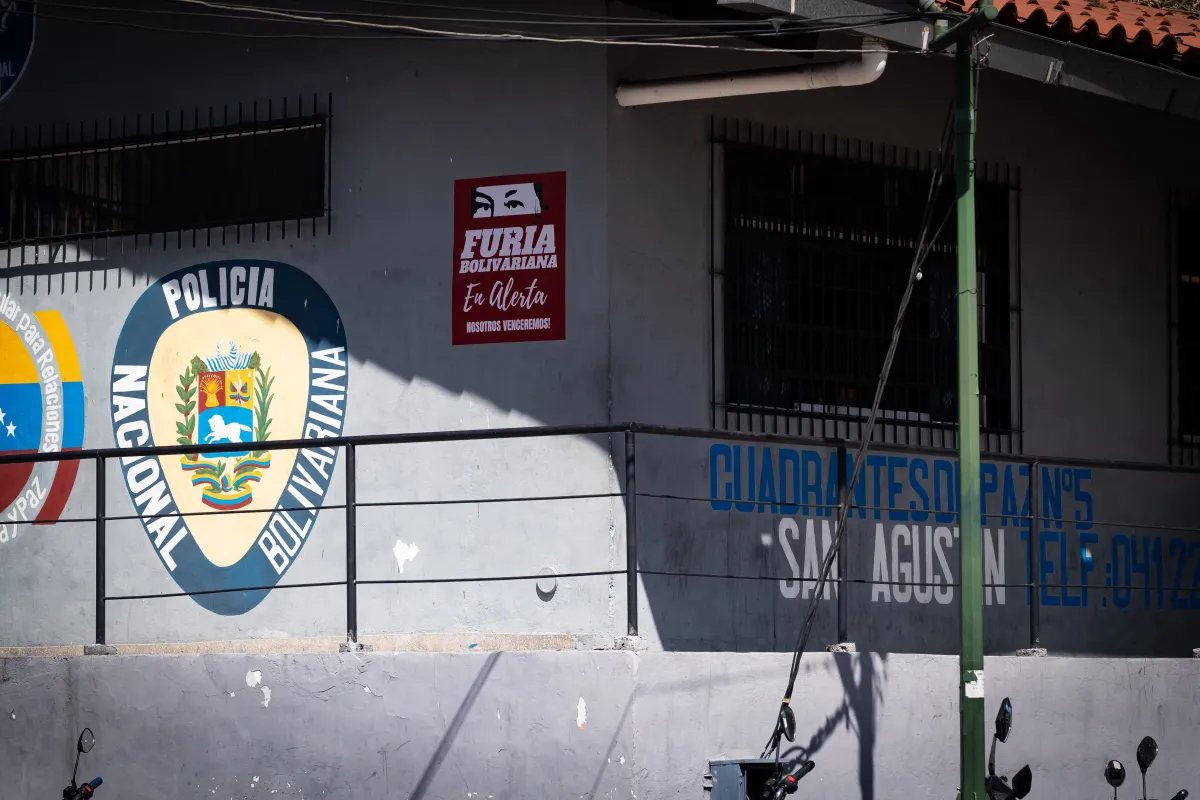
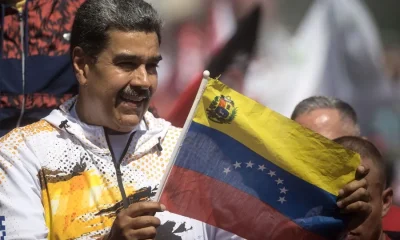
The Government of Venezuela is reactivating “the most violent form of repression,” with a new wave of arrests of opponents accused of alleged conspiracies such as the so-called Operation White Bracelet, the UN Independent International Mission for the country said on Wednesday.
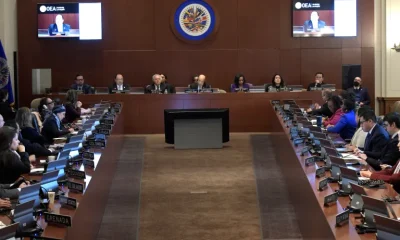
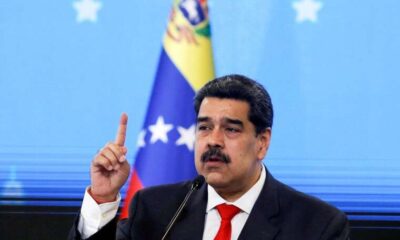
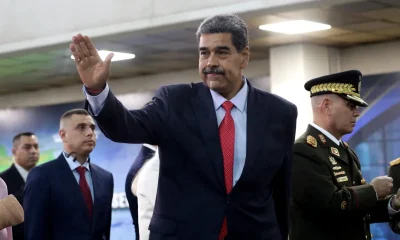
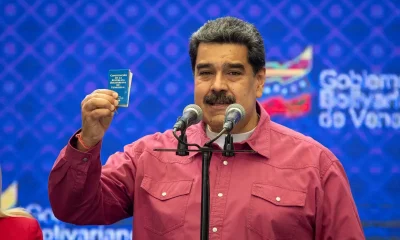
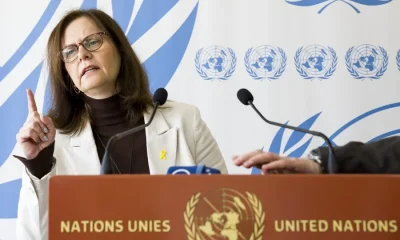
The president of the mission, the Portuguese Marta Valiñas, presented to the United Nations Human Rights Council a new report on abuses committed by the Government of Nicolás Maduro in Venezuela since 2023, where she stressed that “the authorities invoke real or fictitious conspiracies to smedget, arrest and prosecute opponents or government critics.”
In this period, he said, we have moved from a less repressive phase of the opposition, in which Nicolás Maduro’s regime was limited to creating “a climate of fear and intimidation,” to a more violent period “that is activated to silence the voices of the opposition at any price.”
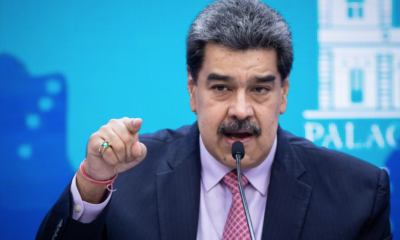
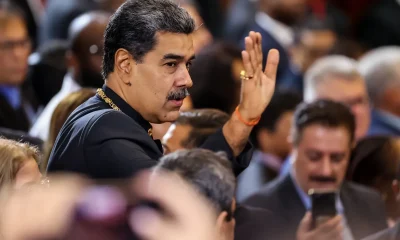
Valiñas highlighted in this sense that in January 2024 Maduro asked to “activate the Bolivarian Fury” after assuring that the previous year four conspiracies had been deactivated to assassinate him or organize coups d’état, and that the Attorney General’s Office then announced the aforementioned Operation White Bracelet, one of the alleged plots to end the life of the Venezuelan president.
In the context of the fight against this last conspiracy, 33 soldiers were degraded and expelled and different critics of the regime were arrested.











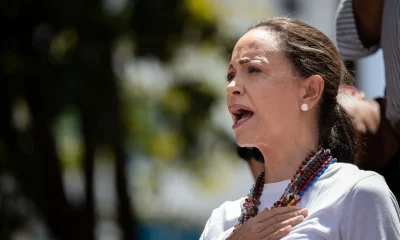
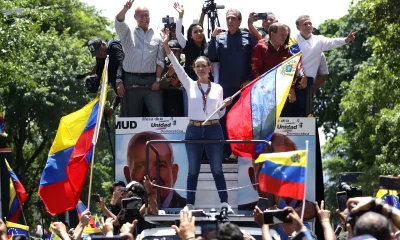
Among them, he recalled, campaign leaders of the Vente Venezuela party (the formation of the opposition leader María Corina Machado) and human rights defenders such as Tamara Suju, Sebastiana Barráez or the Spanish-Venezuelan Rocío San Miguel.
Valiñas stressed that San Miguel, arrested on February 9 at Maiquetía airport without a court order, was in unknown whereabouts for five days “until the authorities reported that she was detained in El Helicoide, one of the torture centers documented by the mission.”
He also stressed that that month, shortly after both the mission he presides over and the UN Office for Human Rights expressed their concern for San Miguel, the Venezuelan Government suspended the activities of the technical mission of the aforementioned office and gave its staff a period of 72 hours to leave the country.
The head of the mission completed by the Chilean Francisco Cox and the Argentine Patricia Tappatá added that together with San Miguel they have documented cases of 18 other women who remain detained under the accusation of being associated or involved in “conspiracies” to overthrow the Government.
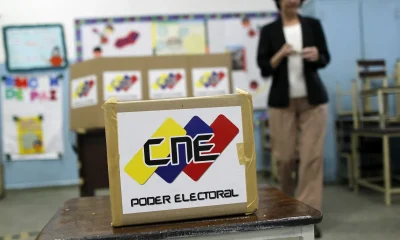
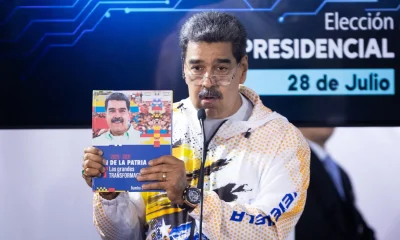
Valiñas also recalled that in the six months analyzed by the mission, an agreement between the Government and the opposition was signed in Barbados so that it could participate in the elections of July 28 of this year, but subsequent actions highlighted the difficulties for its implementation.
The president of the mission gave as an example the suspension by the Supreme Court of Justice of the opposition primaries of October 22, won by a large majority by María Corina Machado, and the ratification by the same instance of justice of her 15-year political disqualification of 15 years, on January 26.
“These actions highlight the serious difficulties that exist in ensuring that the next presidential elections are carried out in accordance with the right to participate in public affairs provided for in the International Covenant on Civil and Political Rights,” Valiñas stressed.
It also drew attention to the arrest warrants against 14 people, including prominent opposition leaders such as Juan Guaidó and Leopoldo López, for their alleged connection with a conspiracy against the consultative referendum on Guayana Esequiba, held on December 3.
In the turn of reply, Venezuela’s delegation to the UN Human Rights Council in Geneva once again rejected the conclusions of the mission and even its legitimacy, created in 2019 by the council itself to investigate human rights abuses in the country.
“The United States, the greatest violator of rights in all history, the European Union and the failed Lima Group designed this mechanism (the mission) with the purpose of applying maximum pressure on Venezuela, manipulating the instruments and purposes of this Council,” said a representative of the delegation.
“They pretend to cover as absolute truths all the barbarities fabricated against Venezuela without verification or sustainable proof,” he added, alluding to the work of a mission that in his opinion “appeals to anonymous and even invented sources.”















































International
Five Bodies Found in Ecuador as Police Probe Suspected Gang Turf War
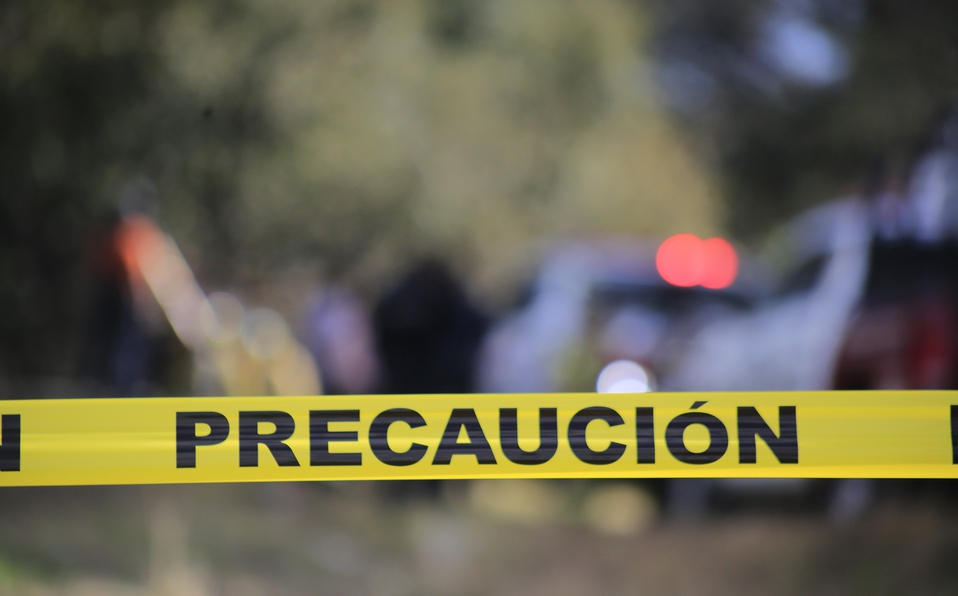
Ecuadorian authorities are investigating the deaths of five people whose bodies were found inside a rural home, in what police believe may be linked to a territorial dispute between organized criminal groups.
The victims, aged between 21 and 30, were discovered Tuesday in the town of La Troncal, in the Andean province of Cañar. Police reported that two of the bodies were bound with wire, while a burned-out vehicle was found outside the residence.
Investigators said graffiti on the walls of the house included messages such as “Lobos territory” and “Lobos active,” suggesting a possible connection to the criminal organization known as Los Lobos.
Police believe the killings were likely the result of a conflict over territorial control between rival gangs.
The discovery came on the same day authorities arrested a former mayor in the neighboring province of Azuay. Officials identified him as the alleged main financial backer of Los Lobos, one of Ecuador’s most powerful criminal organizations.
Ecuador has experienced an unprecedented surge in violence in recent years, driven by criminal groups involved in drug trafficking, illegal mining, kidnapping, and extortion.
According to Insight Crime, the country recorded 51 homicides per 100,000 inhabitants in 2025—equivalent to roughly one killing every hour—making it one of the most violent countries in Latin America.
International
Georgia Teen Sentenced to Life Without Parole for Deadly School Shooting

A Georgia teenager who killed four people in a 2024 school shooting was sentenced Tuesday to life in prison without the possibility of parole after pleading guilty to the attack.
Colt Gray, now 16, admitted to opening fire at Apalachee High School in Winder, about 70 kilometers (45 miles) northeast of Atlanta. He was 14 years old at the time of the shooting.
The attack claimed the lives of two students and two teachers, while nine other people were injured. Despite being a minor when the shooting occurred, Gray was prosecuted as an adult.
During the sentencing hearing, Judge Nicholas Trimm acknowledged the failures of the teenager’s family but said they did not excuse his actions.
“Your parents failed you. Your family failed you. But that does not absolve you,” the judge said.
Trimm also rejected any suggestion that the shooting was motivated by bullying or personal grievances.
“You were not bullied at Apalachee. This was not driven by hate. You didn’t know anyone at that school. It was simply the desire to commit a notorious act,” he told Gray.
The case also led to the prosecution of the shooter’s father, Colin Gray, who was convicted in March of voluntary manslaughter and involuntary manslaughter. The case marked one of the first instances in which a parent was held criminally responsible for a mass shooting carried out by their child.
Prosecutors said Colin Gray had given his son an AR-15-style rifle as a Christmas gift in 2023, despite being aware that the teenager had previously threatened to carry out a school shooting.
Authorities said the same rifle was used in the attack less than a year later. Months before the shooting, FBI investigators had alerted local law enforcement after receiving reports of online messages linked to the Gray family’s internet address that referenced plans for a school massacre.
The case reflects growing legal scrutiny in the United States over the responsibility of parents whose children commit acts of gun violence.
In a similar case, the parents of a Michigan teenager who killed four people at his high school in 2021 were convicted of involuntary manslaughter in 2024 and sentenced to prison terms ranging from 10 to 15 years.
According to U.S. health authorities, firearms have been the leading cause of death among children and teenagers in the United States for several years.
International
Portuguese Authorities Seize 2.6 Tons of Cocaine Worth More Than $550 Million in Drug Bust
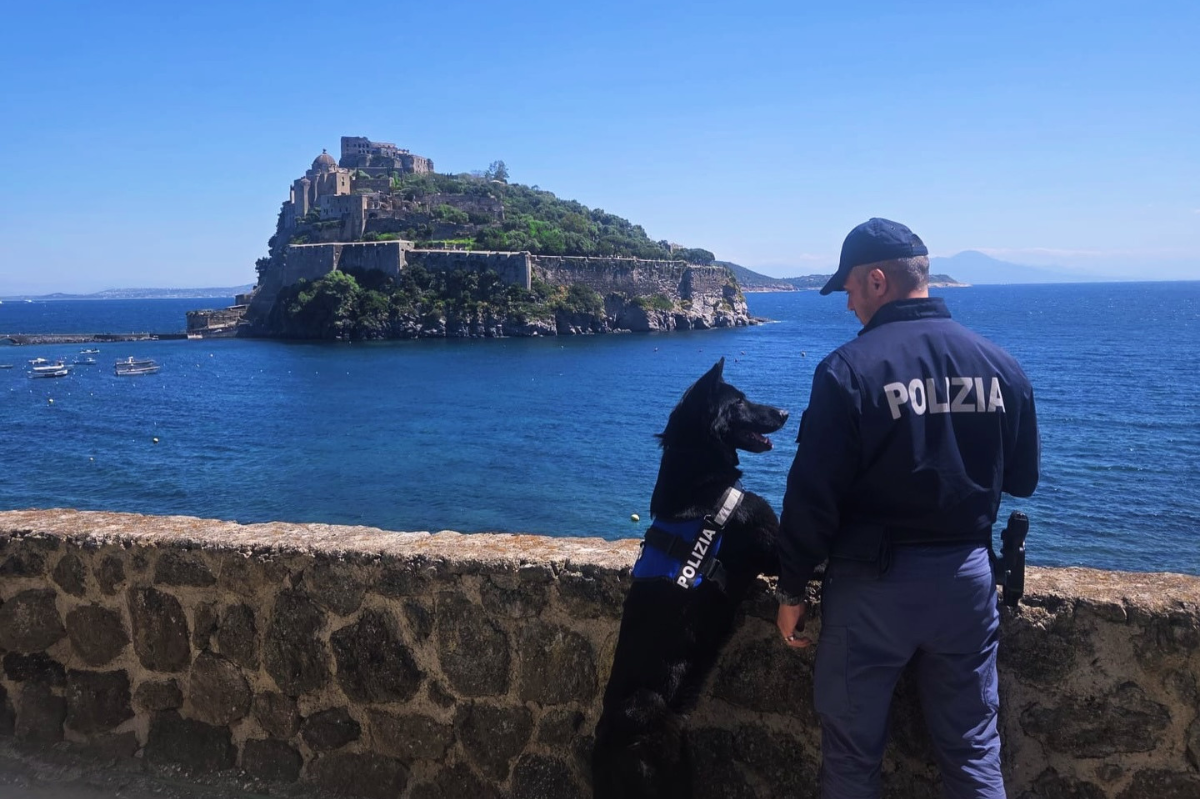
Italian financial police reported Monday that Portuguese authorities intercepted a speedboat carrying more than 2.6 tons of cocaine, with an estimated street value exceeding $550 million.
Four people — two Spanish nationals, one Albanian citizen, and a man from Gibraltar — were arrested in connection with the operation, according to Italian authorities.
The vessel was intercepted off the coast of Lisbon by Portugal’s maritime police following an investigation led by Italian authorities.
Italian financial police estimated that the seized shipment had a street value of approximately 500 million euros ($570 million), making it one of the largest drug seizures reported in the region in recent years.
Portuguese authorities said the interception took place on Thursday, about 90 kilometers (50 nautical miles) southwest of Cape Espichel, during an operation targeting international drug trafficking routes.


Prosecutors Accuse Ex-Defense Minister of Undermining Press Freedom in Honduras

Five Bodies Found in Ecuador as Police Probe Suspected Gang Turf War

Georgia Teen Sentenced to Life Without Parole for Deadly School Shooting
Tec de Monterrey honors one of its students for his contribution to nanotechnology in medicine

Defense Minister commends salvadoran soldier for Central American Cross Country victory

Extension of the state of emergency approved in southern Chile
-
 International2 days ago
U.S. and Iran Maintain Ceasefire as Trump Expresses Optimism Over New Talks
-

 International2 days ago
Police Investigate After Remains of Five Newborns Found in French Apartment
-
 International2 days ago
Portuguese Authorities Seize 2.6 Tons of Cocaine Worth More Than $550 Million in Drug Bust
-
 International17 hours ago
Five Bodies Found in Ecuador as Police Probe Suspected Gang Turf War
-
 Central America3 days ago
EU Urges Nicaragua to Hold Free and Transparent Elections Amid Proposed Electoral Reforms
-

 International3 days ago
Costa Rica Seeks to Expand Extradition Law to Target Organized Crime
-

 International3 days ago
China Accuses U.S. AI Firms of Using Chinese Models to Train Artificial Intelligence
-
 Central America17 hours ago
Prosecutors Accuse Ex-Defense Minister of Undermining Press Freedom in Honduras
-

 International3 days ago
Three Killed, Four Injured in Shooting Near Seattle’s Space Needle
-
 International17 hours ago
Georgia Teen Sentenced to Life Without Parole for Deadly School Shooting