
Central America
Territorial Control Plan of the Salvadoran Government is four years old
June 20 |
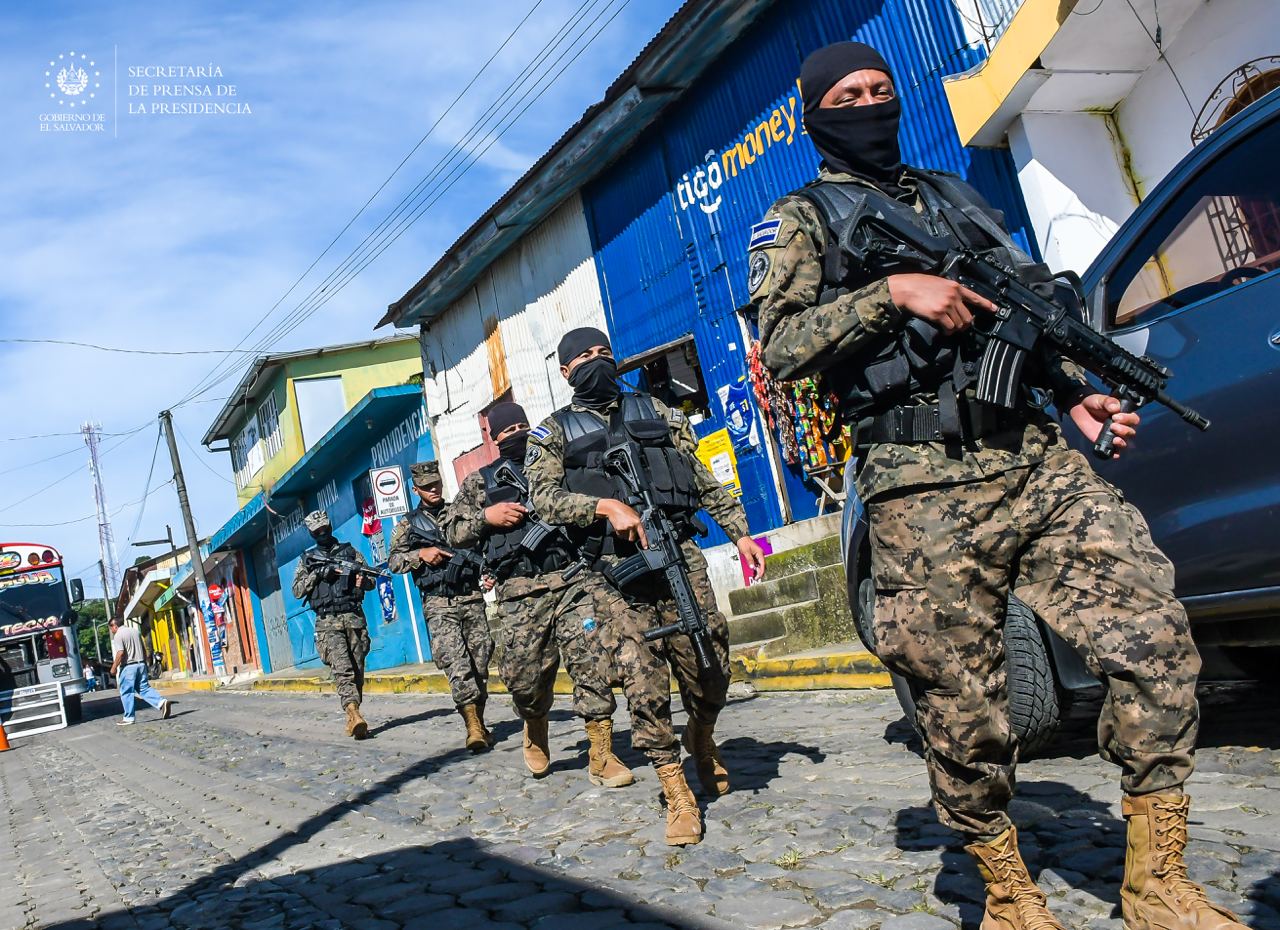
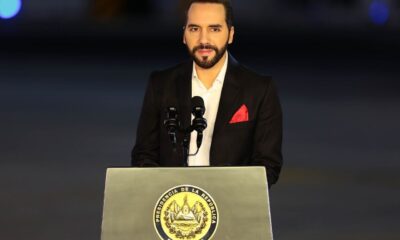
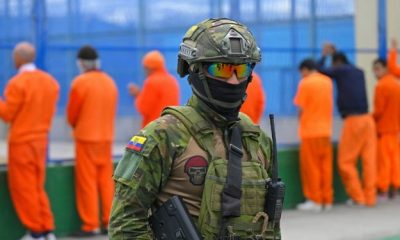
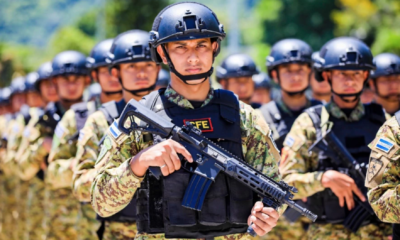
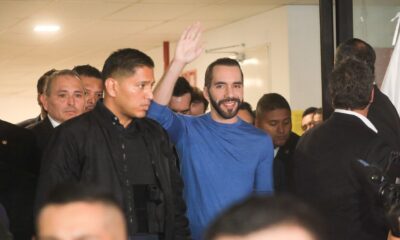
President Nayib Bukele’s successful security strategy, through the Territorial Control Plan (PCT), has been implemented for four years with irrefutable results and benefits for the honest population that for many years was under the stalking of terrorist structures.
The sustained drop in homicides, the drastic reduction of extortions, disappearances, forced displacements, robberies and other high impact crimes are proof of the results of the security plan implemented by the Salvadoran president since June 20 when he launched Phase I of the PCT called Preparation, in which police presence in the communities was increased with patrols in areas of high crime incidence.
On the occasion of the four-year anniversary, the Minister of Justice and Public Security, Gustavo Villatoro, stated that what seemed impossible has become a reality in El Salvador. “As President Nayib Bukele has already said, we regained control of Salvadoran territory, our country left the list of the most dangerous countries in the world, we have returned true freedom, hope, peace and joy to millions of Salvadorans”.
He added that in four years of implementation of the PCT they have achieved unprecedented results and that is why they continue to work for the honest population.









With the implementation of the first stage of the plan, the decrease in high incidence crimes was evident and by July 2, 2019 the authorities implemented Phase 2 known as Opportunities with which 12 CUBOs have been built in which opportunities are generated for young women and the social fabric is rebuilt.
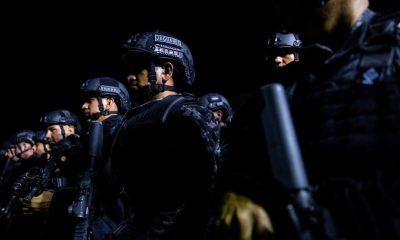
On July 30 of the same year, Phase 3, known as Modernization, was launched, which consists of dignifying the police career, improving the equipment of the PNC and providing the Armed Forces with new equipment. On July 19, 2021, Phase 4, known as Incursion, was implemented, in which police and military teams entered the territories to eradicate criminal groups; there was also the incorporation of new members in the PNC and FAES.
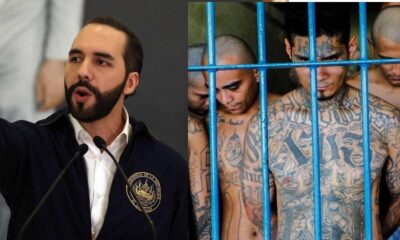
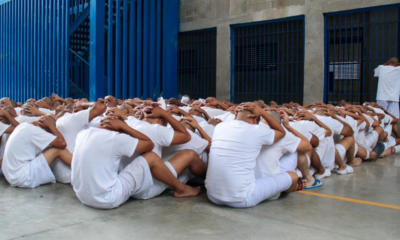
To reinforce the PCT and to eradicate the different terrorist organizations, the Head of State and his Security Cabinet implemented the Exception Regime, which further reduced the homicide rate and other illegal activities. Between March 27, 2022 and June 20 of this year, more than 70,000 gang members were arrested and 380 days without homicides were recorded.
Phase 5 called Extraction was launched on November 23, 2022 and military and police fences were established for a total recovery of the territories, order was restored and vulnerable communities were reactivated.



























































Central America
Nicaraguan media publishes photos of detained Indigenous leader amid calls for proof of life
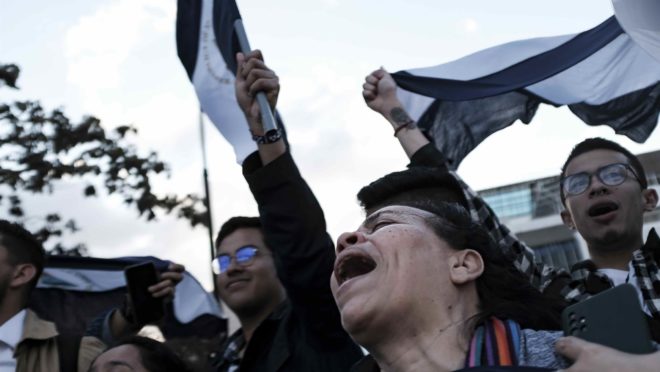
A pro-government media outlet in Nicaragua published on Sunday a series of photographs showing Indigenous leader Steadman Fagoth Müller during a visit from his wife at the National Penitentiary System, days after an opposition alliance demanded proof of life, citing concerns that he could be a political prisoner subjected to enforced disappearance.
The images were shared by the outlet El 19 on its website, with a caption stating that the photos were taken during a scheduled prison visit on Friday, June 12, between Fagoth and his wife, Dr. Stefany Martínez.
The publication includes eleven photographs in which the Indigenous leader and former presidential adviser on Indigenous affairs appears seated with his wife in a room where two meals are served on a table. The images also carry a watermark indicating the date 12.06.2026 and the time 11:13.
The release of the photos comes after the opposition coalition Unidad Nacional Azul y Blanco called on the government of co-presidents Daniel Ortega and Rosario Murillo to provide proof of life for at least nine political prisoners allegedly held in conditions of enforced disappearance, including Fagoth.
The request followed the recent death in state custody of Indigenous leader Brooklyn Rivera Brayan, aged 73, which was reported by the Ministry of Health on May 31. Rivera had been arrested in September 2023.
Fagoth, a former presidential adviser on Indigenous policy, was detained by Nicaraguan police in September 2024 on allegations of attempting to “remove organic weapons” from the army.
His arrest came a day after local media circulated statements in which he criticized environmental damage caused by the arrival of armed non-Indigenous settlers in the Bosawás Reserve, a remote area near the Honduras border inhabited by Miskito and Mayangna communities.
The publication of the photographs has intensified scrutiny over the condition and legal status of detained opposition-linked figures in Nicaragua.
Central America
U.S. Authorities Accuse Guatemalan Nationals of Using False Information to Sponsor Migrant Minors
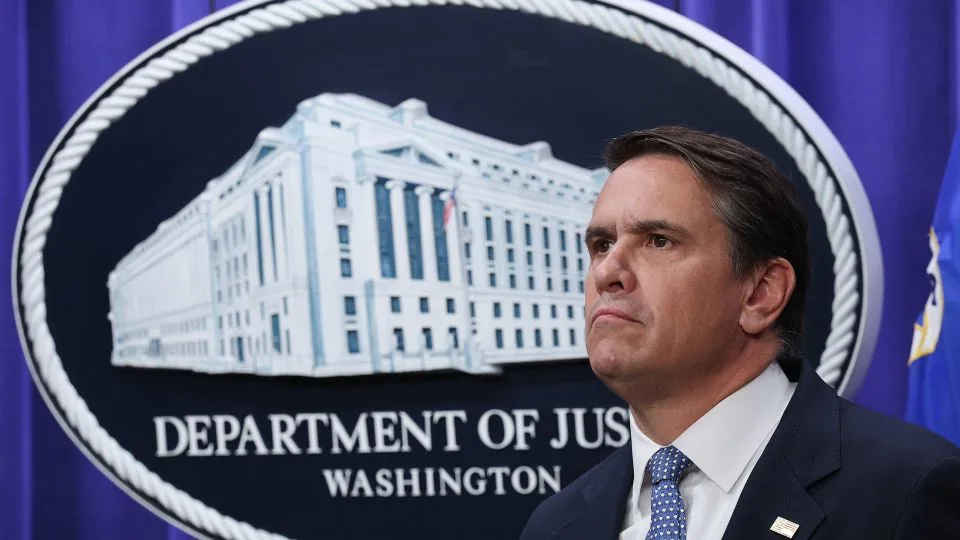
Senior officials from the U.S. Department of Justice and the Department of Homeland Security announced Thursday criminal charges against three Guatemalan citizens accused of using false information to sponsor migrant children who crossed the U.S.-Mexico border without a parent or guardian.
According to an indictment filed in Ohio, Maritza Cahuec Coc allegedly submitted at least 12 sponsorship applications, several of which were filed under aliases or contained materially false statements intended to secure custody of the minors.
Under U.S. procedures, unaccompanied migrant children apprehended at the southern border are placed in the custody of the Department of Health and Human Services, which is responsible for their care until they can be released to a qualified sponsor, such as a parent or relative living in the United States.
Prosecutors allege that Cahuec Coc, who reportedly entered the United States illegally in 2018, received payments between late 2020 and 2023 for helping bring 12 migrant minors into the country. Authorities claim she submitted fraudulent documents and misleading information to obtain approval for the sponsorship requests.
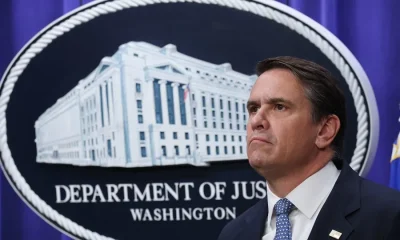
The case was announced during a joint press conference led by Acting Deputy Attorney General Todd Blanche and Homeland Security Secretary Markwayne Mullin. However, officials provided limited details about the investigation and instead focused much of their remarks on criticizing immigration policies implemented under the previous administration.
Republican lawmakers and Trump administration officials have frequently pointed to the increase in unaccompanied migrant children arriving at the U.S.-Mexico border during President Joe Biden’s term, arguing that the government failed to adequately oversee their care and placement.
During Thursday’s briefing, A. Tysen Duva, Assistant Attorney General for the Justice Department’s Criminal Division, alleged that Cahuec Coc used the identities of other individuals and falsely claimed family relationships in order to obtain custody of the children.
“Maritza submitted sponsorship applications using other people’s identities and falsely represented that the minors were the children of close relatives in order to secure their release,” Duva said.
The case remains under investigation, and federal authorities have not yet disclosed additional information regarding the other two Guatemalan nationals charged in connection with the alleged scheme.
Central America
Bukele Tops Latin America’s Presidential Approval Ranking in June, Survey Finds
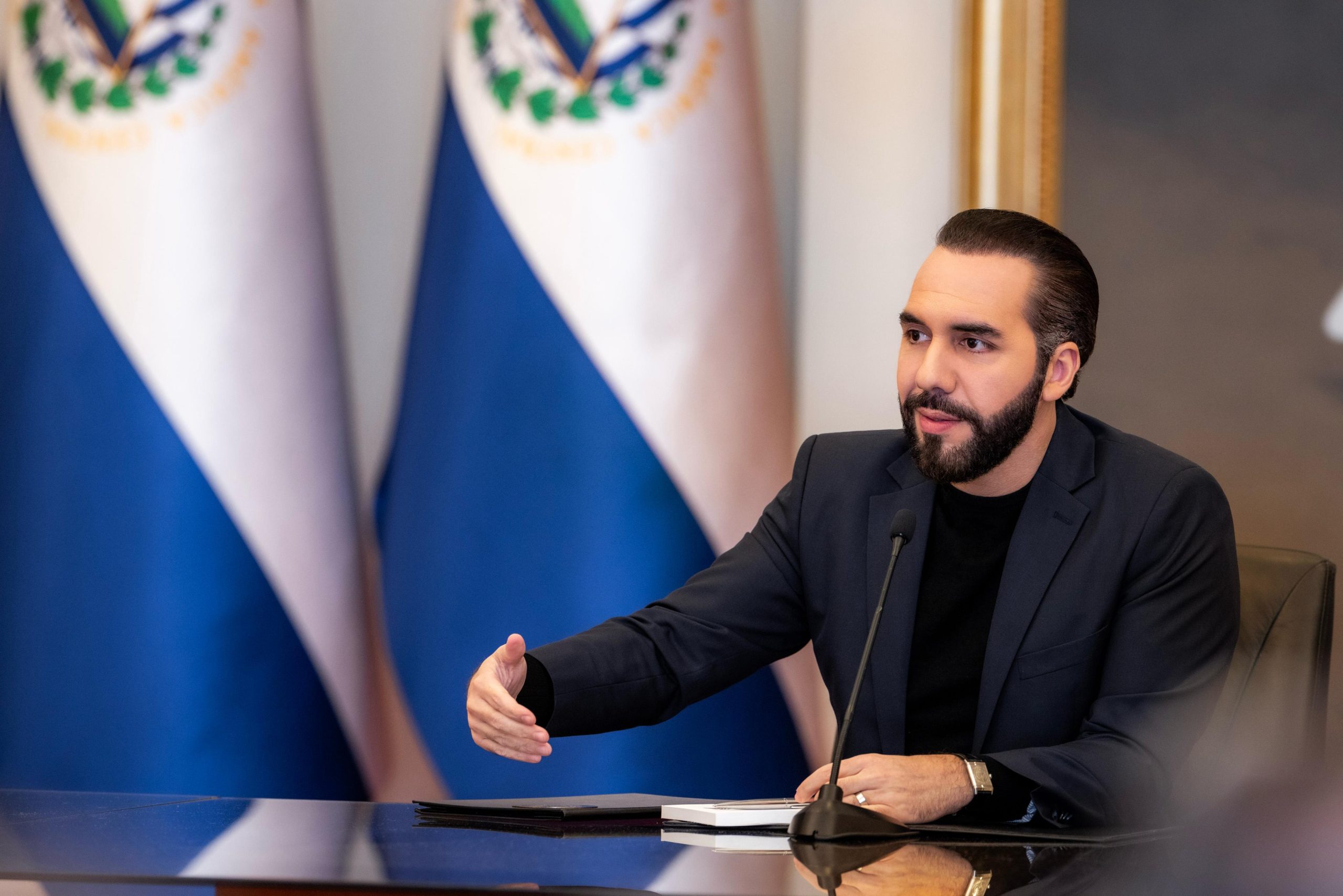
President Nayib Bukele of El Salvador, President Claudia Sheinbaum of Mexico, and President Laura Fernández of Costa Rica are the three highest-rated leaders in Latin America, according to the latest June 2026 presidential approval survey conducted by CB Global Data. The study places Peru’s interim president, José María Balcázar, at the bottom of the regional ranking.
Bukele leads the list with a 69.1% approval rating and a 27.6% disapproval rate, improving on the 67.5% positive image recorded in May. The Salvadoran president has maintained a state of emergency since March 2022 as the cornerstone of his anti-gang security strategy, a policy that continues to shape public perceptions of his administration.
Sheinbaum, Mexico’s first female president, ranks second with a 65.5% approval rating and 31% disapproval. Although she remains among the region’s most popular leaders, her support declined from the 67.8% approval registered in May.
Completing the top three is Costa Rican President Laura Fernández, who recently assumed office and now records a 56.1% favorable rating against 37.1% negative opinion. Her approval has risen significantly from the 52.7% reported a month earlier.
At the opposite end of the ranking is Peru’s interim president, José María Balcázar, who received only 18.2% positive approval while 71.7% of respondents expressed a negative view of his administration. Despite remaining last in the survey, he showed a slight improvement compared to previous measurements.
Second from the bottom is Venezuela’s acting president, Delcy Rodríguez, with a 29.5% approval rating and 64.8% disapproval. Nevertheless, she registered the largest increase in positive perception among all leaders surveyed, gaining more than five percentage points compared with the previous month.
Guatemalan President Bernardo Arévalo rounds out the group of lowest-rated leaders, posting a 33.1% approval rating against 63% disapproval. His support level declined from 36.9% in May.
Just outside the top three is President Luis Abinader of the Dominican Republic, who achieved a 54.8% approval rating and 42.2% disapproval, despite a decline from the 60.2% support recorded a month earlier.
Paraguayan President Santiago Peña follows with a 48.3% favorable rating and 48.2% disapproval, improving slightly compared with May. Meanwhile, Brazilian President Luiz Inácio Lula da Silva ranks sixth with a 47.6% approval rating and 48.1% disapproval, down from 49.5% the previous month. Lula is expected to seek another term in Brazil’s presidential election scheduled for October 2026.
Bolivian President Rodrigo Paz fell to seventh place after experiencing the largest decline in the survey. His approval rating dropped to 46.4%, while disapproval climbed to 52.3%, representing a loss of more than nine percentage points compared with May.
The CB Global Data survey, conducted across 18 Latin American countries, reflects shifting public sentiment toward regional leaders and highlights the growing influence of Central American presidents among the continent’s most highly rated governments.


Nicaraguan media publishes photos of detained Indigenous leader amid calls for proof of life

Brazil helicopter crash in Rio de Janeiro kills six, including pilots and international figures

Mexico and U.S. Launch New Bilateral Security Group to Combat Fentanyl and Organized Crime
Tec de Monterrey honors one of its students for his contribution to nanotechnology in medicine

Defense Minister commends salvadoran soldier for Central American Cross Country victory

Extension of the state of emergency approved in southern Chile
-

 Sin categoría3 days ago
Energy chief says U.S. will restore Gulf oil shipments and refill strategic reserves
-
 International3 days ago
‘El Chapo’ Guzmán again asks Mexican president to seek his return from U.S. prison
-
 International4 days ago
U.S. Halts Military Action Against Iran Amid Diplomatic Breakthrough
-
 Central America4 hours ago
Nicaraguan media publishes photos of detained Indigenous leader amid calls for proof of life
-
 International4 days ago
Iván Cepeda Open to Revising Colombia’s Peace Policy Ahead of Runoff Election
-
 International2 days ago
Mexico and U.S. Launch New Bilateral Security Group to Combat Fentanyl and Organized Crime
-
 Central America4 days ago
U.S. Authorities Accuse Guatemalan Nationals of Using False Information to Sponsor Migrant Minors
-
 International4 hours ago
Brazil helicopter crash in Rio de Janeiro kills six, including pilots and international figures