
International
Rosangela da Silva hopes to be a different kind of Brazilian first lady
| By AFP | Eugenia Logiuratto |
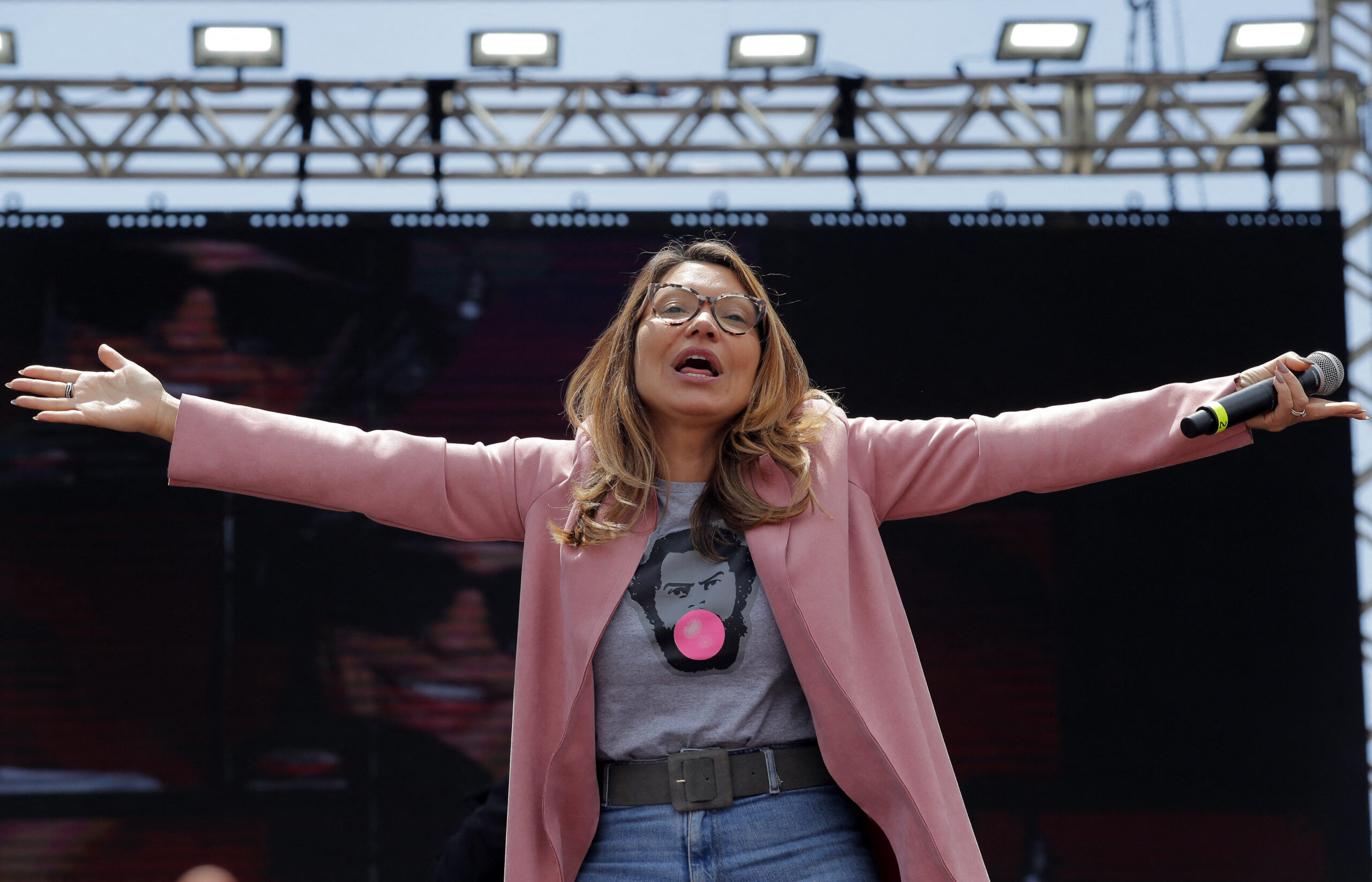
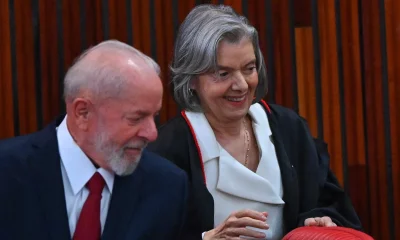
Jumping for joy in a bright red dress, then tenderly holding her husband’s victory speech as he addressed a sea of euphoric supporters, Brazil’s first lady-elect, Rosangela da Silva, looked very much in love.
Her husband, Luiz Inacio Lula da Silva, had just won Sunday’s presidential election in Brazil, capping a remarkable political comeback for the leftist icon — and his new wife was elated at his side.
Da Silva, a 56-year-old sociologist and left-wing activist, married Lula, a twice-widowed cancer survivor who is 21 years her senior, in May.
Despite being stuck in the slog of the ex-president’s brutal, divisive election campaign against far-right incumbent Jair Bolsonaro, the newlyweds have appeared to be on an extended honeymoon ever since — capped by Lula’s election victory.











Lula credits Da Silva, widely known by her nickname, “Janja,” with giving him new life after the 2017 death of his wife of 30 years, Marisa Leticia, with whom he has four children.
“I am as in love as if I were 20 years old,” the former — and now future — president says of his wife, a long-time member of the Workers’ Party.
Their age difference seems to have breathed new energy into Lula, whose first wife, Maria de Lourdes, died in 1971.
“When you lose your wife, and you think, well, my life has no more meaning. Then suddenly, this person appears who makes you feel like you want to live again,” he told Time magazine in an interview published just before he remarried.
The septuagenarian politician often links his political rebirth to his late-life love affair.
“I’m here, standing strong, in love again, crazy about my wife,” he told the crowd Sunday. “She’s the one who will give me strength to confront all obstacles.”
Earlier, Da Silva had celebrated the news of his victory by posting a picture of them on Twitter.
“I love you,” she wrote.
A kiss outside prison
Da Silva was born in the south of Brazil and earned a sociology degree from the university in Curitiba, capital of Parana state.
In 1983 she joined the Workers’ Party, which Lula had co-founded two years earlier.
Brazilian media reports say the two have known each other for decades, but Lula’s press people say their romance began only in late 2017 at an event with left-leaning artists.
But the love affair between this smiling woman with long chestnut hair and the aging lion of the Brazilian left became widely known only in May 2019.
At the time, Lula was in prison — jailed on controversial corruption charges that were later annulled by the Supreme Court.
“Lula is in love, and the first thing he wants to do when he gets out of prison is get married,” said one of his lawyers after a visit with him.
In the end, the two wed only this year. It was a discreet ceremony — by Lula’s standards. The 200 guests included celebrities like singer Gilberto Gil, who had served as culture minister under Lula.
While Lula was in prison, Janja would pen affectionate tweets about him. “All I want to do is hug you and cuddle with you non-stop,” she wrote on his 74th birthday.
In November 2019, shortly after Lula’s release from prison, they shared a kiss before a crowd gathered outside the prison in Curitiba, where Lula had spent 18 months locked up.
– ‘New meaning’ –
While she has been active in Lula’s campaign, on stage and on social media, Da Silva is very private with her personal life. The magazine Veja says she was previously married for more than 10 years and has no children.
Now, as of January 1, she will be Brazil’s first lady.
“I want to give new meaning to the role of first lady, by focusing on topics that are priorities for women, such as food insecurity or domestic violence,” she said in August.
She was one of the stars of his campaign, playing a leading role from the day it launched on May 7 — right up to his victory speech on Sunday night.













































International
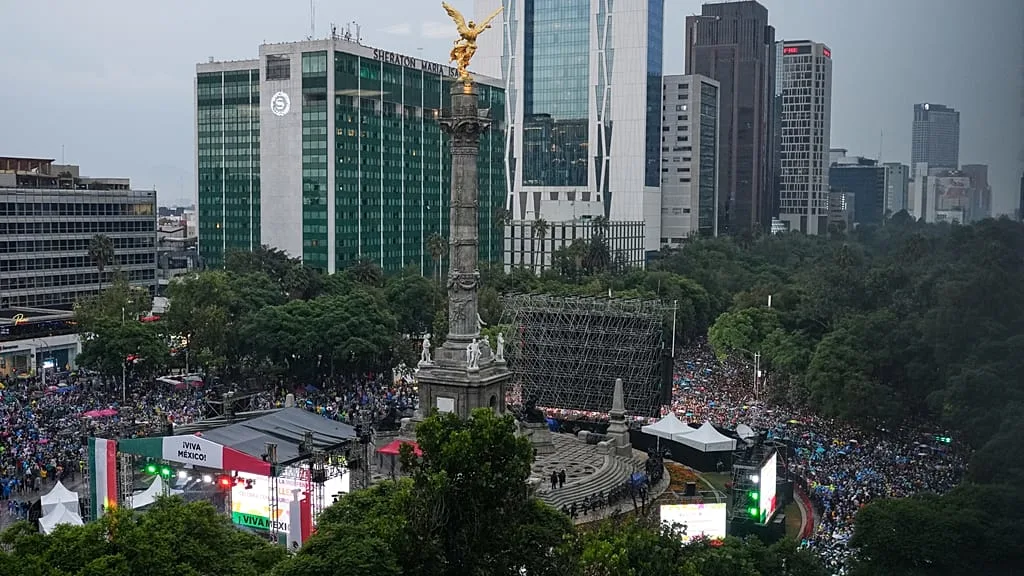
Three Die During World Cup Celebrations in Mexico City After Mexico’s Victory
International
Families Sue Nicolás Maduro in U.S. Over Alleged Extrajudicial Killings
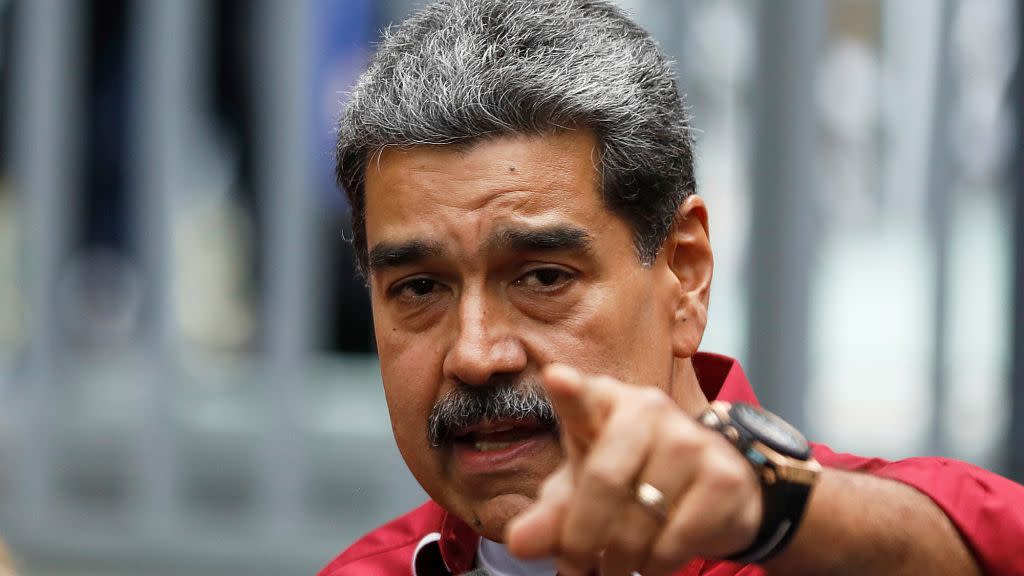
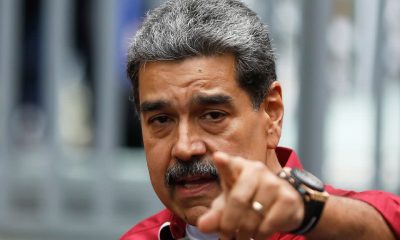
The families of five young Venezuelan men have filed a 44-page civil lawsuit in a U.S. federal court, accusing former Venezuelan President Nicolás Maduro of ordering extrajudicial executions carried out by the country’s former Special Action Forces (FAES) between 2017 and 2020.
The lawsuit, filed Tuesday in the U.S. District Court for the Eastern District of New York in Brooklyn, alleges that the victims were among thousands of people killed under Maduro’s administration by security units, including the FAES, which were dissolved in 2021 following widespread allegations of human rights abuses, including criticism from the United Nations.
Maduro is currently being held in a New York detention facility awaiting trial on U.S. drug trafficking charges after he was removed from power during a U.S. military operation in Venezuela in January.
The complaint argues that the killings followed a well-documented pattern of extrajudicial executions allegedly carried out during Maduro’s presidency, which lasted from 2013 to 2026. Throughout his time in office, Maduro faced repeated accusations from international organizations of using state repression to maintain power.
According to the lawsuit, FAES officers arrived at the victims’ neighborhoods before dawn, dressed entirely in black and wearing face coverings. The agents allegedly separated the men from their families before fatally shooting them.
The complaint further alleges that authorities later fabricated official reports claiming the victims had “resisted arrest” in an effort to justify the killings.
“Maduro used the FAES as a political instrument and a mechanism of social control to violently suppress dissent, terrorize low-income communities, and eliminate political opposition,” the lawsuit states.
It also describes the FAES as being “widely regarded as a death squad or extermination group.”
The plaintiffs argue that Venezuela’s judicial system has failed to provide accountability for the killings, preventing the victims’ families from obtaining justice.
For security reasons, the identities of the families remain confidential. They are seeking financial compensation from Maduro under the U.S. Torture Victim Protection Act.
According to The New York Times, Maduro is expected to argue that he is entitled to head-of-state immunity in the civil proceedings.
In the separate criminal case pending against him in the United States, in which he is charged alongside his wife, Cilia Flores, Maduro has described himself as a “prisoner of war.”
He has pleaded not guilty to multiple charges, including conspiracy to import cocaine into the United States and weapons-related offenses.
International
Salvadoran National Arrested in New Jersey with Over 70 Machine Gun Conversion Devices
The U.S. Department of Justice announced the arrest of 21-year-old Salvadoran national Erick Márquez Cruz after authorities allegedly discovered more than 70 machine gun conversion devices and other firearm-related components during a search of his residence in North Bergen, New Jersey.
According to the Justice Department, law enforcement officers executed a search warrant on June 25 at Cruz’s home, where they recovered a 3D printer that was allegedly being used to manufacture firearm components. Investigators also seized 17 3D-printed firearm frames, magazines, and more than 70 machine gun conversion devices (MCDs).
Federal authorities explained that the conversion devices, which are classified as machine guns under U.S. law, are designed to convert semiautomatic firearms into fully automatic weapons capable of firing multiple rounds with a single pull of the trigger.
Cruz has been charged with unlawful possession of a machine gun. If convicted, he faces a maximum sentence of 10 years in federal prison and a fine of up to $250,000, or twice the gross financial gain resulting from the offense, whichever is greater.


Three Die During World Cup Celebrations in Mexico City After Mexico’s Victory

Families Sue Nicolás Maduro in U.S. Over Alleged Extrajudicial Killings

Salvadoran National Arrested in New Jersey with Over 70 Machine Gun Conversion Devices
Tec de Monterrey honors one of its students for his contribution to nanotechnology in medicine

Defense Minister commends salvadoran soldier for Central American Cross Country victory

Extension of the state of emergency approved in southern Chile
-
 International4 days ago
Looting Spreads in Venezuela’s Hardest-Hit Areas After Deadly Earthquakes
-
 International2 days ago
Salvadoran National Arrested in New Jersey with Over 70 Machine Gun Conversion Devices
-
 International3 days ago
Venezuela Earthquake Death Toll Surpasses 1,700 as Search for Survivors Continues
-
 International5 days ago
UN warns Venezuela earthquakes could affect up to 6.76 million people
-
 International3 days ago
Venezuela Earthquakes Spark Diplomatic Thaw With Former Critics
-
 International13 hours ago
Families Sue Nicolás Maduro in U.S. Over Alleged Extrajudicial Killings
-
 International12 hours ago
Three Die During World Cup Celebrations in Mexico City After Mexico’s Victory