
Central America
Washington Imposes Visa Ban on La Modelo Director Amid Crackdown in Nicaragua
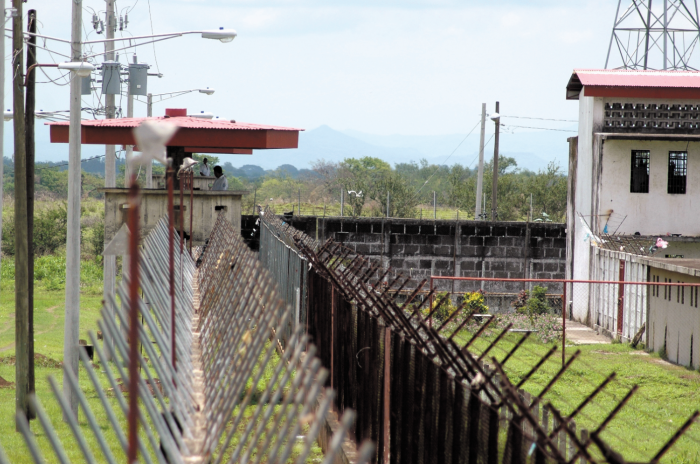
The United States government announced Wednesday that it has imposed visa restrictions on Roberto Clemente Guevara Gómez, director of Nicaragua’s largest prison, La Modelo, for his involvement in actions that violate human rights.
In a statement, U.S. Secretary of State Marco Rubio said the measure is intended to promote accountability for abuses committed under what he described as the “Murillo-Ortega dictatorship” against political prisoners.
Rubio specified that Guevara Gómez was designated for participating in “a gross violation of the human rights of a political prisoner.” The sanction was issued under the 2024 Department of State, Foreign Operations, and Related Programs Appropriations Act, which bars the sanctioned individual — and potentially immediate family members — from entering the United States.
“United States demands the immediate and unconditional release of all political prisoners unjustly detained in Nicaragua,” the statement added.
Ongoing tensions between Washington and Managua
Washington rejected Nicaragua’s November 2021 elections, in which President Daniel Ortega and his wife, now co-president Rosario Murillo, were reelected while seven potential challengers were in prison.









Relations between the two countries remain tense amid expanding U.S. sanctions and increasing diplomatic pressure on the Nicaraguan government.
On January 10, marking Ortega’s 19 years in power, Nicaragua released “dozens of detainees,” including political prisoners. The move came one day after the U.S. Embassy in Managua stated that “more than 60 people” remain “unjustly detained or disappeared” in the Central American nation.
U.S. officials have continued to push for the “unconditional release” of political prisoners rather than selective or temporary releases.
Ortega, 80, governs alongside Murillo with consolidated authority, having strengthened executive power through constitutional reforms and security measures, while the opposition has been weakened by imprisonment, exile, and the revocation of citizenship and property rights.






Central America
Guatemala extends state of prevention and expands it to new regions
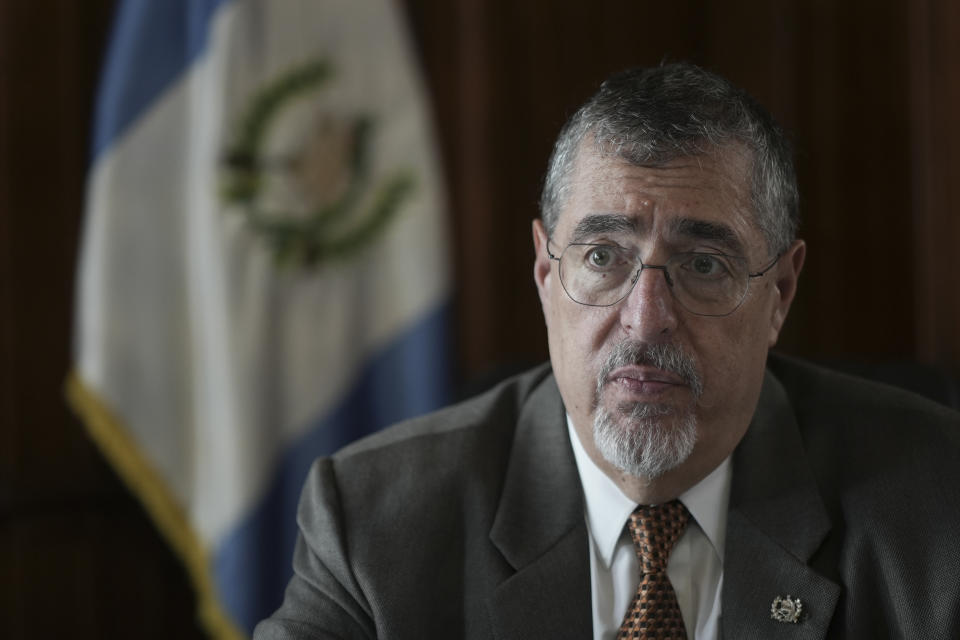
The president of Guatemala, Bernardo Arévalo, announced on Monday that his government will extend the state of prevention for 15 more days in six departments and expand the measure to two additional regions as part of efforts to combat organized crime.
Speaking at a press conference, Arévalo said the decision was approved by the Cabinet and formalized through a decree. The measure will remain in place in the departments of Guatemala, Escuintla, Izabal, Petén, San Marcos, and Huehuetenango, and will now also apply to Sacatepéquez and Quetzaltenango.
The president emphasized that the strategy has contributed to reducing homicide rates in the country and will remain a key component of his administration’s security policy.
Defense Minister Henry Sáenz said the measures are “essential to strengthen the government’s presence in areas where security gaps existed” and to weaken organized criminal groups.
Under the state of prevention, the Policía Nacional Civil, supported by the military, is granted broader powers to confront criminal organizations, particularly gangs and drug trafficking networks. The measure also restricts public demonstrations, which can be dispersed by security forces.
Guatemala has been under heightened security measures since January 18, following a coordinated attack by gangs that left 11 police officers dead, prompting the government to reinforce its response to organized crime.
Central America
Costa Rica urges China to halt actions against Panama-flagged vessels
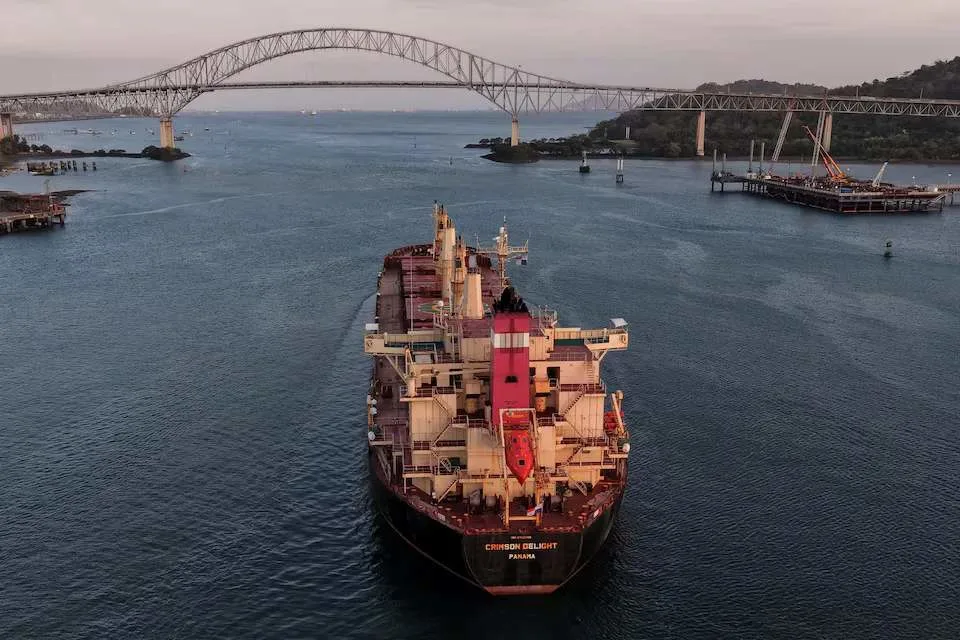
The government of Costa Rica on Saturday called on China to halt retaliatory actions against vessels flying the Panamaflag, amid escalating tensions over control of two strategic ports linked to the Panama Canal.
In a statement shared on social media, Costa Rica’s Foreign Ministry warned that the situation “puts global trade at risk” and expressed its “deep concern and strongest condemnation” over what it described as “arbitrary and unjustified delays and inspections in Chinese ports.”
The Costa Rican government urged “full respect for international law, particularly the United Nations Convention on the Law of the Sea,” while reaffirming its “unconditional support and solidarity” with Panama.
San José’s position aligns with growing international criticism from countries including Honduras, Peru, Paraguay, Israeland Ukraine.
Paraguayan authorities described the detentions as “unacceptable” and pointed to what they called “undue pressure” on the Panamanian government.
Central America
El Salvador sees 45% surge in international tourists during holiday period

Tourism in El Salvador continues to grow during the holiday period, with a 45% increase in international arrivals compared to 2025, according to data from the Ministry of Tourism.
Tourism Minister Morena Valdez reported that the country received around 48,000 foreign visitors between Saturday, March 28 and Sunday, March 29, surpassing the 33,000 recorded during the same period last year.
International visitor behavior remains consistent, with most travelers arriving at the El Salvador International Airport and heading directly to coastal destinations, particularly Surf City and the beaches of La Libertad.
“Sun and beach tourism accounts for 80% of global travel demand. Surf City, with all the positioning work that has been done, is where visitors go, especially because it is close to the airport,” Valdez said in an interview.
However, tourism activity is not limited to La Libertad. Other destinations such as Costa del Sol, Surf City 2, as well as beaches in the western and eastern regions of the country, are also experiencing high visitor traffic.

Guatemala extends state of prevention and expands it to new regions

WHO worker killed as Israeli forces fire on Gaza medical convoy

NASA’s Orion sets record as farthest crewed mission from Earth
Tec de Monterrey honors one of its students for his contribution to nanotechnology in medicine

Defense Minister commends salvadoran soldier for Central American Cross Country victory

Extension of the state of emergency approved in southern Chile
-
 International3 days ago
Devotees in Philippines mark Holy Week with extreme rituals despite rising costs
-
 International3 days ago
Le pape Léon XIV appelle à relancer le dialogue pour une paix au Moyen-Orient
-
 Internacionales3 days ago
Ecuador extends state of emergency amid escalating violence and crime crackdown
-
 International3 days ago
Mexico leads global cases of enforced disappearances, UN report finds
-

 Central America1 day ago
Costa Rica urges China to halt actions against Panama-flagged vessels
-
 International1 day ago
Petro accuses top guerrilla leader of bribing officers to evade military strikes
-
 International8 minutes ago
NASA’s Orion sets record as farthest crewed mission from Earth
-
 International5 minutes ago
WHO worker killed as Israeli forces fire on Gaza medical convoy
-
 Central America3 minutes ago
Guatemala extends state of prevention and expands it to new regions