
International
Trump threatens to impose tariffs on governments that apply digital fees to US companies
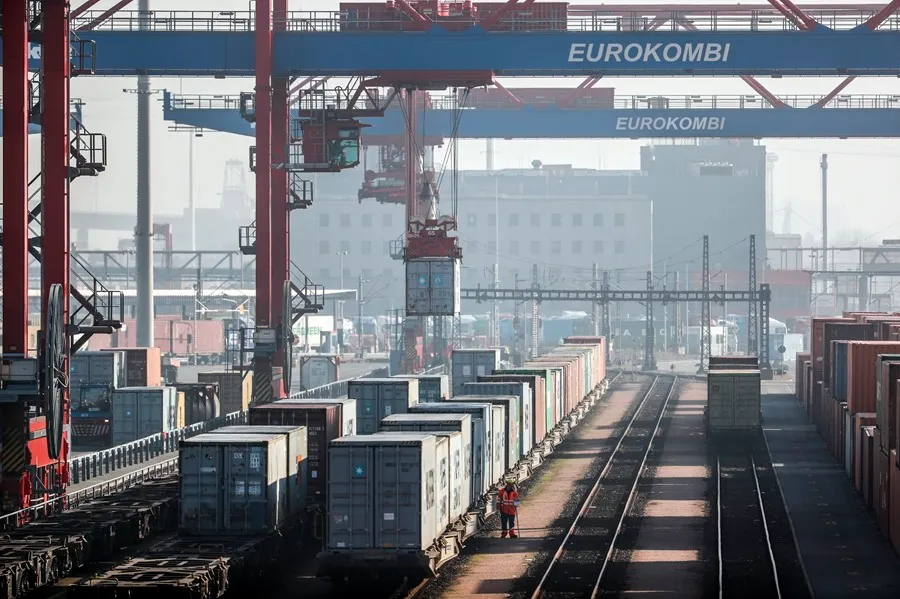
The President of the United States, Donald Trump, signed an executive order on Friday that threatens to impose tariffs on foreign governments that apply digital fees to US companies, including Spain, the United Kingdom and France.
The order states that “foreign governments have exercised a growing extraterritorial authority over US companies, particularly in the technology sector,” and directly cites the taxes on digital services that “several business partners” apply since 2019.
According to the text, the Trump Administration will impose tariffs on those governments that use taxes or regulations that are “discriminatory, disproportionate or designed to transfer significant funds or intellectual property from US companies to that government or its chosen domestic entities.”
Trump delegates to the US Trade Representative the possibility of “renewing investigations” on the so-called technology fees of Spain, the United Kingdom, France, Italy, Austria and Turkey, imposed in the first term of the Republican, and if so, “take all appropriate actions”, which would include the imposition of tariffs.
“US companies will no longer sustain failed foreign economies through fines and extortionational taxes,” says the White House document, which provides for a “process” for them to “report” these “disproportionate” measures to the Commercial Representative.









He also instructs him to investigate together with the Secretaries of the Treasury and Commerce whether in the European Union or the United Kingdom the use of products or services of US companies is “required or encouraged” to “undermine freedom of expression”, political activity or, “otherwise, moderate content”.
It also suggests to the Representative, among other things, to hold “a panel” with its partners of the T-MEC (Canada and Mexico) on the tax on digital services in Canada, and identify ways to achieve a “permanent moratorium on customs duties on electronic transmissions”.
The order does not mention any specific company, but mainly affects large technology companies such as Apple, Google (subsidiary of Alphabet), Meta and Amazon, which have precisely starred in a resounded approach to President Trump since he won the elections in November.
In his first term (2017-2021), Trump ordered to investigate the digital fees to his companies abroad and threatened to apply tariffs to the six countries indicated today; taxes were imposed in the government of his successor, the Democrat Joe Biden, and subsequently suspended.
Trump signed another executive order aimed at restricting access to US technology, especially in the field of artificial intelligence, what he calls “foreign adversaries”, including Cuba, Venezuela, Iran, Russia and China.
The executive order does not specify in detail what measures will be taken to restrict the access of these “foreign adversaries” to US technology.
Under the label of “foreign adversaries”, the order identifies China, Hong Kong, Macau, Cuba, Iran, North Korea, Russia and the “regime of Venezuelan politician Nicolás Maduro”, according to the text.
Trump justifies his decision with the argument that “economic security is national security” and maintains that the country must protect its sensitive infrastructures and technologies, from artificial intelligence to semiconductors and advances in biotechnology.
The executive order focuses especially on China, pointing out that companies linked to Beijing have used investments in the US to access key technologies and that the Chinese government is taking advantage of US technology to modernize its military apparatus.
Since his return to the White House on January 20, Trump has announced several restrictions on trade with the aim of balancing the trade balance and pressuring countries such as Mexico and Canada to make concessions on immigration and efforts against drug trafficking.
It has imposed a 10% tariff on China, which is in addition to the rates already applied during its first term (2017-2021).
Trump’s new restrictions come after his predecessor, Joe Biden, took steps to limit exports of semiconductors and artificial intelligence technology to China, which led Beijing to respond with export controls on graphite, a key material for electric vehicle batteries.






International
White House says Cuba policy unchanged despite sanctioned fuel shipment
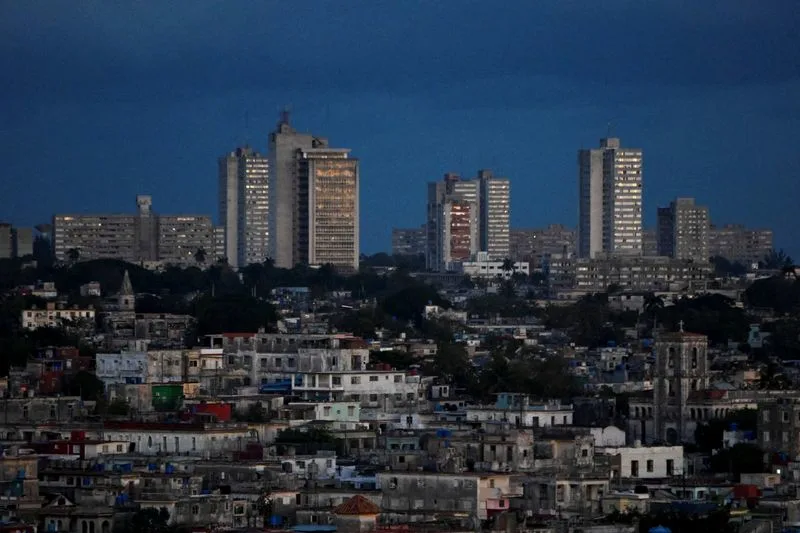
The White House said Monday that it has not changed its policy toward Cuba, despite allowing a sanctioned Russian oil tanker to deliver fuel to the island on humanitarian grounds.
U.S. officials emphasized that the decision was made as an exception and does not signal a broader shift in policy.
The administration added that similar decisions would be evaluated on a case-by-case basis, depending on humanitarian considerations.
The clarification comes amid ongoing restrictions related to U.S. sanctions policy, which continue to limit trade and financial flows involving Cuba.
International
Spain to grant citizenship to Venezuelan opposition leader Leopoldo López
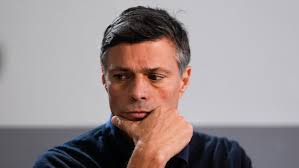
The Spanish government is expected to grant citizenship this Tuesday to Venezuelan opposition leader Leopoldo Lópezthrough an extraordinary procedure known as “carta de naturaleza.”
The decision will be approved by royal decree, an exceptional legal mechanism used in special cases that require expedited resolution due to specific circumstances.
López has been living in Madrid since 2020, after leaving Venezuela following a prolonged political and legal conflict with the government of Nicolás Maduro.
According to government sources, López currently does not have a valid Venezuelan passport and faces difficulties in having his nationality fully recognized in his home country.
As a result, he applied for Spanish citizenship via a fast-track process at the end of 2025, after previously attempting to obtain it through regular procedures.
The Spanish government justified the move based on López’s international relevance and foreign policy considerations.
López is the leader of the Voluntad Popular party and co-founder of the World Liberty Congress, an initiative launched in 2022 alongside figures such as Garry Kasparov and Masih Alinejad.
International
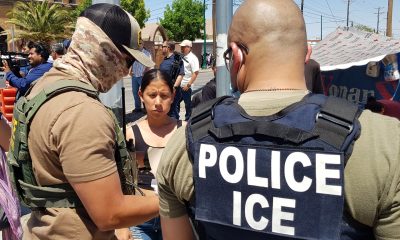
ICE to remain at airports amid DHS shutdown, Homan says
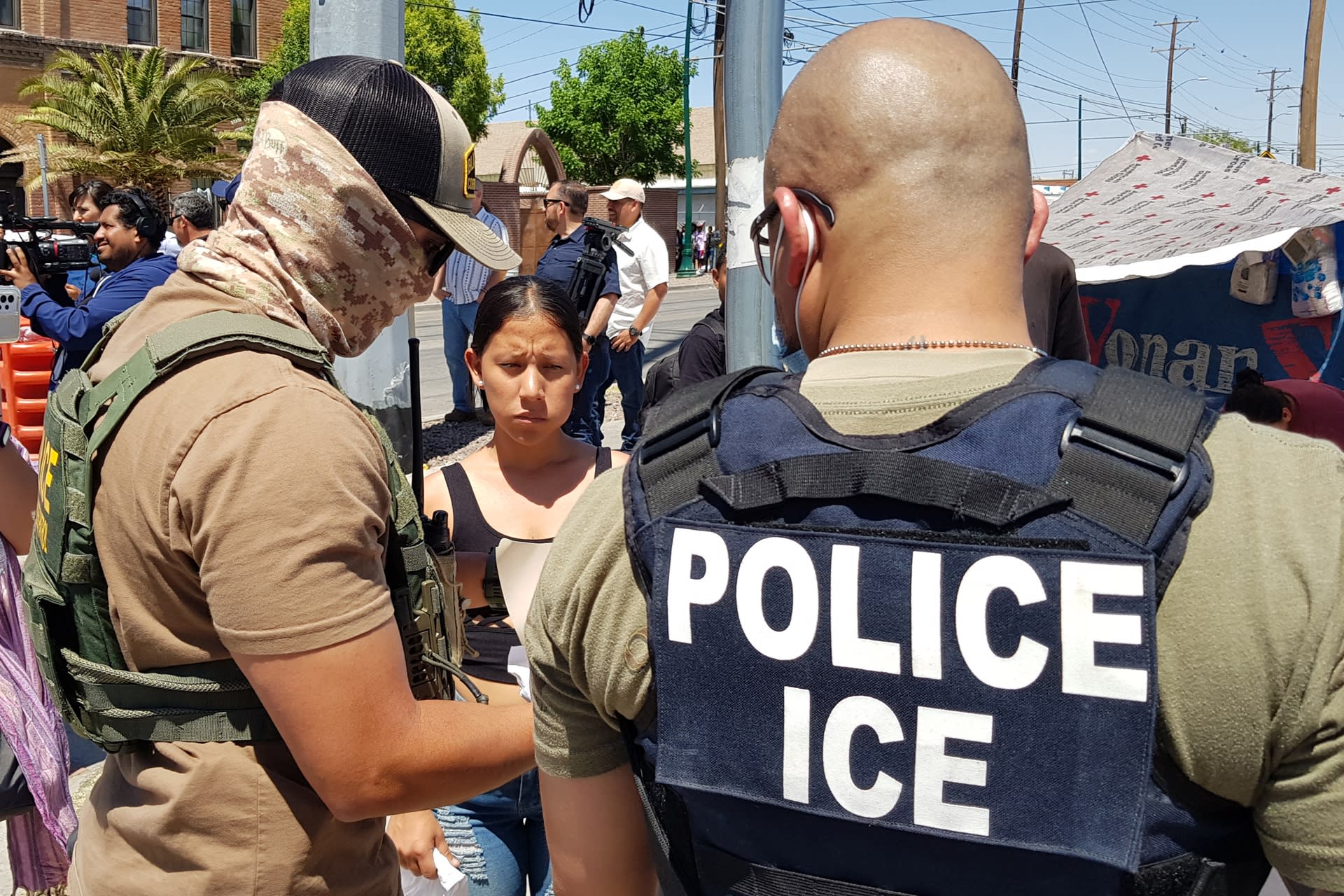
The U.S. “border czar,” Tom Homan, said Sunday that agents from U.S. Immigration and Customs Enforcement (ICE) will remain deployed at airports until operations return to “100% normal,” as the shutdown of the Department of Homeland Security (DHS) continues.
“We will maintain ICE presence until airports feel they are fully back to normal operations,” Homan said during an interview on Face the Nation on CBS.
Homan justified the deployment on security grounds, noting that the measure was ordered by President Donald Trumpamid widespread absenteeism among agents of the Transportation Security Administration, who have gone without pay for over six weeks due to the DHS shutdown.
According to acting TSA administrator Ha Nguyen McNeill, at least 460 TSA agents have resigned during the shutdown, while daily absenteeism has averaged 11%, exceeding 50% at some airports.
Homan warned that if TSA staffing levels do not recover after the shutdown, ICE agents will continue filling the gap. “ICE is there to support our TSA brothers and sisters. We will remain as long as needed to ensure airport security,” he said.
The DHS shutdown reached 44 days on Sunday, making it the longest government shutdown in U.S. history. The impasse stems from disagreements between Democrats and Republicans over ICE funding.
A recent bipartisan Senate proposal to fund DHS without including ICE failed after being blocked by House Republicans, who insist on full funding for the agency.
Amid the deadlock, Trump signed an executive order directing Homeland Security Secretary Markwayne Mullin to immediately pay TSA agents to address what he called an “emergency situation” and restore order at airports, with payments expected to begin Monday.

White House says Cuba policy unchanged despite sanctioned fuel shipment

Spain to grant citizenship to Venezuelan opposition leader Leopoldo López

ICE to remain at airports amid DHS shutdown, Homan says
Tec de Monterrey honors one of its students for his contribution to nanotechnology in medicine

Defense Minister commends salvadoran soldier for Central American Cross Country victory

Extension of the state of emergency approved in southern Chile
-
 International3 days ago
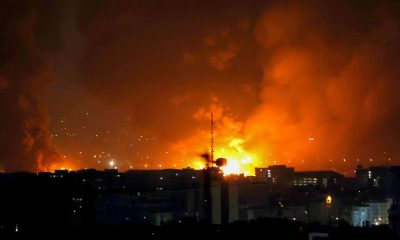
Over 300 U.S. Troops Wounded Since Start of Iran Conflict, CENTCOM Says
-
International2 days ago
Oil prices surge again as Middle East tensions persist
-
 International4 days ago
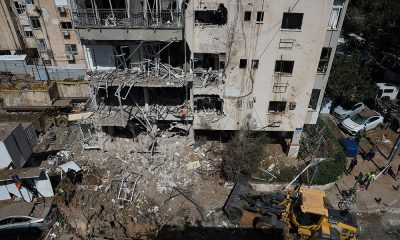
Iran rejects negotiations as tensions escalate with United States
-

 International3 days ago
Young Spanish Woman Receives Euthanasia After Legal Battle, Sparking Debate
-
 International4 days ago
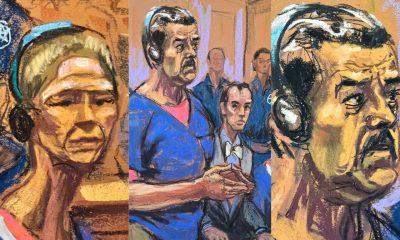
Maduro appears again in New York court amid drug trafficking charges
-
 International39 minutes ago
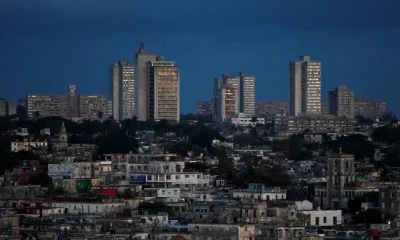
White House says Cuba policy unchanged despite sanctioned fuel shipment
-
 International1 day ago
ICE to remain at airports amid DHS shutdown, Homan says
-
International47 minutes ago
Spain to grant citizenship to Venezuelan opposition leader Leopoldo López