
International
About thirty deaths in Gaza in the last hours, 40,435 since the war began
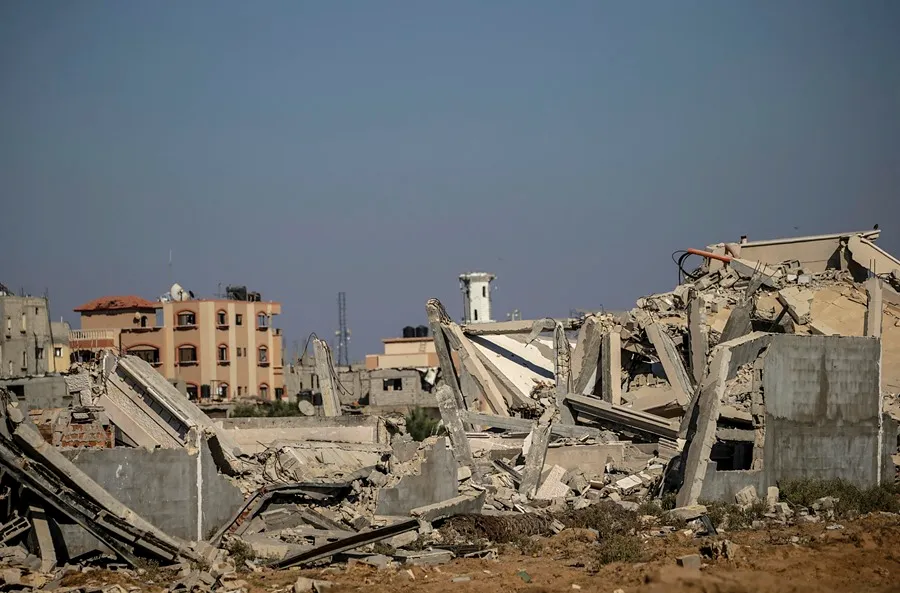
At least thirty people lost their lives in the Israeli attacks on the Gaza Strip of the last 24 hours, according to the Gaza Ministry of Health, controlled by Hamas, and there are 40,435 deaths since the start of the war on October 7.
In addition, 66 people were injured on the last day, bringing the total number of injuries since the beginning of the war to 93,534.
According to the spokesman for the Gaza Civil Defense, Mahmud Basal, at least seven people died on Monday in an attack on a port on the coast of Gaza City (north), where a group of citizens were fishing.
Another person was killed in an Israeli bombing of an apartment in the Gaza capital, and two other bodies were recovered in Deir al Balah (center) after a bombing of a residential neighborhood in the southeast of the city.
Meanwhile, the Israeli Army claimed on Monday that it had bombed a rocket launcher from Hamas in Jan Yunis (south) that they say had been used in an attack against central Israel, in addition to attacking several alleged militiamen throughout the enclave.









“After the attack on the shuttle, secondary explosions were identified, indicating the presence of additional rockets,” a military statement said today.
In addition, according to the text, dozens of militiamen were eliminated on the last day in Jan Yunis and Deir el Balah, where Israel has been forcing the civilian population to move since last week, with new evacuation orders, despite the danger they face due to the fighting.
The municipality of Deir el Balah confirmed the displacement of 250,000 Palestinians, while 25 shelters have been de-used, according to a statement.
The Islamist group Hamas, which governs in the Gaza Strip, today referred to the attacks and forced displacements in the town of the center of the enclave and said in a statement that they represent some of “the most unpleasant images of a genocide seen in the modern era.”
This Sunday, the humanitarian group Doctors Without Borders (MSF) announced that hundreds of patients have been forced to flee from the Al Aqsa hospital in Deir al Balah, adjacent to the area considered “humanitarian” by the Israeli Army and where troops have been fighting for two weeks.
“Israeli forces have issued an evacuation order in the vicinity of the Al Aqsa hospital, to which MSF provides support, in Deir al Balah, urging people to flee. An explosion about 250 meters away has unleashed panic and many have left the hospital,” the Paris-based organization said in a statement.
Of the 650 patients that the hospital had, only a hundred remain in it, of which seven are in intensive care units, the organization said, citing figures from the Gazaz Ministry of Health.
Meanwhile, the Israeli delegation headed by the heads of the Mosad and Shin Bet left Cairo on Sunday after a day of indirect negotiations that has not brought results or progress to reach a truce in the Gaza Strip, sources close to the talks told EFE.
Egypt, for its part, will only accept as a solution to achieve a truce in the Gaza Strip the complete exit of Israel from the border area – the so-called Philadelphia Corridor – although it would accept that it be done in two phases based on the fulfillment of the exchange of hostages and detainees between Israel and Hamas.
On the other hand, the border between Israel and Lebanon, which yesterday experienced a hard escalation of the exchange of fire between the Israeli Army and the Shiite group Hizbulah, woke up this Monday in relative calm.
Since dawn, anti-aircraft sirens have been activated only once on the Israeli side, due to a drone.
In the early morning of Sunday, Israel carried out intense bombings in southern Lebanon, with more than 100 fighter jets, after the Army identified that Hizbulah was preparing for an imminent large-scale attack that targeted the north and center of the country.
The pro-Iranian militia had promised this attack weeks ago, in revenge for the murder of its top military commander, Fuad Shukr, in an Israeli bombing on July 30 on the outskirts of Beirut.
Hizbulah said he launched more than 300 projectiles, while the Israeli Army detected about 210 rockets and 20 explosive drones that were mostly intercepted.
The day left four dead: three in southern Lebanon, one of which was a militiaman from the Shiite Amal group, and a soldier from the Israeli Navy, while the Shiite militia said yesterday that their retaliation “was completed and achieved.”
Despite the calm, Israel maintains the state of military emergency, approved yesterday by the Minister of Defense, Yoav Gallant, which allows the Israeli armed forces to instruct the population in case of new attacks.
On the other hand, Israeli troops abused, mistreated and humiliated Palestinian doctors, nurses and health workers who were arrested during the war in Gaza, concluded an investigation by Human Rights Watch (HRW), sometimes causing their death, as the Israeli newspaper Haaretz had already reported.
“The Israeli government’s mistreatment of Palestinian health workers has continued in the shadows and must cease immediately,” Balkees Jarrah, interim director for the Middle East of HRW, said today. “Torture and other mistreatment of doctors, nurses and health workers must be thoroughly investigated and properly punished, including by the International Criminal Court (ICC),” he added.






International
Young Spanish Woman Receives Euthanasia After Legal Battle, Sparking Debate

A 25-year-old Spanish woman, Noelia Castillo, received euthanasia on Thursday following a prolonged legal dispute with her father.
She passed away at a care center in Sant Pere de Ribes, about 40 kilometers from Barcelona, where she had been living for some time, according to Spanish media reports.
In an interview broadcast a day earlier on Antena 3, Castillo expressed her exhaustion after enduring prolonged suffering. She indicated that her decision was influenced by a combination of personal circumstances and health-related challenges, including family conflicts and a condition of paraplegia following a previous incident that left her with lasting physical consequences.
Spain legalized euthanasia in 2021, becoming one of the few countries that allow patients under strict conditions to seek medical assistance to end their lives in order to avoid what the law defines as unbearable suffering.
The case has reignited debate in Spain over the ethical, legal, and family dimensions surrounding euthanasia, as well as the broader issue of support for individuals in vulnerable situations.
International
Over 300 U.S. Troops Wounded Since Start of Iran Conflict, CENTCOM Says
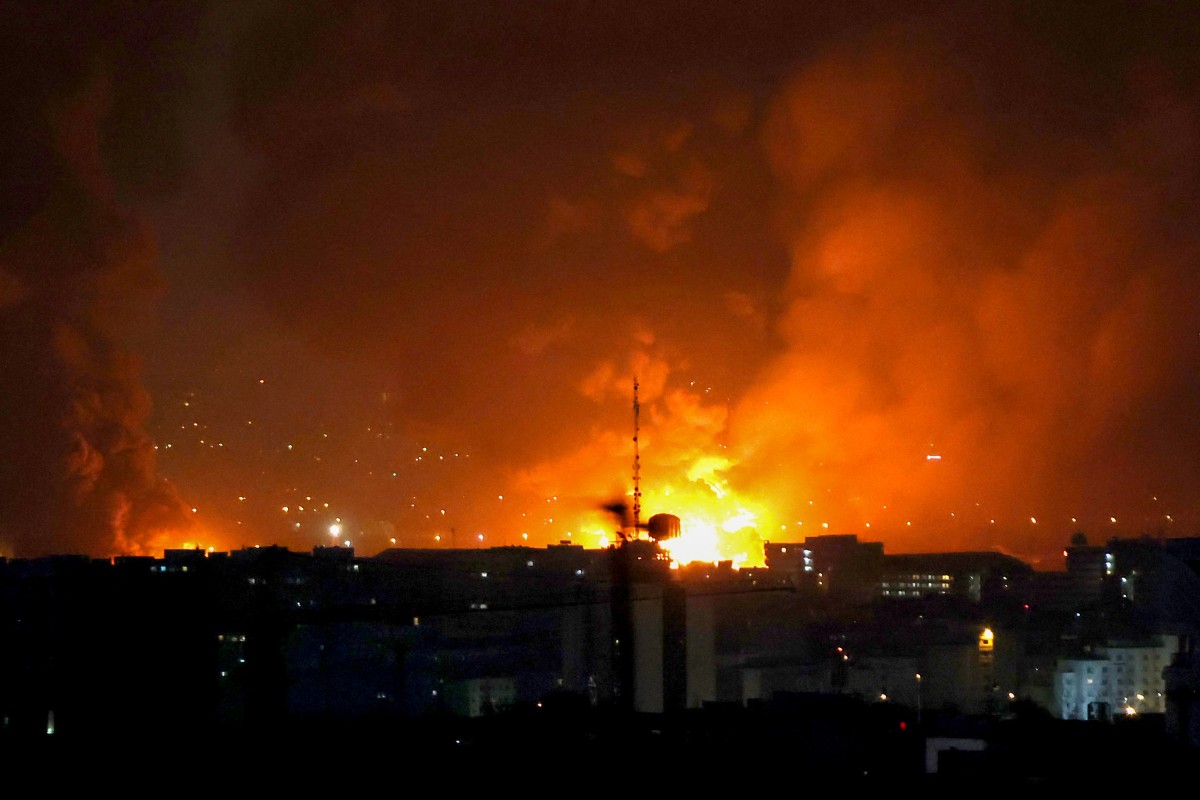
More than 300 U.S. service members have been injured since the start of the conflict with Iran on February 28, the United States Central Command confirmed on Friday.
“Since the beginning of Operation Epic Fury, approximately 303 U.S. service members have been wounded. The vast majority of these injuries are minor, and 273 troops have already returned to duty,” said U.S. Navy Captain Tim Hawkins.
A U.S. official, speaking on condition of anonymity to AFP, indicated that 10 American troops remain seriously injured.
According to the latest figures, an additional 13 U.S. service members have been killed since the conflict began, including seven in the Gulf region and six in Iraq.
Meanwhile, Iran’s armed forces warned on Friday that hotels hosting U.S. troops in the region could be considered legitimate military targets.
“When U.S. forces enter a hotel, from our perspective that hotel becomes American,” said armed forces spokesperson Abolfazl Shekarchi in remarks broadcast on state television.
International
Iran rejects negotiations as tensions escalate with United States
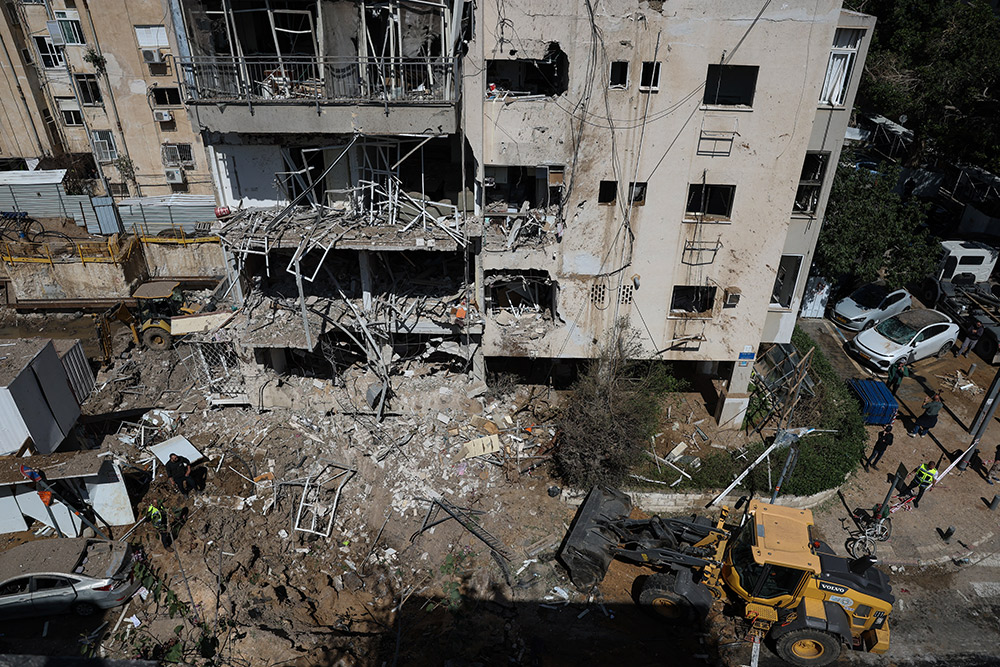
Iran has no intention of entering negotiations and will continue to resist, Foreign Minister Abbas Araghchi said Wednesday night, dismissing recent statements by U.S. President Donald Trump about possible talks.
Speaking to state television, Araghchi argued that Washington’s call for negotiations reflects a position of weakness. He added that the Islamic Republic seeks to end the war on its own terms, ensuring that such a conflict does not recur in the future.
Meanwhile, the White House issued a stark warning, stating that Trump would “unleash hell” on Iran if it refuses to accept a deal to end the conflict. Despite Tehran’s rejection, U.S. officials maintained that discussions remain ongoing.
White House spokesperson Karoline Leavitt reinforced the administration’s position, warning that failure to acknowledge what she described as Iran’s military defeat would result in even stronger action from Washington.
The increasingly aggressive rhetoric from both sides has diminished hopes for a near-term de-escalation in the conflict, which began following U.S. and Israeli strikes against Iran on February 28.
As tensions continue to rise, the prospect of a diplomatic resolution remains uncertain amid conflicting narratives and escalating threats from both governments.

Young Spanish Woman Receives Euthanasia After Legal Battle, Sparking Debate

Over 300 U.S. Troops Wounded Since Start of Iran Conflict, CENTCOM Says

Iran rejects negotiations as tensions escalate with United States
Tec de Monterrey honors one of its students for his contribution to nanotechnology in medicine

Defense Minister commends salvadoran soldier for Central American Cross Country victory

Extension of the state of emergency approved in southern Chile
-
 Sin categoría5 days ago
Tehran engulfed in toxic cloud after strikes on fuel facilities
-

 International5 days ago
IEA warns Middle East conflict could spark worst energy crisis in decades
-

 International4 days ago
Trump claims talks with Iran as G7 meets to address global tensions
-
 Central America5 days ago
Panama seizes over 1,200 drug packages in container bound for Lithuania
-

 International5 days ago
Colombian Air Force Hercules plane crashes during takeoff with troops onboard
-

 International4 days ago
German president says trust in U.S. leadership is ‘lost’ amid global tensions
-
 International4 days ago
Pentagon to deploy 3,000 troops to Persian Gulf as Middle East tensions escalate
-
 International4 days ago
Israel plans to seize security zone in southern Lebanon amid escalating conflict
-
International18 hours ago
Over 300 U.S. Troops Wounded Since Start of Iran Conflict, CENTCOM Says
-
 International1 day ago
Iran rejects negotiations as tensions escalate with United States
-
 International17 hours ago
Young Spanish Woman Receives Euthanasia After Legal Battle, Sparking Debate
-

 International1 day ago
Maduro appears again in New York court amid drug trafficking charges