
International
Netanyahu tells Blinken that he remains “firm” in his demands on Hamas for a truce
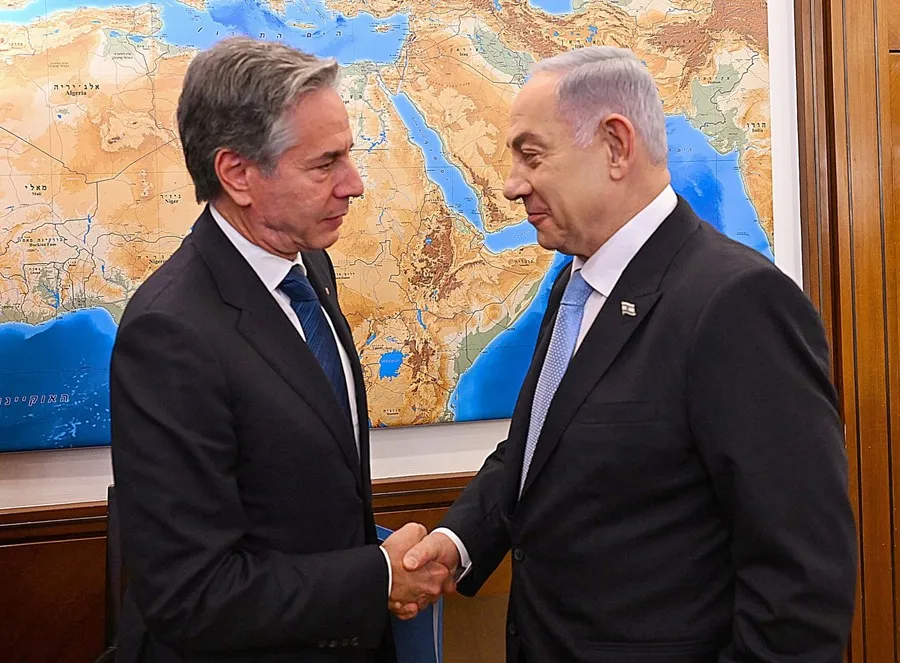
Israeli Prime Minister Benjamin Netanyahu insisted on Monday to US Secretary of State Antony Blinken that he will remain “firm” in the negotiations of a ceasefire with the Islamist group Hamas so as not to give in to the “security needs of Israel.”
Netanyahu spoke for about three hours with Blinken in Jerusalem, in a meeting that “was positive and conducted in a good spirit,” according to a statement from the prime minister’s office.
The Israeli president “reiterated Israel’s commitment to the latest US proposal (ceasefire agreement) on the release of the kidnapped, which takes into account Israel’s security needs, in which he stands firm,” the statement added without giving further details.
Blinken arrived in Israel on Sunday for a ninth visit since the outbreak of the war on October 7, with the aim of promoting a ceasefire agreement that includes the release of the 111 Israeli hostages that Hamas keeps kidnapped in Gaza (of which at least 39 have died), as well as the massive entry of humanitarian aid into the devastated Strip.
Netanyahu – whom many in his own country accuse of torpedoing the negotiations with new demands and putting his political interests first – made it clear on Sunday that Israel is “negotiating, not giving in” to Hamas.









The Israeli leader urged the mediating countries – the United States, Qatar and Egypt – to put pressure on Hamas and not Israel, and reiterated his firmness on two central points: not to cease the military offensive until the Islamist group is dismantled and not to withdraw its troops from the strategic Philadelphia Corridor, which covers the entire border line between Gaza and Egypt.
Israel’s negotiating team met over the weekend with the mediators in Doha, an appointment that Hamas did not attend, demanding that, instead of new negotiations, what had already been agreed in previous months be applied based on a proposal by US President Joe Biden.
“The new proposal” that emerged after the meeting in Doha “responds to the conditions imposed by Netanyahu and is consistent with them,” Hamas lamented on Sunday, rejecting what was agreed in Qatar.
The Islamist group criticizes that the new proposal does not include a definitive ceasefire or the integral withdrawal of Israeli troops from the Gaza Strip, and that it agrees to Netanyahu’s “insistence” that the Israeli Army continue to control the Netzarim crossing (which connects the north with the south of the Strip), the border crossing of the Gaza city of Rafah (with Egypt) and the Philadelphia Corridor.
Hamas claims to have accepted on July 2 what President Biden proposed, while Israel claims to have done the same without adding new demands, but “clarifications.”
While Washington estimates that the agreement could be reached as soon as next week, Netanyahu would have told his ministers that “the chances are not high,” according to public radio Kan.
The war broke out on October 7 of last year with a Hamas attack on Israel that left about 1,200 dead and 251 kidnapped.
Blinken, for his part, said that the latest proposed agreement for a ceasefire between Israel and Hamas may be “the last chance” to rescue the hundred Israeli hostages who still remain in the Gaza Strip.
“It is a decisive moment, probably the best and perhaps the last opportunity to return the kidnapped home, to achieve a ceasefire,” the American said at the beginning of a meeting in Tel Aviv with the Israeli president, Isaac Herzog.
The head of US diplomacy made it clear that his country wants a pact as soon as possible, and highlighted the deployment of US forces in the region to try to dissuade Iran and the Lebanese group Hizbulah from attacking Israel, which could put the negotiations at risk.
The Israeli president, for his part, thanked the United States for their support and the other mediating countries, Egypt and Qatar, for their efforts to achieve a ceasefire agreement that will allow the hostages to be released.
“There is no greater humanitarian objective, nor greater humanitarian cause than bringing back the hostages,” Herzog said.
Iran assured that it supports the negotiations between Israel and its ally Hamas to achieve a ceasefire in Gaza, despite its differences with the United States and considers that Tel Aviv does not want a truce.
Despite the negotiating momentum, the Israeli offensive in Gaza continues, and this Sunday the troops extended their operations to parts of Jan Yunis (south) and, for the first time, the town of Deir al Balah (center), where thousands of Gazans have taken refuge since the offensive against Rafah, the southernmost town in Gaza, began.
The Israeli Army continued to attack a devastated Gaza Strip in the last 24 hours, where after ten months of offensive 40,139 people have already died, according to the latest figures from the Ministry of Health of the enclave, controlled by the Islamist group Hamas.
Meanwhile, at least two people were killed on Monday by the bombing of an Israeli drone against the Houla area, in southern Lebanon, amid an increase in selective attacks by the Jewish State and renewed fears of an open war in Lebanese territory.
A 45-year-old Israeli soldier, identified by military sources as Mahmud Amaria, died on Monday morning in a drone attack in the region of western Galilee, northern Israel, perpetrated by the Lebanese Shiite militia Hizbulah.
In addition, the Israeli authorities confirmed that an explosion recorded last night in Tel Aviv, which claimed the life of the suspect who was carrying the device and injured another person, was part of a failed attempt at a terrorist attack.
The armed wing of the Islamist group Hamas claimed the act, according to a message on Telegram, which it said it had perpetrated in collaboration with the Palestinian Islamic Jihad.






International
Iran Reports 201 Dead, 747 Injured After U.S. and Israeli Strikes
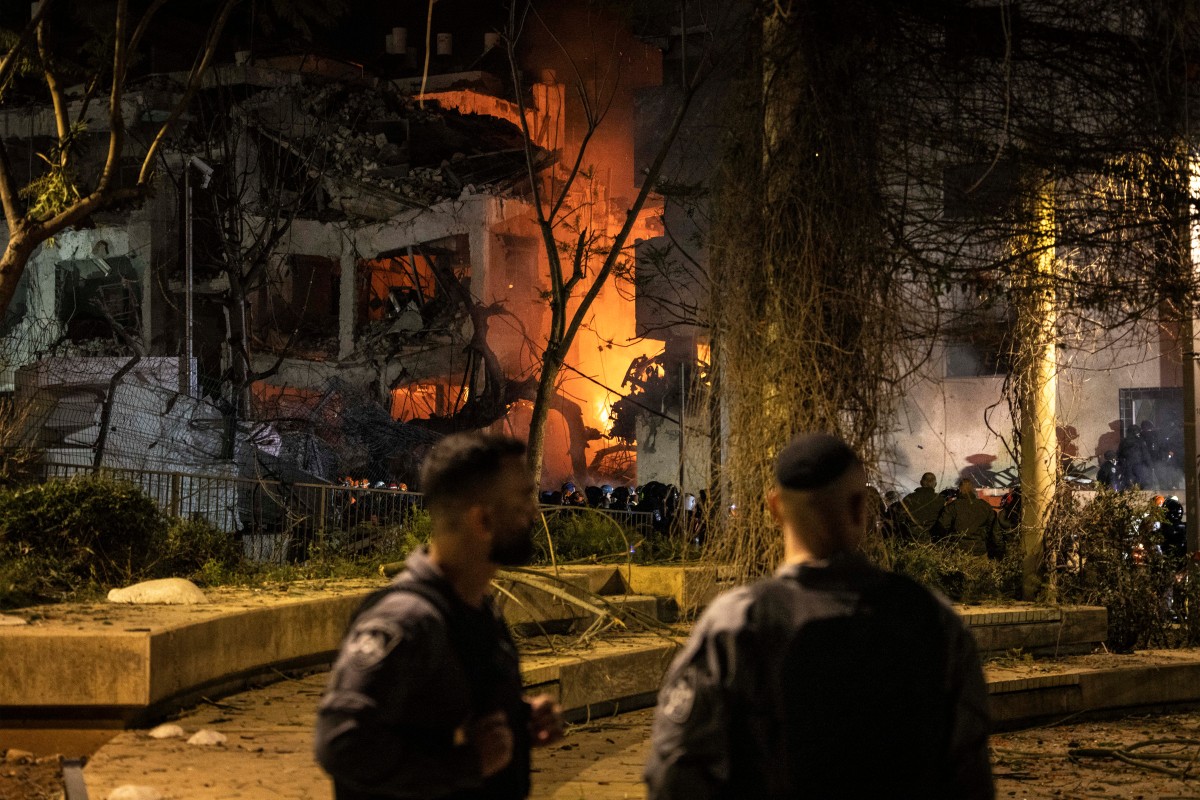
The Iranian Red Crescent Society reported Sunday night (local time) that at least 201 people were killed and 747 injured following attacks carried out by Israel and the United States against the Islamic Republic.
A spokesperson for the humanitarian organization said more than 220 rescue teams have been deployed across affected areas and that relief operations are continuing without interruption. The official highlighted the difficulty of treating the large number of wounded and the urgent need for additional resources in impacted provinces.
Out of Iran’s 31 provinces, 24 have reported damage, according to a statement carried by the Isna news agency. This marks the first overall casualty toll released by Iranian state-affiliated media since the launch of the offensive.
Among the dead are 85 schoolgirls from a school in the southern city of Minab, according to the country’s judiciary. “The number of martyrs at the Minab girls’ school has risen to 85,” the local prosecutor’s office said, as quoted by the judiciary’s website, Mizan Online.
Iranian President Masud Pezeshkian described the attack as a “savagery” that “constitutes a new black page in the record of countless crimes committed by the aggressors.”
Meanwhile, the international community continues to monitor the situation closely amid concerns about possible further reprisals and the broader impact on Middle East stability, energy markets, and global security.
AFP noted that it was unable to independently verify the casualty figures or the circumstances surrounding the events.
International
Pope Leo XIV Urges End to ‘Spiral of Violence’ in Middle East
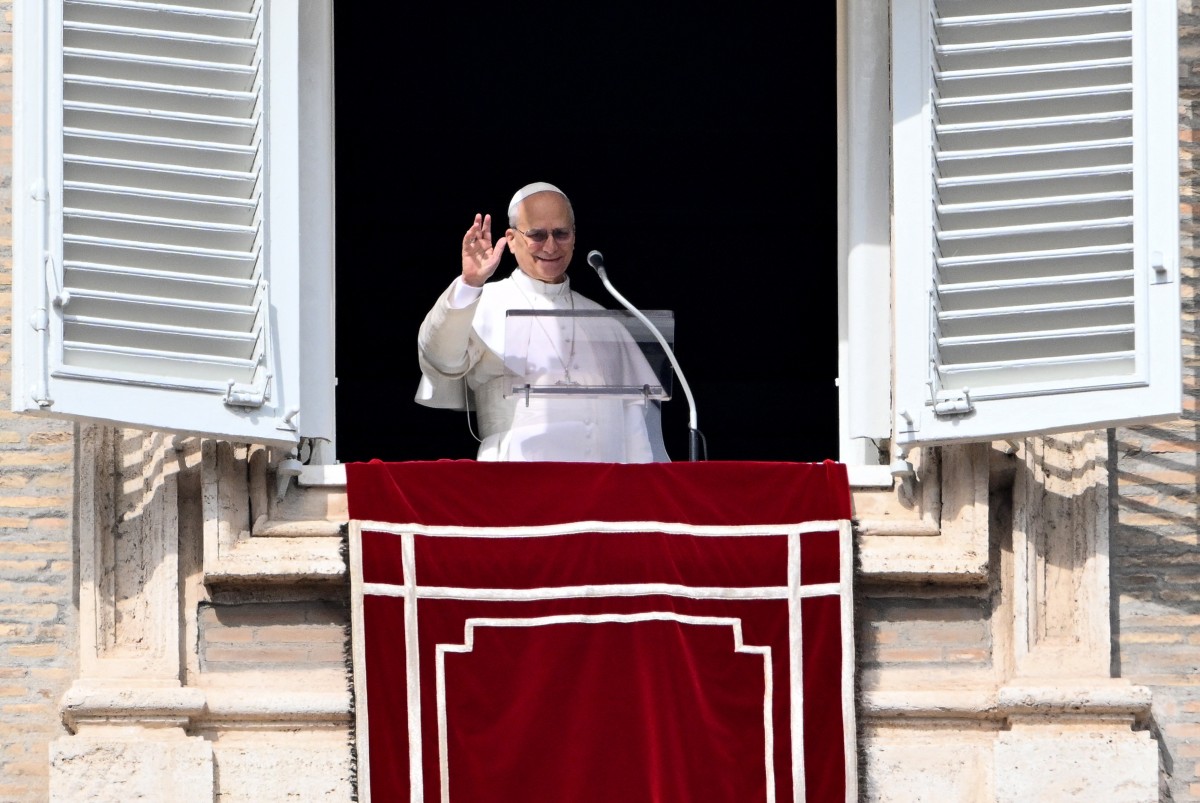
Pope Leo XIV on Sunday called for an end to the “spiral of violence” in the Middle East, following military strikes by the United States and Israel against Iran and subsequent retaliatory bombardments in the region.
“Faced with the possibility of a tragedy of enormous proportions, I urge the parties involved to assume their moral responsibility and stop the spiral of violence before it becomes an irreparable abyss,” the pontiff told the crowd gathered in St. Peter’s Square at the Vatican.
Speaking during the Angelus prayer, the U.S.-born pope said stability and peace cannot be achieved through threats or weapons. “Stability and peace are not built with reciprocal threats or with arms that sow destruction, suffering and death, but only through reasonable, sincere and responsible dialogue,” he declared.
The leader of the world’s 1.4 billion Catholics also called for diplomacy to “regain its role” amid escalating tensions.
In addition, the pope urged Afghanistan and Pakistan to urgently resume dialogue after several days of clashes between the two countries.
International
Security Council to Hold Emergency Meeting on Middle East Crisis
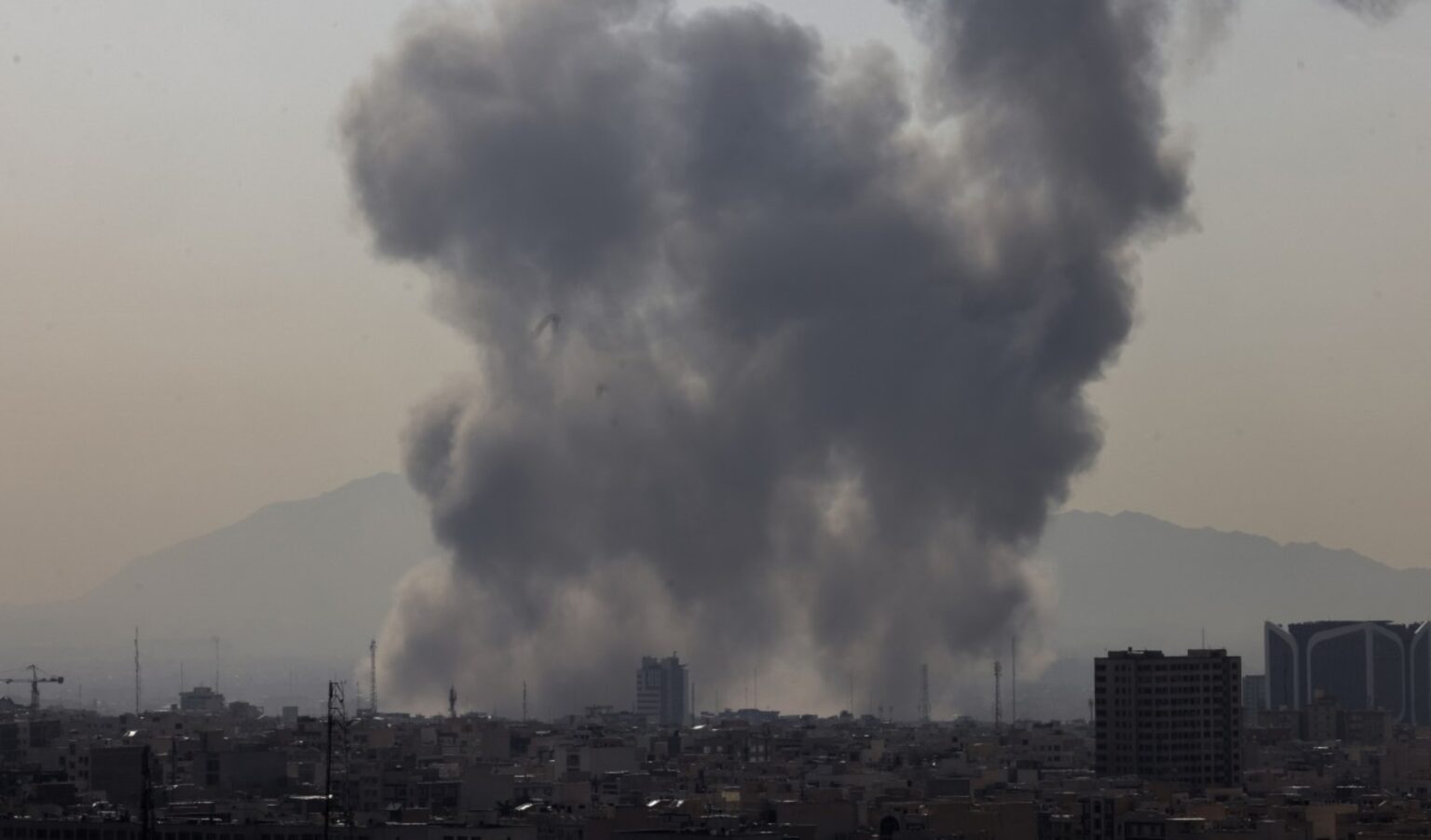
UN Secretary-General António Guterres on Saturday condemned the “military escalation in the Middle East” following attacks by the United States and Israel against Iran and Tehran’s retaliatory strikes, just hours before an urgent meeting of the UN Security Council.
“I call for the immediate cessation of hostilities and de-escalation,” Guterres said in a statement.
The Security Council is scheduled to meet on Saturday at 21:00 GMT (4:00 p.m. in New York) to address “the situation in the Middle East,” the United Nations announced.
The meeting, during which Guterres will deliver remarks, was convened at the request of France, Bahrain, Colombia, Russia and China, according to a diplomatic source.

Iran Reports 201 Dead, 747 Injured After U.S. and Israeli Strikes

Pope Leo XIV Urges End to ‘Spiral of Violence’ in Middle East

Security Council to Hold Emergency Meeting on Middle East Crisis
Tec de Monterrey honors one of its students for his contribution to nanotechnology in medicine

Defense Minister commends salvadoran soldier for Central American Cross Country victory

Extension of the state of emergency approved in southern Chile
-

 International4 days ago
Family of “El Mencho” Seeks Return of Body After Deadly Military Operation
-

 International4 days ago
Larry Summers Steps Down from Harvard Role Amid Epstein Controversy
-
 International4 days ago
Iran’s President Optimistic Ahead of Geneva Nuclear Talks with U.S.
-

 International4 days ago
Bill Gates Admits “Serious Mistake” Over Epstein Ties
-

 International4 days ago
Stephen Hawking Photo Appears in Newly Released Epstein Documents
-

 International3 days ago
Cocaine Production Surges 34% in 2023 as Market Expands into Africa and Asia
-

 International3 days ago
Federal Judge Blocks Trump Policy Allowing Deportations to Third Countries
-

 International2 days ago
Trump Floats “Friendly Takeover” of Cuba Amid Rising Tensions
-

 International2 days ago
Argentina’s Senate Reviews Milei-Backed Labor Overhaul
-

 International3 days ago
Clinton Accuses Republican Committee of Using Epstein Case to Shield Trump
-
 International1 day ago
Security Council to Hold Emergency Meeting on Middle East Crisis
-

 Sin categoría1 day ago
Trump: ‘We Think It’s True’ Amid Claims Iran’s Supreme Leader Was Killed
-
 International10 hours ago
Pope Leo XIV Urges End to ‘Spiral of Violence’ in Middle East
-
 International10 hours ago
Iran Reports 201 Dead, 747 Injured After U.S. and Israeli Strikes