
International
Trump relaunches diplomatic push to finalize U.S.-Backed peace plan for Ukraine War
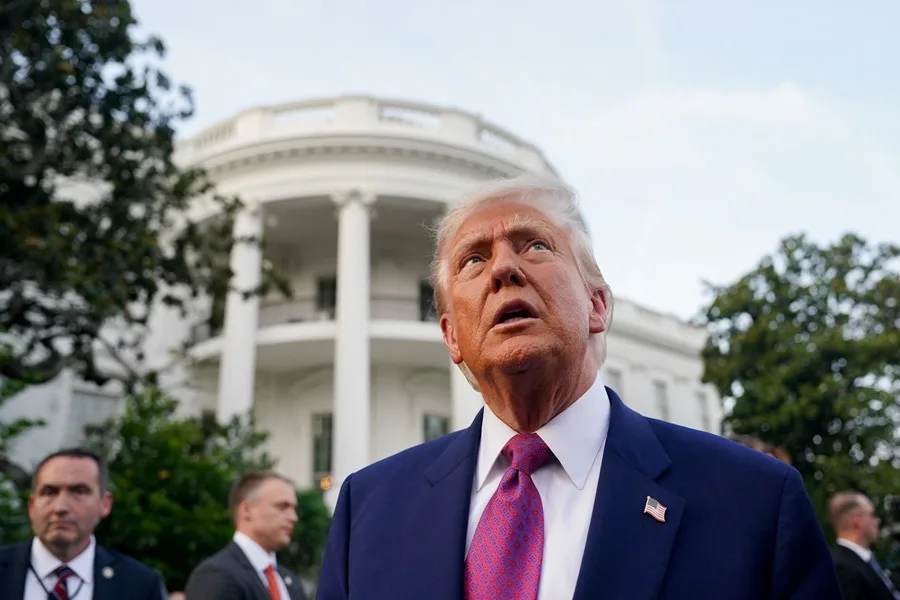
U.S. President Donald Trump announced on Tuesday that his diplomatic team will resume meetings with delegations from Russia and Ukraine in an effort to pressure both sides to accept the peace plan proposed by Washington to end the war in Ukraine.
As part of this new round of talks, U.S. Special Envoy Steve Witkoff will travel to Moscow to meet with Russian President Vladimir Putin. Meanwhile, Army Secretary Dan Driscoll will hold discussions with Ukrainian representatives to narrow differences on the remaining points of the agreement.
Trump also confirmed his intention to meet personally with Ukrainian President Volodymyr Zelensky and with Putin, though he emphasized that such meetings will only take place “when the agreement is fully finalized or in its final stage.”
The president claimed that his administration has made “tremendous progress” toward resolving the conflict and reiterated that the war “never would have started” if he had been in the White House at the onset of the crisis.
The U.S.-backed peace plan consists of 28 points and has been revised following feedback from both sides. According to Trump, only “a few points of disagreement” remain under active discussion.









One of the most controversial aspects of the proposal is the suggestion that Ukraine cede parts of the Donbas region to Russia and limit the size of its armed forces. Kyiv is working closely with Washington to soften these clauses in search of an arrangement that does not compromise its sovereignty or security.
With this diplomatic push, Trump aims to solidify his role as the main mediator in the conflict and steer the war toward a political resolution after years of devastation, humanitarian crisis, and rising global geopolitical tensions.






International
ICE to prioritize security over immigration enforcement during 2026 World Cup, says official
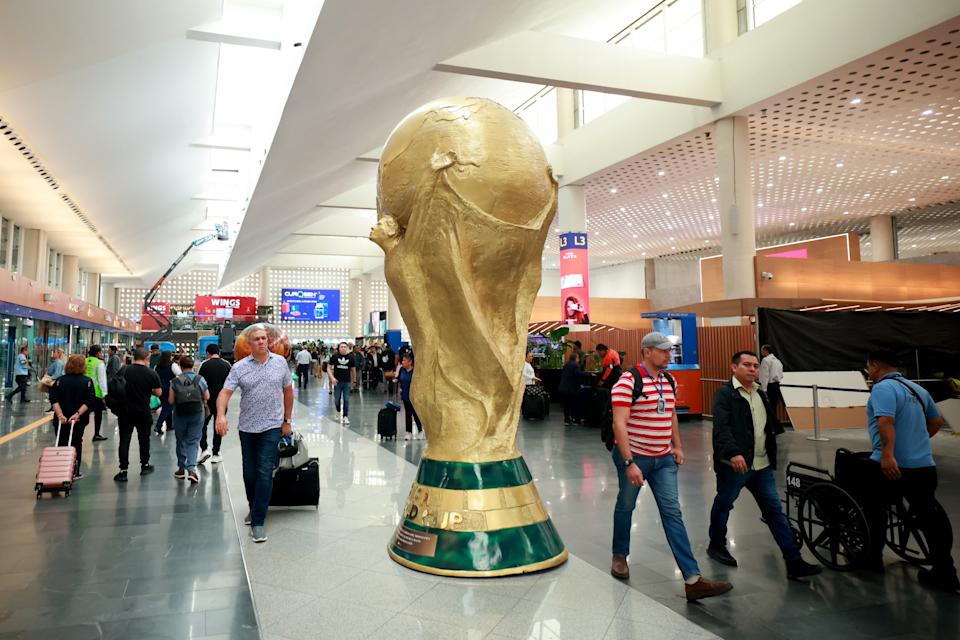
U.S. Immigration and Customs Enforcement (ICE) will prioritize event security and the protection of attendees over immigration enforcement during the 2026 World Cup, according to its director, Tom Homan.
The tournament will be jointly hosted by the United States, Mexico, and Canada from June 11 to July 19, 2026, and is expected to draw millions of visitors across the three countries.
Speaking in an interview with ABC, Homan said the agency’s main responsibility during the competition will be to prevent any security threats that could disrupt one of the world’s largest sporting events.
“We have a national security responsibility that we are going to carry out,” Homan stated, emphasizing that ICE operations during the tournament will focus on intelligence, prevention, and the protection of critical infrastructure rather than immigration enforcement actions targeting undocumented individuals.
He added that the agency’s priority will be safeguarding players, teams, fans, and stadiums throughout the event.
However, Homan clarified that immigration status could still be taken into account in cases where national security concerns arise. “If we find a national security issue and it involves an illegal alien, of course we will take action,” he said.
The comments came in response to questions about concerns from international visitors regarding possible immigration enforcement activity during the tournament.
Homan reiterated that ICE’s operational focus will remain strictly on security-related matters. Known as the “border czar” within the U.S. administration, he said the agency will concentrate on preventing risks and ensuring the safety of all participants and spectators.
The 2026 World Cup will be the first edition of the tournament to feature 48 national teams, significantly increasing travel and logistical demands across the host nations. As a result, authorities are coordinating extensive security preparations involving federal, state, and international agencies.
Officials have described the tournament as one of the most complex security and organizational challenges ever undertaken in North America, with preparations already underway to ensure its safe and orderly execution.
International
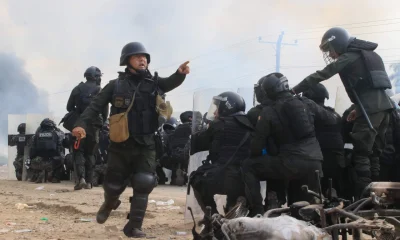
Two Police Officers Shot During Road Clearance Operation in Eastern Bolivia
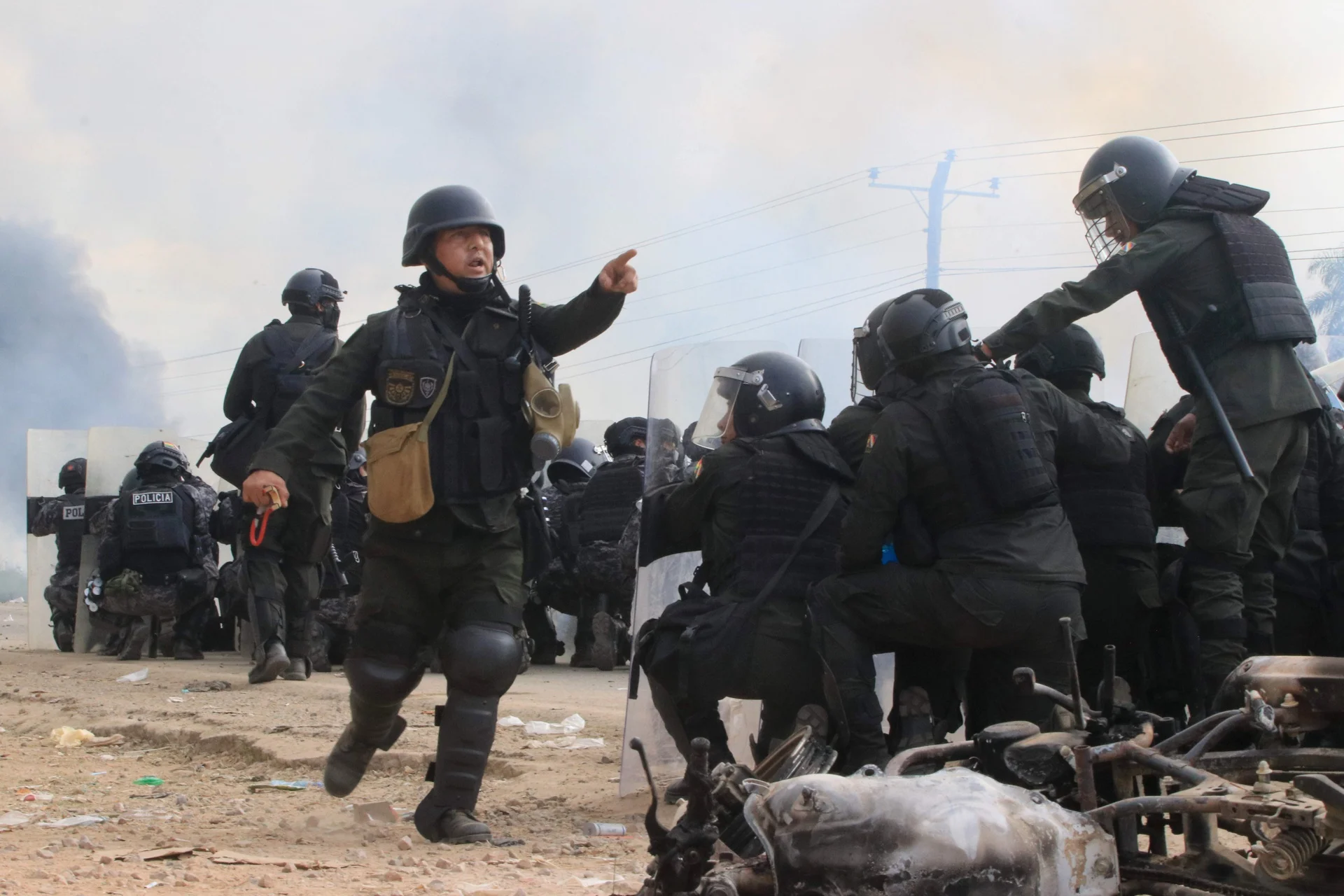
At least two police officers were wounded by gunfire on Saturday during an operation to clear roadblocks in Bolivia’s eastern Santa Cruz region, which has remained partially cut off for 24 days amid protests demanding the resignation of President Rodrigo Paz.
The joint operation involving the Police and the Armed Forces began at 6:00 a.m. local time near the town of San Julián, approximately 117 kilometers northeast of Santa Cruz city. The effort focused on reopening an alternative highway linking the region with Beni and western Bolivia.
According to Santa Cruz Police Commander David Gómez, protesters initially responded aggressively to the security operation.
“Local groups organized themselves and began attacking us brutally with firecrackers, stones, and other objects,” Gómez told reporters. “We used chemical agents in an attempt to disperse the crowd, which was behaving aggressively.”
Authorities initially succeeded in reopening the roadway, allowing vehicles to pass through. However, protesters later regrouped and engaged in renewed clashes with police forces that lasted for more than four hours.
During the confrontation, gunshots were heard, forcing both police and military personnel to withdraw from the area.
Gómez reported that one officer suffered a gunshot wound to the head, while another was struck in the right thigh. Both officers were evacuated for medical treatment.
The police commander stated that demonstrators not only carried out physical attacks against officers but also used firearms during the confrontation, prompting authorities to order a tactical retreat.
The incident marks a significant escalation in tensions surrounding the ongoing protests in Santa Cruz, where demonstrators have maintained roadblocks for more than three weeks as part of their campaign against the government.
International
U.S. to invest $700 million in coal plants and mines under Trump initiative
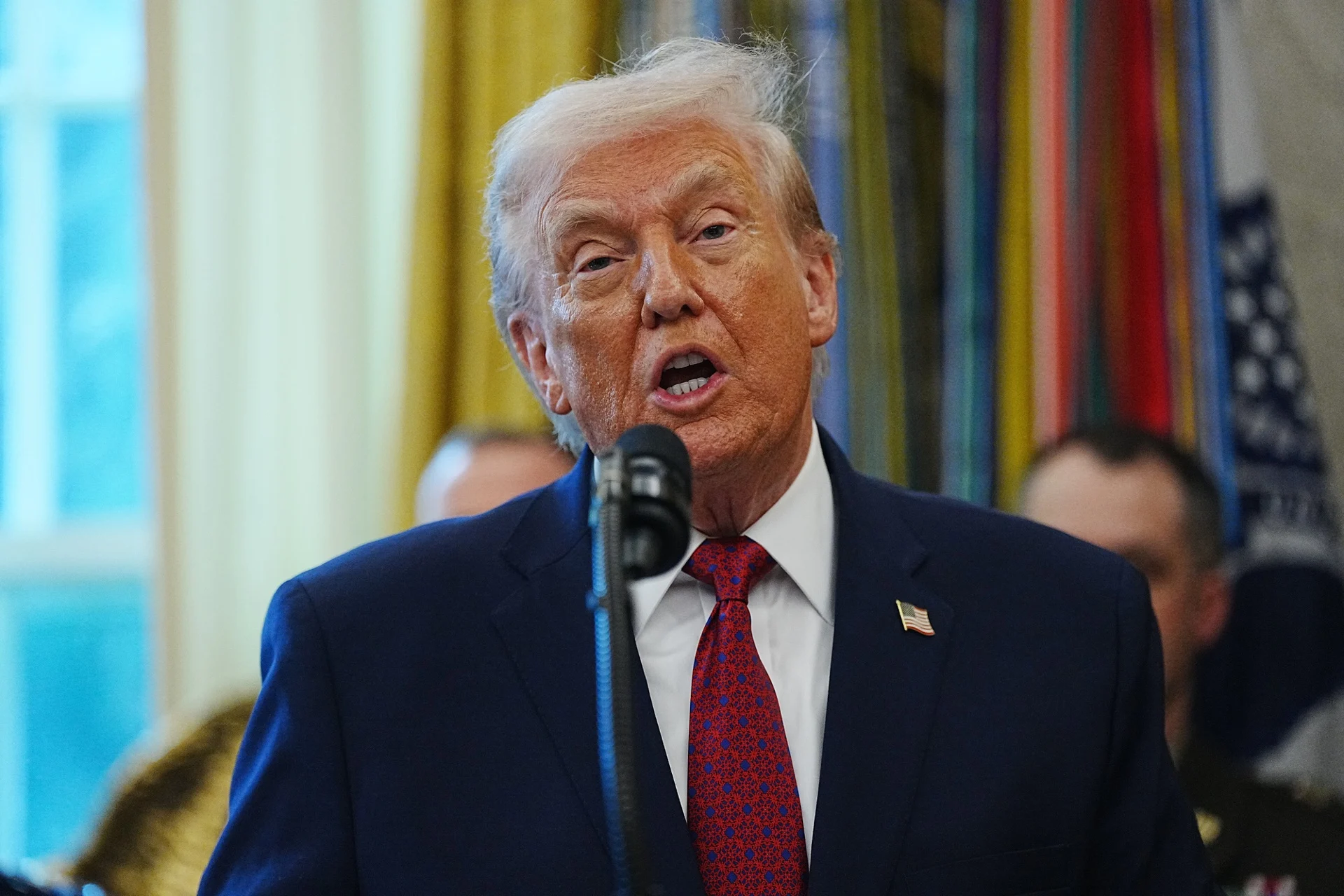
U.S. President Donald Trump announced on Thursday a $700 million funding package aimed at supporting the American coal industry, marking the latest step in his administration’s efforts to boost the use of the fossil fuel.
According to Trump, the funding will be used to keep 14 coal-fired power plants operating across ten states, maintain 42 coal mines, and support the construction of two new power plants and an export terminal.
The president said the initiative will be financed through the Defense Production Act, a law enacted in 1950 that grants emergency powers to the president to support and direct domestic industries considered critical to national interests.
Since returning to the White House last year, Trump has pursued policies designed to expand domestic energy production and roll back a number of environmental regulations. He has also repeatedly questioned the scientific consensus regarding human-caused climate change.
Coal remains the most carbon-intensive fossil fuel and is the largest source of greenhouse gas emissions among major energy sources, making it a central focus of debates over climate policy and energy security.
U.S. Energy Secretary Chris Wright defended the initiative, describing coal as a critical resource for both electricity generation and industrial production.
The announcement comes as global energy markets continue to evolve. According to an analysis by the Global Energy Monitor, the world added and commissioned more coal-fired power capacity in 2025, although overall coal consumption declined. The report also found that the United States was the only major economy to record a significant increase in coal-fired power generation during that period.
The new funding package underscores the administration’s commitment to supporting traditional energy industries while debate continues over the balance between energy security, economic growth and environmental objectives.

ICE to prioritize security over immigration enforcement during 2026 World Cup, says official

Two Police Officers Shot During Road Clearance Operation in Eastern Bolivia

U.S. to invest $700 million in coal plants and mines under Trump initiative
Tec de Monterrey honors one of its students for his contribution to nanotechnology in medicine

Defense Minister commends salvadoran soldier for Central American Cross Country victory

Extension of the state of emergency approved in southern Chile
-
 International3 days ago
Four decapitated bodies found in abandoned vehicle near Guerrero state Congress
-
 International3 days ago
U.S. to invest $700 million in coal plants and mines under Trump initiative
-
 International4 days ago
Foro Penal Reports 404 Political Prisoners Still Held in Venezuela
-
 International4 days ago
Eight Bodies Found in Ecuador as Authorities Probe Link to Missing Persons Case
-
 International1 day ago
Two Police Officers Shot During Road Clearance Operation in Eastern Bolivia
-
 International11 hours ago
ICE to prioritize security over immigration enforcement during 2026 World Cup, says official