
International
How Latin America has reacted: from the rejection of Chile and Argentina waiting for Brazil and Mexico
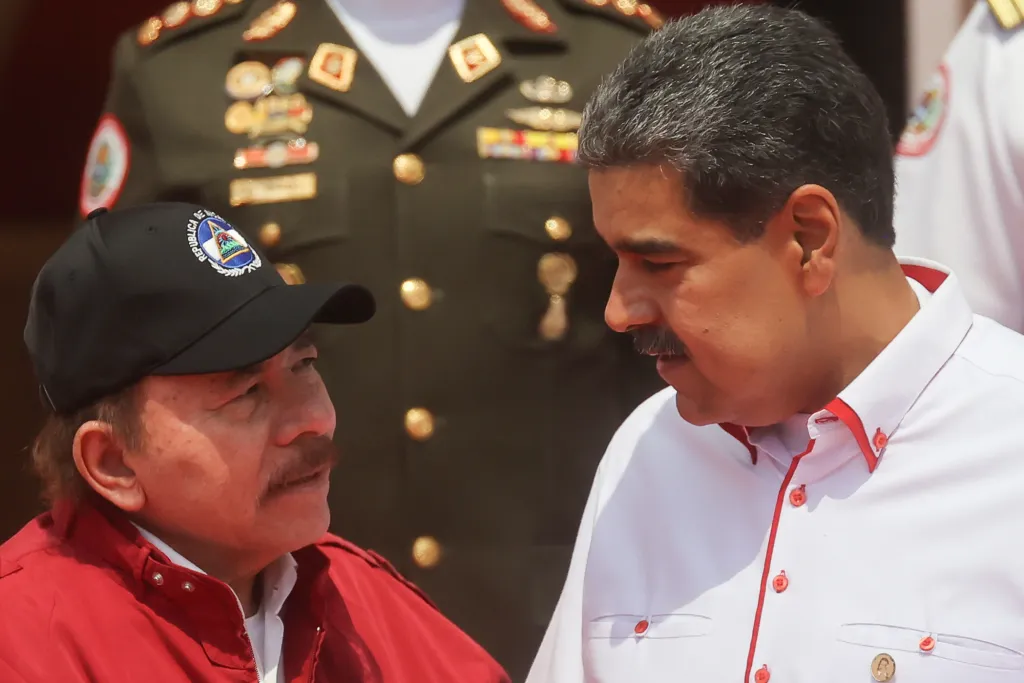
After knowing the results announced by the National Electoral Council (CNE) of Venezuela on the presidential elections that, according to the entity, was won by President Nicolás Maduro, there have been various reactions in Latin America from the request for transparency of Chile and Argentina to the caution of Brazil and Mexico.
One of the first to react was the president of Chile, Gabriel Boric, who at first said that the results “are difficult to believe” and on Monday he claimed that it is necessary to deliver all the electoral records to both independent international observers and the opposition.
“As long as that is not done, we as a country are going to refrain from recognizing what the National Electoral Council has pointed out,” Boric said.
“I have stated, and I have also discussed it with the chancellor and with different people in Latin America and in the world, that the elections, and elections that generate as much expectation as this, have to be absolutely transparent and verifiable by international observers who are not dependent or supporters of the Government,” added the Chilean leader.
The president of Argentina, Javier Milei, described on Monday the results of this Sunday’s presidential elections in Venezuela as an “electoral scam” and ignored the announcement of the National Electoral Council (CNE) of that country, which gave Nicolás Maduro as the winner, results that the opposition denounced for irregular.









“Not even he believes the electoral scam that celebrates. Neither does the Argentine Republic,” the Argentine president wrote about Maduro on his profile on the social network X.
“We do not recognize fraud, we call on the international community to unite to restore the rule of law in Venezuela, and we remind the Venezuelan people that the doors of our homeland are open to every man who chooses to live in freedom,” added the publication of the ultraliberal politician.
“Condemn the electoral fraud perpetrated by the regime of dictator Nicolás Maduro in the Bolivarian Republic of Venezuela. Argentina demands total transparency in the counting of votes. We are not going to consolidate any results without the support of international observers; of course, that they are not puppets of the Chavista regime,” the presidential spokesman, Manuel Adorni, said earlier.
The Government of Brazil celebrated on Monday the “peaceful character” of the elections in Venezuela, but ratified that it will wait for all the results to pronounce on the victory attributed by the electoral authorities to Nicolás Maduro.
In an official statement, the Brazilian Ministry of Foreign Affairs “reaffirms” that “the principle of popular sovereignty must be observed through the impartial verification of the results” and adds that Brazil “waits, in that context,” the publication of all the data “detailed by a polling station.”
That last requirement, according to the statement, is “an indispensable step for the transparency, credibility and legitimacy of the result of the electoral lawsuit.”
In the same waiting line, the president of Mexico, Andrés Manuel López Obrador, spoke out, who said that he will recognize Maduro’s triumph, if Venezuela’s CNE “confirms the trend” after Sunday’s elections, although he asked to “wait for the count.”
“We are going to wait for the result, and when the count has been carried out, see what the legal process is and then we are going to pronounce, if the electoral authority confirms this trend, we are going to recognize the Government elected by the people of Venezuela,” López Obrador said in his morning conference.
The Mexican ruler assured that “they cannot ignore any result” of the CNE, which during the night announced that Maduro won with 51.2% of the votes compared to 44.2% by Edmundo González Urrutia of the opposition Democratic Unitary Platform (PUD) of Venezuela.
The president of Panama, José Raúl Mulino, announced that he “suspends” diplomatic relations and announces the withdrawal of his diplomatic corps in Venezuela “until a complete review of the minutes” of the votes is carried out after rejecting the results of the elections.
Mulino, who pointed out the “deterioration” during the last years of diplomatic relations between the two countries, said: “I make this decision out of respect for the history of Panama, the millions of Venezuelans who chose our homeland to live, and my democratic convictions, I cannot allow my silence to turn into complicity.”
“I believe, and I hope I am wrong, that the flow of Venezuelans will increase for obvious reasons and we have to take the appropriate decisions to safeguard their life and integrity,” Mulino said.
At the same time, the Government of Peru denounced the attempt of the Venezuelan authorities to “consolidate a fraud” and detailed that it remains “in active observation” in the face of the possible “migratory effects” of the announcement of the re-election of Nicolás Maduro.
The Ministry of Foreign Affairs said in a statement that, along with other competent authorities, it is “in a state of active observation in anticipation of migratory effects as a result of the seriousness of the course of Venezuelan electoral events.”
The president of Bolivia, Luis Arce, was one of the first leaders in the region to react and considered that Maduro’s “victory” is a “great way” to remember the late leader Hugo Chávez on his birthday.
“We congratulate the Venezuelan people and President @NicolasMaduro for the electoral victory of this historic July 28. Great way to remember Commander Hugo Chávez,” Arce wrote on the social network X, where earlier he recalled in another message the 70th anniversary of the birth of the former Venezuelan president.
Arce, who has a political affinity with Maduro, also maintained that he followed “closely” the “democratic party” in Venezuela and greeted “that the will of the Venezuelan people has been respected at the polls.”
The congratulations were also joined by the president of Nicaragua, Daniel Ortega, and his wife and vice president, Rosario Murillo, who described the result as a “great victory that that heroic people” delivers to Chávez, while the president of Cuba, Miguel Díaz-Canel considered it as a “triumph of dignity.”
For its part, the Bolivarian Alliance for the Peoples of Our America (ALBA) congratulated Maduro, for what he sees as an “unobjectible triumph” in the presidential elections.
“The member states of the ALBA congratulate the people and government of the sister Bolivarian Republic of Venezuela, for the unobjectionable triumph of President Nicolás Maduro Moros in the presidential elections this Sunday, July 28, 2024,” the bloc said in a statement published on its website.






International
German president says trust in U.S. leadership is ‘lost’ amid global tensions
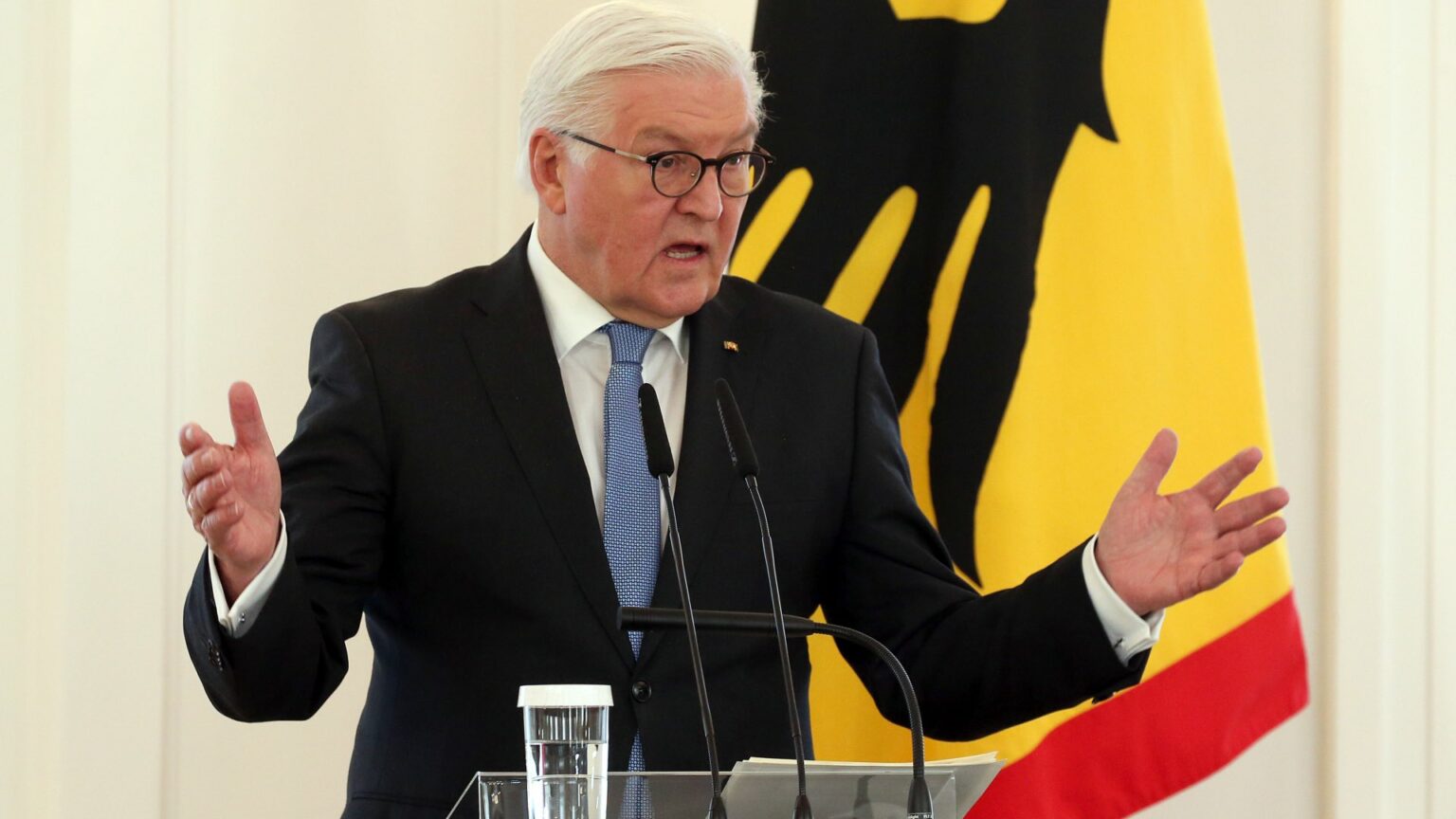
German President Frank-Walter Steinmeier said on Tuesday that trust between the United States and its Western allies has been “lost,” warning that the damage could persist beyond the presidency of Donald Trump.
“The rupture is very deep, and the loss of trust in U.S. great power policy is significant—not only among its allies, but also, as I observe, globally,” Steinmeier said during a speech in Berlin marking the 75th anniversary of Germany’s Foreign Ministry.
Referring to the future of transatlantic relations, he stated that “there is no return to the situation before January 20, 2025,” the date marking the start of Trump’s second term in the White House.
“Even a future U.S. administration will no longer be able to resume the role of a benevolent hegemon guaranteeing a liberal international order,” added Steinmeier, who previously served as Germany’s foreign minister.
He also criticized the war against Iran, describing it as “contrary to international law” and calling it “a political mistake with serious consequences.”
“This war is avoidable and unnecessary,” he said.
Although the German presidency is largely ceremonial, Steinmeier’s remarks reflect a broader concern within Germany, aligning with the government’s cautious stance while going further in tone.
International
Trump claims talks with Iran as G7 meets to address global tensions
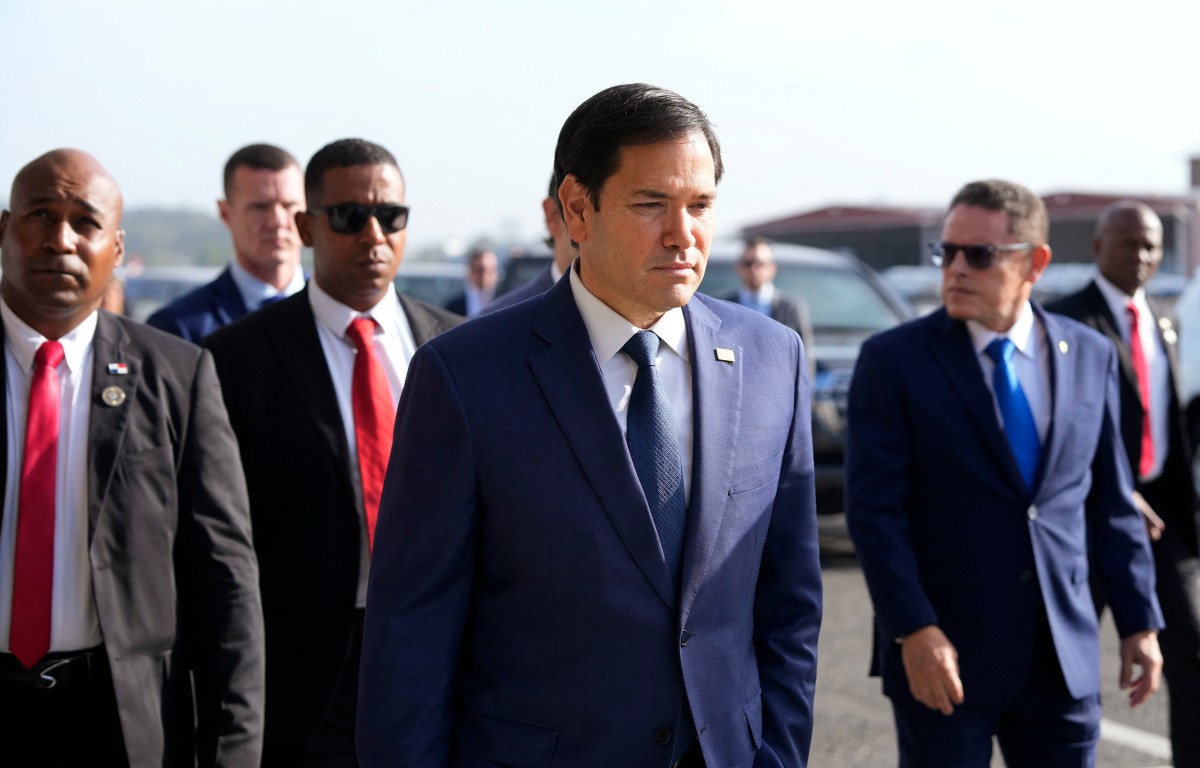
U.S. President Donald Trump said that the United States has held talks with Iran—a claim denied by Tehran—and has temporarily paused his threat to target the country’s electrical infrastructure.
In his first overseas trip since the United States and Israel launched their offensive on February 28, U.S. Secretary of State Marco Rubio is expected to address key global issues, including the situation in the Middle East, according to State Department spokesperson Tommy Pigott.
Foreign ministers from the Group of Seven will meet in Cernay-la-Ville, close to Versailles, on the outskirts of Paris.
During the meeting, Rubio will hold discussions with his counterparts on “the war between Russia and Ukraine, the situation in the Middle East, and threats to global peace and stability,” Pigott said.
France currently holds the presidency of the G7, whose members also include the United Kingdom, Canada, Germany, Italy, and Japan.
Although all G7 nations are close allies of the United States, none has offered explicit support for Washington’s military actions against Iran, a stance that has reportedly frustrated Trump.
Last Saturday, G7 foreign ministers called for an “immediate and unconditional end” to Iranian attacks against U.S. allies in the Middle East.
International
Pentagon to deploy 3,000 troops to Persian Gulf as Middle East tensions escalate
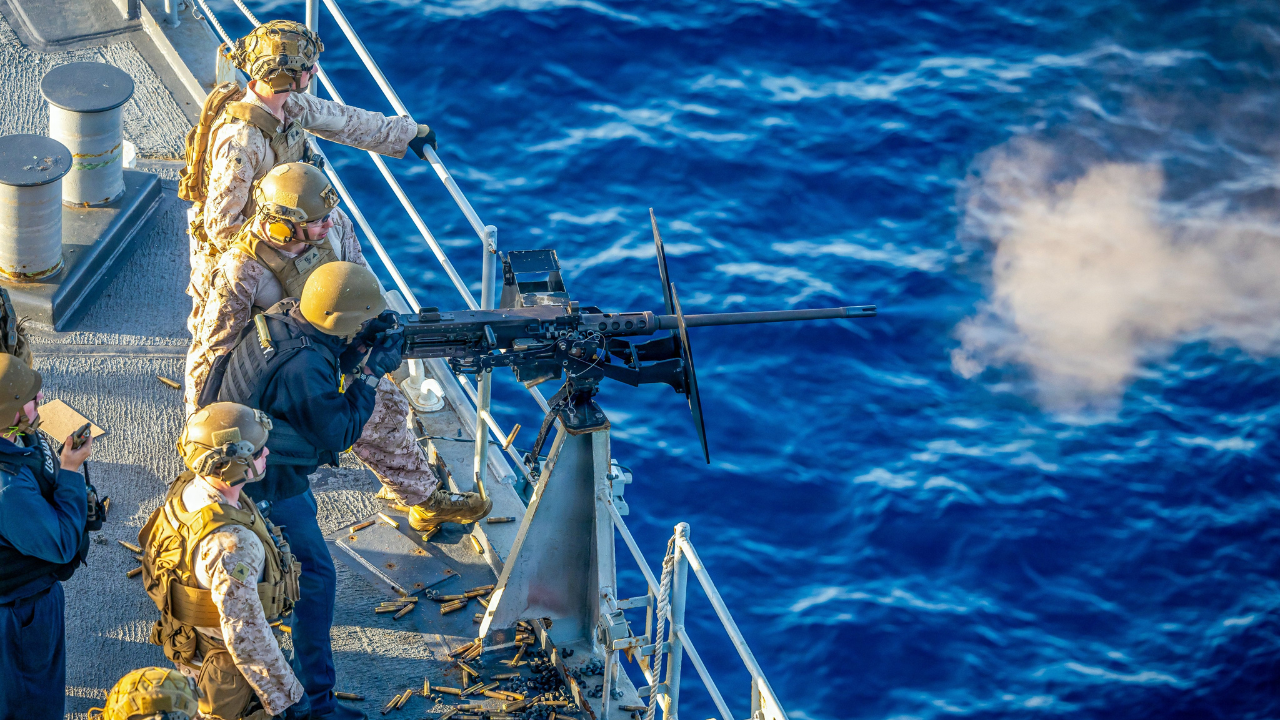
The Pentagon is planning to deploy nearly 3,000 troops from the 82nd Airborne Division to the Persian Gulf, according to two senior officials cited Tuesday by Spanish newspaper El País.
Meanwhile, Hezbollah warned it would confront any attempt at occupation following Israel’s announcement that its military will take control of southern Lebanon up to the Litani River, located about 30 kilometers from the border.
In recent hours, the Israel Defense Forces carried out airstrikes on Beirut, while Iran and Hezbollah responded with attacks on Israel, leaving at least six people with minor injuries in Tel Aviv.
The escalation comes as global markets react to renewed instability. The price of oil rose again above $100 per barrel after a brief decline the previous day, following an announcement by U.S. President Donald Trump of a five-day truce on attacks targeting Iran’s energy infrastructure.
Despite the announcement, Iranian authorities reported that two projectiles struck a gas pipeline in Khorramshahr and administrative buildings at a gas facility in Isfahan early Tuesday.

German president says trust in U.S. leadership is ‘lost’ amid global tensions

Trump claims talks with Iran as G7 meets to address global tensions

Pentagon to deploy 3,000 troops to Persian Gulf as Middle East tensions escalate
Tec de Monterrey honors one of its students for his contribution to nanotechnology in medicine

Defense Minister commends salvadoran soldier for Central American Cross Country victory

Extension of the state of emergency approved in southern Chile
-
 Sin categoría3 days ago
Tehran engulfed in toxic cloud after strikes on fuel facilities
-
 International3 days ago
IEA warns Middle East conflict could spark worst energy crisis in decades
-

 International3 days ago
Colombian Air Force Hercules plane crashes during takeoff with troops onboard
-
 Central America3 days ago
Panama seizes over 1,200 drug packages in container bound for Lithuania
-
 International2 days ago
Trump claims talks with Iran as G7 meets to address global tensions
-
 International4 days ago
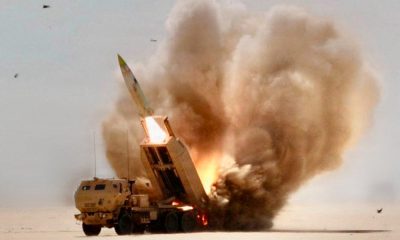
Netanyahu vows to target Iran’s leadership after missile strikes in southern Israel
-
 International2 days ago
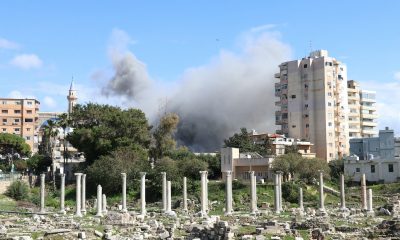
Israel plans to seize security zone in southern Lebanon amid escalating conflict
-
 International2 days ago
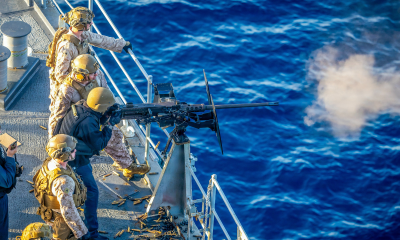
Pentagon to deploy 3,000 troops to Persian Gulf as Middle East tensions escalate
-
 International2 days ago
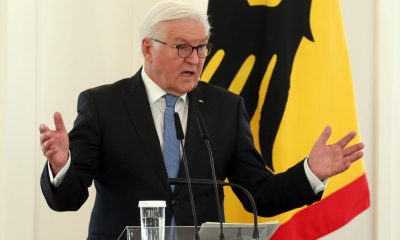
German president says trust in U.S. leadership is ‘lost’ amid global tensions
-
 International4 days ago
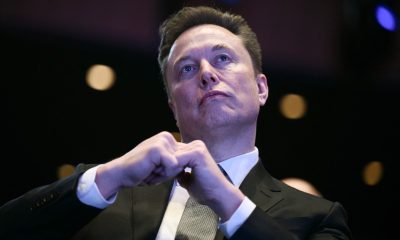
Paris prosecutors alert U.S. over alleged deepfake strategy linked to Elon Musk