
International
How will the rise of the far right influence the day-to-day life of the EU and the European Parliament?
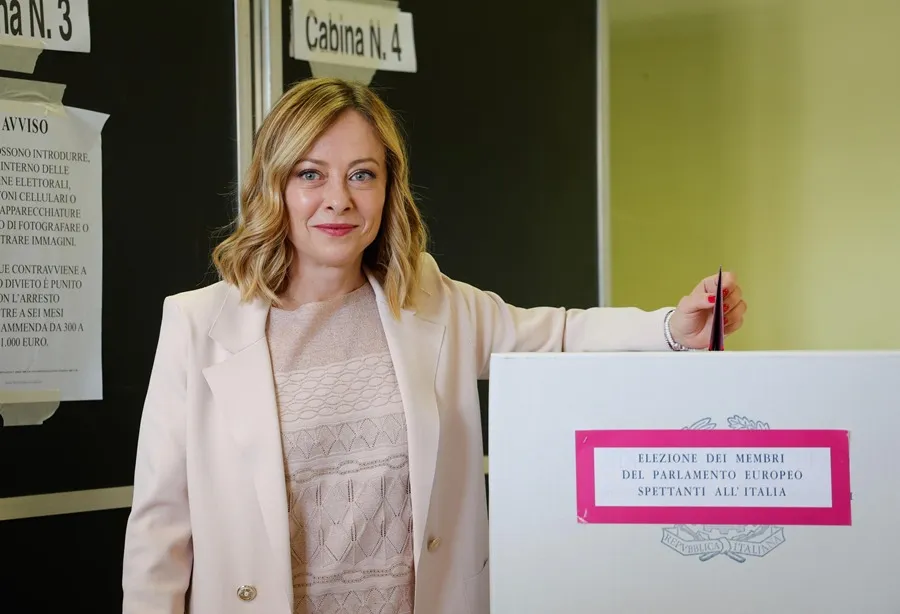
The European elections to renew the European Parliament have certified an increase in seats throughout the EU of ultra-conservative and far-right parties, which are placed as the first force in France, Italy, the Netherlands or Austria.
As a result, they will have more weight in decisions such as the orientation of the EU budget between 2027 and 2034, the position of the European Parliament in the defense of the rule of law and European values, the future expansion to the east or the progress in implementing climate objectives.
The coming weeks and months will determine what their real capacity for influence is, if they manage to coordinate their positions in the hemicycle and how the day-to-day legislative work in the European Union will change.
In practice, the European elections redesign only one of the three community institutions involved in the legislative process. The European Council (the Heads of State and Government) and the Council of the EU (the ministers of the Member States) remain stable, since they only renew their members when there are elections at the national level.
This means, for example, that Emmanuel Macron and his ministers will continue to represent France in the Council even though Marine Le Pen has won the European elections in France.









A Parliament left to the right may have some influence to unbalance the confirmation vote of the president of the European Commission or the approval of his team of commissioners, but these will also be by definition “multicolored” politically because they are sent by their governments.
Most decisions in the European Parliament require the favorable vote of half plus one of the MEPs who cast their vote, so the combined 131 seats of the Conservatives and Reformists and Identity and Democracy (waiting for the like-minded non-attached) are not enough in a European Parliament with 720 seats.
To be noticed, they will need, as has been the case so far, almost all of the European People’s Party, which in this legislature inherits from the liberals the role of the “majority facilitator”: the block supported by the popular in each individual vote, whether the center-left or the ultra-right, will take the cat to the water.
Due to the nature of these groups, which often do not have enough cohesion or internal structure and respond to national interests rather than their European Parliamentary group, it tends to be difficult to find a stable majority to move legislation forward, but they can push for concrete amendments.
“It will take longer than other times to draw conclusions from these 27 elections in parallel and translate them into a clear parliamentary majority, which in my opinion will be flexible instead of permanent and will change depending on the proposals presented by the new Commission to Parliament,” said the professor of European Union Law at HEC Paris Alberto Alemanno.
The same analyst pointed to the rise of unregistered parties or newcomers without a political family that “could play a role in recomposing the existing groups and shaping the new political cycle.”
And it is that the “cake” of the hemicycle is not yet completely distributed after this Sunday’s elections, with almost a hundred MEPs who do not belong to any group or who arrive new to the European Parliament and have not yet been associated with one of the existing ones.
From today, they can look for fit in existing groups or, if new groups are formed, join them. It will be the case of the Alternative for Germany, which will provide 15 seats, or Viktor Orbán’s Fidesz, with 10.
With them and other related groups, arithmetically it will be possible to unite the votes of popular, ultra-conservative, extreme right-right and non-registered people who sympathize with their ideas to, occasionally, carry out narrow majorities such as the one that was about to destroy the Law of the Restoration of Nature in the legislature that now ends.
The need for total cohesion in the hemicycle disappears in other decisions within the European Parliament. They are taken by weighted vote in parliamentary forums such as the Conference of Presidents (which brings together the president of the institution and heads of political groups) or among the coordinators of the political groups in the different parliamentary committees.
In these spaces, the representative of each political group arrogates the voice and vote of all its MEPs, with no room for dissension, and – if it reaches 361 seats – EPP, ECR and ID could decant the balance in decisions on the agenda or legislative work, among others.






International
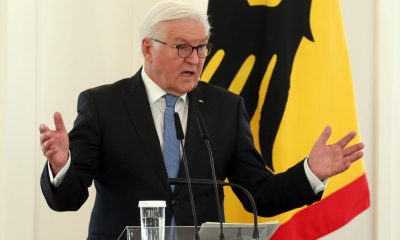
German president says trust in U.S. leadership is ‘lost’ amid global tensions
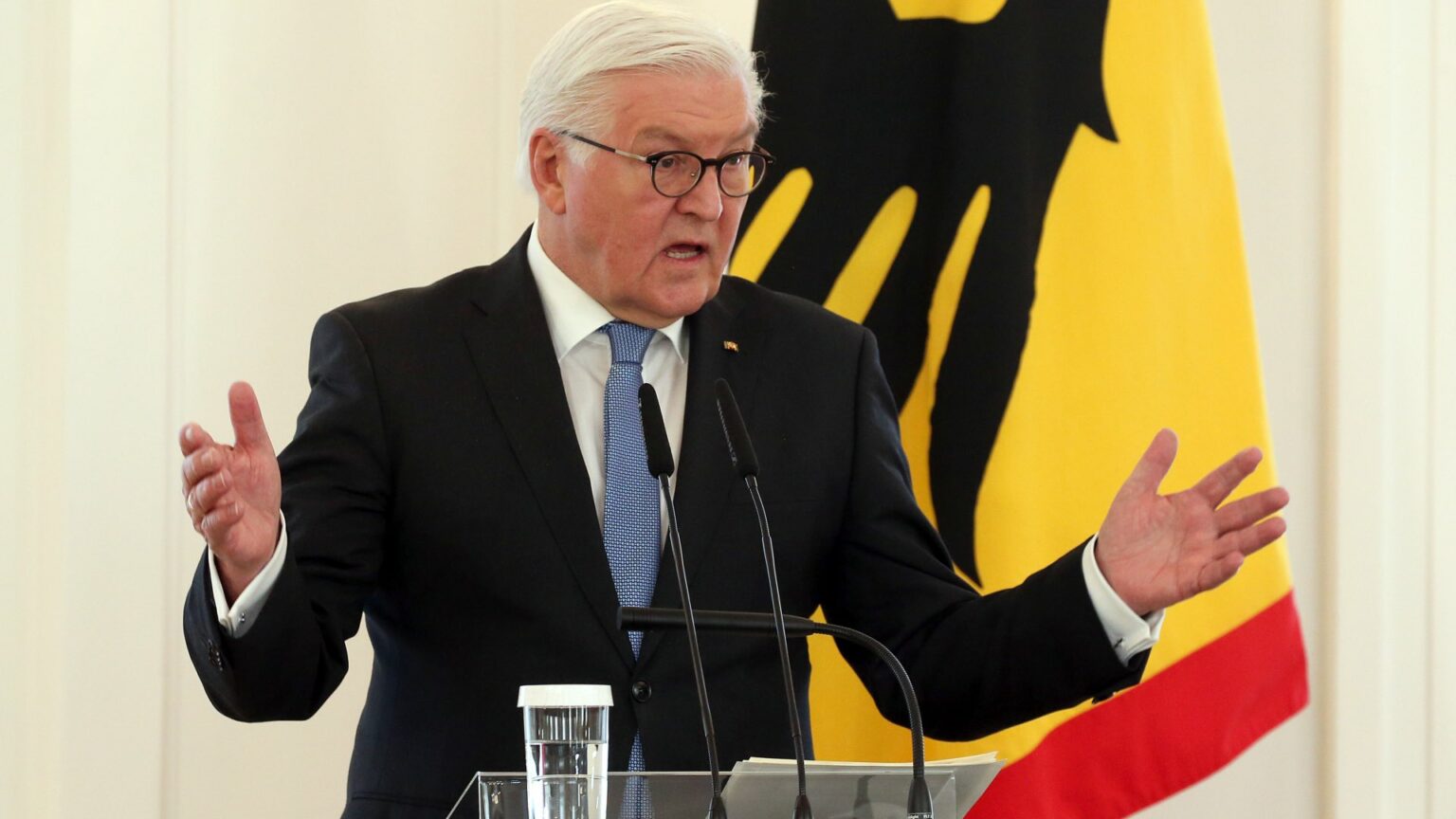
German President Frank-Walter Steinmeier said on Tuesday that trust between the United States and its Western allies has been “lost,” warning that the damage could persist beyond the presidency of Donald Trump.
“The rupture is very deep, and the loss of trust in U.S. great power policy is significant—not only among its allies, but also, as I observe, globally,” Steinmeier said during a speech in Berlin marking the 75th anniversary of Germany’s Foreign Ministry.
Referring to the future of transatlantic relations, he stated that “there is no return to the situation before January 20, 2025,” the date marking the start of Trump’s second term in the White House.
“Even a future U.S. administration will no longer be able to resume the role of a benevolent hegemon guaranteeing a liberal international order,” added Steinmeier, who previously served as Germany’s foreign minister.
He also criticized the war against Iran, describing it as “contrary to international law” and calling it “a political mistake with serious consequences.”
“This war is avoidable and unnecessary,” he said.
Although the German presidency is largely ceremonial, Steinmeier’s remarks reflect a broader concern within Germany, aligning with the government’s cautious stance while going further in tone.
International
Trump claims talks with Iran as G7 meets to address global tensions
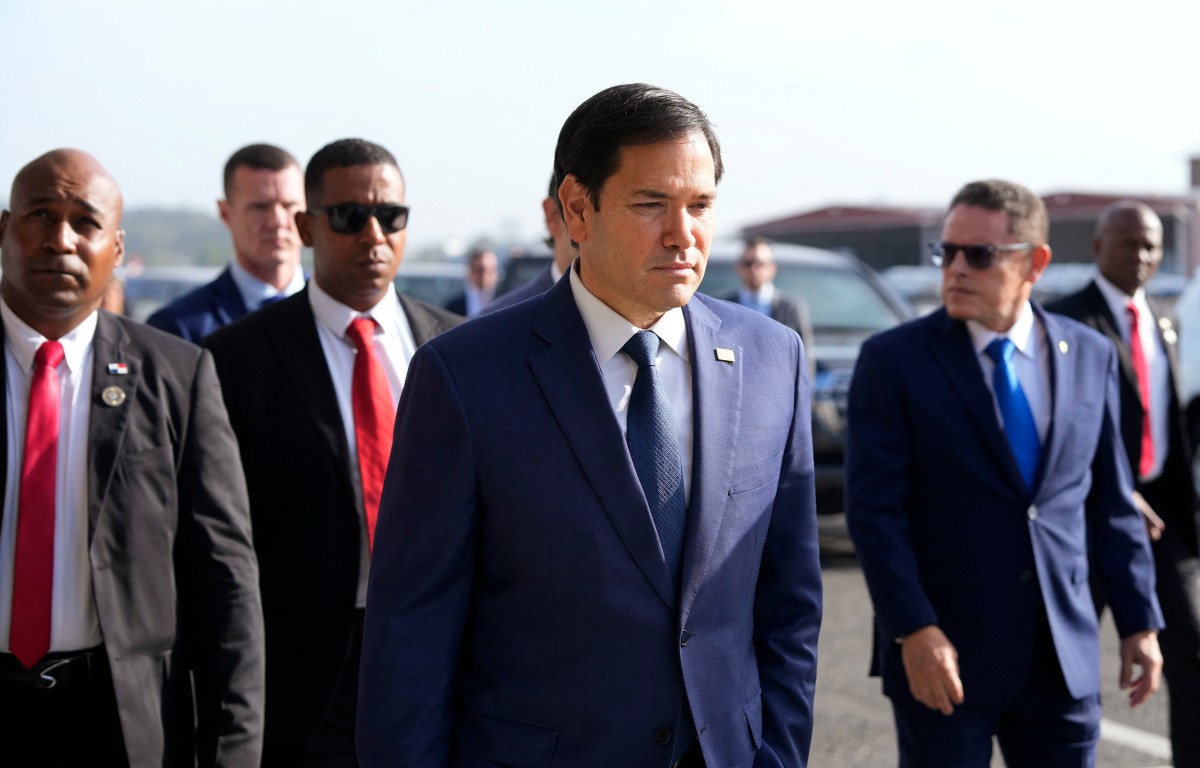
U.S. President Donald Trump said that the United States has held talks with Iran—a claim denied by Tehran—and has temporarily paused his threat to target the country’s electrical infrastructure.
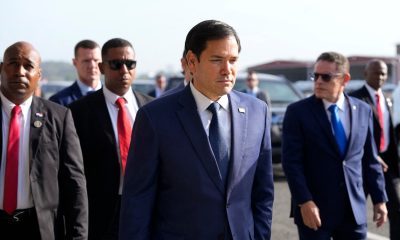
In his first overseas trip since the United States and Israel launched their offensive on February 28, U.S. Secretary of State Marco Rubio is expected to address key global issues, including the situation in the Middle East, according to State Department spokesperson Tommy Pigott.
Foreign ministers from the Group of Seven will meet in Cernay-la-Ville, close to Versailles, on the outskirts of Paris.
During the meeting, Rubio will hold discussions with his counterparts on “the war between Russia and Ukraine, the situation in the Middle East, and threats to global peace and stability,” Pigott said.
France currently holds the presidency of the G7, whose members also include the United Kingdom, Canada, Germany, Italy, and Japan.
Although all G7 nations are close allies of the United States, none has offered explicit support for Washington’s military actions against Iran, a stance that has reportedly frustrated Trump.
Last Saturday, G7 foreign ministers called for an “immediate and unconditional end” to Iranian attacks against U.S. allies in the Middle East.
International
Pentagon to deploy 3,000 troops to Persian Gulf as Middle East tensions escalate
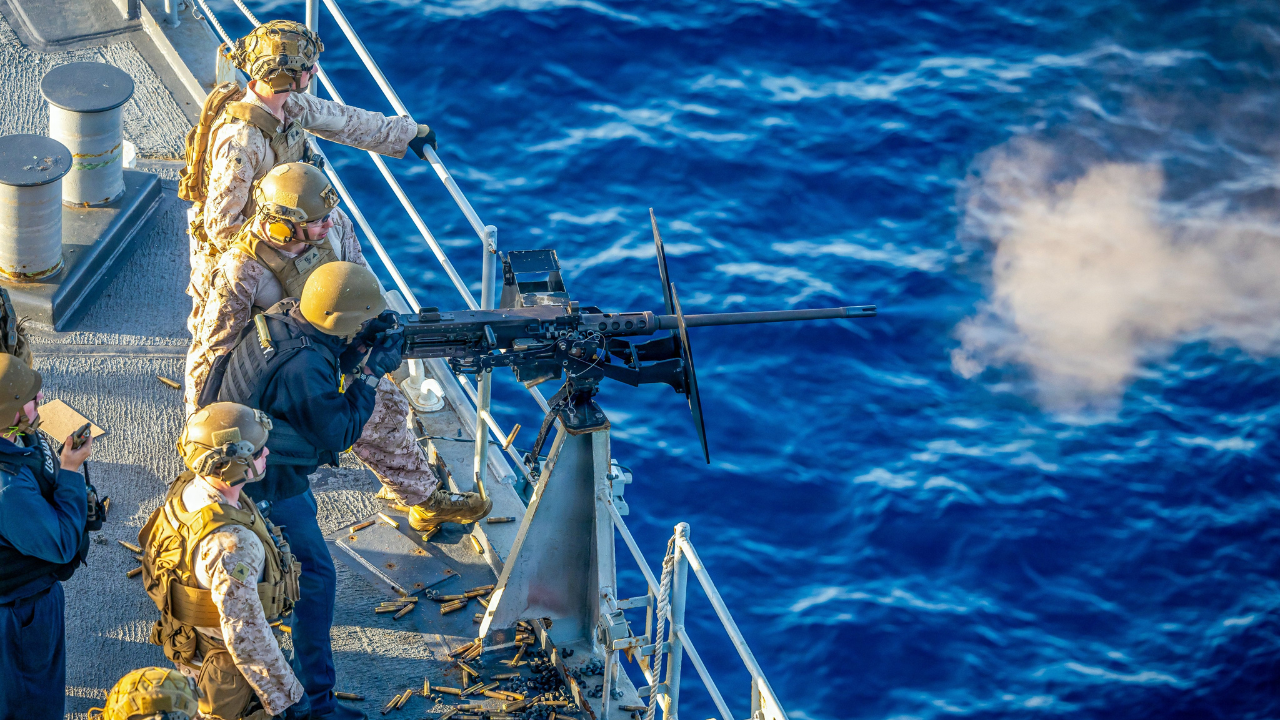
The Pentagon is planning to deploy nearly 3,000 troops from the 82nd Airborne Division to the Persian Gulf, according to two senior officials cited Tuesday by Spanish newspaper El País.
Meanwhile, Hezbollah warned it would confront any attempt at occupation following Israel’s announcement that its military will take control of southern Lebanon up to the Litani River, located about 30 kilometers from the border.
In recent hours, the Israel Defense Forces carried out airstrikes on Beirut, while Iran and Hezbollah responded with attacks on Israel, leaving at least six people with minor injuries in Tel Aviv.
The escalation comes as global markets react to renewed instability. The price of oil rose again above $100 per barrel after a brief decline the previous day, following an announcement by U.S. President Donald Trump of a five-day truce on attacks targeting Iran’s energy infrastructure.
Despite the announcement, Iranian authorities reported that two projectiles struck a gas pipeline in Khorramshahr and administrative buildings at a gas facility in Isfahan early Tuesday.

German president says trust in U.S. leadership is ‘lost’ amid global tensions

Trump claims talks with Iran as G7 meets to address global tensions

Pentagon to deploy 3,000 troops to Persian Gulf as Middle East tensions escalate
Tec de Monterrey honors one of its students for his contribution to nanotechnology in medicine

Defense Minister commends salvadoran soldier for Central American Cross Country victory

Extension of the state of emergency approved in southern Chile
-
 Sin categoría2 days ago
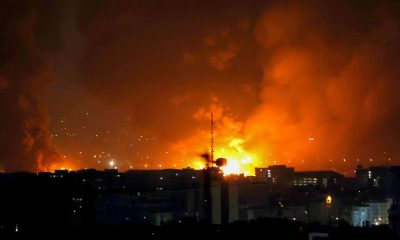
Tehran engulfed in toxic cloud after strikes on fuel facilities
-
 International2 days ago
IEA warns Middle East conflict could spark worst energy crisis in decades
-

 International2 days ago
Colombian Air Force Hercules plane crashes during takeoff with troops onboard
-
 Central America2 days ago
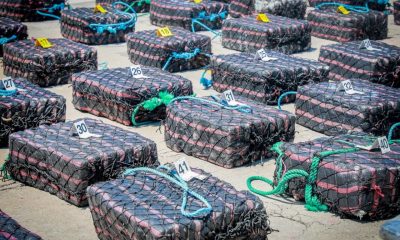
Panama seizes over 1,200 drug packages in container bound for Lithuania
-
 International1 day ago
Trump claims talks with Iran as G7 meets to address global tensions
-
 International3 days ago
Netanyahu vows to target Iran’s leadership after missile strikes in southern Israel
-
 International3 days ago
Paris prosecutors alert U.S. over alleged deepfake strategy linked to Elon Musk
-
 International1 day ago
Israel plans to seize security zone in southern Lebanon amid escalating conflict
-
 International1 day ago
Pentagon to deploy 3,000 troops to Persian Gulf as Middle East tensions escalate
-
 International1 day ago
German president says trust in U.S. leadership is ‘lost’ amid global tensions