
International
One European elections, twenty-seven national elections: this is how each EU country votes
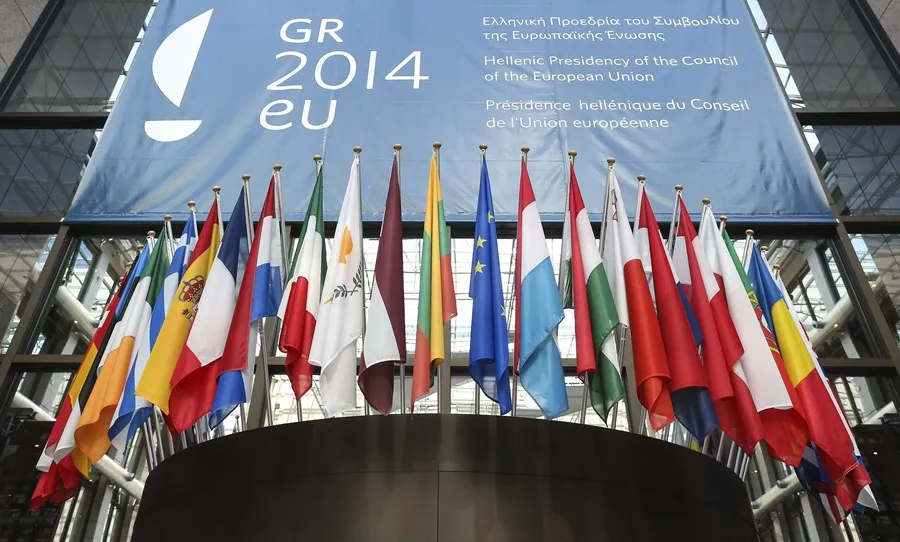
What at first glance seem to be a unified election for the European Parliament between this Thursday and Sunday are actually 27 different electoral processes, with their rules, thresholds, constituencies and rarities, in the absence of a unified electoral law in all the countries of the European Union as the European Parliament has insistently requested.
The celebration of these elections on four different days is the first detail that attracts attention: it began this Thursday in the Netherlands and on Friday in Ireland and the Czech Republic, which extends the election day until today, Saturday.
Estonia, for its part, has already started with electronic voting this Monday and is the only country that allows it.
But the Czechs are not the only ones who have two days to go to vote; it is also the case of the Italians, who in turn set the record for the latest closing time of the polling stations at eleven on Sunday night.
Most countries, including Spain, attend their polling stations on Sunday the 9th.











Each country also has its own rules regarding the voting margins necessary to get the first seat in the European Parliament: Spain accompanies thirteen other member states that have no threshold, but nine countries (Czech Republic, France, Croatia, Latvia, Lithuania, Hungary, Poland, Romania and Slovakia) set it at 5%; in Italy, Austria and Sweden it is 4%; in Greece 3% and in Cyprus 1.8%.
Also the alternatives to vote if a citizen is abroad are very different depending on their country of origin: the Czech Republic, Ireland, Malta and Slovakia do not allow to do so, although most countries do offer voting by mail and/or in an embassy or consulate. France, the Netherlands and Belgium also allow the proxy vote, for an authorized person to vote for the absentee.
On the other hand, it is mandatory to go to vote in Luxembourg, Bulgaria, Belgium and Greece, but not in the rest of the Member States. And in Malta, Austria, Belgium and Germany, citizens from the age of 16 will go to the polls, and 17 in the case of those from Greece.
The electoral law remains a competence mainly assigned to national governments and these, as in so many other areas, do not want to cede their sovereignty when organizing their elections as it suits them best because of their national idiosyncrasy: sometimes such simple issues as a local holiday or rules that are already applied in national elections come into play.
The European Parliament has insisted several times on the need to harmonize a series of minimum concepts, especially with a view to reinforcing the European character of these elections, which until now are excessively marked by the dynamics of each country.
Now two years ago, MEPs proposed, for example, that each European citizen should have two votes in the elections to the European Parliament: one equivalent to the current one, for the national lists, and an additional one for a single European constituency of 28 seats whose head of the list would be the candidate for the presidency of the European Commission.
In this proposal they also included that countries with more than 60 seats (Spain, Italy, France and Germany) had a minimum threshold of 3.5%, on May 9 (Europe Day) as a common voting day in all countries every five years and that the lists are compulsorily in zipper format (alternating a man and a woman successively) or with gender quotas to ensure equal representation.
The few characteristics common to all countries are reflected in the European electoral law of 1976, which protects the right of Europeans residing in another EU country to vote and stand for elections in their place of residence, a maximum threshold of 5%, the system of voting lists or transferable single vote and the incompatibilities to be an MEP










International
Actress Hayden Panettiere Dies at 36, Representative Confirms

Actress Hayden Panettiere has died at the age of 36, her representative confirmed to CNN.
“It is with profound sadness that we share the tragic passing of our beloved Hayden. She was an incredible light and a force of nature who brought immeasurable love and joy to everyone who knew her, and to the millions who saw her on screen,” her father, Skip Panettiere, said in a statement to CNN.
The circumstances surrounding her death were not immediately known. ABC was the first outlet to report the news.
Panettiere rose to prominence in the late 2000s with her role as Claire Bennet in the television series “Heroes.” Her character was a cheerleader with the ability to heal herself, becoming one of the show’s most recognizable figures.
She later starred in the musical drama series “Nashville,” portraying Juliette Barnes, a young country music star whose career and personal life were central to the series.
Panettiere also appeared in the 2011 horror film “Scream 4” as Kirby Reed. She later returned to the franchise more than a decade later in “Scream VI.”
Her other notable film credits included “I Love You, Beth Cooper” and “Remember the Titans.”
Panettiere’s career spanned television and film, with roles that made her a familiar face to audiences from the 2000s onward.
International
Luigi Mangione Pleads Guilty to Killing UnitedHealthcare CEO Brian Thompson

Luigi Mangione admitted Friday to fatally shooting Brian Thompson, the CEO of UnitedHealthcare, the largest health insurance group in the United States, during an appearance before a federal judge.
The case shocked the U.S. business community and dates back to December 2024, when Mangione opened fire on Thompson, 50, on a Manhattan street. Prosecutors have described the attack as being motivated by Mangione’s opposition to the U.S. health insurance system.
“On the morning of December 4, I shot Mr. Thompson in Manhattan and he died,” Mangione said as he pleaded guilty to a federal stalking charge related to his pursuit of the executive.
Mangione, 28, is scheduled to be sentenced on December 18, and prosecutors have indicated that they will seek a life sentence.
In addition to the federal charges related to stalking Thompson, Mangione also faces a murder case brought by the state of New York.
Following his guilty plea in federal court, Mangione’s defense asked a state court to dismiss the state charges, arguing that prosecuting him again for the same conduct would violate protections against double jeopardy.
“We have just filed our motion in state court to explain why the charges should be dismissed under New York’s protections against double jeopardy,” Mangione’s attorney, Karen Friedman Agnifilo, said Friday.
Both the federal and state cases could result in a life sentence. Two other federal charges that initially carried the possibility of the death penalty were dismissed by a judge earlier this year.
International
ICE Plan to Equip Agents With Electric Shock Gloves Raises Abuse Concerns

Plans to equip U.S. immigration agents with gloves capable of delivering electric shocks are raising concerns over potential abuses by a law enforcement agency that critics accuse of using excessive force and providing inadequate training to its personnel.
The plan involves the potential purchase of electric-shock gloves for agents with U.S. Immigration and Customs Enforcement (ICE), the agency primarily responsible for carrying out President Donald Trump’s campaign to deport millions of undocumented immigrants.
Democratic Representative Maxwell Frost criticized the proposal on X, arguing that the agency has already faced accusations of excessive force during immigration enforcement operations.
“As if assaulting and shooting people in the streets wasn’t enough,” Frost wrote. He also criticized the reported $20 million potential expenditure on the devices and called for greater restrictions on ICE.
The agency has faced growing scrutiny following a series of deadly shootings during immigration enforcement operations. Among the incidents were the deaths of two U.S. citizens in Minnesota in January who were participating in protests against the agency.
Critics have focused on the tactics used by ICE agents when detaining immigrants, as well as allegations that training standards for newly recruited personnel have been lowered.
According to a procurement plan first reported by the Associated Press, the Department of Homeland Security (DHS), which oversees ICE, could spend between $10 million and $20 million on the devices.
The gloves are described by the agency as tools intended for “distraction and de-escalation,” rather than lethal weapons. The system, known as GLOVE, stands for “Generated Low-Output Voltage Emitter.”
The device is manufactured by Compliant Technologies, a Kentucky-based company that describes its products as advanced non-lethal tools designed to protect and assist law enforcement and other personnel.
The proposal comes amid an intensifying national debate over ICE’s enforcement methods and the use of force during the Trump administration’s immigration crackdown.

Actress Hayden Panettiere Dies at 36, Representative Confirms

Luigi Mangione Pleads Guilty to Killing UnitedHealthcare CEO Brian Thompson

ICE Plan to Equip Agents With Electric Shock Gloves Raises Abuse Concerns

Three U.S. Executions Set for Same Day as Trump Pushes to Expand Death Penalty

Colombia Earthquake Death Toll Reaches 265 as Rescue Teams Race Against Time

German Authorities Investigate More Than 100 New Cases Against Convicted Nurse

Venezuela Raises Earthquake Death Toll to 6,301

CEAPI Backs Colombia’s New Government and Calls for Greater Public-Private Cooperation
Actress Hayden Panettiere Dies at 36, Representative Confirms
Three U.S. Executions Set for Same Day as Trump Pushes to Expand Death Penalty
Colombia Earthquake Death Toll Reaches 265 as Rescue Teams Race Against Time
ICE Plan to Equip Agents With Electric Shock Gloves Raises Abuse Concerns
Luigi Mangione Pleads Guilty to Killing UnitedHealthcare CEO Brian Thompson
-
 International13 hours ago
Actress Hayden Panettiere Dies at 36, Representative Confirms
-
 International4 days ago
Three U.S. Executions Set for Same Day as Trump Pushes to Expand Death Penalty
-
 International4 days ago
Colombia Earthquake Death Toll Reaches 265 as Rescue Teams Race Against Time
-
 International3 days ago
ICE Plan to Equip Agents With Electric Shock Gloves Raises Abuse Concerns
-
 International3 days ago
Luigi Mangione Pleads Guilty to Killing UnitedHealthcare CEO Brian Thompson