
International
Argentine president criticizes spanish PM amidst political row

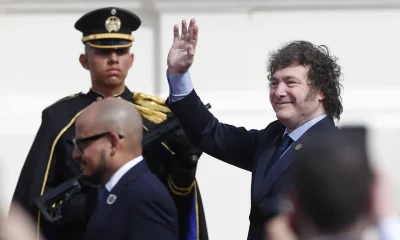
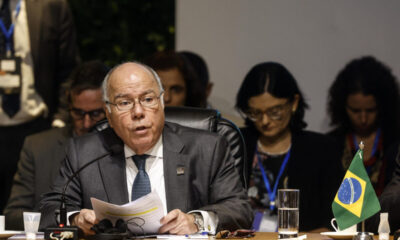
Argentine President Javier Milei sharply criticized Spanish Prime Minister Pedro Sánchez, suggesting he “has more significant issues to address,” in response to comments made by Spain’s Minister of Transport, Óscar Puente, on Friday.
“The government of Pedro Sánchez has more significant issues to deal with, such as the corruption allegations against his wife, a matter that even led him to consider resignation,” stated Argentine President Javier Milei.
In this regard, the Argentine leader expressed his expectation that the judiciary would act “swiftly” in this corruption case, which he mentioned “affects the stability” of Spain and relations between the two nations.
Moreover, Milei accused Spanish Prime Minister Pedro Sánchez of “endangering” the unity of Spain by “negotiating with separatists,” harming women by “allowing illegal immigration of those who threaten their physical integrity,” and damaging the middle class through “socialist policies that only bring poverty and death.”
The Argentine presidency issued these statements in response to remarks from Spain’s Minister of Transport and Mobility, Óscar Puente, who accused Milei of “substance ingestion,” which the Argentine presidency labeled as “slander and libel.”









“I saw Milei on TV and, hearing him, I couldn’t tell in what state he was in, before or after the ingestion of whatever substances, and he came out to say that and I thought, it’s impossible that he wins the elections, he’s dug his own grave, but no,” Puente declared at a colloquium on communication and social media held this Friday in Salamanca.


















































International
FBI Warns of Possible Iranian Drone Attack on U.S. West Coast
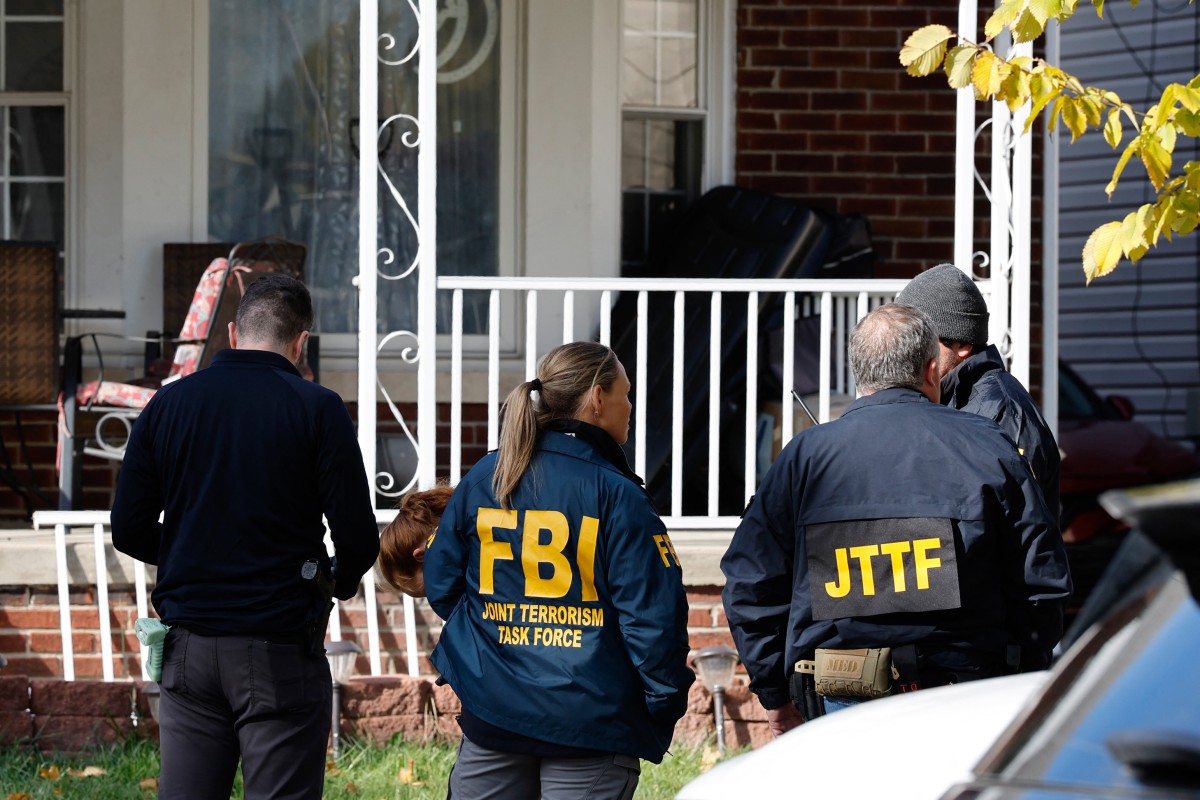
The Federal Bureau of Investigation (FBI) has warned police departments in California about a possible Iranian plan to carry out a drone attack against the west coast of the United States, according to a report published Wednesday by ABC News.
The warning was issued through a memorandum sent to agencies participating in a Joint Terrorism Task Force, outlining the possibility of a surprise attack involving unmanned aerial vehicles launched from a vessel off the U.S. coastline.
According to the document, intelligence suggested that in early February 2026 Iran may have considered an attack against unspecified targets in California if the United States carried out airstrikes on Iranian territory.
However, the memo also noted that authorities lack additional details about the timing, method, specific targets, or individuals responsible for the alleged plan.
Reports cited by U.S. media indicate that the alert coincided with the start of a military offensive by the administration of Donald Trump against the Iran, a development that has heightened tensions across the Middle East.
Law enforcement sources with counterterrorism experience told the Los Angeles Times that the warning is part of a routine precautionary advisory based on information from the U.S. Coast Guard.
The sources emphasized that there is no credible indication of an imminent attack and no evidence that Iran currently has the capability to successfully carry out such an operation.
California is home to the largest Iranian community in the United States. According to the Migration Policy Institute, more than half of Iranian immigrants in the country lived in the state in 2019, including around 140,000 people in Los Angeles County alone.
The city also hosts a neighborhood widely known as “Tehrangeles,” where a large Iranian community began settling in the 1960s and continued to grow following the Iranian Revolution.
International
Trump Says Iran Is Welcome at 2026 World Cup but Warns of Security Concerns
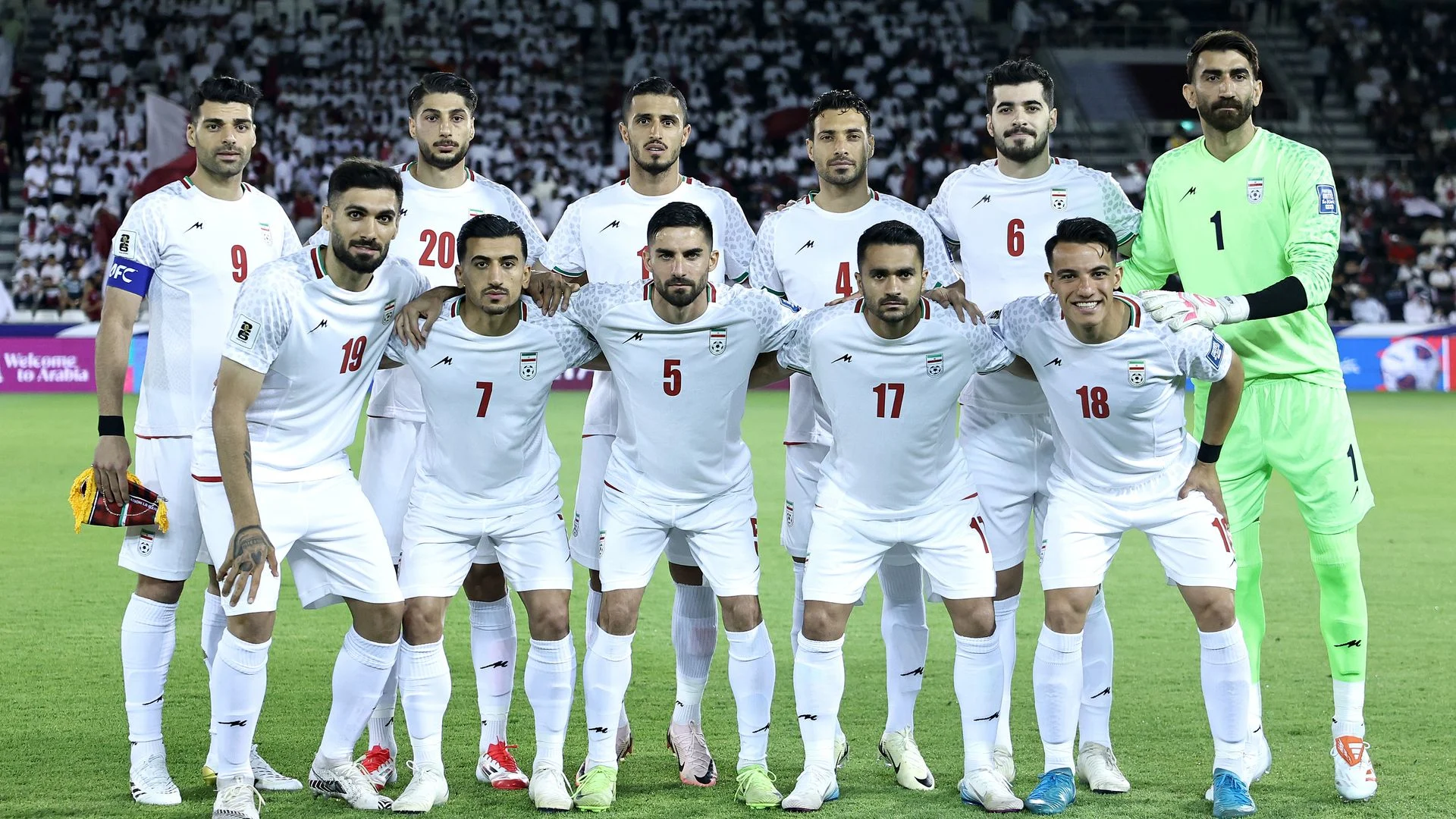
The President of the United States, Donald Trump, said Thursday that the national football team of Iran is “welcome” to participate in the 2026 World Cup, although he suggested it might be safer for the team not to take part in the tournament.
“The Iranian national soccer team is welcome at the World Cup, but I really don’t think it’s appropriate for them to be there, for their own safety,” Trump wrote on his social media platform Truth Social.
His comments came a day after Iran’s sports minister, Ahman Donyamali, said that there are currently no conditions for the country to participate in the tournament following the killing of Iran’s Supreme Leader, Ali Khamenei, during a military offensive launched on February 28 by Israel and the United States.
“After the corrupt government killed our leader, there are no conditions that allow us to take part in the World Cup,” the Iranian official said. He added that the country has faced two wars in the past eight or nine months, resulting in thousands of civilian deaths, making participation in the tournament unlikely.
On Tuesday, the president of FIFA, Gianni Infantino, met with Trump at the White House.
Following the meeting, Infantino said that Trump reiterated that Iran’s national team would be allowed to compete in the FIFA World Cup 2026.
“We discussed the current situation in Iran and the fact that the Iranian team has qualified to participate in the FIFA World Cup 2026. During the conversation, President Trump reiterated that the Iranian team is, of course, welcome to compete in the tournament in the United States,” Infantino wrote on Instagram.
International
Iran issues threat to Trump as conflict escalates over Strait of Hormuz
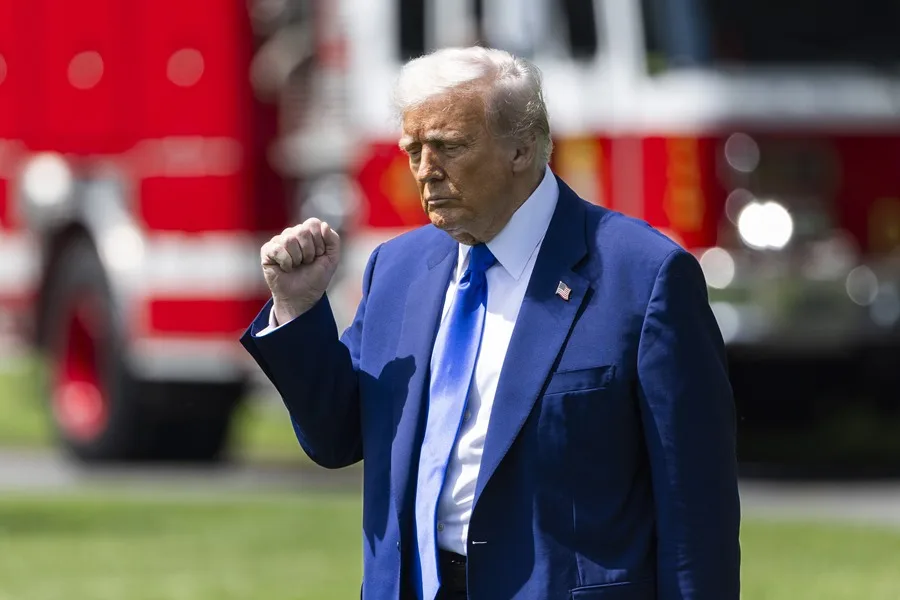
The head of Iran’s Supreme National Security Council, Ali Larijani, threatened U.S. President Donald Trump on Tuesday, warning him to “beware of being eliminated.”
The Republican president had warned on Monday that he would strike Iran “very hard” if the Islamic Republic blocked oil shipments through the Strait of Hormuz, which has effectively been closed since the war began eleven days ago.
“Iran is not afraid of your empty threats. Others more powerful than you tried to destroy the Iranian nation and failed. Beware that you are not eliminated,” Larijani wrote on X.
Earlier, Iran’s Revolutionary Guards — the ideological military force of the Islamic Republic — also said their forces would move to block oil exports from the Gulf.
Meanwhile, Israeli Prime Minister Benjamin Netanyahu said Israel’s military offensive against Iran is far from over.
“Our aspiration is that the Iranian people free themselves from the yoke of tyranny; ultimately, that depends on them. But there is no doubt that with the measures taken so far we are breaking their bones, and we are not finished yet,” Netanyahu said in a statement.


FBI Most Wanted Fugitive Arrested in Mexico and Deported to U.S.

FBI Warns of Possible Iranian Drone Attack on U.S. West Coast

Trump Says Iran Is Welcome at 2026 World Cup but Warns of Security Concerns
Tec de Monterrey honors one of its students for his contribution to nanotechnology in medicine

Defense Minister commends salvadoran soldier for Central American Cross Country victory

Extension of the state of emergency approved in southern Chile
-
 International5 days ago
Mexico, Brazil and Colombia left out of Trump’s “Shield of the Americas” summit
-

 Central America3 days ago
Guatemala Remains in “Restricted” Press Freedom Category, Chapultepec Index Warns
-
 International3 days ago
Trump Raises Possibility of “Friendly Takeover” of Cuba Amid Deepening Crisis
-
 International2 days ago
Iran issues threat to Trump as conflict escalates over Strait of Hormuz
-
 International17 hours ago
FBI Warns of Possible Iranian Drone Attack on U.S. West Coast
-
 International2 days ago
Driver detained after suspicious vehicle incident near the White House
-
 International17 hours ago
Trump Says Iran Is Welcome at 2026 World Cup but Warns of Security Concerns
-
 Central America3 days ago
UN Report Warns of Nicaragua’s “Transnational” Surveillance Network Targeting Dissidents
-
 Sin categoría2 days ago
UN experts warn Nicaragua runs vast transnational network to monitor exiled dissidents
-
 Central America3 days ago
UN Rapporteur Warns of “Deep Crisis” in Guatemala’s Judicial System
-
 Sin categoría16 hours ago
FBI Most Wanted Fugitive Arrested in Mexico and Deported to U.S.