
International
Milei celebrates 100 days as president, between the controversy and his obstinacy about the course

The president of Argentina, Javier Milei, celebrates 100 days of management this Tuesday, in which he has shown obstinacy in the course to achieve fiscal balance and reduce the weight of the State to lower inflation, despite the setbacks in Congress; the fall in purchasing power and criticism for his confrontational method.
In several publications that Milei replied on his social network account X, a direct media that he appreciates a lot, he celebrated that he “avoided the hyperinflation” that was “activated” by his predecessor, the Peronist Alberto Fernández (2019-2023); he began the “sustained process of disinflation” and the decrease in country risk, today at 1,520 basis points.
In terms of security, he replied messages that say that he “ended the pickets” and “he stood against insecurity and narco-terrorism,” and as for corruption, “the amount of illegalities” that he is discovering.
Milei took advantage of this Tuesday to exhibit the unit with her vice president, Victoria Villarruel, on social networks, where they came to publish a photo hugging, after she participated in the meeting of the Cabinet of ministers in the Casa Rosada: “Those who are fighting…!!!,” the president said ironically.
The relationship between Milei and Villarruel reached a peak of tension last week due to the decision of the vice president – who also chairs the Senate – to convene a session in the Upper House where the megadecree of necessity and urgency (DNU) signed by the president in December was rejected.











The presidential spokesman, Manuel Adorni, defined the first 100 days as “a case study” and “an atypical case,” in his usual press conference at the Executive headquarters.
Adorni listed that since Milei took office on December 10, Congress rejected the DNU and a fundamental bill for the Executive, the main union center called for a general strike on January 24 and there were train and bus stops.
In addition, the Patagonian province of Chubut threatened to cut off the supply of hydrocarbons and opposition groups “fantasized” that the far-right would fall for these months.
“This was the only Government (…) that in the first days of the Government has meticulously fulfilled each of the points it had promised in the campaign,” Adorni said, because it “attacked from the outset” the fiscal deficit and clung to the balance of public accounts to “end inflation and the destruction of the currency.”
Milei is an ‘outsider’ who, with aggressive speech and disruptive forms against the “political caste,” won the elections in a second round last November, with 56% support.
“No other government so far had been encouraged to put their hand in politics’s pocket” or “exposed as much to politics” as Milei’s, Adorni said.
Fernández is one of the opposition politicians who criticized the first 100 days of Milei, by showing on his social networks that inflation rose by 71.3%, industrial production fell by 19.4%, retail sales of SMEs fell by 23% and the real salary of registered private workers fell by 27.1%, among other negative indicators.
Amnesty International Argentina warned that the “confrontation” practiced by the Government of Milei is to divert attention from those real conflicts – inflation, poverty, lack of medicines – and violate freedom of expression, and asked for “basic rules of coexistence and non-aggression, especially from the presidential investiture and its collaborators.”
Despite the severe economic adjustment that causes a loss of purchasing power, with inflation that climbed to 276.2% year-on-year last February, Milei maintains a positive image of more than 50%, according to opinion polls.
In that sense, the Government of Milei also boasts of having “changed the concept of governance” because now “it is given by the support of the people,” in a context in which its far-right party, La Libertad Avanza, only has 38 deputies, 7 senators and no provincial governor.
Adorni acknowledged that “there is still a lot to do,” remembering that seven out of ten minors are still poor in Argentina, but that “this time a new sun comes to impoverished Argentina.”

















































International
Portuguese Authorities Seize 2.6 Tons of Cocaine Worth More Than $550 Million in Drug Bust
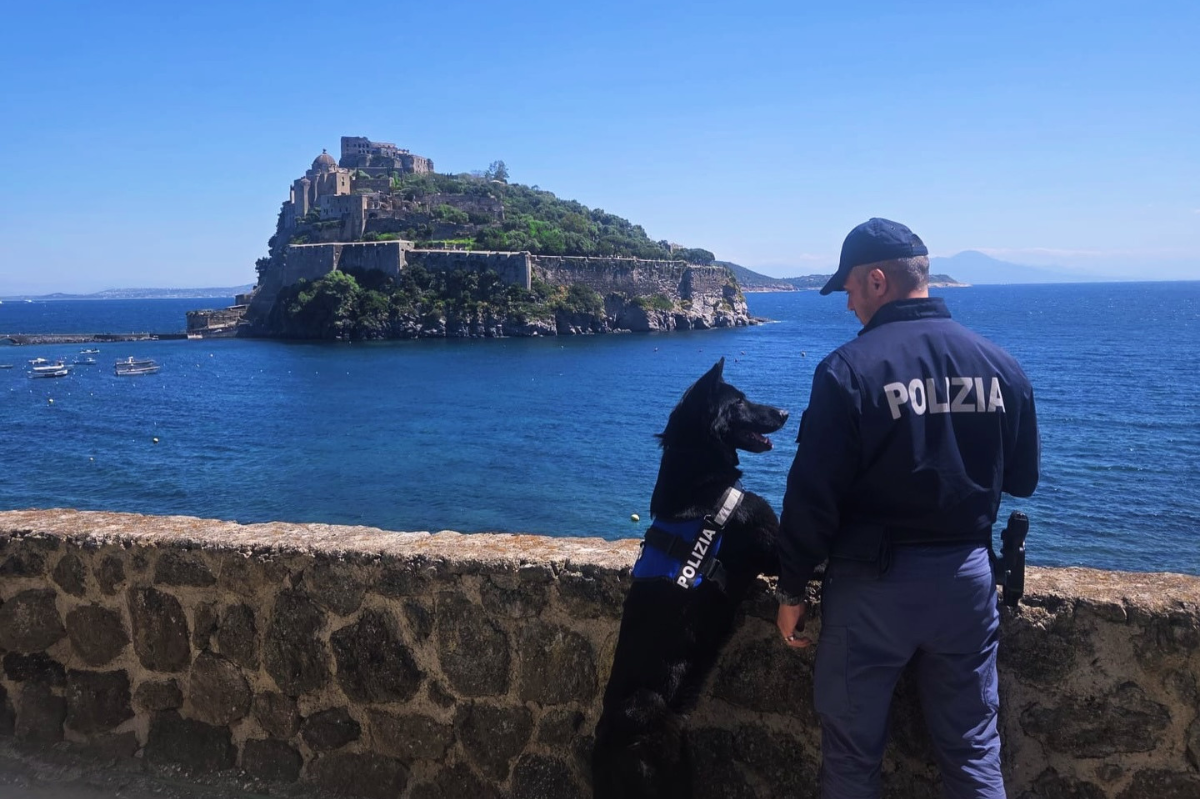
Italian financial police reported Monday that Portuguese authorities intercepted a speedboat carrying more than 2.6 tons of cocaine, with an estimated street value exceeding $550 million.
Four people — two Spanish nationals, one Albanian citizen, and a man from Gibraltar — were arrested in connection with the operation, according to Italian authorities.
The vessel was intercepted off the coast of Lisbon by Portugal’s maritime police following an investigation led by Italian authorities.
Italian financial police estimated that the seized shipment had a street value of approximately 500 million euros ($570 million), making it one of the largest drug seizures reported in the region in recent years.
Portuguese authorities said the interception took place on Thursday, about 90 kilometers (50 nautical miles) southwest of Cape Espichel, during an operation targeting international drug trafficking routes.
International
U.S. and Iran Maintain Ceasefire as Trump Expresses Optimism Over New Talks
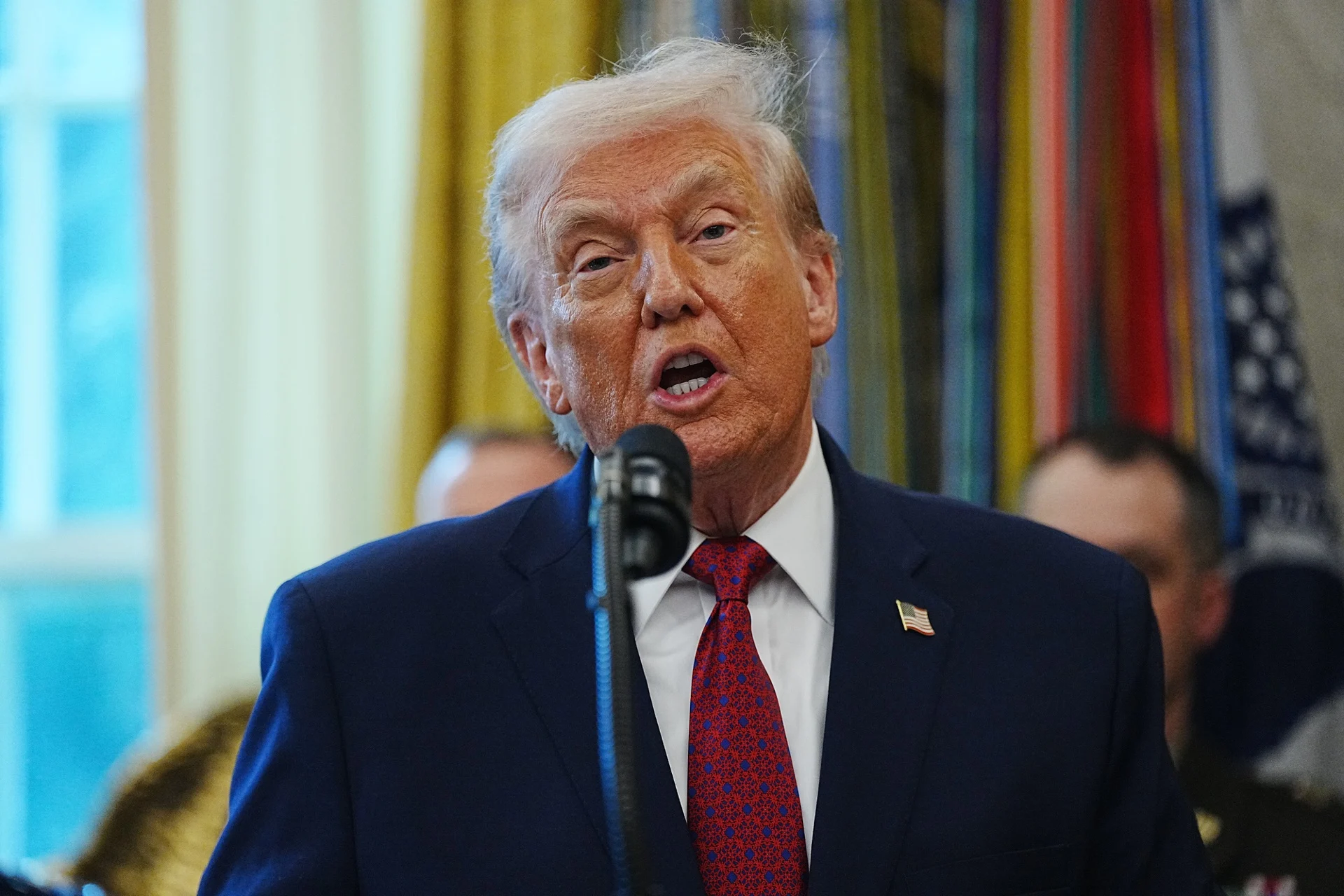
U.S. President Donald Trump said Monday that there are “good chances” of reaching an agreement with Iran, as both sides maintained a ceasefire for the third consecutive day following weeks of escalating hostilities.
Trump expressed optimism about the possibility of resuming diplomatic negotiations aimed at ending the conflict, which began in late February and has raised international concerns over its impact on global markets and energy supplies.
The fighting has remained suspended since Saturday, after the United States resumed airstrikes against Iran amid a dispute over control of the Strait of Hormuz, a key route for global oil shipments. The renewed military action had previously caused the collapse of an earlier ceasefire agreement.
Asked about the prospects for negotiations aboard Air Force One, Trump said: “I have a lot of patience… We’ll see what happens. I think there are good chances that something could happen.”
The U.S. president also highlighted Washington’s military capabilities, saying: “We have a lot of ammunition,” while adding that he would like to have more resources due to U.S. support for Ukraine.
U.S. Ambassador to the United Nations Mike Waltz said Trump was allowing diplomatic efforts more time, explaining that the president was “giving some space to the talks” while maintaining that Washington remains prepared to take action if necessary.
Meanwhile, tensions continue in other areas of the Middle East. Saudi Arabia reported that it intercepted drones launched from Iraq by groups allied with Tehran and urged the Iraqi government to take measures to prevent further attacks.
International
Police Investigate After Remains of Five Newborns Found in French Apartment
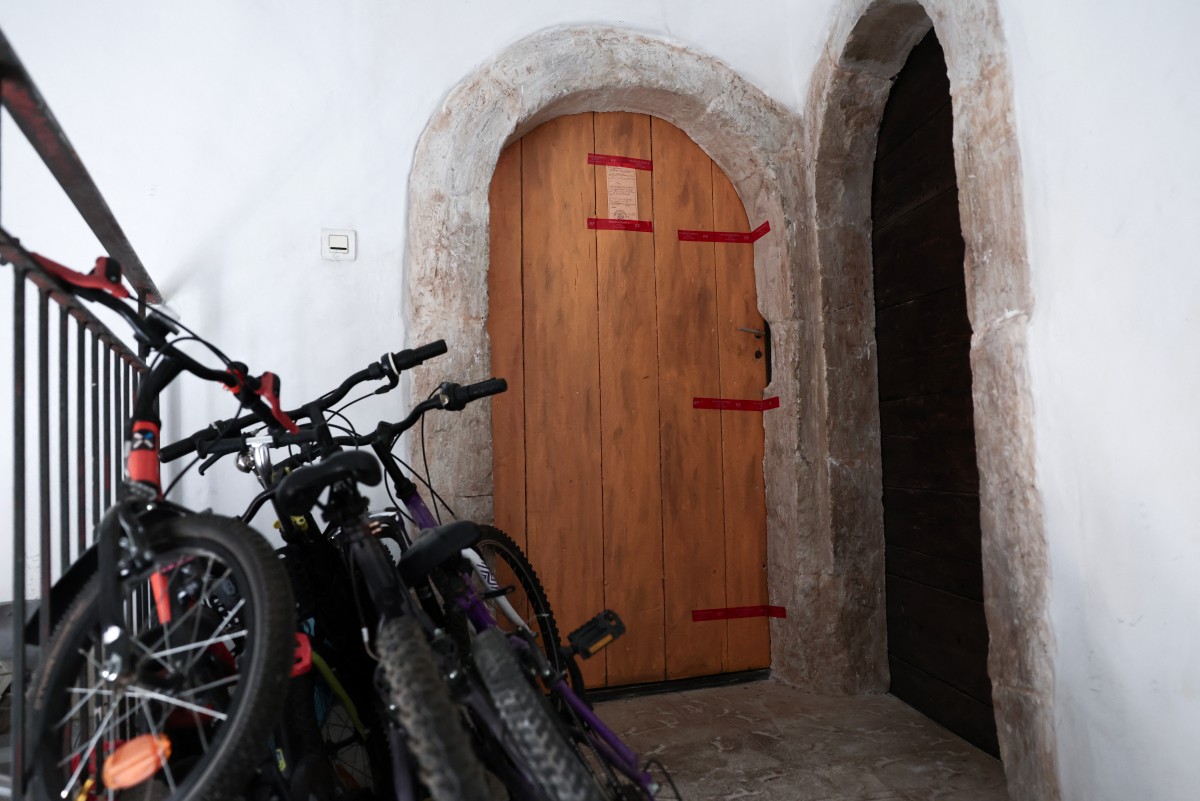
French authorities have opened a murder investigation after the discovery of human remains believed to belong to five newborn babies inside an apartment in the historic center of a city, the local prosecutor’s office reported Monday night.
According to prosecutors, a 32-year-old woman had given birth at home on Sunday to a healthy baby before being taken to a hospital for medical care.
The discovery was made after the woman’s 32-year-old partner began searching the residence after reportedly learning, once again and at a late stage, that she had been pregnant.
During the search, the man found what appeared to be human remains and informed the hospital, which then alerted prosecutors.
A forensic doctor determined that the remains likely belonged to five newborn infants. Authorities have not yet established the circumstances or motive behind the case.
Investigators have not been able to interview the mother, who remains hospitalized following the delivery.
Prosecutors also confirmed that the couple has two other children, aged eight and nine years old. The investigation remains ongoing as authorities work to clarify the events surrounding the discovery.


Portuguese Authorities Seize 2.6 Tons of Cocaine Worth More Than $550 Million in Drug Bust

U.S. and Iran Maintain Ceasefire as Trump Expresses Optimism Over New Talks

Police Investigate After Remains of Five Newborns Found in French Apartment
Tec de Monterrey honors one of its students for his contribution to nanotechnology in medicine

Defense Minister commends salvadoran soldier for Central American Cross Country victory

Extension of the state of emergency approved in southern Chile
-

 International5 days ago
Wildfires in France Burn Nearly Three Times More Land Than in 2025, Interior Minister Says
-
 International24 hours ago
U.S. and Iran Maintain Ceasefire as Trump Expresses Optimism Over New Talks
-
 International24 hours ago
Police Investigate After Remains of Five Newborns Found in French Apartment
-

 International5 days ago
Israel Says Saudi Recognition Would Mark ‘Historic Breakthrough’ for Middle East Peace
-
 International24 hours ago
Portuguese Authorities Seize 2.6 Tons of Cocaine Worth More Than $550 Million in Drug Bust
-

 International2 days ago
Costa Rica Seeks to Expand Extradition Law to Target Organized Crime
-

 International2 days ago
China Accuses U.S. AI Firms of Using Chinese Models to Train Artificial Intelligence
-
 Central America2 days ago
EU Urges Nicaragua to Hold Free and Transparent Elections Amid Proposed Electoral Reforms
-

 International2 days ago
Three Killed, Four Injured in Shooting Near Seattle’s Space Needle