
International
The death toll in an insurgent attack on a military base in Pakistan rise to 13
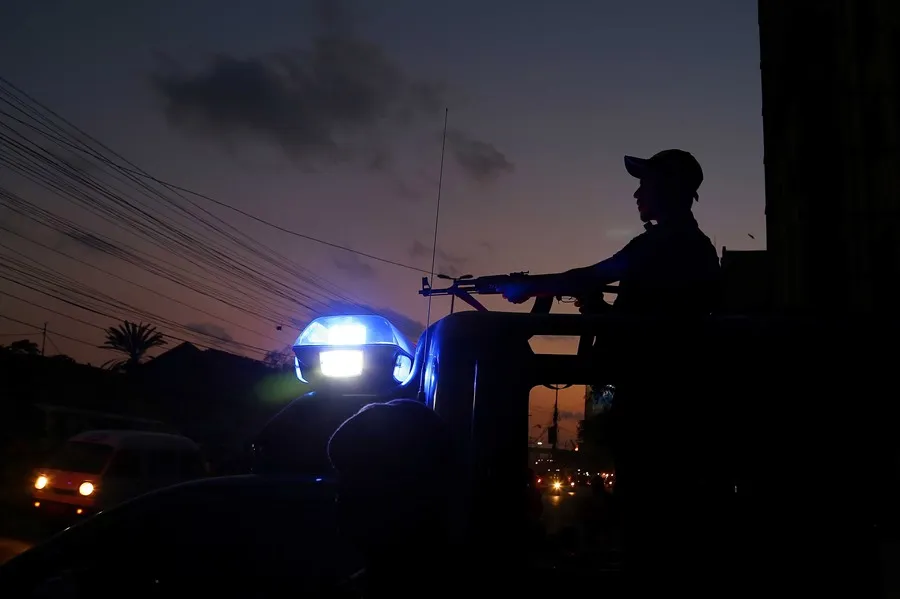
The death toll in an attack this Saturday against a military base in northern Pakistan increased to thirteen, including seven members of the security forces and six insurgents, the Asian country’s Army reported.
“A group of six terrorists attacked a security forces post in the Mir Ali area, in the district of North Waziristan. His troops failed in the initial attempt at intrusion, so the terrorists rammed a truck loaded with explosives against the post followed by multiple suicide attacks,” said the communication services of the Pakistani Army, the ISPR.
The source said in a statement that seven soldiers, including two officers, died in an attack that also led to the partial destruction of the military base.
The Pakistani Army claimed that the six attacking insurgents were killed in the confrontation with the security forces.
“During the clean-ups operation, our troops led by Lieutenant Colonel Kashif, managed to confront and send the six terrorists to hell,” the ISPR said.
An officer from the Mir Ali Police Station, Hayat Khan, told EFE that the attack began around 6:10 local time (1:10 GMT), in this district located in the northern province of Khyber Pakhtunkhwa.











Despite the fact that the Pakistani authorities claimed to have killed all the insurgents, the Army’s communication office pointed out that the security forces are carrying out a search “to eliminate any other terrorist present in the area.”
For now, no insurgent group has claimed responsibility for the attack.
The eastern province of Khyber Pakhtunkhwa, where today’s attack took place, and southern Balochistan have been especially affected by the increase in insurgent attacks in Pakistan.
Ten police officers were killed and six others were injured on February 5 in an attack on the police station in the Dera Ismail Khan district, in Khyber Pakhtunkhwa.
In that same province, 23 soldiers were killed and more than 30 were injured last December when six insurgents tried unsuccessfully to access a military base, and later a vehicle loaded with explosives crashed into it that caused the collapse of the building.
The rise in violence in the Asian country coincided with the coming to power of the Taliban in Afghanistan in August 2021, which according to the Pakistani Government reactivated the attacks of its Pakistani ideological brothers, the Tehreek-e-Taliban Pakistan (TTP).
The government of the Asian country accuses the TTP of using Afghan soil to carry out attacks, an extreme that Kabul has repeatedly denied.











International
Three Killed, Four Injured in Shooting Near Seattle’s Space Needle

International
China Accuses U.S. AI Firms of Using Chinese Models to Train Artificial Intelligence

China on Monday accused U.S. artificial intelligence companies of using Chinese AI models to train their own systems, escalating tensions in the technological rivalry between the world’s two largest economies.
In a statement, China’s Ministry of Commerce said it has evidence that “many U.S. artificial intelligence companies have distilled Chinese models during their research, development and training processes.”
Model distillation is a machine learning technique that transfers knowledge from a larger, more advanced model to a smaller and faster one, allowing it to perform efficiently while requiring fewer computing resources. The approach is widely used across the AI industry.
U.S. officials have previously argued that Chinese firms employ distillation on a large scale to unlawfully replicate proprietary American AI systems. Beijing dismissed those allegations, calling them unfounded.
According to the Chinese ministry, Washington’s accusations “lack both factual and legal basis, apply double standards in practice, and represent a typical act of AI hegemony.”
“China will take all necessary measures to firmly safeguard its legitimate rights and interests,” the ministry added.
The statement comes days after a senior White House official accused Chinese startup Moonshot AI of secretly copying Anthropic’s most advanced AI model to develop its Kimi K3 system.
Moonshot’s latest model drew significant attention across the U.S. technology sector following its release, reigniting debate over China’s growing competitiveness in artificial intelligence.
Last week, U.S. Treasury Secretary Scott Bessent warned that Washington could impose sanctions on China as the administration considers restricting or banning foreign-developed open-source AI models, many of which are built using model distillation techniques.
International
Costa Rica Seeks to Expand Extradition Law to Target Organized Crime
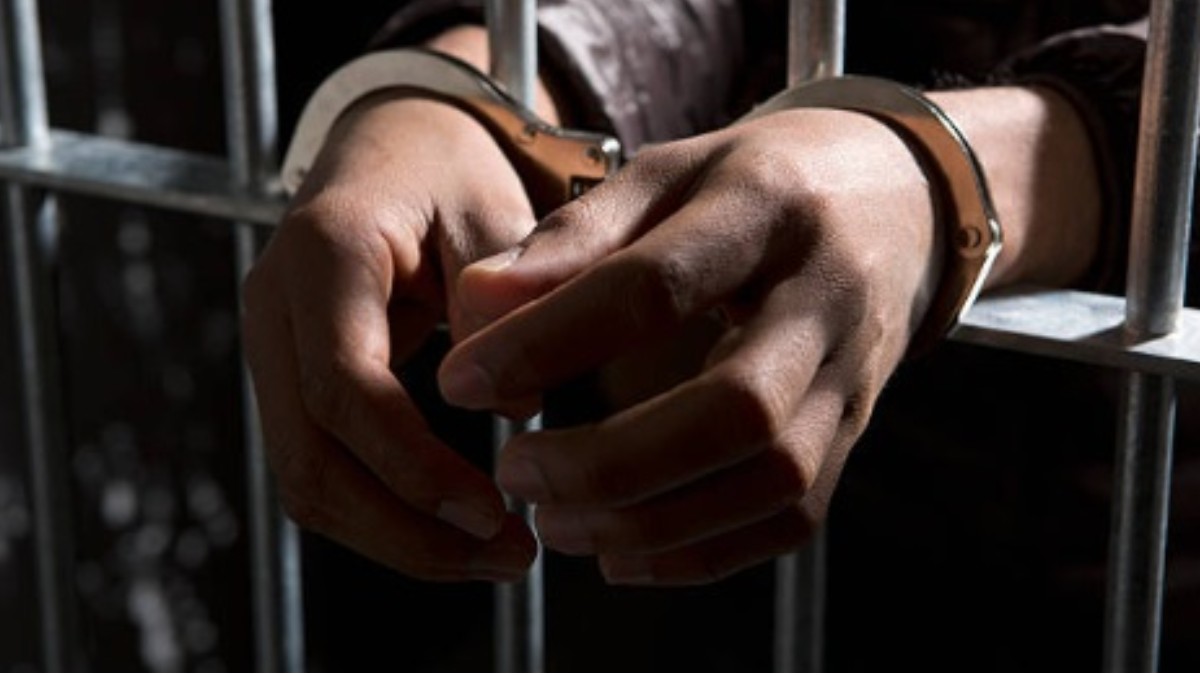
Costa Rican President Laura Fernández announced that her administration will submit a constitutional reform bill to Congress on August 3 aimed at expanding the legal grounds for extraditing Costa Rican nationals accused of serious crimes.
Under current legislation, Costa Rican citizens can only be extradited to face prosecution abroad for international drug trafficking and terrorism. The proposed reform would broaden that list to include a wider range of organized crime offenses.
Speaking before the Legislative Assembly while presenting a broader package of public security initiatives, Fernández said the proposal seeks to strengthen the country’s fight against transnational criminal organizations.
“We are going to expand the grounds for extradition to include serious crimes,” the president said.
The initiative would allow the extradition of Costa Rican nationals accused of financing drug trafficking or terrorism, money laundering, human trafficking, migrant smuggling, arms and organ trafficking, contract killings, organized crime-related homicides, cybercrime and cyberterrorism.
“We will not stop in our national crusade against organized crime or in our relentless war against drug trafficking,” Fernández said.
A political ally of U.S. President Donald Trump, Fernández took office in May after campaigning on a promise to adopt a tougher stance against organized crime, which she has linked to the recent rise in violence in Costa Rica, a country long regarded as one of the safest in Latin America.
Costa Rica currently permits the extradition of its own citizens only for international drug trafficking and terrorism, following a 2025 constitutional amendment promoted by former President Rodrigo Chaves, who now serves as the country’s Minister of the Presidency and Finance.


Three Killed, Four Injured in Shooting Near Seattle’s Space Needle

China Accuses U.S. AI Firms of Using Chinese Models to Train Artificial Intelligence

Costa Rica Seeks to Expand Extradition Law to Target Organized Crime
Tec de Monterrey honors one of its students for his contribution to nanotechnology in medicine

Defense Minister commends salvadoran soldier for Central American Cross Country victory

Extension of the state of emergency approved in southern Chile
-

 Central America5 days ago
CDC Issues Level 2 Travel Alert for Costa Rica Amid Chikungunya Outbreak
-

 International4 days ago
Wildfires in France Burn Nearly Three Times More Land Than in 2025, Interior Minister Says
-
 Central America5 days ago
Honduras Warns of Possible New Dengue Epidemic as Cases Continue to Rise
-
 International4 days ago
Israel Says Saudi Recognition Would Mark ‘Historic Breakthrough’ for Middle East Peace
-
 International18 hours ago
Costa Rica Seeks to Expand Extradition Law to Target Organized Crime
-

 Central America1 day ago
EU Urges Nicaragua to Hold Free and Transparent Elections Amid Proposed Electoral Reforms
-
 International17 hours ago
China Accuses U.S. AI Firms of Using Chinese Models to Train Artificial Intelligence
-
 International17 hours ago
Three Killed, Four Injured in Shooting Near Seattle’s Space Needle