
International
By water or land, the security forces shield Rosario against drug trafficking
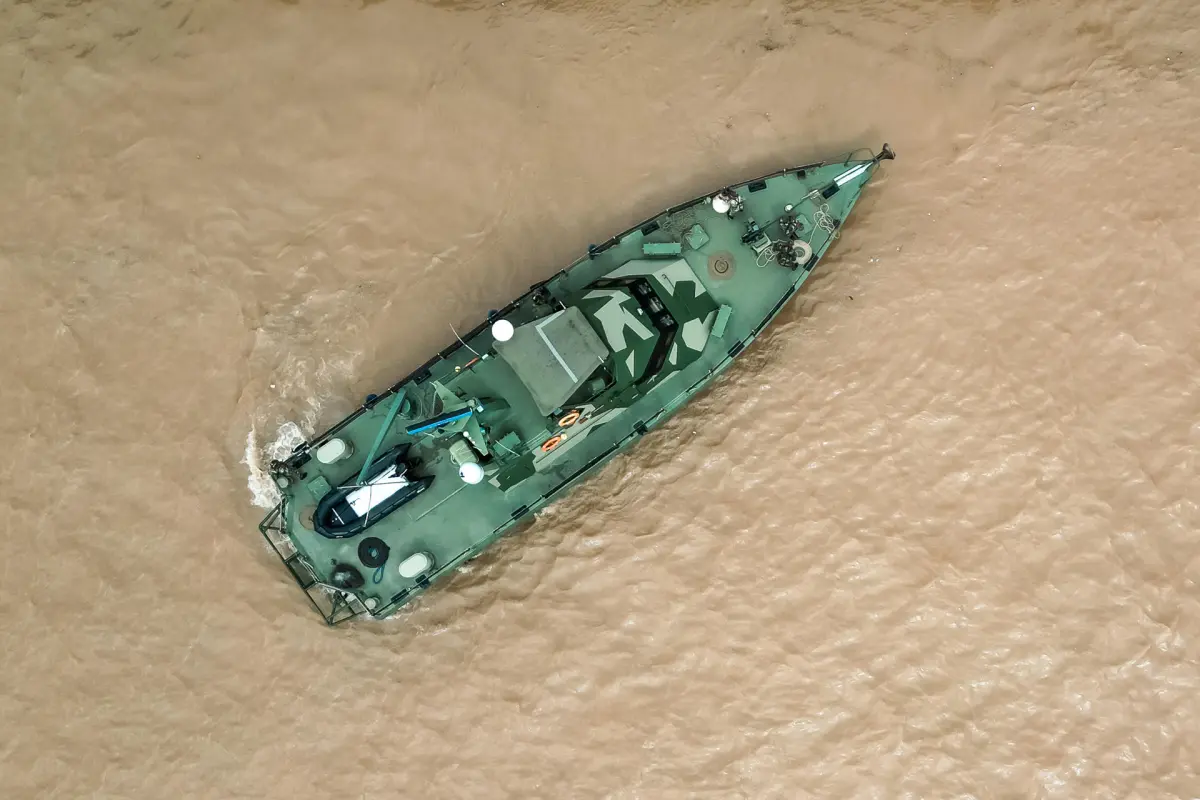
Whether by water or by land, the hardest core of the Argentine federal forces, which the Minister of Security, Patricia Bullrich, promised a few days ago, is in Rosario equipped with state-of-the-art technology and armored vehicles to reinforce the fight against drug trafficking.
Drug violence, which has been present in the third largest city in Argentina for decades, has intensified in recent weeks with the random murder of citizens in retaliation for the measures of the governor of Santa Fe, Maximiliano Pullaro, to implement the ‘Bukele style’ in the prisons of his province.
Faced with the situation of insecurity, the Executive intervened with the creation of a crisis committee, which sent hundreds of troops from the Prefecture, Federal Police, Gendarmerie, Airport Police and even members of the Army and the Naval Navy to Rosario, working together within a unified command.
It is estimated that they reach a total of 2,000 uniformed personnel. Although sources from the Ministry of Security inform EFE that they are estimated figures and can be even more: in short, “how much should not be revealed.”
As a port city on the banks of the Paraná River, Rosario has the protection of the Argentine Naval Prefecture (PNA), which since last December patrols the waterway day and night with different boats, among which the ‘Toba’ coast guard stands out.











One of the four fast attack boats of the Sheldag class, of Israeli origin, transferred to Argentina in 2018 to protect the water borders of the coast and north of the country, has two static machine guns of 7.62 caliber on the sides of the bridge and a heavy of 12.7 in the bow, with space for 12 prefects.
With 25 meters of length, 6 meters of sleeve and 1.25 meters of drage it can reach 75 kilometers of speed; in addition, it has a rubber Zodiac for coastal approaches or shipments to other ships.
The chief officer of the PNA Damián Centurión, captain of the ‘Toba’, explains to the EFE team embarked on the ship to accompany a patrol that the most frequent crime on the coasts is the smuggling of narcotics.
“Our job is to control and suppress illicit activities in water such as smuggling. Mainly, we take care of the control of the waterways. Our stay here is indefinite. We know that there is a lot to do in Rosario,” he says.
The ship has “endured punishment,” since in the middle of a confrontation it endured bullets of 9 and 22 millimeter caliber without being penetrated
According to the captain, the ship has already “endured punishment”: in the middle of a confrontation, the naval aluminum withstored, without being penetrated, bullets of the caliber 9 and 22 millimeters.
They arrived in Rosario with the ‘Flag Plan’, installed shortly after Javier Milei assumed president, to strengthen security and, according to official data, the reduction in intentional homicides dropped to 47.83%.
In the first two months of 2024, the drug trafficker has carried out 24 murders, while the operatives managed to dismantle organized crime activities, in addition to seizing vehicles, weapons and mobile phones.
“At the moment, there was no worrying fact among our current patrol tasks that go from Rosario, Santa Fe, Arroyo Seco, San Lorenzo and wherever they require us. We are varying the schedules, but we are usually at night,” he adds.
For that work, the ‘Toba’ has thermal, night and daytime cameras with a range of 7 kilometers used to follow boats from a distance and automatically, thanks to its radar system.
The arrival of federal forces included their tactical groups, prepared to deal with anti-terrorist and drug trafficking situations: the special group of federal operations (GEOF) arrived on the streets of Rosario, which uses the ‘Mengshi’ (Chinese word for ‘brave soldier’) type CSK131.
It is a light armored vehicle of the four donated by China to Argentina and put into operation in 2018 for the G20 Summit, it has space for six men and is used to accompany police searches.
This Asian version of the famous HMMWV (‘Humvee’) accompanies checkpoints and checkpoints in the so-called ‘saturation operations’ – as EFE could verify -, which work in an intimidating way by controlling vehicles and in the surveillance of the most dangerous neighborhoods.
These operations begin at 5:00 p.m. (20:00 GMT) until 7:00 a.m. (10:00 GMT) the following day with the intention of preventing and mapping the criminal structure.
The ‘Mengshi’ can reach 135 kilometers per hour, withstand all kinds of calibers of firearms and explosive splinters of low and medium power; it can even be equipped with a heavy machine gun and even grenade launcher.
Although “narcoterrorism,” as the authorities call it, has long tentacles, the arrival of agents and heavy equipment for now shields Rosario against drug trafficking.










International
Three Killed, Four Injured in Shooting Near Seattle’s Space Needle

International
China Accuses U.S. AI Firms of Using Chinese Models to Train Artificial Intelligence

China on Monday accused U.S. artificial intelligence companies of using Chinese AI models to train their own systems, escalating tensions in the technological rivalry between the world’s two largest economies.
In a statement, China’s Ministry of Commerce said it has evidence that “many U.S. artificial intelligence companies have distilled Chinese models during their research, development and training processes.”
Model distillation is a machine learning technique that transfers knowledge from a larger, more advanced model to a smaller and faster one, allowing it to perform efficiently while requiring fewer computing resources. The approach is widely used across the AI industry.
U.S. officials have previously argued that Chinese firms employ distillation on a large scale to unlawfully replicate proprietary American AI systems. Beijing dismissed those allegations, calling them unfounded.
According to the Chinese ministry, Washington’s accusations “lack both factual and legal basis, apply double standards in practice, and represent a typical act of AI hegemony.”
“China will take all necessary measures to firmly safeguard its legitimate rights and interests,” the ministry added.
The statement comes days after a senior White House official accused Chinese startup Moonshot AI of secretly copying Anthropic’s most advanced AI model to develop its Kimi K3 system.
Moonshot’s latest model drew significant attention across the U.S. technology sector following its release, reigniting debate over China’s growing competitiveness in artificial intelligence.
Last week, U.S. Treasury Secretary Scott Bessent warned that Washington could impose sanctions on China as the administration considers restricting or banning foreign-developed open-source AI models, many of which are built using model distillation techniques.
International
Costa Rica Seeks to Expand Extradition Law to Target Organized Crime
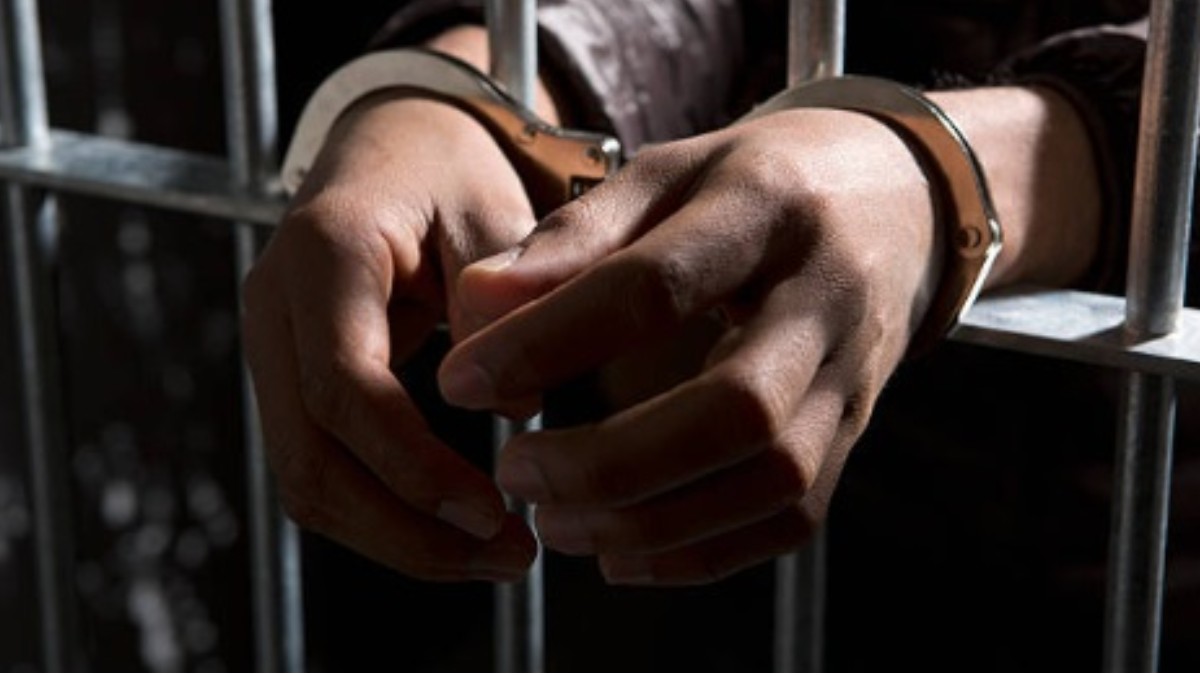
Costa Rican President Laura Fernández announced that her administration will submit a constitutional reform bill to Congress on August 3 aimed at expanding the legal grounds for extraditing Costa Rican nationals accused of serious crimes.
Under current legislation, Costa Rican citizens can only be extradited to face prosecution abroad for international drug trafficking and terrorism. The proposed reform would broaden that list to include a wider range of organized crime offenses.
Speaking before the Legislative Assembly while presenting a broader package of public security initiatives, Fernández said the proposal seeks to strengthen the country’s fight against transnational criminal organizations.
“We are going to expand the grounds for extradition to include serious crimes,” the president said.
The initiative would allow the extradition of Costa Rican nationals accused of financing drug trafficking or terrorism, money laundering, human trafficking, migrant smuggling, arms and organ trafficking, contract killings, organized crime-related homicides, cybercrime and cyberterrorism.
“We will not stop in our national crusade against organized crime or in our relentless war against drug trafficking,” Fernández said.
A political ally of U.S. President Donald Trump, Fernández took office in May after campaigning on a promise to adopt a tougher stance against organized crime, which she has linked to the recent rise in violence in Costa Rica, a country long regarded as one of the safest in Latin America.
Costa Rica currently permits the extradition of its own citizens only for international drug trafficking and terrorism, following a 2025 constitutional amendment promoted by former President Rodrigo Chaves, who now serves as the country’s Minister of the Presidency and Finance.


Three Killed, Four Injured in Shooting Near Seattle’s Space Needle

China Accuses U.S. AI Firms of Using Chinese Models to Train Artificial Intelligence

Costa Rica Seeks to Expand Extradition Law to Target Organized Crime
Tec de Monterrey honors one of its students for his contribution to nanotechnology in medicine

Defense Minister commends salvadoran soldier for Central American Cross Country victory

Extension of the state of emergency approved in southern Chile
-
 Central America5 days ago
CDC Issues Level 2 Travel Alert for Costa Rica Amid Chikungunya Outbreak
-
 International4 days ago
Wildfires in France Burn Nearly Three Times More Land Than in 2025, Interior Minister Says
-
 Central America5 days ago
Honduras Warns of Possible New Dengue Epidemic as Cases Continue to Rise
-
 International4 days ago
Israel Says Saudi Recognition Would Mark ‘Historic Breakthrough’ for Middle East Peace
-
 International17 hours ago
Costa Rica Seeks to Expand Extradition Law to Target Organized Crime
-
 Central America1 day ago
EU Urges Nicaragua to Hold Free and Transparent Elections Amid Proposed Electoral Reforms
-
 International16 hours ago
China Accuses U.S. AI Firms of Using Chinese Models to Train Artificial Intelligence
-
 International16 hours ago
Three Killed, Four Injured in Shooting Near Seattle’s Space Needle