
Tecnología
SpaceX’s Stellar Year: U.S. Leads Global Rocket Launches in 2023

The United States, spearheaded by SpaceX, dominated rocket launches in the year 2023. Elon Musk’s company, SpaceX, conducted a total of 96 launches throughout the year with its Falcon 9, maintaining an impressive pace of almost two launches per week. This effort focused on the continuous expansion of the Starlink internet satellite constellation.
Thanks to SpaceX’s achievements, the United States once again stood out in the global market of space launchers, with a total of 107 orbital flights in 2023, significantly surpassing other players in this strategic sector.
SpaceX not only limited itself to Falcon 9 launches but also deployed its Falcon Heavy to orbit the military space drone X-37B. Additionally, two tests of the super-heavy Starship launcher, intended for the Artemis missions to the Moon, were conducted, although both ended in explosions. SpaceX’s ambition for the coming year is to achieve an impressive 12 flights per month, totaling 144 flights in the year, as stated by SpaceX’s Vice President, Bill Gerstenmaier, before the U.S. Senate in October.
Despite U.S. dominance, China is rapidly expanding its space activities with 67 launches in 2023. Russia, on the other hand, carried out 19 launches, with 17 of them involving the Soyuz rocket. Rocket Lab, the U.S. and New Zealand-based company, successfully launched its Electron rocket nine times, establishing itself as one of the few operational mini-launchers.
India, through the ISRO space agency, completed seven successful launches in 2023 and kicked off 2024 with the launch of a PSLV rocket placing a scientific satellite into orbit.











In Europe, undergoing a launcher crisis, only three launches occurred in 2023. However, autonomous access to space is expected to be regained with the inaugural flight of Ariane 6 scheduled for mid-June and the Vega-C flight at the end of the year.
Japan, with three launches in 2023, faced challenges with the failure of the new heavy launcher H-3. The Japanese space agency, JAXA, announced a new attempt scheduled for February 15th.











International
EU launches new probe into X over AI-generated fake nude images

The European Commission announced on Monday the launch of a new investigation into the social media platform X, owned by Elon Musk, over the generation of fake nude images of minors and women by Grok, its artificial intelligence assistant.
Europe will not “tolerate reckless behavior” by digital platforms, including the creation of “fake nude images of women and children,” said European Commission President Ursula von der Leyen in comments to AFP.
“Our position is clear: we will not entrust consent or the protection of children to technology platforms that violate and monetize them,” von der Leyen said. She added that while safeguards already exist, “we must do more to protect citizens, both online and offline.”
The new investigation aims to determine whether X (formerly Twitter) has violated the European Union’s strict digital regulations, which require platforms to protect users from illegal content.
The Commission also decided to expand the scope of an earlier investigation opened in December 2023 against X under the EU’s Digital Services Act (DSA).
Grok includes a feature that allows users to create fabricated nude images based on real photographs of underage individuals or adult women, raising serious concerns over user safety and compliance with EU law.
International
Science Brings Back the Extinct Direwolf with Successful De-Extinction Project
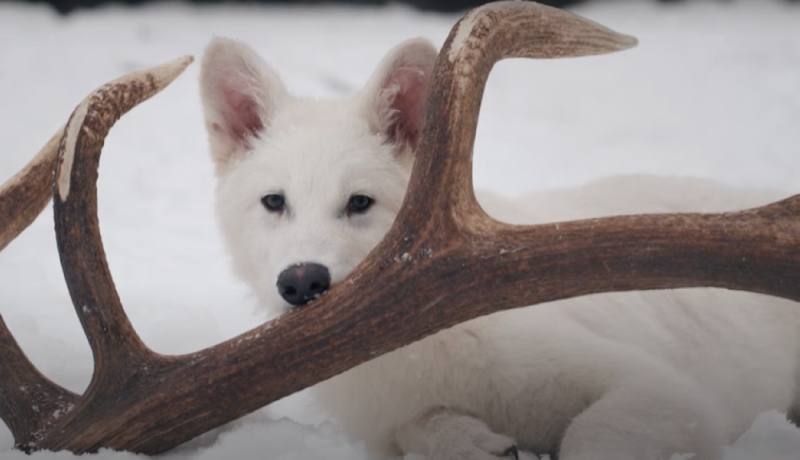
Science has achieved what was once confined to the realm of fantasy: the direwolf, extinct for over 10,000 years and popularized by the Game of Thrones series, has been brought back to life thanks to an ambitious de-extinction project led by the biotechnology company Colossal Biosciences.
The Texas-based company announced on Monday the birth of three direwolf pups, created through a combination of cloning and genetic editing. The pups include two males, Romulus and Remus, both six months old, and a three-month-old female named Khaleesi, in honor of the character from the HBO series.
The process that led to these wolves began with the extraction of ancient DNA from a 13,000-year-old tooth and a 72,000-year-old skull. Using this genetic material, scientists edited 20 genes in the cells of a modern gray wolf, its closest relative. These cells were then implanted into domestic dog eggs for gestation.
“The birth of these pups is a huge milestone,” said Ben Lamm, CEO of Colossal, who emphasized that this is the world’s first successful de-extinction. “This achievement shows that our technology works and marks the beginning of a new era for species conservation,” he said.
International
NASA’s lunar mission faces setbacks, pushed to mid-2027
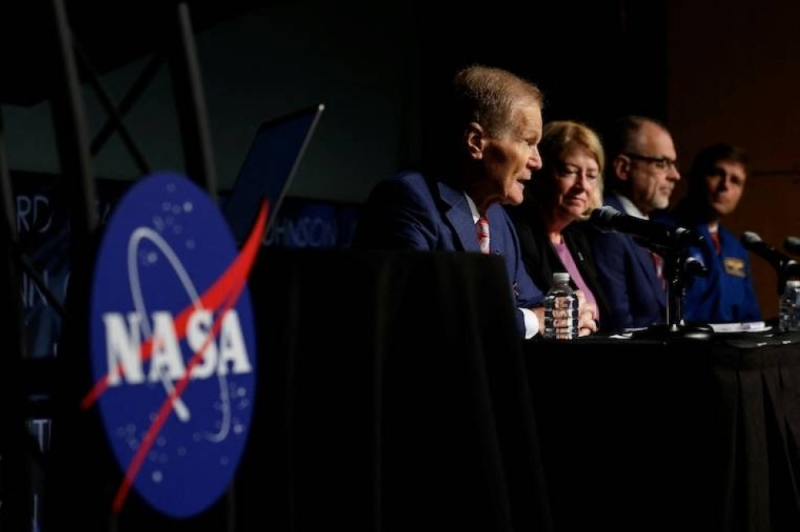
NASA announced another delay for its Artemis 3 mission, pushing the first manned lunar landing since 1972 to mid-2027. Technical problems with the Orion spacecraft’s heat shield were cited as the primary reason for the postponement.
“Safety is our top priority, and we won’t proceed until we are ready,” said NASA Administrator Bill Nelson. He emphasized that the delay will still keep the U.S. ahead of China’s plan to send a crewed mission to the Moon by 2030.
Artemis 1 successfully sent the uncrewed Orion capsule around the Moon in 2022, but subsequent missions have faced repeated setbacks.


Prosecutors Accuse Ex-Defense Minister of Undermining Press Freedom in Honduras

Five Bodies Found in Ecuador as Police Probe Suspected Gang Turf War

Georgia Teen Sentenced to Life Without Parole for Deadly School Shooting
Tec de Monterrey honors one of its students for his contribution to nanotechnology in medicine

Defense Minister commends salvadoran soldier for Central American Cross Country victory

Extension of the state of emergency approved in southern Chile
-

 International2 days ago
U.S. and Iran Maintain Ceasefire as Trump Expresses Optimism Over New Talks
-

 International2 days ago
Police Investigate After Remains of Five Newborns Found in French Apartment
-

 International2 days ago
Portuguese Authorities Seize 2.6 Tons of Cocaine Worth More Than $550 Million in Drug Bust
-
 International13 hours ago
Five Bodies Found in Ecuador as Police Probe Suspected Gang Turf War
-

 Central America3 days ago
EU Urges Nicaragua to Hold Free and Transparent Elections Amid Proposed Electoral Reforms
-

 International3 days ago
Costa Rica Seeks to Expand Extradition Law to Target Organized Crime
-

 International3 days ago
China Accuses U.S. AI Firms of Using Chinese Models to Train Artificial Intelligence
-
 Central America12 hours ago
Prosecutors Accuse Ex-Defense Minister of Undermining Press Freedom in Honduras
-

 International3 days ago
Three Killed, Four Injured in Shooting Near Seattle’s Space Needle
-
 International13 hours ago
Georgia Teen Sentenced to Life Without Parole for Deadly School Shooting