
International
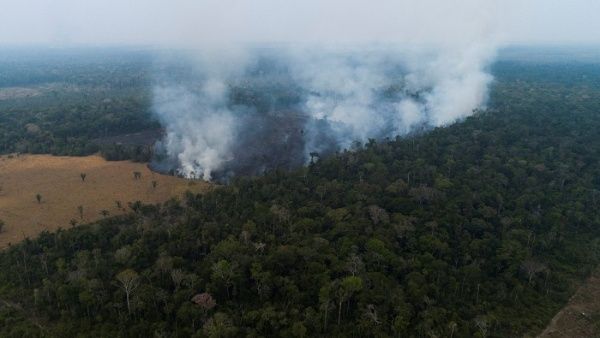
Deforestation in the Brazilian Amazon drops to 22.3%.
November 10 |
The deforested area in the Brazilian Amazon totaled 9,001 square kilometers between August 2022 and July 2023, reporting the lowest deforestation rate since 2019 at 22.3 percent.
The data were disclosed this day by the Minister of Environment and Climate Change, Marina Silva, and by the National Institute for Space Research (INPE, acronym in Portuguese).
Compared to the previous period, between August 2021 and July 2022, the figure was 11,594 square kilometers, representing a reduction of 2,593 square kilometers.
Silva detailed that 37 percent of the fires in the Amazon occurred in forested areas, not in deforested regions, which shows water stress in the jungle due to climate change.









All data are collected in the annual report of the Project for Monitoring Deforestation in the Amazon Legal Deforestation by Satellite (Prodes).
The highest rate of deforestation in the last 20 years dates back to 2004, when 27,700 square kilometers of rainforest were left without forest area.
Then began a steady decline in the rate and reached the lowest deforestation in 2012 when it stood at 4,500 square kilometers.






















































International
Child Found Malnourished in Van in France; Father Admits Confinement

French gendarmes discovered a child in a van in Hagenbach, in northeastern France, after a neighbor reported hearing what she described as “childlike noises” coming from the parked vehicle.
After unlocking the van, officers found the boy lying in a fetal position, unclothed and covered with a blanket, surrounded by garbage and near human waste, according to a statement from the Mulhouse prosecutor, Nicolas Heitz.
Authorities said the child appeared pale and severely malnourished. Due to prolonged confinement in a seated position, he was no longer able to walk. He was immediately taken to a hospital in Mulhouse for medical care.
The boy’s father, who lived with his partner and two daughters aged 10 and 12, admitted to keeping the child confined and depriving him of proper care.
According to the prosecutor, the man said he placed the child in the van in November 2024, claiming he wanted to “protect him” because his partner intended to have the boy admitted to a psychiatric facility.
The suspect also stated that he allowed the child out of the vehicle in May 2025 and permitted him to enter the family apartment around mid-year, when the rest of the family was on vacation.
The man’s partner—who is not the child’s mother—also faces charges, including failure to report abuse. However, she has denied all accusations.
International
Europe Faces Jet Fuel Shortage Risk Amid Hormuz Disruption
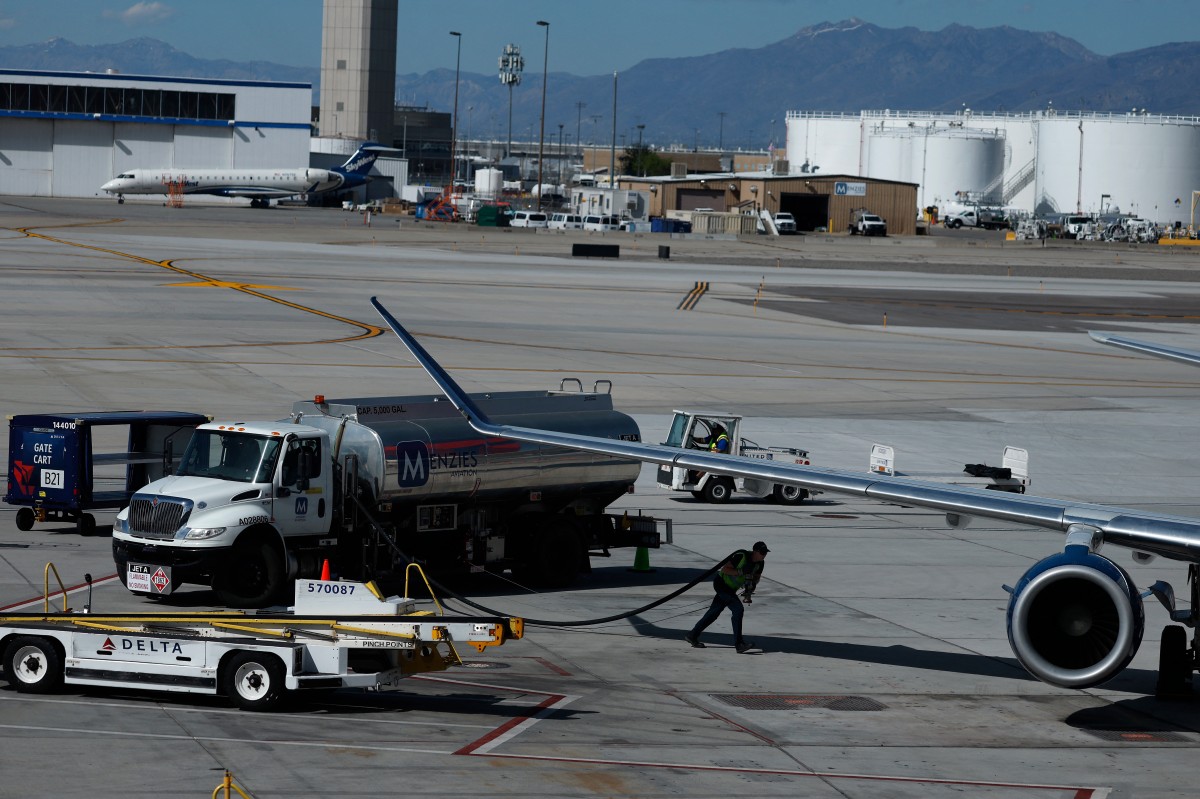
The Airports Council International Europe has warned of a potential “systemic shortage” of jet fuel if maritime traffic through the Strait of Hormuz is not restored within the next three weeks, according to a letter reviewed by AFP on Friday.
In the document, addressed to the European Commission and first reported by the Financial Times, the European airport lobby stated that a “systemic jet fuel shortage will become a reality” in the European Union unless stable and significant transit through the strait resumes soon.
The association, which represents around 600 airports across 50 countries, called on Brussels to implement “urgent monitoring of fuel availability and supply” over the next six months.
Jet fuel prices have surged amid the conflict in the Middle East and the ongoing disruption in the Strait of Hormuz, a critical chokepoint for global energy transport.
The conflict escalated on February 28 following joint U.S. and Israeli airstrikes against Iran.
In response, Tehran imposed several countermeasures, including blocking maritime traffic through the strait, a route through which roughly 20% of the world’s oil, jet fuel, and gas supply passes.
International
Artemis II crew prepares for Earth return and splashdown recovery
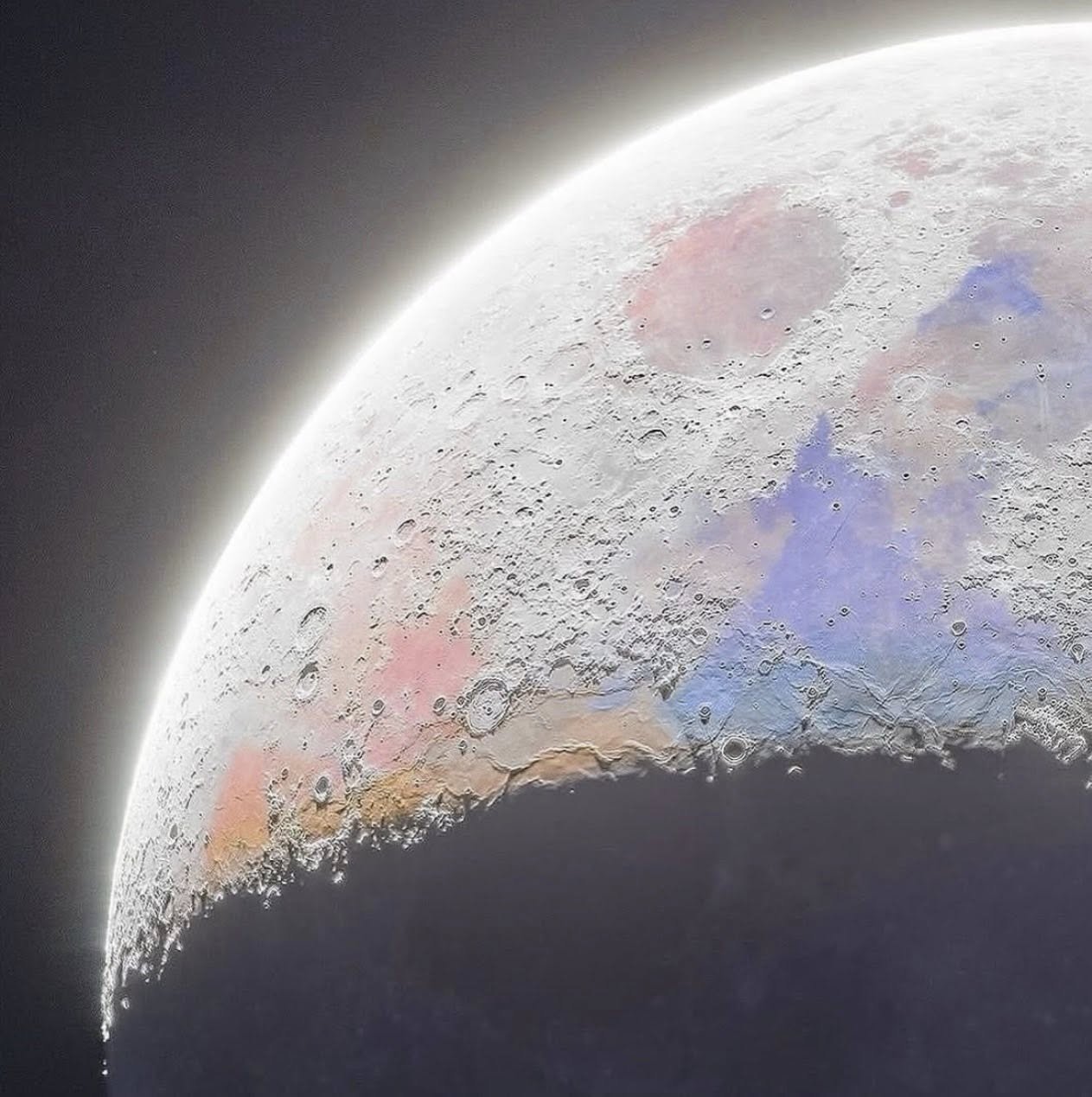
Astronauts from the Artemis II mission are expected to be extracted from the Orion spacecraft approximately two hours after splashdown, scheduled for 20:07 UTC this Friday (6:07 p.m. in San Salvador), according to NASA.
Following recovery, a rescue team will transport the crew by aircraft to the USS John P. Murtha. Once onboard, they will undergo medical evaluations before boarding another flight to the Johnson Space Center.
On Thursday, NASA astronauts Reid Wiseman, Victor Glover, and Christina Koch, along with Canadian astronaut Jeremy Hansen from the Canadian Space Agency, continued preparations for their return to Earth.
Their activities include stowing equipment used during the mission, securing cargo and storage compartments, and installing and adjusting crew seats to ensure all items are properly fastened. The crew will also review the latest weather updates, recovery operations status, and reentry timeline, while preparing for post-landing procedures.
At 21:53 UTC (9:53 p.m. in San Salvador), Orion’s thrusters are scheduled to perform a second trajectory correction maneuver, refining the spacecraft’s path back to Earth. During this operation, Hansen will monitor guidance, navigation, and propulsion systems.
NASA explained that during Friday’s reentry, the service module will separate about 20 minutes before Orion reaches the upper atmosphere southeast of Hawaii. If necessary, a final trajectory adjustment will fine-tune the flight path before the capsule begins a series of roll maneuvers to safely distance itself from jettisoned components.
Just before atmospheric interface, Orion will reach a peak speed of approximately 3,800 km/h. As it descends to about 400,000 feet (around 121.9 km), communications will be interrupted for approximately six minutes due to plasma formation around the capsule during peak heating.
NASA expects the crew to experience up to 3.9 G during a nominal reentry profile. After exiting the blackout phase, the capsule will jettison its forward bay cover. Drogue parachutes will deploy at around 22,000 feet (6.7 km), followed by the three main parachutes at approximately 6,000 feet (1.8 km).
Artemis II marks NASA’s first crewed flight test of the Space Launch System (SLS) rocket and Orion spacecraft around the Moon. The mission aims to validate capabilities for deep space human exploration and lay the groundwork for future long-term scientific missions on the lunar surface.


Panama and Costa Rica strengthen border alliance to combat organized crime

Ancelotti leaves door open for Neymar’s return to Brazil’s 2026 World Cup squad

Child Found Malnourished in Van in France; Father Admits Confinement
Tec de Monterrey honors one of its students for his contribution to nanotechnology in medicine

Defense Minister commends salvadoran soldier for Central American Cross Country victory

Extension of the state of emergency approved in southern Chile
-

 International4 days ago
Trump pauses strikes on Iran, extends ultimatum by two weeks
-

 International4 days ago
Former Trump allies call for removal, cite 25th Amendment amid Iran threats
-
 International2 days ago
Europe Faces Jet Fuel Shortage Risk Amid Hormuz Disruption
-

 Central America3 days ago
Gunfire and protests mark controversial rector reelection at Guatemala’s USAC
-
 International2 days ago
Flooding in Dominican Republic leaves child dead and thousands affected
-
 International2 days ago
Child Found Malnourished in Van in France; Father Admits Confinement
-
 International2 days ago
Artemis II crew prepares for Earth return and splashdown recovery
-

 International4 days ago
Bill Gates to testify before Congress over Epstein connections
-
 Sports16 hours ago
Ancelotti leaves door open for Neymar’s return to Brazil’s 2026 World Cup squad
-
 Central America16 hours ago
Panama and Costa Rica strengthen border alliance to combat organized crime
-

 Central America3 days ago
Seven arrested in Guatemala over disappearance of six near Mexico border