
International
Lula slams far-right ‘terrorism’ as Brazil clears protest camps
January 10 | By AFP | Ramon Sahmkow|
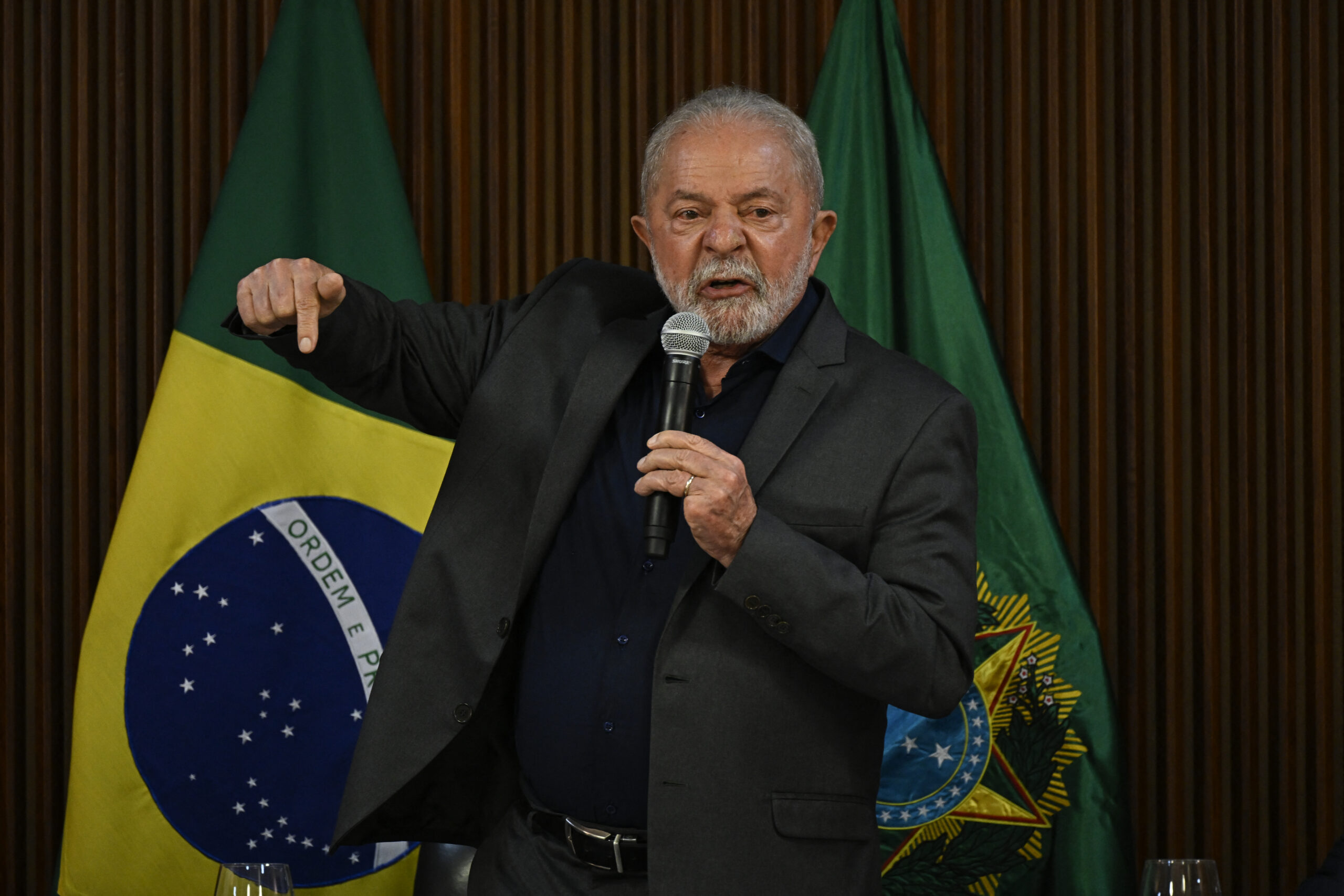
Brazilian security forces cleared protest camps Monday and arrested 1,500 people as President Luiz Inacio Lula da Silva condemned “acts of terrorism” after a far-right mob stormed the seat of power, unleashing chaos on the capital.
Hundreds of soldiers and police mobilized to dismantle an improvised camp outside the army’s headquarters in Brasilia.
There, some 3,000 supporters of ex-president Jair Bolsonaro had set up tents — used as a base for the sea of protesters who ran riot inside the presidential palace, Congress and Supreme Court for around four hours Sunday.
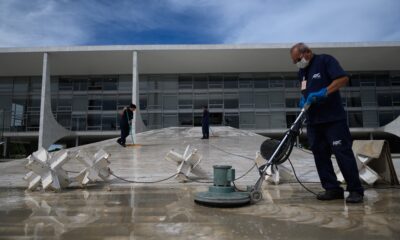
Lula, who took office on January 1 after a bitterly divisive election win over Bolsonaro, returned to work in the pillaged presidential palace, where AFP reporters saw the wreckage that remained of the previous day’s havoc: trashed artwork and offices, shattered windows and doors, broken glass strewn across the floor, and furniture dragged into a reflecting pool.











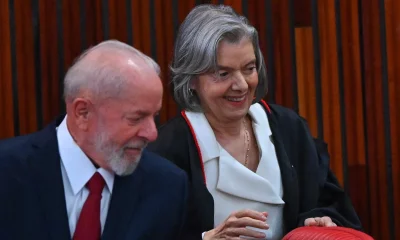
Lula, the 77-year-old veteran leftist who previously led Brazil from 2003 to 2010, met with the leaders of both houses of Congress and the chief justice of the Supreme Court, and joined them in condemning what many called the South American country’s version of the US Capitol riots in Washington two years ago.
“The three powers of the republic, the defenders of democracy and the constitution, reject the terrorist acts and criminal, coup-mongering vandalism that occurred,” they said in a joint statement.
Lula accepted an invitation to meet with President Joe Biden next month in Washington, US officials said.
Bolsonaro, who narrowly lost the October elections, meanwhile said on Twitter that he had been hospitalized in Florida with abdominal pains stemming from a near-fatal knife attack when he was campaigning for the presidency in 2018.
Bolsonaro has alleged he is the victim of a conspiracy against him by Brazil’s courts and electoral authorities.
The ex-president, dubbed the “Tropical Trump,” traveled to Orlando on the second-to-last day of his term — snubbing Lula’s inauguration, in a break with tradition.
Bolsonaro, 67, took to Twitter Sunday night to condemn the “pillaging” in Brasilia, but rejected Lula’s claim he incited the attacks, and defended the right to “peaceful protests.”
‘Traces of Trumpism’
As the nation continued to come to grips with Sunday’s stunning violence, hundreds of people gathered along a major avenue in downtown Sao Paulo to defend Brazilian democracy and demand punishment for the people who stormed the halls of power a day earlier.
“I have not endured what I have in this life to see what I saw yesterday — my people, my country, divided in such a way,” said Edi Valladares, a 61 year old teacher.
The demonstrators included young people, entire families, labor union activists, anti-racism advocates and others, with banners reading “We are with Lula and for democracy” and “Respect for the people’s vote.”
Earlier in the day, large contingents of riot police deployed to lock down the capital’s Three Powers Square, home to the iconic modernist buildings that serve as the headquarters of the three branches of government.
Condemnation continued to pour in from around the world, with Pope Francis criticizing the unrest as a sign of “weakening of democracy” in the Americas.
In a joint statement ahead of summit talks in Mexico City, Biden, Mexican President Andres Manuel Lopez Obrador and Canadian Prime Minister Justin Trudeau condemned the attacks and said they “stand with Brazil as it safeguards its democratic institutions.”
In a show of firm support, Biden spoke with Lula by phone Monday and invited him to visit the White House in early February. The Brazilian leader accepted, the White House said.
Biden told Lula of his support for “the free will of the Brazilian people as expressed in Brazil’s recent presidential election, which President Lula won,” the White House said in a statement.
Many drew the inevitable comparison to January 6, 2021, when supporters of then-US president Donald Trump invaded the Capitol in Washington in a violent, failed bid to stop Congress from certifying his election loss.
Investigation begins
Lula, who was in the southeastern city of Araraquara visiting a flood-hit region when the riot started, signed a decree Sunday declaring a federal intervention in Brasilia, giving his government special powers over the local police force to restore law and order in the capital.
His government vowed to find and arrest those who planned and financed the attacks.
Supreme Court Justice Alexandre de Moraes suspended Brasilia Governor Ibaneis Rocha, a Bolsonaro ally, from his post for 90 days, on grounds of “criminal negligence.”
Moraes also ordered the security forces to disperse anti-government protests outside military bases nationwide.
Hardline Bolsonaro supporters have been protesting outside army barracks calling for a military intervention to keep Lula from power since his election win.
Following the ruling, soldiers and police broke up camps in Rio de Janeiro and Sao Paulo, as well as Brasilia.
Lula narrowly won the October 30 runoff election by a score of 50.9 percent to 49.1 percent.





















































International
Pilot killed and two Pennsylvania state troopers injured in mid-air collision
A pilot was killed and two Pennsylvania state police officers were injured when a Cessna 150 airplane collided with the helicopter they were traveling in during a routine training exercise at a regional airport in the state.
Pennsylvania Governor Josh Shapiro identified the officers as Corporal Bryce Corman and Trooper Jason Mills, members of the Pennsylvania State Police aviation unit. Both are expected to recover from their injuries, according to ABC.
The county coroner’s office identified the pilot as 57-year-old Paul Sokoloski.
George Bivens, acting commissioner of the Pennsylvania State Police, said the collision occurred at around 6:50 p.m. Wednesday. The helicopter was flying several feet above a grassy area near a runway at Carlisle Regional Airport when the small plane approached from behind.
According to investigators, the Cessna suddenly veered to the right moments before the collision, striking the helicopter’s tail rotor before also hitting its main rotor.
The airplane crashed a short distance away and broke into several pieces, while the helicopter lost its tail and other components before crashing on its side.
Police said Corporal Corman opened a window and helped Trooper Mills escape from the helicopter because they feared the aircraft could catch fire.
The Federal Aviation Administration and the National Transportation Safety Board are investigating the circumstances surrounding the crash.
International
Argentina’s Milei Links Low Birth Rates to Abortion and Feminism

Argentine President Javier Milei on Thursday blamed feminism and the legalization of abortion for the country’s declining birth rate, arguing that the demographic trend is creating economic and pension-system challenges.
“We are paying a very high price for the madness of the green scarves,” Milei said during a speech at the Council of the Americas in Buenos Aires, referring to the symbol associated with the feminist movement and the campaign for legal abortion in Argentina.
According to Milei, Argentina is failing to reach the population growth and birth rates needed to maintain demographic replacement.
He also linked the decline in births to future challenges for the country’s pension system and workforce.
“That passion for killing children in the mother’s womb is costing us in terms of growth and pensions. It is also costing us in terms of human capital,” the president said.
Milei has consistently opposed abortion, which has been legal in Argentina since 2020. The law was considered a major victory for the feminist movement across Latin America at the time of its approval.
In February 2024, lawmakers from Milei’s La Libertad Avanza (LLA) party introduced a bill seeking to repeal voluntary abortion legislation.
Under Argentina’s current law, abortion is legal, safe and free of charge up to the 14th week of pregnancy. After that period, it is permitted when the pregnancy poses a risk to the woman’s life or health, or when it resulted from rape.
Milei has repeatedly criticized abortion
The Argentine president has also criticized abortion and feminism in international forums. During his speech at the World Economic Forum in Davos in January 2024, he attacked the feminist movement and denounced what he described as the “bloody agenda of abortion.”
His latest comments come amid growing concerns over Argentina’s demographic outlook and the potential long-term effects of declining birth rates on economic growth, the labor force and social security.
International
Virginia Police Arrest Salvadoran Man in Great Falls Woman’s Killing

Alexis Antonio Cedillos-Campos, 19, identified by federal officials as an undocumented immigrant from El Salvador, was arrested in connection with the death of Carmen Lizet Puch, 42, who was found dead Monday, the Fairfax County Police Department said.
Authorities said Cedillos-Campos and Puch were coworkers and were also involved in an “intimate relationship.”
“Our victim suffered numerous stab wounds in a truly brutal and indescribable manner,” Police Chief Kevin Davis said during a news conference Wednesday.
Investigators said surveillance video showed Cedillos-Campos at the restaurant where he and Puch worked, allegedly taking a fixed-blade knife, a pair of black latex gloves and a bottle of water before leaving.
“He left with the intent to harm and kill the victim,” Davis said.
Cedillos-Campos was arrested Wednesday morning in Maryland and confessed to the killing, according to Davis. He is awaiting extradition to Virginia. Authorities have not said whether he has an attorney representing him.
The Department of Homeland Security said Cedillos-Campos had previously been arrested by U.S. Customs and Border Protection in 2024 after allegedly crossing the U.S.-Mexico border illegally near El Paso, Texas.


Panama’s Geisha Coffee Retains Pure Ethiopian Genetics, Studies Find

Pilot killed and two Pennsylvania state troopers injured in mid-air collision

Argentina’s Milei Links Low Birth Rates to Abortion and Feminism

Virginia Police Arrest Salvadoran Man in Great Falls Woman’s Killing

Honduran Lawyer and Protected Witness in Angie Peña Case Shot Dead

Mexico and Guatemala Agree on Five-Point Binational Plan for 2027

France to Expel Two Iranian Diplomats Over Alleged Attack on French Officials

Heat wave puts more than 70 million Americans under alerts as temperatures near 46°C
France to Expel Two Iranian Diplomats Over Alleged Attack on French Officials

Actress Hayden Panettiere Dies at 36, Representative Confirms
Honduran Lawyer and Protected Witness in Angie Peña Case Shot Dead

Trump warns Iran over nuclear ambitions as U.S.-Iran ceasefire deadline passes
Heat wave puts more than 70 million Americans under alerts as temperatures near 46°C
Virginia Police Arrest Salvadoran Man in Great Falls Woman’s Killing

Brazil’s Lula and Flávio Bolsonaro kick off election campaigns amid focus on crime
Mexico and Guatemala Agree on Five-Point Binational Plan for 2027
-
 International2 days ago
France to Expel Two Iranian Diplomats Over Alleged Attack on French Officials
-
 International4 days ago
Actress Hayden Panettiere Dies at 36, Representative Confirms
-
 Central America20 hours ago
Honduran Lawyer and Protected Witness in Angie Peña Case Shot Dead
-
 International3 days ago
Trump warns Iran over nuclear ambitions as U.S.-Iran ceasefire deadline passes
-
 International3 days ago
Heat wave puts more than 70 million Americans under alerts as temperatures near 46°C
-
 International20 hours ago
Virginia Police Arrest Salvadoran Man in Great Falls Woman’s Killing
-
 International3 days ago
Brazil’s Lula and Flávio Bolsonaro kick off election campaigns amid focus on crime
-
 International2 days ago
Mexico and Guatemala Agree on Five-Point Binational Plan for 2027
-
 International3 hours ago
Argentina’s Milei Links Low Birth Rates to Abortion and Feminism
-
 International3 hours ago
Pilot killed and two Pennsylvania state troopers injured in mid-air collision
-
 Central America3 hours ago
Panama’s Geisha Coffee Retains Pure Ethiopian Genetics, Studies Find