
International
Three jailed for 30 years for drone attack on Venezuelan leader
| By AFP |
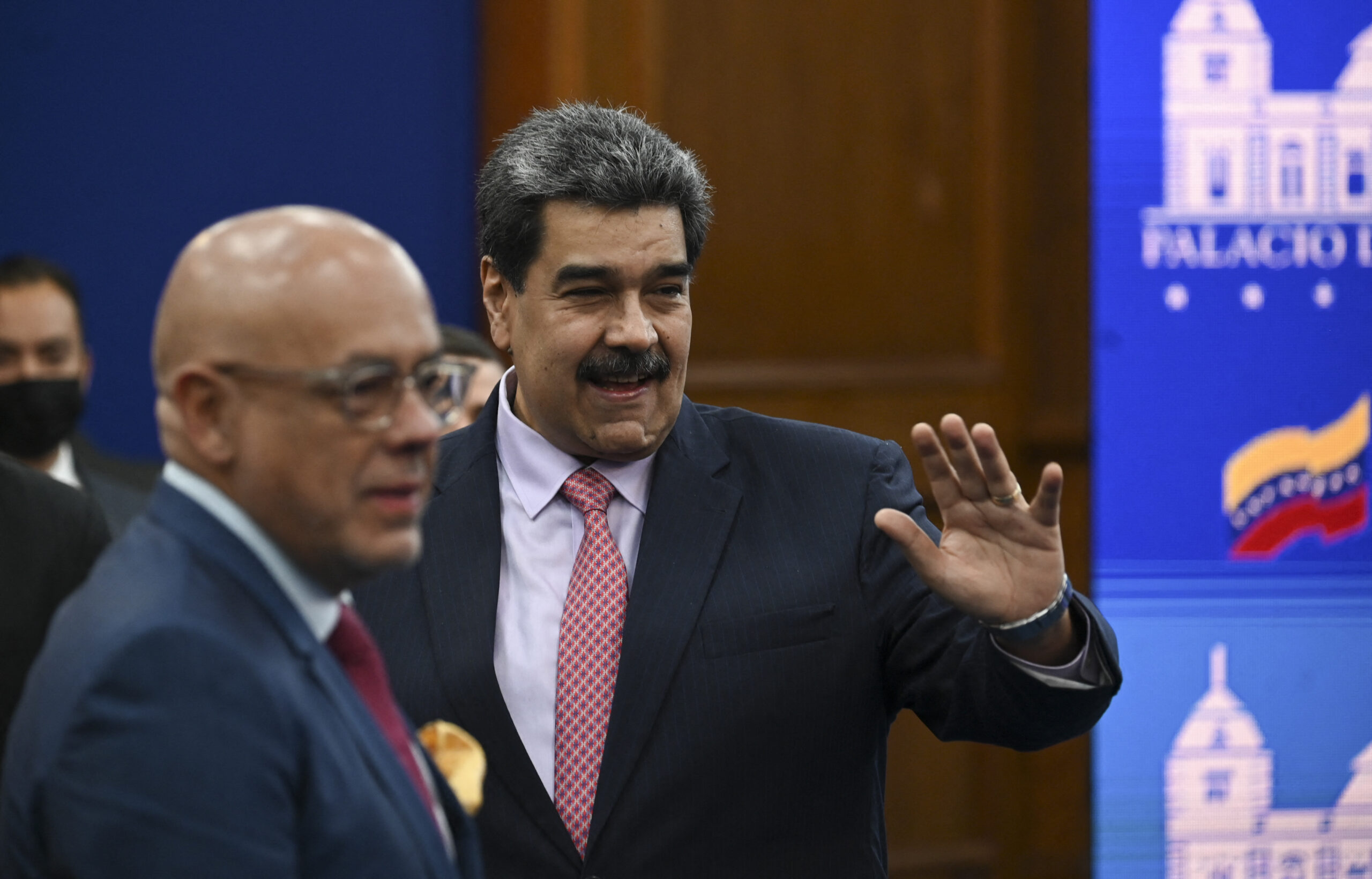
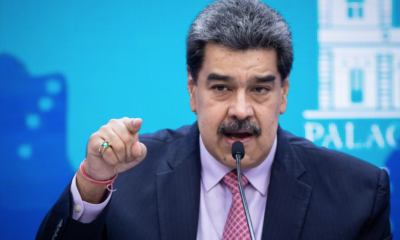
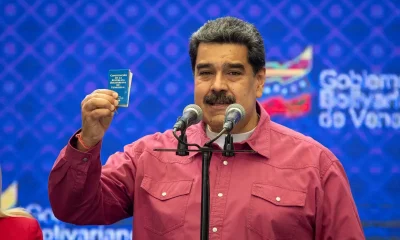
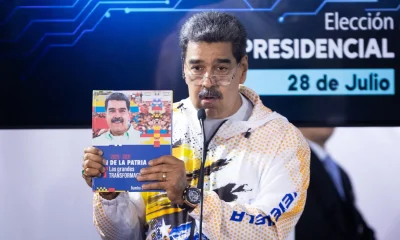
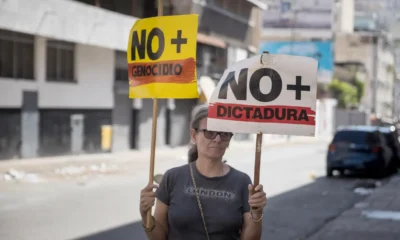
Three people accused in a failed drone attack targeting Venezuelan President Nicolas Maduro in 2018 were sentenced to 30-year jail terms, relatives said on Friday.
Maria Delgado Tabosky, retired army major Juan Carlos Marrufo and retired colonel Juan Francisco Rodriguez were convicted on charges of “terrorism, treason and criminal conspiracy,” according to a family member of one of the accused, who asked to remain anonymous.
The criminal hearing began Thursday night and lasted into the early hours of Friday, the family member said.
Delgado Tabosky, 48, holds dual Venezuelan and Spanish citizenship and is sister of Osman Delgado Tabosky, who resides in the United States,









He is accused by the Maduro government of financing the attack, in which two drones carrying explosives blew up near where Maduro was addressing an assembly of members of the National Guard on August 4, 2018, in Caracas.
One drone exploded in the air over guardsmen standing in formation, injuring a few of them, and the second drone crashed into an apartment building two blocks away. Neither Maduro nor his wife, who was nearby, were hurt.
Marrufo, 52, who has both Venezuelan and Italian citizenship, is married to Maria Delgado Tabosky.
The Working Group on Arbitrary Detention, a UN human rights body, has said that the arrests of Delgado Tabosky and Marrufo in 2019 were “arbitrary.” The couple have been jailed for three years and eight months at the General Directorate of Military Counterintelligence.
Relatives have appealed for their transfer to a prison and requested without avail for Spain and Italy to intercede in their cases.
Another 17 people accused in the attack, among them former opposition legislator Juan Requesens, were condemned in August to prison terms of between five and 30 years.











































International
Colombia slams Ecuador’s 30% tariff as ‘economic aggression’
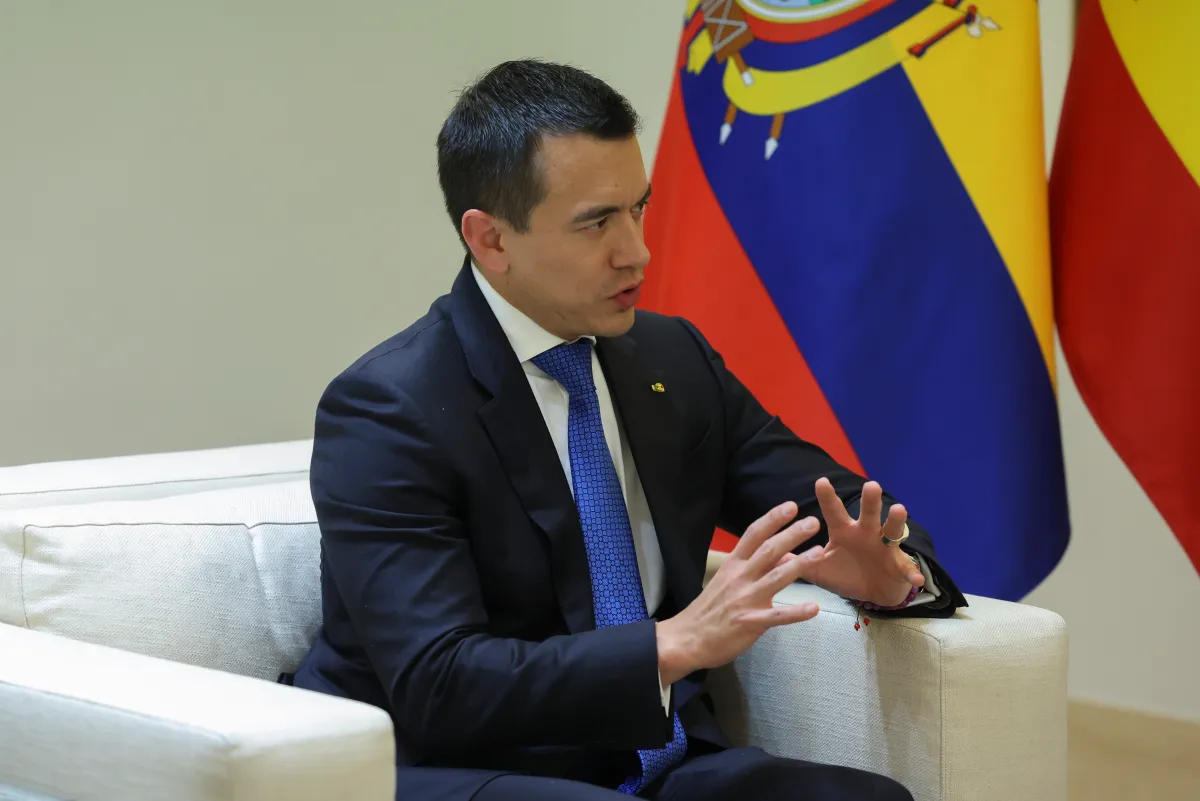
Colombia’s Minister of Mines and Energy, Edwin Palma, on Wednesday described as an “economic aggression” the 30% “security fee” imposed by Ecuadorian President Daniel Noboa on imports from Colombia.
“We reject the tariff measure imposed by Ecuador, an economic aggression that breaks the principle of regional integration,” Palma said in a post on X.
President Noboa explained that the decision was taken due to what he described as a “lack of reciprocity and firm actions” by Colombia in the fight against drug trafficking. He added that despite Ecuador having made “real efforts of cooperation,” including maintaining a trade deficit exceeding $1 billion annually, the country’s armed forces continue to face drug-linked criminal groups along the border without any cooperation.
For that reason, Noboa stated that the measure will remain in place “until there is a real commitment” from Colombia to jointly confront drug trafficking and illegal mining along the 586-kilometer shared border, with the same level of determination Ecuador is currently applying.
According to official data, Ecuador seized 214.5 metric tons of drugs in 2025, down from the record 294.6 tons confiscated in 2024.
Colombian President Gustavo Petro said on January 7 that during his administration, which began on August 7, 2022 and ends this year, drug seizures have increased significantly, adding that total confiscations are expected to exceed 3,500 tons by the time he leaves office.
International
José Jerí claims destabilization attempt after videos of secretive meetings surface
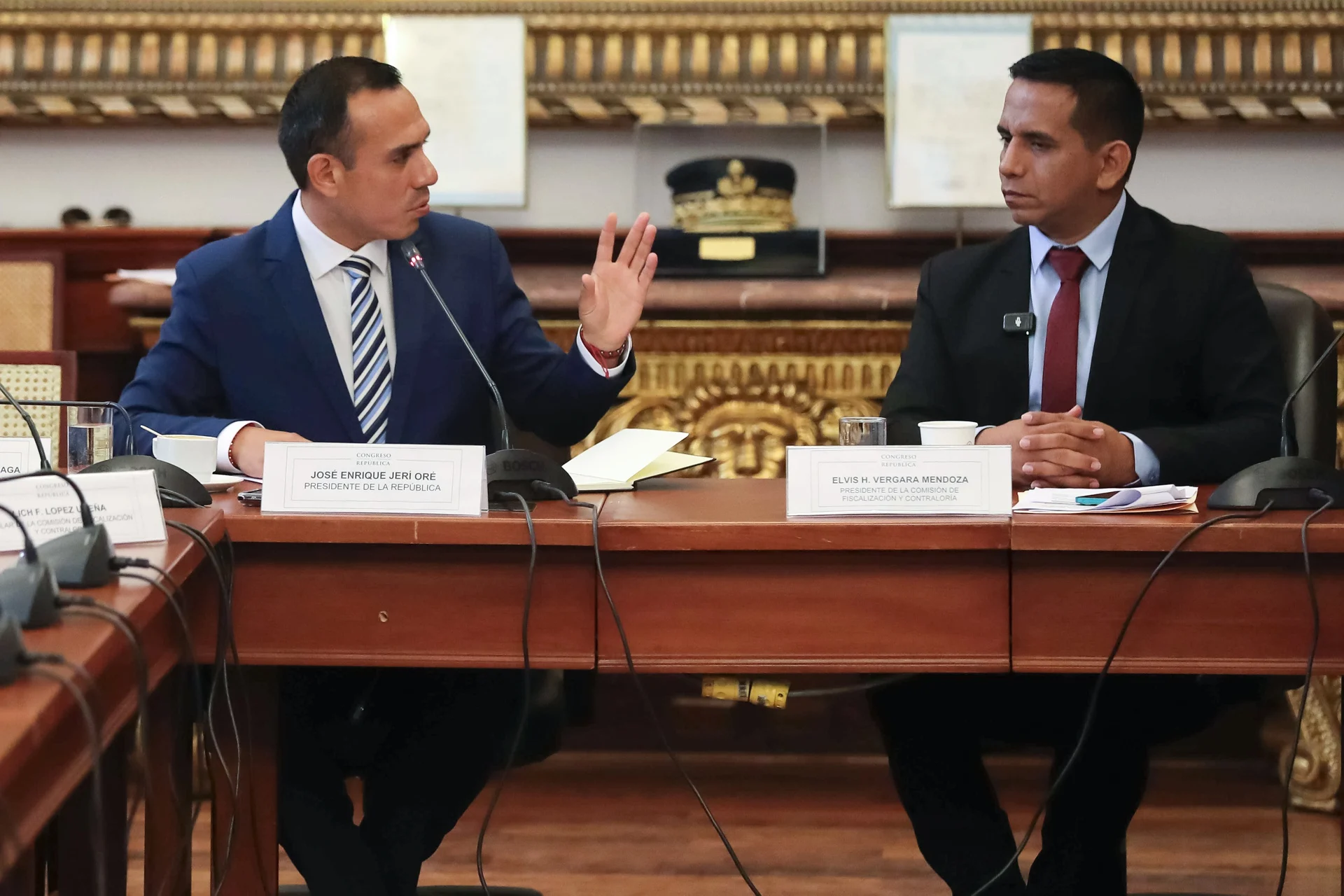
Peru’s interim president, right-wing leader José Jerí, on Wednesday denounced an alleged plot against him and warned of a deliberate attempt to destabilize the country, following the release of a series of videos showing semi-clandestine meetings with a Chinese businessman, as well as visits to the Government Palace by another businessman of the same nationality who is under house arrest.
“I also want to know who is behind this entire plot. I am an objective and impartial president who does not give in to pressure, but someone has found a way to do so. I want to know who is behind it and what their real objective is,” Jerí said while appearing before Congress’ Oversight and Comptroller Commission.
The interim president, who recently marked 100 days in office after replacing former president Dina Boluarte (2022–2025) in his role as head of Congress, insisted that he has never lied to the country. Without directly accusing any individual or group, he argued that routine activities—such as visiting a restaurant or a shop—are being portrayed with a “malicious” intent.
So far, reports indicate that on December 26, close to midnight, Jerí visited a chifa restaurant—a Peruvian-Chinese eatery—owned by Chinese businessman and state contractor Zhihua “Johnny” Yang, accompanied by Interior Minister Vicente Tiburcio, and wearing a hood. On January 6, he also visited a shop belonging to the same businessman, which had been shut down by municipal authorities just hours earlier.
The revelations have fueled political controversy and renewed scrutiny of the interim administration’s actions amid Peru’s ongoing political instability.
International
Mexican influencer “La Nicholette” kidnapped in exclusive area of Culiacán

The content creator known as “La Nicholette,” also referred to as “La Muchacha del Salado,” was kidnapped Tuesday afternoon in Isla Musalá, one of the most exclusive residential areas of Culiacán, capital of the northern Mexican state of Sinaloa, according to local media reports on Wednesday.
The abduction was captured by the security camera of the young woman’s vehicle, a lilac-colored Tesla Cybertruck, which was later found abandoned at the scene.
Video footage circulating on social media shows a masked man carrying a long firearm preventing the influencer from entering her vehicle, while another individual forces her into a white sedan, reportedly an older-model Toyota Corolla.
According to media reports, the incident occurred at approximately 5:00 p.m. local time (2300 GMT) at the intersection of Tachichilte Avenue and San Esteban Street, within the Musalá residential area.
Authorities have not yet released official details regarding the victim’s whereabouts or the motives behind the kidnapping.


Colombia slams Ecuador’s 30% tariff as ‘economic aggression’

José Jerí claims destabilization attempt after videos of secretive meetings surface

Mexican influencer “La Nicholette” kidnapped in exclusive area of Culiacán
Tec de Monterrey honors one of its students for his contribution to nanotechnology in medicine

Defense Minister commends salvadoran soldier for Central American Cross Country victory

Extension of the state of emergency approved in southern Chile
-
 International3 days ago
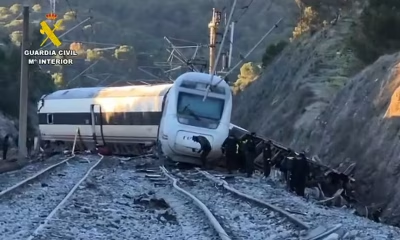
Death toll from southern Spain train crash rises to 40
-
 International5 days ago
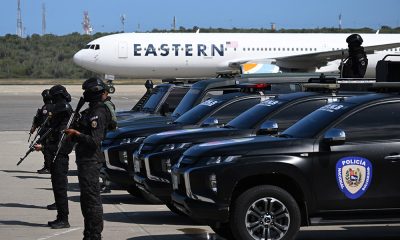
U.S. deportation flight returns venezuelans to Caracas after Maduro’s ouster
-
 Central America3 days ago
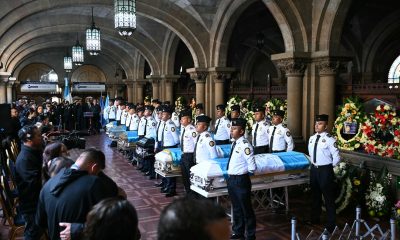
Guatemala raises police death toll to nine after gang violence escalates
-
 Central America4 days ago
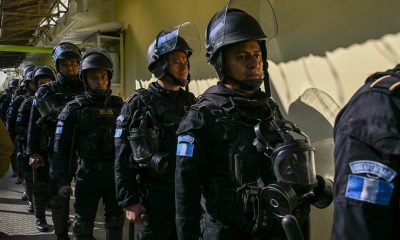
Guatemala prison uprisings leave 46 guards held by gangs
-
 International14 hours ago
Mexican influencer “La Nicholette” kidnapped in exclusive area of Culiacán
-

 International3 days ago
Over 160 christian worshippers kidnapped in Kaduna Church attacks
-

 International2 days ago
Daily Mail publisher insists reports relied on legitimate sources amid privacy trial
-

 International4 days ago
Chile declares state of catastrophe as wildfires rage in Ñuble and Biobío
-

 International2 days ago
Germany says football bodies alone will decide on possible World Cup boycott
-
 International5 days ago
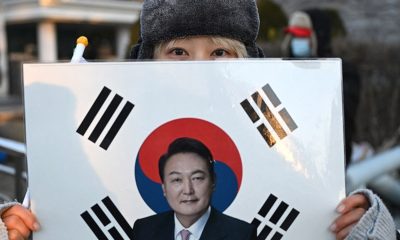
Former South Korean President Yoon sentenced to five years in prison
-

 International3 days ago
Spain’s Prime Minister pledges transparency after train crash kills at least 39
-

 International14 hours ago
Trump announces preliminary NATO agreement on Greenland, suspends tariffs on Europe
-
 International14 hours ago
Major winter storm to blanket U.S. and Canada with snow, ice and arctic cold
-
 International13 hours ago
Colombia slams Ecuador’s 30% tariff as ‘economic aggression’
-
 International13 hours ago
José Jerí claims destabilization attempt after videos of secretive meetings surface