
International
Argentina revives special ‘soy dollar’ to boost reserves

| By AFP |
Argentinian soy farmers will be able to sell their product at a preferential exchange rate, as the country seeks to shore up its central bank reserves, according to a decree published Monday.
Argentina is one of the world’s largest exporters of soybeans and soy oil. However, with year-on-year inflation of 88 percent and constant fears of currency devaluation, farmers often hoard their supplies waiting for a better rate.
The plan is to “increase reserves so that the economy reaches the end of the year with $10 billion available,” Secretary of Industry Jose de Mendiguren told Futurok radio.
The incentive kicks off Monday and will last until December 30.









Instead of selling soy products for the tightly-controlled official rate of around 166 pesos per dollar, producers will receive a much higher 230 pesos.
A similar preferential soy rate was applied in September, when soybean sales earned the country almost $8 billion.
Argentina imposed a raft of exchange controls in 2019 in its constant battle to keep dollars in the country and fight low foreign exchange reserves.
These include blocking citizens from buying more than $200 in greenbacks per month.
This has led to a multitude of dollar exchange rates. Demand for scarce dollars is so high that they are exchanged for over 300 pesos at the “Blue Dollar” rate on the streets of Buenos Aires.
The “Qatar Dollar” imposes higher taxes on those using their credit cards abroad — such as those spending valuable dollars at the World Cup in Doha.
Meanwhile, the “Coldplay Dollar” was the name given to the higher rate applied to entrance tickets to international shows.
“Nobody wants various exchange rates, the economy must be normalized and stabilized. But it is a solution, a tool for the exceptional circumstances Argentina is experiencing,” De Mendiguren said.
Argentines have so little faith in their currency that many exchange it into dollars as fast as they can and store it in safes or under their mattresses.
Under an International Monetary Fund deal to refinance debt of more than $44 billion, Argentina must boost its international reserves and reduce its fiscal deficit.




























International
Hiroshima survivor who embraced Obama dies at 88
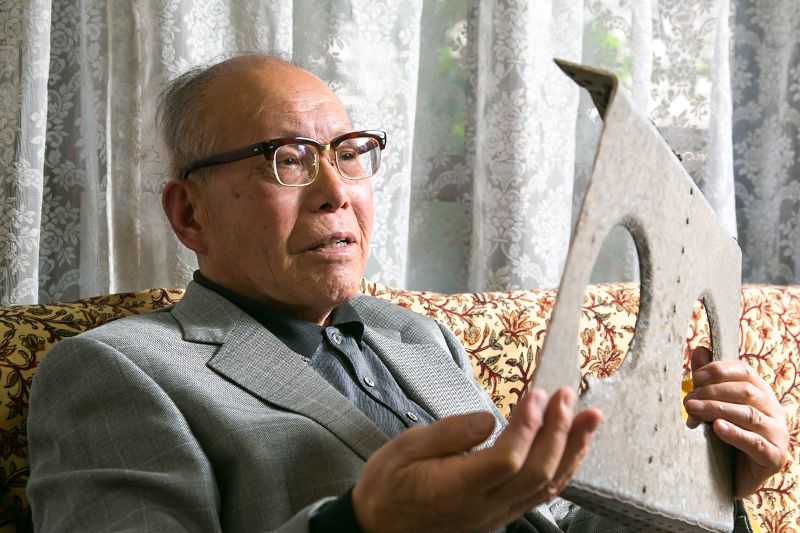
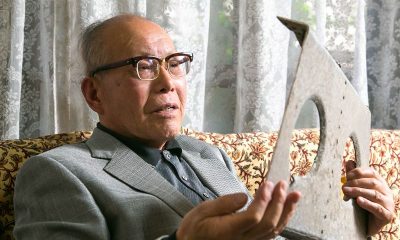
The emotional embrace between Barack Obama and Hiroshima survivor Mori—who was eight years old when the United States dropped the atomic bomb in 1945—resonated around the world.
According to Asahi Shimbun and other local media, Mori died on Saturday at a hospital in Hiroshima.
Mori, known for his research on the fate of American prisoners of war in Hiroshima, was thrown into a river by the force of the explosion on August 6, 1945, during the atomic bombing of the city.
In a past interview with AFP, ahead of his meeting with Obama at the Hiroshima Peace Memorial in 2016, Mori recalled the chaos and desperation that followed the blast.
He described how, after emerging from the water, he encountered injured civilians seeking help amid the devastation, an experience that stayed with him throughout his life.
In 2016, Obama became the first sitting U.S. president to visit Hiroshima, where he paid tribute to the victims of the first atomic bomb used in warfare. During the visit, Mori was visibly moved as he met the president, sharing a brief but powerful moment that symbolized remembrance and reconciliation.
The bombing of Hiroshima resulted in the deaths of approximately 140,000 people, including those who succumbed to radiation exposure in the aftermath.
Three days later, a second atomic bomb was dropped on Nagasaki, killing an estimated 74,000 people and contributing to the end of World War II.
International
Colombia seeks ‘total suffocation’ of armed groups with regional support
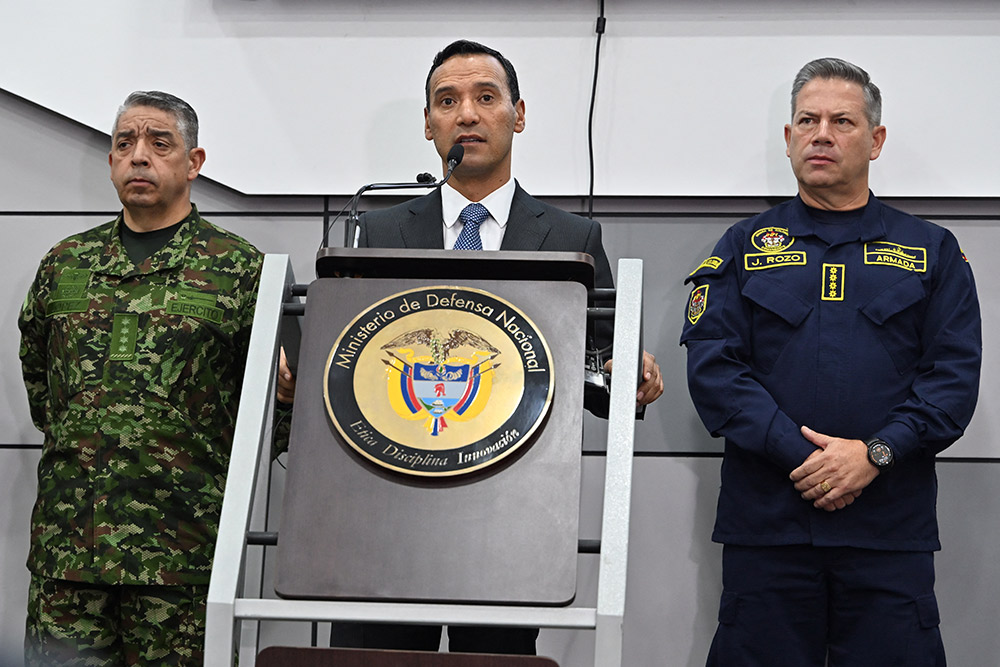
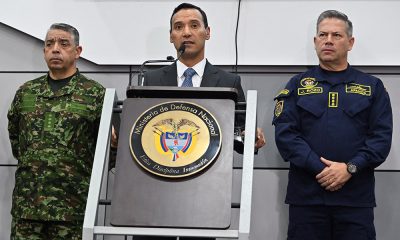
Colombia is advancing a strategy aimed at the “total suffocation” of illegal armed groups, seeking to corner them in border regions with the support of Ecuador and Venezuela, Defense Minister Pedro Sánchez said in an interview with AFP.
According to the minister, coordinated pressure from neighboring countries—backed by United States—aims to dismantle criminal networks that use cross-border routes to traffic Colombian cocaine toward North America and Europe.
For decades, armed groups involved in Colombia’s internal conflict have relied on border territories as strategic rear bases to evade military operations and maintain logistical support.
However, Sánchez said that dynamic is beginning to change.
“We expect a total suffocation between both nations so they have no spaces where they can live or feel safe […] to close off any room they might have,” he stated during the interview in Bogotá, less than five months before the end of President Gustavo Petro’s term.
Regional developments have reinforced this strategy. Following the capture of Nicolás Maduro in a U.S. military operation, Washington has increased its influence in Caracas, where interim leader Delcy Rodríguez has implemented a renewed anti-narcotics policy.
Meanwhile, in Ecuador, President Daniel Noboa—a key U.S. ally in the region—has launched a two-week security plan under strict curfews to combat criminal gangs, with U.S. support.
Sánchez argued that these combined efforts leave illegal organizations with fewer escape routes and operational spaces, effectively placing them in a “dead end.”
International
Two killed in shooting at restaurant near Frankfurt Airport
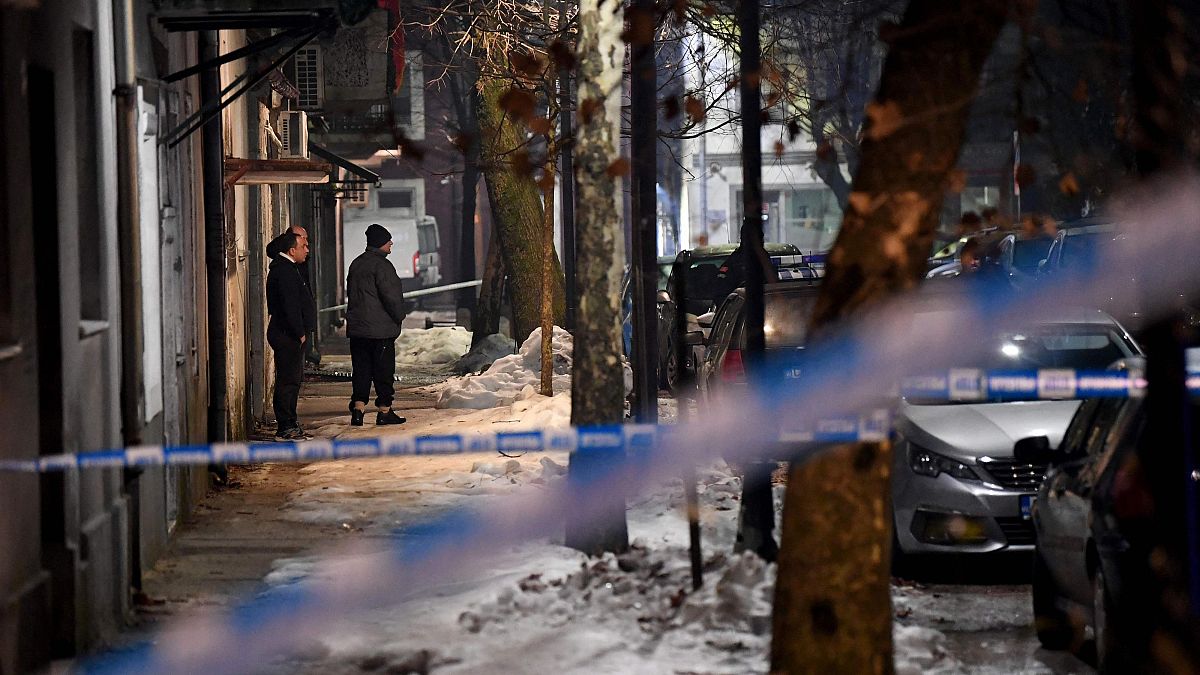
Two people were shot dead early Tuesday at a restaurant in Raunheim, near Frankfurt Airport, according to local police.
Preliminary findings indicate that an armed individual entered the establishment at around 03:45 local time (02:45 GMT) and opened fire on the victims, who died at the scene from their injuries.
The suspect fled and remains at large, while the motive behind the shooting is still unclear, German media reported. Authorities have launched a large-scale search operation.


Costa Rica closes embassy in Cuba, citing human rights concerns

Costa Rica closes Cuba embassy as president escalates rhetoric

Hiroshima survivor who embraced Obama dies at 88
Tec de Monterrey honors one of its students for his contribution to nanotechnology in medicine

Defense Minister commends salvadoran soldier for Central American Cross Country victory

Extension of the state of emergency approved in southern Chile
-
 International1 day ago
Two killed in shooting at restaurant near Frankfurt Airport
-
 International2 days ago
German president warns Iran war could spread and disrupt Strait of Hormuz
-

 International4 days ago
FBI: Man who attacked Michigan synagogue died from self-inflicted gunshot
-
 Central America1 day ago
El Salvador destroys $166 million worth of cocaine seized from Tanzanian vessel
-
 International3 days ago
Noboa intensifies anti-cartel crackdown as violence persists in Ecuador
-
 International1 day ago
U.S. counterterrorism chief resigns over opposition to war in Iran
-
 International4 days ago
Peruvian presidential candidate proposes death penalty amid crime surge
-
 International2 days ago
Venezuela’s foreign minister accuses UN rights chief of “immoral bias”
-
 International2 days ago
Mexico security chief meets DEA director in Washington to boost anti-drug cooperation
-
 International3 days ago
Peruvian presidential candidate Napoleón Becerra dies in campaign road accident
-
 Central America1 day ago
Analyst questions IACHR role over report on El Salvador emergency measures
-
 International25 minutes ago
Colombia seeks ‘total suffocation’ of armed groups with regional support
-
 International14 minutes ago
Hiroshima survivor who embraced Obama dies at 88
-
 Central America9 minutes ago
Costa Rica closes Cuba embassy as president escalates rhetoric
-
 Central America3 minutes ago
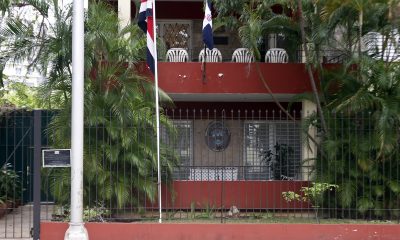
Costa Rica closes embassy in Cuba, citing human rights concerns