
Central America
Blinken calls for global cooperation on migration in Panama trip
AFP
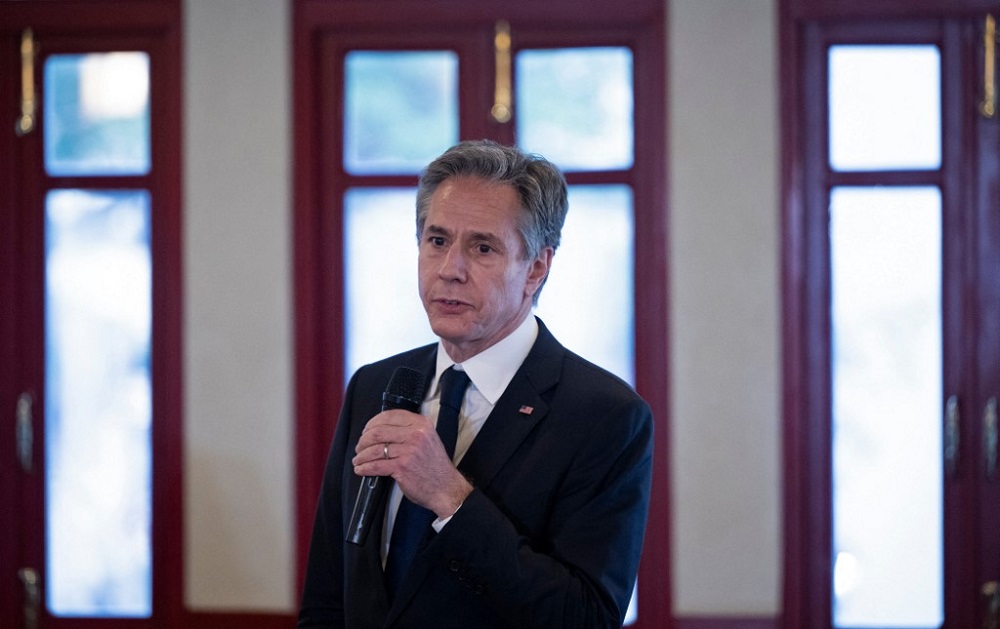
US Secretary of State Antony Blinken on Tuesday sought greater cooperation in Latin America on migration, taking on a cause of growing political headaches that has only been exacerbated by the crisis in Ukraine.
The top US diplomat was paying a two-day trip to Panama, his first to Latin America this year, weeks before President Joe Biden’s administration ends pandemic restrictions that allowed swift expulsions to Mexico.
Opening talks with a generous dinner at the foreign ministry, Blinken and US Homeland Security Secretary Alejandro Mayorkas met with counterparts from more than 20 countries in the Western Hemisphere.
“This issue is a priority for the United States,” Blinken said, calling for a “safe, orderly and humane” way of migration.









“We care about the well-being of millions of people across the hemisphere who have made the desperate decision to leave their homes and communities in search of a better life,” he said.
“All of us bring our concerns to this discussion but also the shared sense of responsibility to meet the migration challenges throughout our region.”
Nearly 100 million people have fled their homes worldwide — a figure that Blinken noted is the highest since World War II.
The global crisis has been worsened by the startlingly fast displacement of millions of Ukrainians since Russia invaded in February.
In the United States, authorities apprehended more than 221,000 people on the Mexican border in March, the highest for a single month in more than two decades — an issue sure to be high on the agenda of Biden’s Republican rivals in upcoming congressional elections.
The spike comes as people from El Salvador, Guatemala, Haiti and Honduras flee dire poverty, rampant violence and natural disasters aggravated by climate change.
– Refocusing on region –
But the United States is far from the only nation in the hemisphere experiencing migration strains. Venezuela’s economic and political crisis has triggered an exodus of more than six million people, with neighboring Colombia taking the most.
Blinken signed with Panama an agreement to work together on migration, the second such pact after one last month with Costa Rica.
Panamanian Foreign Minister Erika Mouynes said that the trading nation — home to the dangerous Durian Gap that connects North and South America — saw a record of more than 130,000 migrants last year.
She doubted that migration would ease, pointing to the effects of climate change and the invasion of Ukraine.
“The difficult and harsh reality — our reality — puts us all in a scenario that demands collaboration,” she said.
“Coordinating our efforts is no longer optional. It’s a necessity.”
Brian Nichols, the top US diplomat for Latin America, said the Panama talks would seek to boost support to nations that welcome refugees, including through multinational institutions.
The Panama trip will also help lay the groundwork for a summit of Latin American leaders that Biden will lead in Los Angeles in June.
With Latin America rarely seen as a global security hotspot, the international community spends more than 10 times on each refugee from Syria compared with each Venezuelan migrant, according to a Brookings Institution study.
“There’s going to be less and less appetite from the international community to support migrants in the Western Hemisphere while we have a major migration crisis being provoked by Russia,” said Jason Marczak, an expert on Latin America at the Atlantic Council.
“We need to avoid that becoming an afterthought for the global community, so it’s really important to have Secretary Blinken along with Secretary Mayorkas there in Panama.”
Ukrainian refugees have received a warmer welcome in much of the West than did mostly Muslim migrants from Syria and Afghanistan.
Biden has promised to welcome 100,000 Ukrainian refugees, drawing few protests from former president Donald Trump’s Republican Party, which has generally made opposition to immigration a core issue.






Central America
Panama seizes over 1,200 drug packages in container bound for Lithuania
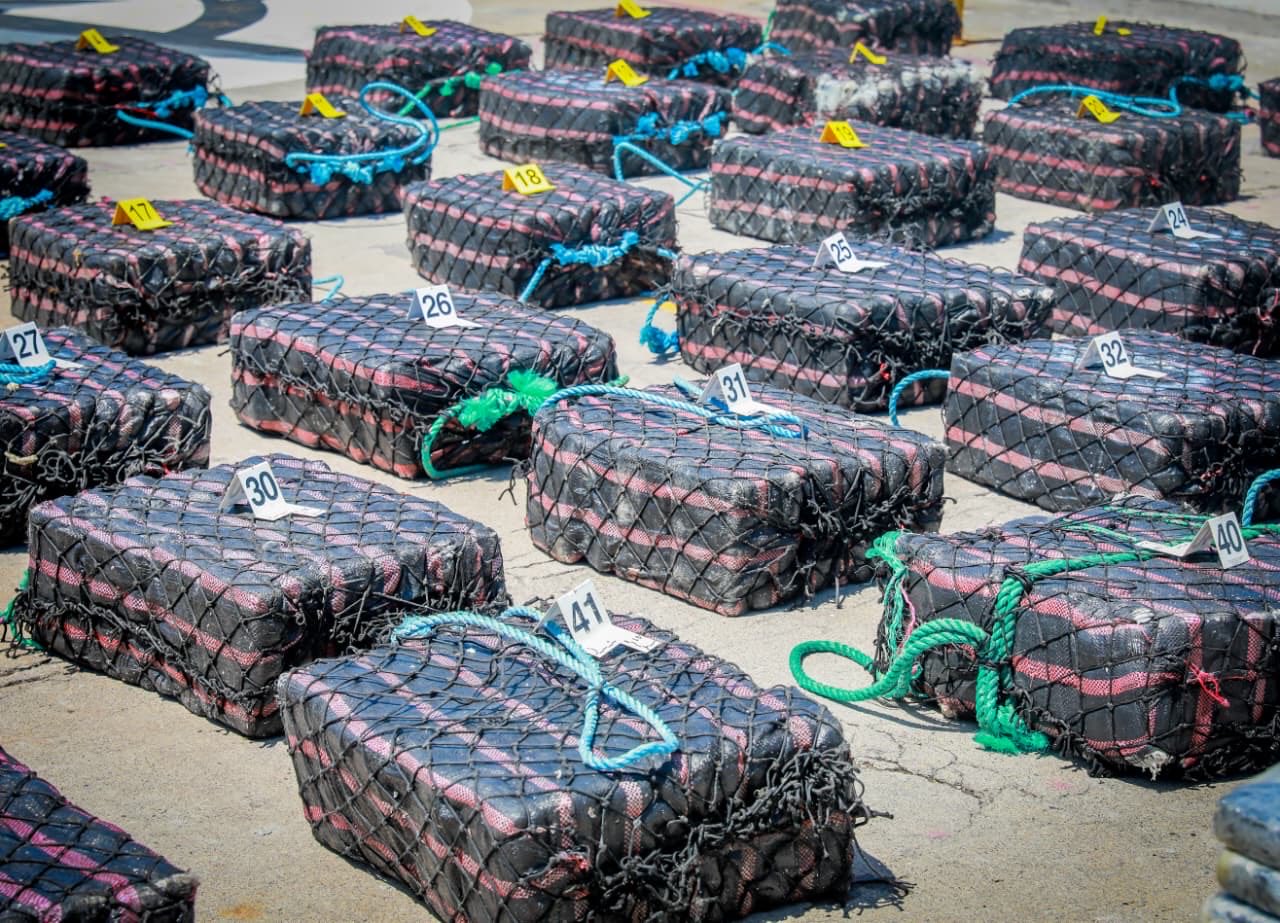
Authorities in Panama reported the seizure of 1,251 packages of suspected drugs hidden inside a shipping container bound for Lithuania, just days after intercepting another shipment of similar size headed to the same destination.
The Panama Public Prosecutor’s Office stated on social media that, through its Colón Drug Prosecutor’s Office and in coordination with the National Anti-Drug Directorate, authorities carried out the operation. The illicit substance was discovered inside a container scheduled for export.
Last Friday, officials also seized 1,506 packages of drugs in another container destined for Lithuania.
While authorities have not specified the type or exact weight of the seized substance, drug packages in Panama typically weigh around one kilogram each, and cocaine remains the most commonly confiscated narcotic in the country.
So far this year, Panamanian authorities have reported multiple drug seizures. Among them was a shipment of 5,356 packages intercepted on January 17, when agents of the National Aeronaval Service (SENAN) stopped a vessel near the Pearl Islands archipelago in the Pacific.
According to official figures, in 2025 Panama seized 129 tons of drugs and 47.8 tons of chemical precursors, highlighting ongoing efforts to combat international drug trafficking.
Central America
Guatemala narrows emergency measures to hardest-hit gang violence areas
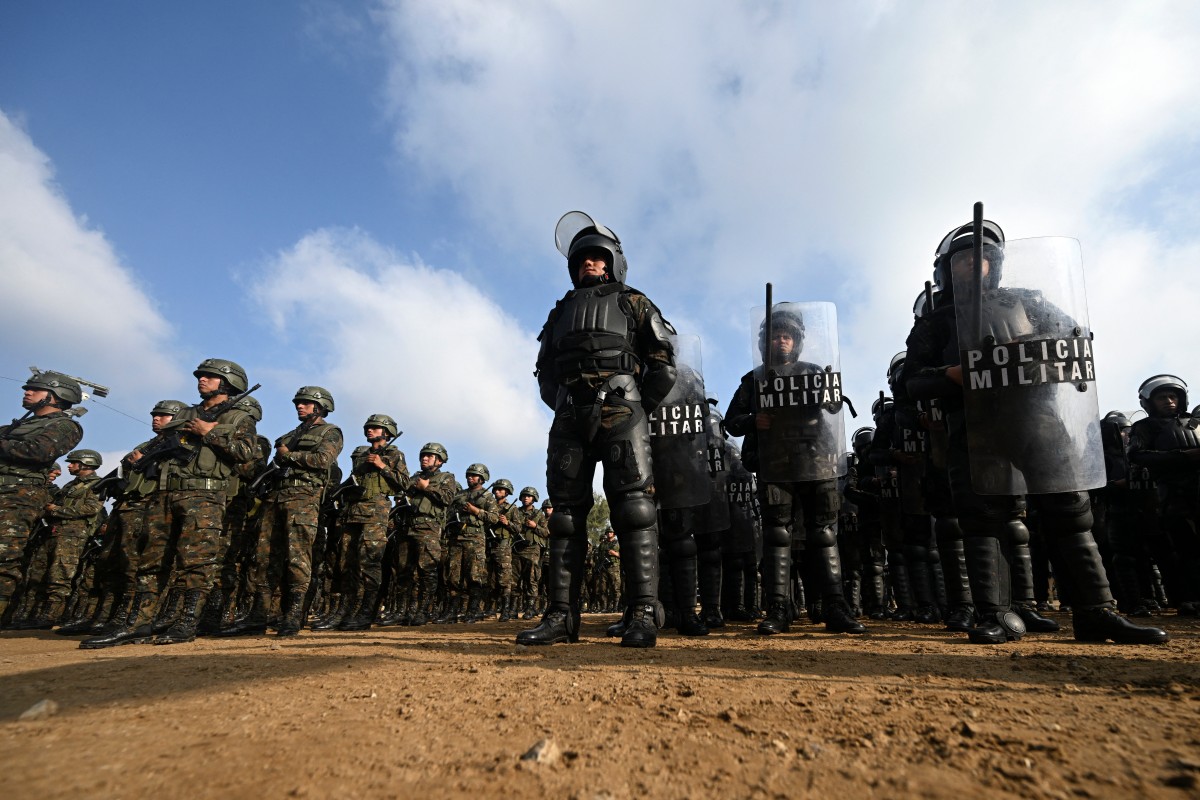
The government of Guatemala has narrowed the scope of its state of emergency to the areas most affected by gang violence, Interior Minister Marco Antonio Villeda announced on Thursday.
The measure comes two months after coordinated attacks attributed to the Barrio 18 left 11 police officers dead.
President Bernardo Arévalo initially imposed a state of siege in mid-January following the violence, which was reportedly in retaliation for government intervention in three prisons where gang leaders had staged uprisings.
That measure, which allowed arrests without a warrant, expired after one month. It was then replaced by a less restrictive “state of prevention,” alongside an increased security deployment in Guatemala City and surrounding areas.
According to Villeda, the state of prevention has been extended for two additional weeks but will now apply primarily to the central department of Guatemala — home to the capital — and Escuintla, which have recorded the highest levels of homicides and criminal activity.
“We need to continue these joint operations between the police and the military to maintain control,” the minister said.
The measure will also remain in effect in border departments including Petén, San Marcos and Huehuetenango, which border Mexico, as well as Izabal, which borders Honduras and Belize, in an effort to prevent the entry of criminal groups linked to drug trafficking.
Villeda added that in the past two weeks, homicides have dropped by 25% and extortion cases by 33% compared to the same period in 2025.
Central America
Costa Rica closes embassy in Cuba, citing human rights concerns
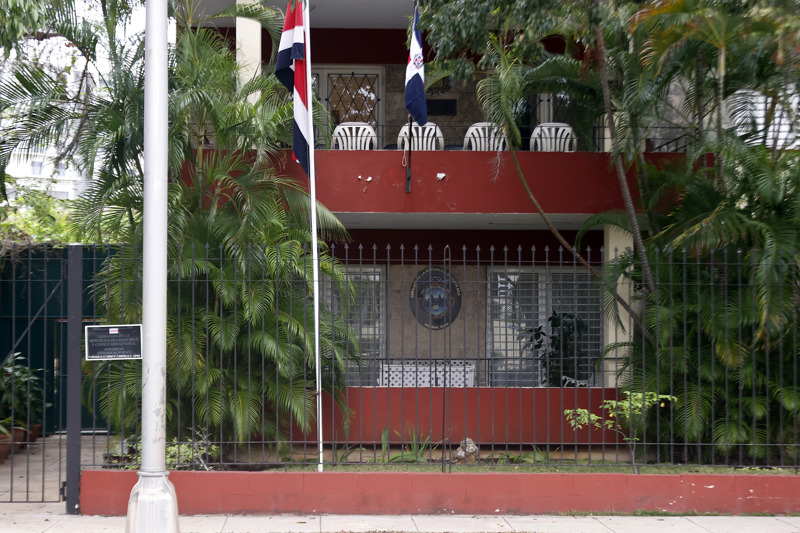
The government of Costa Rica announced on Wednesday the closure of its embassy in Cuba, a move that signals a further deterioration in diplomatic relations between the two nations.
Foreign Minister Arnoldo André confirmed that Costa Rica has also requested the withdrawal of Cuban diplomatic personnel from San José, leaving only consular representation in place.
According to André, the decision is driven by concerns over the worsening human rights situation on the island, including increased repression against citizens and opposition figures.
He also noted that Cuba’s ongoing economic and social crisis—marked by shortages of food, medicine, and basic services—has made the operation of the embassy increasingly difficult.
President Rodrigo Chaves backed the measure, stating that his administration does not recognize the legitimacy of Cuba’s political system.
In response, the Cuban government rejected the decision, calling it a “unilateral” move taken under pressure from United States.
“Under pressure from the United States, Costa Rica has limited its relations with Cuba to consular matters,” Cuba’s Foreign Ministry said, describing the action as “arbitrary.”
Despite the diplomatic setback, Cuban authorities stated that historical ties between the two nations would endure.

White House says Cuba policy unchanged despite sanctioned fuel shipment

Spain to grant citizenship to Venezuelan opposition leader Leopoldo López

ICE to remain at airports amid DHS shutdown, Homan says
Tec de Monterrey honors one of its students for his contribution to nanotechnology in medicine

Defense Minister commends salvadoran soldier for Central American Cross Country victory

Extension of the state of emergency approved in southern Chile
-
 International3 days ago
Over 300 U.S. Troops Wounded Since Start of Iran Conflict, CENTCOM Says
-
International2 days ago
Oil prices surge again as Middle East tensions persist
-
 International4 days ago
Iran rejects negotiations as tensions escalate with United States
-

 International3 days ago
Young Spanish Woman Receives Euthanasia After Legal Battle, Sparking Debate
-

 International4 days ago
Maduro appears again in New York court amid drug trafficking charges
-
 International1 hour ago
White House says Cuba policy unchanged despite sanctioned fuel shipment
-
 International1 day ago
ICE to remain at airports amid DHS shutdown, Homan says
-
 International1 hour ago
Spain to grant citizenship to Venezuelan opposition leader Leopoldo López