
International
Sanctions and elections on table at Venezuela talks

AFP
Venezuela’s government and opposition will restart talks in Mexico with sanctions, political prisoners and elections on the table, but not the future of President Nicolas Maduro.
Talks in the Dominican Republic in 2018 and Barbados a year later failed to produce a breakthrough in disputes centred on Maduro and Juan Guaido, the opposition leader recognized as the rightful president by about 60 countries.
“This process is more elaborate and better constructed than the previous ones,” a source close to the Norway-mediated dialogue told AFP.
An organizational meeting is planned for Friday while the official start of the talks is set for August 30.











“We have made a set of demands and we hold firmly to them: first of all, the immediate lifting of all the criminal sanctions,” said Maduro, referring to the raft of international measures imposed on himself and top government officials, including a US oil embargo against the state oil company PDVSA.
The opposition led by Guaido wants guarantees over electoral conditions and a clear program for presidential elections, as well as freeing political prisoners, including former legislator Freddy Guevara, who was detained just before talks began.
“There could be a softening of certain sanctions (and) on themes such as political prisoners and the institutional recognition of the opposition,” said Luis Vicente Leon, the director of pollsters Datanalisis.
– ‘Nothing to offer’ –
Guaido declared himself Venezuela’s president in 2019 through his position as parliament speaker.
The opposition-dominated parliament had claimed Maduro’s 2018 re-election was fraudulent, a view shared by the European Union and United States.
That led to a raft of new sanctions against the government at a time when Venezuela was gripped by the worst economic crisis in its modern history: eight years of recession and four years of hyperinflation have decimated an economy that has lost 80 percent of its value since 2014.
Despite the rival presidential claims, Maduro never lost control of the country’s institutions, in particular the armed forces, while Guaido was replaced as parliament speaker after the opposition boycotted legislative elections in December.
Neither Maduro or Guaido will attend the talks, but the government holds most of the cards.
“The opposition has nothing to offer” other than “the relationship with those that do, which is the international community,” said Leon.
“The opposition can make requests and incorporate it into the negotiations but the decisions will be made by the countries” that have imposed sanctions on Maduro.
The European Union, US and Canada have shown they are open to revising the sanctions if they see significant progress towards “credible, inclusive and transparent” elections, added Leon.
– ‘Not on the ropes’ –
The Mexico process follows a domestic negotiation, which resulted in the liberation of some political prisoners and the replacement of some electoral authorities — moves that were well received in Brussels and Washington.
“The conditions are in place for an agreement to be reached if there is the will from both parties,” said Pedro Benitez, a columnist and university professor.
Having boycotted the last legislative and presidential elections, the opposition has shown signs it is prepared to contest mayoral and gubernatorial polls in November.
Benitez believes that with the regional elections on the horizon, these talks in Mexico could “give back to the people trust in the vote” as long as “whoever wins, the victory is recognized.”
What is sure, though, is that Maduro is going nowhere.
“Maduro is not on the ropes,” said Leon. “Is he affected? Yes. Are there sanctions? Yes. Does he want to resolve them? Yes … Is he on the brink of leaving power? No.”
Leon added there is little chance the opposition will succeed in its demand to bring forward the 2024 presidential election.










International
Luigi Mangione Pleads Guilty to Killing UnitedHealthcare CEO Brian Thompson
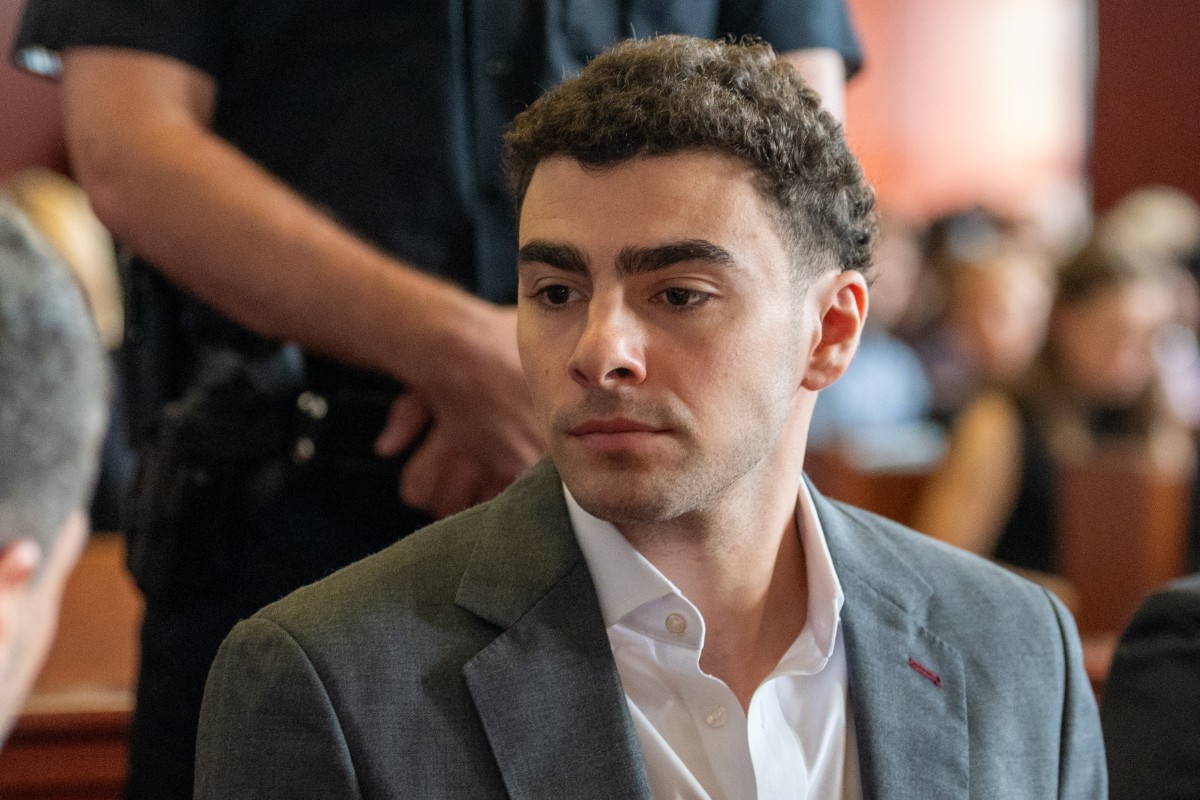
Luigi Mangione admitted Friday to fatally shooting Brian Thompson, the CEO of UnitedHealthcare, the largest health insurance group in the United States, during an appearance before a federal judge.
The case shocked the U.S. business community and dates back to December 2024, when Mangione opened fire on Thompson, 50, on a Manhattan street. Prosecutors have described the attack as being motivated by Mangione’s opposition to the U.S. health insurance system.
“On the morning of December 4, I shot Mr. Thompson in Manhattan and he died,” Mangione said as he pleaded guilty to a federal stalking charge related to his pursuit of the executive.
Mangione, 28, is scheduled to be sentenced on December 18, and prosecutors have indicated that they will seek a life sentence.
In addition to the federal charges related to stalking Thompson, Mangione also faces a murder case brought by the state of New York.
Following his guilty plea in federal court, Mangione’s defense asked a state court to dismiss the state charges, arguing that prosecuting him again for the same conduct would violate protections against double jeopardy.
“We have just filed our motion in state court to explain why the charges should be dismissed under New York’s protections against double jeopardy,” Mangione’s attorney, Karen Friedman Agnifilo, said Friday.
Both the federal and state cases could result in a life sentence. Two other federal charges that initially carried the possibility of the death penalty were dismissed by a judge earlier this year.
International
ICE Plan to Equip Agents With Electric Shock Gloves Raises Abuse Concerns
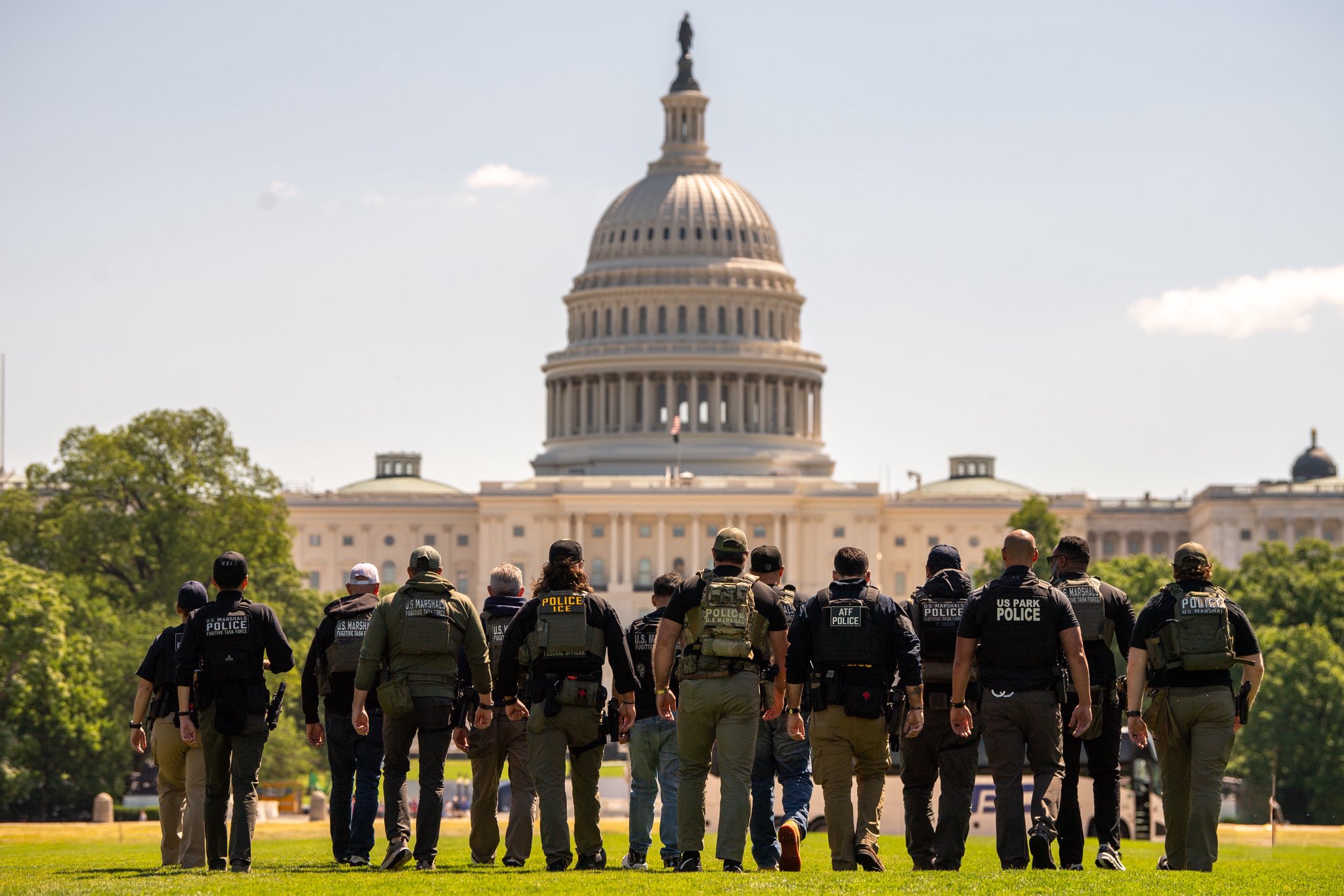
Plans to equip U.S. immigration agents with gloves capable of delivering electric shocks are raising concerns over potential abuses by a law enforcement agency that critics accuse of using excessive force and providing inadequate training to its personnel.
The plan involves the potential purchase of electric-shock gloves for agents with U.S. Immigration and Customs Enforcement (ICE), the agency primarily responsible for carrying out President Donald Trump’s campaign to deport millions of undocumented immigrants.
Democratic Representative Maxwell Frost criticized the proposal on X, arguing that the agency has already faced accusations of excessive force during immigration enforcement operations.
“As if assaulting and shooting people in the streets wasn’t enough,” Frost wrote. He also criticized the reported $20 million potential expenditure on the devices and called for greater restrictions on ICE.
The agency has faced growing scrutiny following a series of deadly shootings during immigration enforcement operations. Among the incidents were the deaths of two U.S. citizens in Minnesota in January who were participating in protests against the agency.
Critics have focused on the tactics used by ICE agents when detaining immigrants, as well as allegations that training standards for newly recruited personnel have been lowered.
According to a procurement plan first reported by the Associated Press, the Department of Homeland Security (DHS), which oversees ICE, could spend between $10 million and $20 million on the devices.
The gloves are described by the agency as tools intended for “distraction and de-escalation,” rather than lethal weapons. The system, known as GLOVE, stands for “Generated Low-Output Voltage Emitter.”
The device is manufactured by Compliant Technologies, a Kentucky-based company that describes its products as advanced non-lethal tools designed to protect and assist law enforcement and other personnel.
The proposal comes amid an intensifying national debate over ICE’s enforcement methods and the use of force during the Trump administration’s immigration crackdown.
International
Three U.S. Executions Set for Same Day as Trump Pushes to Expand Death Penalty

The death penalty has been abolished in 23 of the 50 U.S. states, while three others —California, Oregon and Pennsylvania— currently have moratoriums in place.
The United States is set to carry out three executions on the same day, a rare occurrence that has not happened since 2010, according to the nonprofit Death Penalty Information Center.
President Donald Trump has sought to expand the use of capital punishment for what he describes as “the most heinous crimes.” In April, the Department of Justice proposed expanding execution methods to include firing squads, lethal gas and electrocution.
Tennessee is scheduled to execute Anthony Darrell Dugard Hines, 66, on Thursday. He was sentenced to death for the 1985 murder of a woman, according to local media.
In Oklahoma, Carlos Cuesta-Rodríguez, 70, is scheduled to be executed for a 2003 murder.
Meanwhile, Alabama plans to execute Jeremy Williams, 42, who was sentenced to death for the rape and murder of a five-year-old girl.
The United States carried out 47 executions in 2025, the highest number since 2009, when 52 executions were recorded.
Florida conducted the largest number of executions last year, with 19, followed by Alabama, South Carolina and Texas, with five each.
Of the executions carried out in 2025, 39 were conducted by lethal injection. Three were carried out by firing squad and five through nitrogen hypoxia, a method that involves forcing nitrogen gas into a face mask, depriving the prisoner of oxygen.
The United Nations has condemned nitrogen gas as a cruel and inhumane method of capital punishment.

Luigi Mangione Pleads Guilty to Killing UnitedHealthcare CEO Brian Thompson

ICE Plan to Equip Agents With Electric Shock Gloves Raises Abuse Concerns

Three U.S. Executions Set for Same Day as Trump Pushes to Expand Death Penalty

Colombia Earthquake Death Toll Reaches 265 as Rescue Teams Race Against Time

German Authorities Investigate More Than 100 New Cases Against Convicted Nurse

Venezuela Raises Earthquake Death Toll to 6,301

CEAPI Backs Colombia’s New Government and Calls for Greater Public-Private Cooperation
Colombia Earthquake Leaves at Least 22 Dead as Rescue Efforts Continue
Three U.S. Executions Set for Same Day as Trump Pushes to Expand Death Penalty
Colombia Earthquake Death Toll Reaches 265 as Rescue Teams Race Against Time
Luigi Mangione Pleads Guilty to Killing UnitedHealthcare CEO Brian Thompson
ICE Plan to Equip Agents With Electric Shock Gloves Raises Abuse Concerns
-
 International3 days ago
Three U.S. Executions Set for Same Day as Trump Pushes to Expand Death Penalty
-
 International3 days ago
Colombia Earthquake Death Toll Reaches 265 as Rescue Teams Race Against Time
-
 International2 days ago
Luigi Mangione Pleads Guilty to Killing UnitedHealthcare CEO Brian Thompson
-
 International2 days ago
ICE Plan to Equip Agents With Electric Shock Gloves Raises Abuse Concerns