
International
Fujimori edges ahead of Castillo in tight Peru presidential vote

AFP/Editor
Right-wing populist Keiko Fujimori held a narrow lead over radical leftist Pedro Castillo following a partial vote count in Peru’s presidential election on Sunday.
With 52.9 percent of the vote counted after 42 percent of polling stations were tallied, Fujimori edged ahead in a seesaw battle for the presidency after Ipsos pollsters declared a “statistical draw” following an earlier exit poll and quick count.
Peru’s new leader will need to tackle a country in crisis, suffering from recession and with the worst coronavirus fatality rate in the world after recording over 184,000 deaths among its 33 million population.
Peruvians will also look to the winner to end years of political turbulence after four presidents in the last three years, and with seven of the last 10 of the country’s leaders either having been convicted of or investigated for corruption.











Piero Corvetto, head of Peru’s top electoral body (ONPE) warned that many polling stations from rural areas — Castillo’s stronghold — had yet to be tallied.
“They haven’t counted our votes yet,” Castillo told supporters in Tacabamba, in the northern Cajamarca region where he lives.
An exit poll by Ipsos after voting ended at 7:00 pm (0000 GMT) showed Fujimori just ahead with 50.3 percent, sparking protests from Castillo supporters outside the ONPE offices in the capital Lima.
But three hours later the pollsters released a quick count that showed Castillo in front with 50.2 percent, bringing scenes of joy and celebrations to the northern Cajamarca region.
Castillo, 51, had earlier urged his supporters to “stay calm.”
“Seeing how small the gap is, it is essential to maintain prudence and I say that for all Peruvians,” added Fujimori, who had earlier been seen hugging family and campaign staff following the exit poll.
Both candidates promised to respect the results when voting earlier in the day.
– ‘Too tight’ –
“We’re not going to know (the winner) until the last vote” is counted, political scientist Jessica Smith told AFP.
“It’s still very unsure, the difference is too tight and we have to wait for the official result.”
Castillo, 51, had topped the first round of voting in April, when the pair both caused a surprise by reaching the second round, and he was also narrowly ahead in the latest opinion polls before Sunday’s vote.
At the height of the political storm in November last year, Peru had three different presidents in just five days.
Two million Peruvians have lost their jobs during the pandemic and nearly a third of the country now live in poverty, according to official figures.
For voters, this was a choice between polar opposites.
Fujimori, 46, represents the neoliberal economic model of tax cuts and boosting private activity to generate jobs.
Fujimori’s bastion is the capital Lima, while Castillo’s bulwark is the rural deep interior.
Trade unionist schoolteacher Castillo has pledged to nationalize vital industries, raise taxes, eliminate tax exemptions and increase state regulation.
He voted in Tacabamba following a breakfast with his family.
Favored by the business sector and middle classes, Fujimori tried to portray Castillo as a communist threat, warning that Peru would become a new Venezuela or North Korea should he win.
Castillo pointed to the Fujimori family’s history of corruption scandals. Keiko Fujimori is under investigation over campaign funding in her 2011 and 2016 presidential bids and has already spent 16 months in pre-trial detention.
Her father is serving a 25-year sentence for crimes against humanity and corruption.
– ‘It won’t be easy’ –
“If Keiko is eventually elected, you can’t forget that this 50 percent is not her real support but rather a reaction from an electorate that is afraid of what her opponent represents,” Smith told AFP.
Whoever wins will have a hard time governing as Congress is fragmented. Castillo’s Free Peru is the largest single party, just ahead of Fujimori’s Popular Force, but without a majority.
“It won’t be easy (for Fujimori) given the mistrust her name and that of her family generates in many sectors. She’ll have to quickly calm the markets and generate ways to reactivate them,” added Smith.
If Castillo triumphs, he’ll have to “consolidate a parliamentary majority that will allow him to deliver his ambitious program.”
But in either case “it will take time to calm the waters because there’s fierce polarization and an atmosphere of social conflict,” analyst Luis Pasaraindico told AFP.
Some 160,000 police and soldiers were deployed to guarantee peace on election day as 25 million people were due to vote, plus another one million from the Peruvian diaspora living in 75 countries around the world.
The new president will take office on July 28, replacing centrist interim leader Francisco Sagasti.










International
Luigi Mangione Pleads Guilty to Killing UnitedHealthcare CEO Brian Thompson
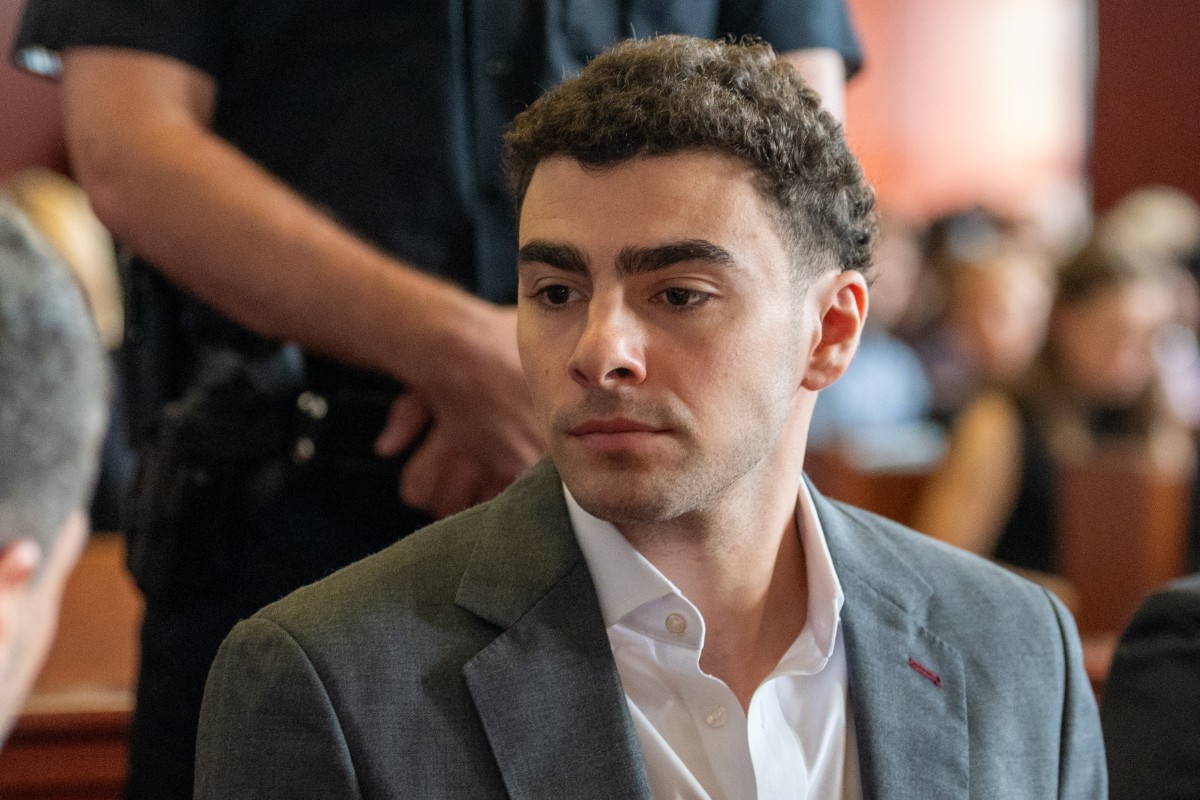
Luigi Mangione admitted Friday to fatally shooting Brian Thompson, the CEO of UnitedHealthcare, the largest health insurance group in the United States, during an appearance before a federal judge.
The case shocked the U.S. business community and dates back to December 2024, when Mangione opened fire on Thompson, 50, on a Manhattan street. Prosecutors have described the attack as being motivated by Mangione’s opposition to the U.S. health insurance system.
“On the morning of December 4, I shot Mr. Thompson in Manhattan and he died,” Mangione said as he pleaded guilty to a federal stalking charge related to his pursuit of the executive.
Mangione, 28, is scheduled to be sentenced on December 18, and prosecutors have indicated that they will seek a life sentence.
In addition to the federal charges related to stalking Thompson, Mangione also faces a murder case brought by the state of New York.
Following his guilty plea in federal court, Mangione’s defense asked a state court to dismiss the state charges, arguing that prosecuting him again for the same conduct would violate protections against double jeopardy.
“We have just filed our motion in state court to explain why the charges should be dismissed under New York’s protections against double jeopardy,” Mangione’s attorney, Karen Friedman Agnifilo, said Friday.
Both the federal and state cases could result in a life sentence. Two other federal charges that initially carried the possibility of the death penalty were dismissed by a judge earlier this year.
International
ICE Plan to Equip Agents With Electric Shock Gloves Raises Abuse Concerns
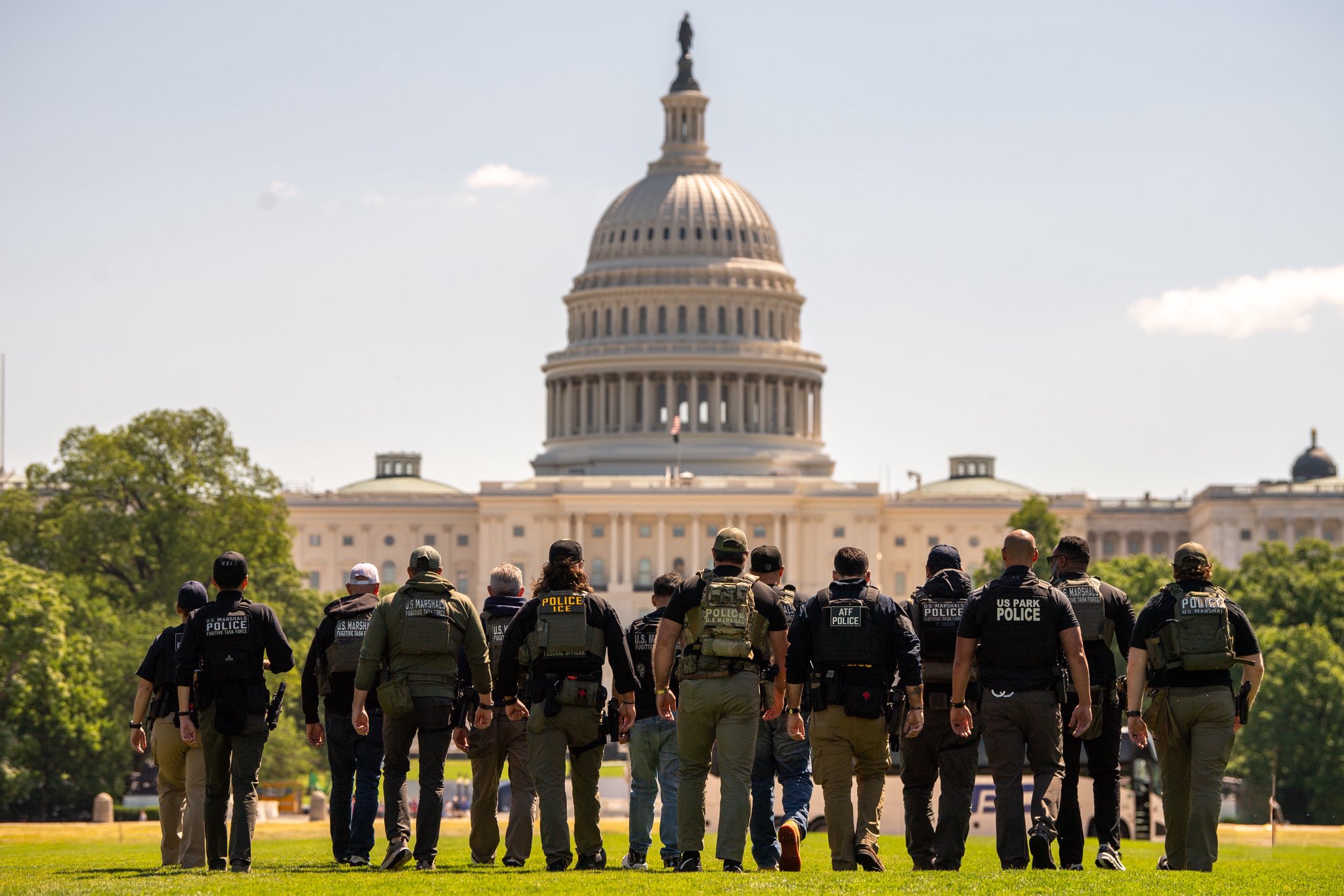
Plans to equip U.S. immigration agents with gloves capable of delivering electric shocks are raising concerns over potential abuses by a law enforcement agency that critics accuse of using excessive force and providing inadequate training to its personnel.
The plan involves the potential purchase of electric-shock gloves for agents with U.S. Immigration and Customs Enforcement (ICE), the agency primarily responsible for carrying out President Donald Trump’s campaign to deport millions of undocumented immigrants.
Democratic Representative Maxwell Frost criticized the proposal on X, arguing that the agency has already faced accusations of excessive force during immigration enforcement operations.
“As if assaulting and shooting people in the streets wasn’t enough,” Frost wrote. He also criticized the reported $20 million potential expenditure on the devices and called for greater restrictions on ICE.
The agency has faced growing scrutiny following a series of deadly shootings during immigration enforcement operations. Among the incidents were the deaths of two U.S. citizens in Minnesota in January who were participating in protests against the agency.
Critics have focused on the tactics used by ICE agents when detaining immigrants, as well as allegations that training standards for newly recruited personnel have been lowered.
According to a procurement plan first reported by the Associated Press, the Department of Homeland Security (DHS), which oversees ICE, could spend between $10 million and $20 million on the devices.
The gloves are described by the agency as tools intended for “distraction and de-escalation,” rather than lethal weapons. The system, known as GLOVE, stands for “Generated Low-Output Voltage Emitter.”
The device is manufactured by Compliant Technologies, a Kentucky-based company that describes its products as advanced non-lethal tools designed to protect and assist law enforcement and other personnel.
The proposal comes amid an intensifying national debate over ICE’s enforcement methods and the use of force during the Trump administration’s immigration crackdown.
International
Three U.S. Executions Set for Same Day as Trump Pushes to Expand Death Penalty

The death penalty has been abolished in 23 of the 50 U.S. states, while three others —California, Oregon and Pennsylvania— currently have moratoriums in place.
The United States is set to carry out three executions on the same day, a rare occurrence that has not happened since 2010, according to the nonprofit Death Penalty Information Center.
President Donald Trump has sought to expand the use of capital punishment for what he describes as “the most heinous crimes.” In April, the Department of Justice proposed expanding execution methods to include firing squads, lethal gas and electrocution.
Tennessee is scheduled to execute Anthony Darrell Dugard Hines, 66, on Thursday. He was sentenced to death for the 1985 murder of a woman, according to local media.
In Oklahoma, Carlos Cuesta-Rodríguez, 70, is scheduled to be executed for a 2003 murder.
Meanwhile, Alabama plans to execute Jeremy Williams, 42, who was sentenced to death for the rape and murder of a five-year-old girl.
The United States carried out 47 executions in 2025, the highest number since 2009, when 52 executions were recorded.
Florida conducted the largest number of executions last year, with 19, followed by Alabama, South Carolina and Texas, with five each.
Of the executions carried out in 2025, 39 were conducted by lethal injection. Three were carried out by firing squad and five through nitrogen hypoxia, a method that involves forcing nitrogen gas into a face mask, depriving the prisoner of oxygen.
The United Nations has condemned nitrogen gas as a cruel and inhumane method of capital punishment.

Luigi Mangione Pleads Guilty to Killing UnitedHealthcare CEO Brian Thompson

ICE Plan to Equip Agents With Electric Shock Gloves Raises Abuse Concerns

Three U.S. Executions Set for Same Day as Trump Pushes to Expand Death Penalty

Colombia Earthquake Death Toll Reaches 265 as Rescue Teams Race Against Time

German Authorities Investigate More Than 100 New Cases Against Convicted Nurse

Venezuela Raises Earthquake Death Toll to 6,301

CEAPI Backs Colombia’s New Government and Calls for Greater Public-Private Cooperation
Colombia Earthquake Leaves at Least 22 Dead as Rescue Efforts Continue
Three U.S. Executions Set for Same Day as Trump Pushes to Expand Death Penalty
Colombia Earthquake Death Toll Reaches 265 as Rescue Teams Race Against Time
Luigi Mangione Pleads Guilty to Killing UnitedHealthcare CEO Brian Thompson
ICE Plan to Equip Agents With Electric Shock Gloves Raises Abuse Concerns
-
 International3 days ago
Three U.S. Executions Set for Same Day as Trump Pushes to Expand Death Penalty
-
 International3 days ago
Colombia Earthquake Death Toll Reaches 265 as Rescue Teams Race Against Time
-
 International2 days ago
Luigi Mangione Pleads Guilty to Killing UnitedHealthcare CEO Brian Thompson
-
 International2 days ago
ICE Plan to Equip Agents With Electric Shock Gloves Raises Abuse Concerns