
International
Governor in Colombia: A ceasefire can be a demonstration of peace before COP16

The governor of the Colombian department of Valle del Cauca, Dilian Francisca Toro, believes that a ceasefire between armed groups in the Pacific “can happen” and would be “a demonstration of the will” of peace before the upcoming celebration of COP16 in Cali, the capital of that region.
“This has to serve, that nature, which is what reconciles us and is reconciling us at this moment, the conservation of life, serves for them to reflect and see that the most important thing is to be able to achieve peace, reconciliation and tranquility above all these communities so suffered,” Toro explains in an interview with EFE.
The objective of the United Nations Conference on Biodiversity (COP16), to be held from October 21 to November 1, with the participation of about 12,000 people, is to address the loss of biodiversity, restore ecosystems, distribute the benefits in a fair and equitable way and protect the rights of indigenous peoples.
However, the armed groups operating in the Pacific region have intensified their attacks in the vicinity of Cali in recent months, which set off alarms before the upcoming celebration of COP16, especially after the Central Staff (EMC), the main dissident of the FARC, referred to this international summit.
“I believe that (a ceasefire) can be a demonstration of the will to reduce all that onslaught of violence and suffering that the people of the Pacific have had, because it is those of the Colombian Pacific who have suffered the most violence and conflict,” says the governor.











Despite this, Toro is “completely calm” that COP16 will take place with total normality and without setbacks. “We have the certainty and we want to give all the certainty and security to the entire Colombian and international community,” he says.
The governor insists that to guarantee security there will be a “very great reinforcement of capabilities by the Army, the Police” and the regional authorities, including the purchase of technology such as anti-drones.
“What we want is for everyone to live it, that they do not tell them about it, but that they live the diversity in our region” and that they discover that “we can do a lot of ecotourism and that there nature is taken care of by indigenous, Afro-descendant, peasant communities and also civil society,” he says.
Toro highlights among the events of COP16 the summit of mayors and regional authorities that will take place on October 26, where they do not want to discuss, but to listen to the communities of each of the regions that are represented to know “how they take care of life, how they take care of nature, how they do to have sustainable development.”
“It is an opportunity, not only to take care of the environment, but that (COP16) becomes a closure of social gaps and inequalities, generating a sustainable economic development for those communities that live and that take care of that nature,” and those communities are precisely the ones that will be the protagonists of the summit, emphasizes the governor.
As for the expectations with COP16, he is confident that not only will the high-level negotiations “come to a successful conclusion,” but that “will serve to be able to continue taking care of nature, continue caring for biodiversity by 2030 as it is established.”
“And the most important thing is that we as a region, as a department, have a legacy (…) of culture, of the awareness of taking care of nature,” he adds.
So far, 145 delegations have confirmed their attendance, in addition to observer organizations, youth groups, civil society, academies and the general public that will negotiate and discuss the importance of the protection and restoration of nature through 23 goals for 2030 and four objectives for 2050.










International
Mexico and Guatemala Agree on Five-Point Binational Plan for 2027
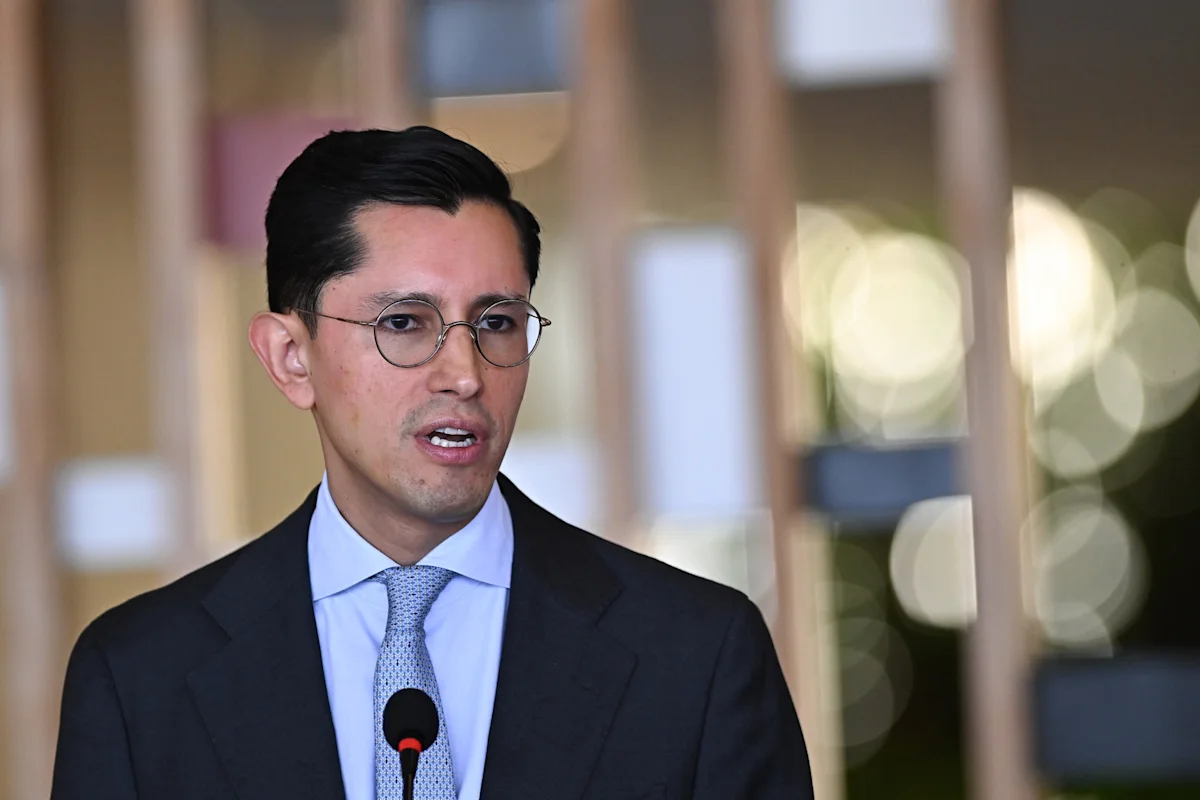
Mexico and Guatemala agreed Tuesday on a 2027 Binational Plan built around five areas of cooperation, along with a schedule of meetings and initiatives aimed at making progress by the end of 2026 on security, border infrastructure, human mobility, development and technical and social cooperation.
The agreement was announced by the foreign ministers of both countries following a meeting in Mexico City.
Mexican Foreign Minister Roberto Velasco said the plan will establish the “direction and priorities” of bilateral relations for next year. His Guatemalan counterpart, Carlos Ramiro Martínez, said the meeting allowed both governments to make decisions, schedule activities and revitalize bilateral cooperation mechanisms.
Security and border infrastructure
In the area of security, the two governments have nearly completed negotiations on a new memorandum of understanding for the Mexico-Guatemala High-Level Security Group (Ganseg), which was reactivated in 2025.
The countries expect to sign the agreement in the coming months to strengthen coordination and their ability to respond to shared security threats.
Regarding their nearly 1,000-kilometer shared border, Mexico and Guatemala agreed to advance infrastructure improvements at border crossings and continue work on a joint cargo clearance program between Ciudad Hidalgo and Tecún Umán, two border areas separated by the Suchiate River.
The measures are intended to facilitate bilateral trade while making cross-border exchanges safer and more efficient.
The two governments will also continue defining a route toward a railway connection between their countries through Line K of Mexico’s Interoceanic Corridor of the Isthmus of Tehuantepec (CIIT), with the aim of strengthening economic and community ties.
Migration and development
On human mobility, Mexico and Guatemala will maintain coordination to ensure safe, orderly and dignified returns, while strengthening protection for people in transit.
The bilateral agenda also includes a second phase of the Sembrando Vida program in Guatemala, which is expected to benefit 10,000 people across 15 departments.
Both countries will also advance initiatives under Juntos para el Bienestar, as well as six technical, scientific and energy cooperation projects approved by the Joint Commission.
The agreements seek to strengthen bilateral ties and establish concrete priorities for cooperation between Mexico and Guatemala during 2027.
International
France to Expel Two Iranian Diplomats Over Alleged Attack on French Officials
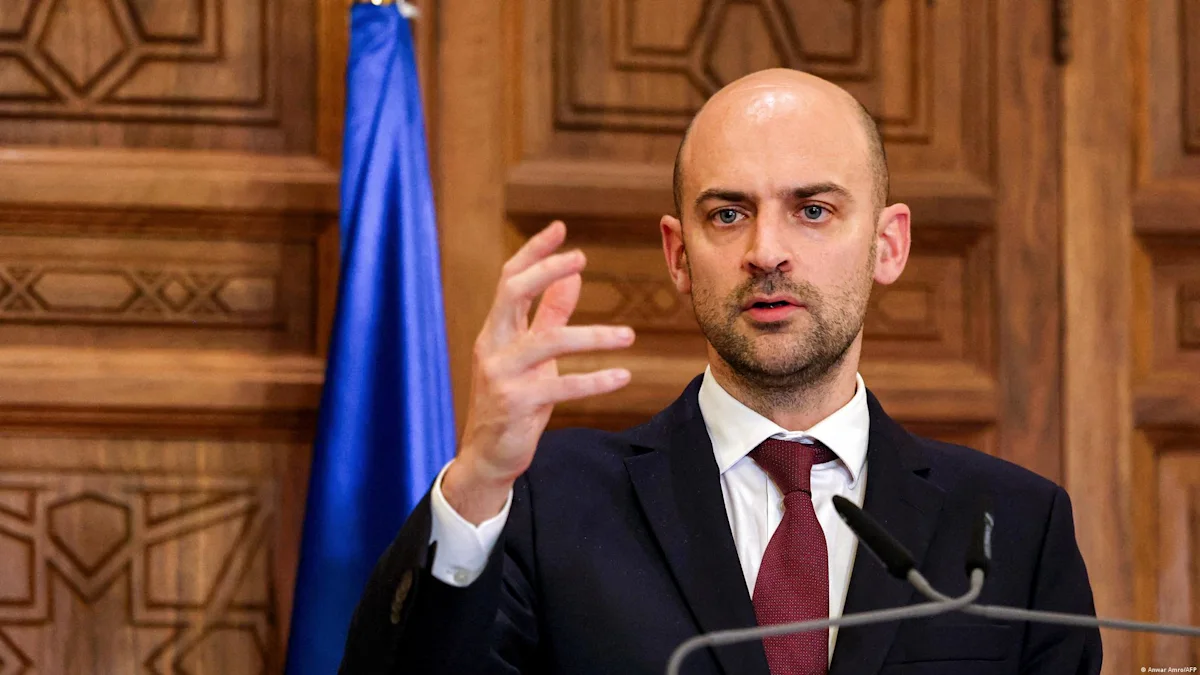
French Foreign Minister Jean-Noël Barrot announced Tuesday, August 18, 2026, that France will expel two Iranian diplomats in response to what Paris described as an attack on two French representatives in Iran last month.
“Two French diplomats were scandalously and deliberately assaulted on July 19. I had announced that this intolerable act would have consequences. It has now happened. Two Iranian diplomats in France will be expelled in the coming days,” Barrot said in a message posted on X.
The two Iranian diplomats have been declared persona non grata and will be required to leave France within the coming days, according to the French foreign minister.
About a month ago, Barrot said that two members of the French diplomatic staff had been detained by Iranian security forces for several hours. One of them was also subjected to harassment, he said.
The French government described the incident as an “extremely serious act of intimidation” that violated diplomatic immunity.
The two French embassy staff members were working on programs supporting Iranian civil society, particularly initiatives involving artists and researchers.
Iran has denied France’s allegations regarding the incident. The diplomatic dispute comes amid already strained relations between Paris and Tehran.
International
Heat wave puts more than 70 million Americans under alerts as temperatures near 46°C

More than 70 million people remained under heat alerts Monday as an intense heat wave continued across the southern United States, particularly Florida and states along the Mexican border, where temperatures and heat indexes could reach as high as 46 degrees Celsius, according to the National Weather Service (NWS).
Several cities recorded or tied temperature records over the weekend and into Monday, including Miami and Fort Lauderdale in Florida; Laredo, Borger and Austin’s airport in Texas; Atlanta, Georgia; Raleigh and Charlotte, North Carolina; and Memphis, Tennessee.
The NWS warned that the heat wave will continue affecting the southern and southeastern United States, with maximum temperatures expected to remain near 38°C to 40°C for several days. The heat index, which combines temperature and humidity to estimate how hot conditions feel, could reach 46°C.
The extreme heat is also spreading into the Southwest, where temperatures began rising again between Monday and Tuesday. Forecast highs in the region range from about 38°C to 43°C.
Heat alerts remain in effect across Nevada, Arizona and California, including areas in southern Arizona and California near the Mexican border, as authorities warn of the risks posed by prolonged extreme temperatures.
The NWS urged residents to limit outdoor activity, stay hydrated, ensure access to air conditioning or cooling centers, and check on vulnerable friends, neighbors and family members.
The United States is experiencing a summer marked by above-average temperatures and repeated heat waves. One of the most intense episodes occurred during the July 4 weekend, when extreme heat was blamed for roughly 30 deaths.
July was the hottest month ever recorded in the United States since measurements began, with the average temperature across the contiguous country approaching 25°C, according to the National Oceanic and Atmospheric Administration (NOAA).
The combination of extreme heat and drought conditions has also fueled wildfires. Nearly 3 million hectares have burned across the country so far in 2026, making it the largest area affected by wildfires in a decade.

Mexico and Guatemala Agree on Five-Point Binational Plan for 2027

France to Expel Two Iranian Diplomats Over Alleged Attack on French Officials

Heat wave puts more than 70 million Americans under alerts as temperatures near 46°C

Trump warns Iran over nuclear ambitions as U.S.-Iran ceasefire deadline passes

Brazil’s Lula and Flávio Bolsonaro kick off election campaigns amid focus on crime

Actress Hayden Panettiere Dies at 36, Representative Confirms

Luigi Mangione Pleads Guilty to Killing UnitedHealthcare CEO Brian Thompson

ICE Plan to Equip Agents With Electric Shock Gloves Raises Abuse Concerns
France to Expel Two Iranian Diplomats Over Alleged Attack on French Officials
Actress Hayden Panettiere Dies at 36, Representative Confirms
Trump warns Iran over nuclear ambitions as U.S.-Iran ceasefire deadline passes
Heat wave puts more than 70 million Americans under alerts as temperatures near 46°C
Brazil’s Lula and Flávio Bolsonaro kick off election campaigns amid focus on crime
Mexico and Guatemala Agree on Five-Point Binational Plan for 2027
Luigi Mangione Pleads Guilty to Killing UnitedHealthcare CEO Brian Thompson
ICE Plan to Equip Agents With Electric Shock Gloves Raises Abuse Concerns
-
 International15 hours ago
France to Expel Two Iranian Diplomats Over Alleged Attack on French Officials
-
 International3 days ago
Actress Hayden Panettiere Dies at 36, Representative Confirms
-
 International2 days ago
Trump warns Iran over nuclear ambitions as U.S.-Iran ceasefire deadline passes
-
 International2 days ago
Heat wave puts more than 70 million Americans under alerts as temperatures near 46°C
-
 International2 days ago
Brazil’s Lula and Flávio Bolsonaro kick off election campaigns amid focus on crime
-
 International15 hours ago
Mexico and Guatemala Agree on Five-Point Binational Plan for 2027
-
 International5 days ago
Luigi Mangione Pleads Guilty to Killing UnitedHealthcare CEO Brian Thompson
-
 International5 days ago
ICE Plan to Equip Agents With Electric Shock Gloves Raises Abuse Concerns