
International
Hunger in the world remains at high levels for the third consecutive year
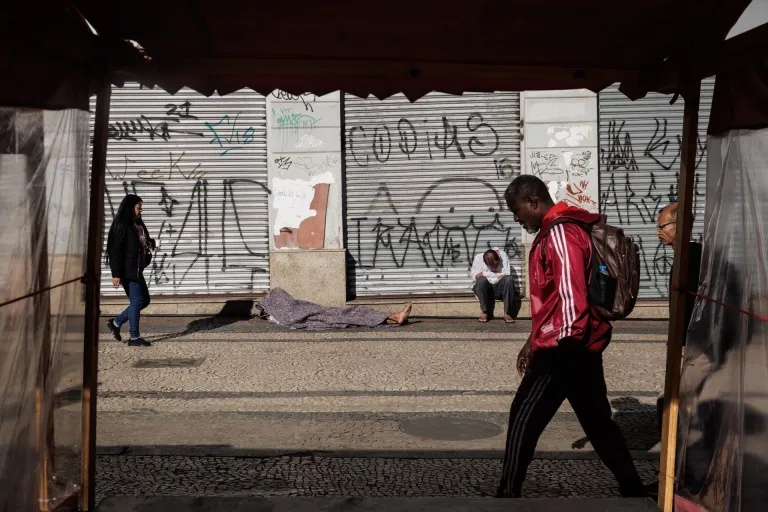
Hunger levels remained worryingly high in 2023 for the third consecutive year, with about 733 million people chronically undernourished worldwide, according to a report released on Wednesday by five United Nations agencies.
The report on “The state of food security and nutrition in the world,” presented in Rio de Janeiro, coinciding with the ministerial meetings of the G20, shows an alarming global scenario in which one in eleven people went hungry last year.
Hunger continues to increase in Africa, where 20.4% of its population suffers, stabilizes in Asia (8.1%) and is experiencing progress in Latin America (6.2%), except in the Caribbean region.
“In Africa, conflicts have increased and access to finance has been greatly reduced,” Máximo Torero, chief economist of the UN Food and Agriculture Agency (FAO), told EFE.
The world has gone back 15 years in the fight against hunger, with levels of undernourishment comparable to those of 2008-2009, in the heat of wars, the climate crisis, the loss of purchasing power corroded by inflation, the lack of funding and the growing social inequality.











These phenomena, especially wars, climatic catastrophes and economic crises, “are increasingly frequent and serious,” the report warns.
The ravages of the COVID-19 pandemic remain. Today, there are 152 million more people who go hungry compared to 2019.
Between 2022 and 2023 there were advances in the rates of growth retardation and exclusive breastfeeding, but access to adequate food continues to be an “unattainable” chimera for many
Last year, about 2,33 billion people, that is, almost a third of the world’s population, faced moderate or severe food insecurity, practically the same level that was reached during the coronavirus crisis.
.
“The pandemic has greatly exacerbated inequalities,” Torero said.
This year’s report emphasizes the “urgent” need for “greater and more profitable financing, with a clear and standardized definition” in favor of food security and nutrition, especially in poor countries.
“You need to invest more and do it smarter. Investments should not come only from governments; also from the private sector, which we hope will have a part in this fight against rural hunger and poverty,” Rossana Polastri, IFAD’s regional director for Latin America and the Caribbean, told EFE.
Not covering that financing deficit will have “social, economic and environmental” consequences that will require solutions that will also cost several billion dollars.
If the trend continues, “582 million people will be chronically undernourished by 2030, half of them in Africa,” warn FAO, the International Fund for Agricultural Development (IFAD), the World Health Organization (WHO), the World Food Program (WFP) and the Children’s Fund (Unicef), authors of the study.
A figure far removed from the target of zero famine set for that year.
To get closer to that goal that seems impossible today, Brazil, which holds the rotating presidency of the G20, launches this Wednesday a Global Alliance against Hunger with which it intends to end this scourge through better coordination and greater investment.










International
U.S. to Limit Visa Duration for Foreign Students and Journalists
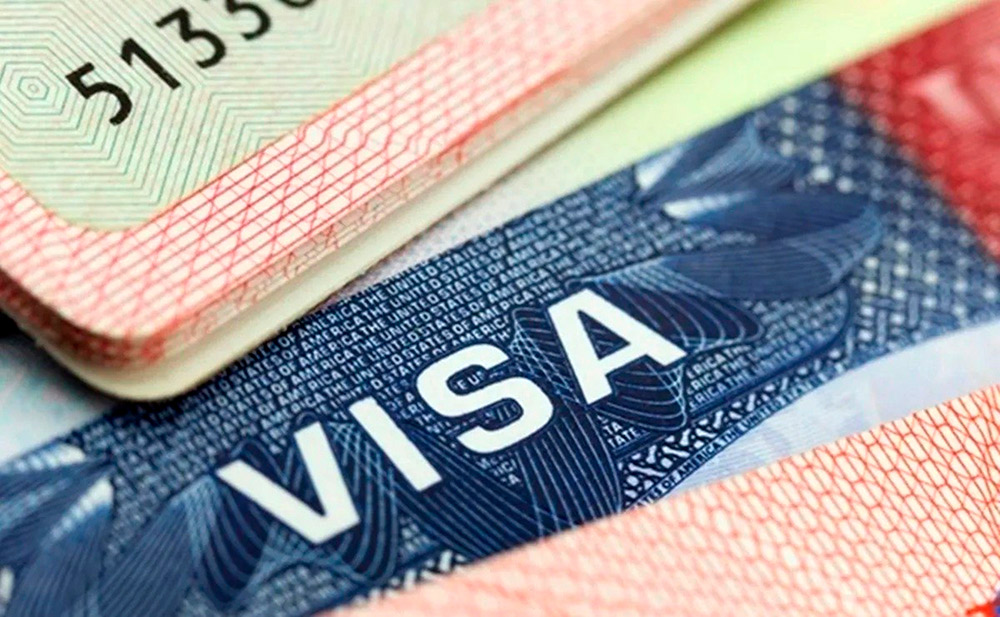
The United States has announced new limits on the legal length of stay for foreign students and journalists, marking the latest tightening of immigration policies under President Donald Trump.
The changes, outlined in an administrative rule published on Thursday, are expected to take effect in September, unless Congress blocks the measure.
Under the new policy, holders of student visas will be allowed to remain in the United States for no more than four years.
Foreign journalists will be limited to 240-day stays—approximately eight months—with the possibility of applying for extensions of the same duration.
The policy imposes even stricter rules on Chinese journalists, whose visas will be capped at 90 days.
More than 100 international news organizations and press freedom groups, including Agence France-Presse (AFP), criticized the measure in an open letter, arguing that it would reduce both the quantity and quality of international coverage of events in the United States.
The Republican Party, led by President Trump, currently holds a majority in Congress and has pledged to curb both illegal immigration and certain forms of legal immigration.
Previously, the United States generally issued student visas for the full duration of an academic program, while foreign journalists could receive visas valid for up to five years.
Central America
Nicaragua Cuts Diplomatic Ties With Italy Over Red Brigades Dispute

The Nicaraguan government announced on Thursday that it is severing diplomatic relations with Italy following criticism from the Italian government over Nicaragua’s long-standing decision to shelter Alessio Casimirri, a former member of the Red Brigades convicted in Italy for the 1978 kidnapping and murder of former Prime Minister Aldo Moro.
Italian Foreign Minister Antonio Tajani criticized the administration of co-presidents Daniel Ortega and Rosario Murillo on Wednesday for continuing to provide refuge to Casimirri, who was sentenced in Italy to six life terms for his role in Moro’s abduction and killing.
In a statement issued Thursday, Nicaragua’s Foreign Ministry said it was ending all diplomatic relations with Italy, describing Tajani’s remarks as “unjustified, aggressive, and irresponsible.”
Tajani made the comments during a gathering of conservative leaders from Europe and Latin America held in Madrid.
“We have absolutely nothing in common with the positions of extremist governments such as Nicaragua, a country that continues to harbor dangerous Red Brigades terrorists like Alessio Casimirri,” Tajani said, according to Italian media.
The diplomatic break marks a new escalation in tensions between the two countries over the decades-old case involving Casimirri, who has lived in Nicaragua for many years despite repeated calls from Italy for his extradition.
International
U.S. Strikes Hit Areas Near Strait of Hormuz as Tensions With Iran Escalate

Several U.S. strikes targeted areas near the Strait of Hormuz on Thursday, according to Iranian state media citing local authorities, as hostilities between the United States and Iran intensified.
Officials in Iran’s Hormozgan Province said the island of Qeshm was struck multiple times by what they described as U.S. missiles during the evening. The reports were carried by the Iranian news agencies Fars and Tasnim.
Iranian state television also reported that the Bandar Abbas region, located on the Iranian coast overlooking the Strait of Hormuz, was the target of what authorities described as an “enemy U.S. air attack.”
According to local officials quoted by state television, no casualties have been reported following the strikes.
The reported attacks come amid renewed military tensions between Washington and Tehran, although U.S. authorities had not immediately commented on the reported operations.

U.S. to Limit Visa Duration for Foreign Students and Journalists

Nicaragua Cuts Diplomatic Ties With Italy Over Red Brigades Dispute

U.S. Strikes Hit Areas Near Strait of Hormuz as Tensions With Iran Escalate
Tec de Monterrey honors one of its students for his contribution to nanotechnology in medicine

Defense Minister commends salvadoran soldier for Central American Cross Country victory

Extension of the state of emergency approved in southern Chile
-

 International3 days ago
ICE reverses course and moves forward with New Jersey migrant detention facility project
-

 International3 days ago
Judge rules Trump’s IRS lawsuit was a “bad faith” attempt to manipulate the judicial process
-

 International2 days ago
France Holds Largest Bastille Day Military Parade as Europe Highlights Strategic Defense
-
 International2 days ago
President Noboa Declares New Security Strategy as Ecuador Faces Record Violence Levels
-
 International3 days ago
Marco Rubio launches U.S. campaign to “dismantle” the International Criminal Court
-
 International2 days ago
Foreign Medical Teams Race to Prevent Health Crisis in Venezuela Earthquake Camps
-
 International4 days ago
Venezuela Earthquake Death Toll Rises to 4,490 as Rescue Efforts Continue
-

 International1 day ago
Latin Music Stars Unite in Miami to Raise Aid for Victims of Venezuela’s Devastating Earthquake
-
 International11 hours ago
U.S. Strikes Hit Areas Near Strait of Hormuz as Tensions With Iran Escalate
-
 International1 day ago
Trump Administration Seeks Global Action Against “Resurgent” Left-Wing Terrorism
-
 International11 hours ago
U.S. to Limit Visa Duration for Foreign Students and Journalists
-
 Central America11 hours ago
Nicaragua Cuts Diplomatic Ties With Italy Over Red Brigades Dispute
-
 International11 hours ago
El Salvador Sends Eighth Humanitarian Flight to Earthquake-Hit Venezuela