
International
A sixth man is found dead after the explosion in a tequila factory in Mexico
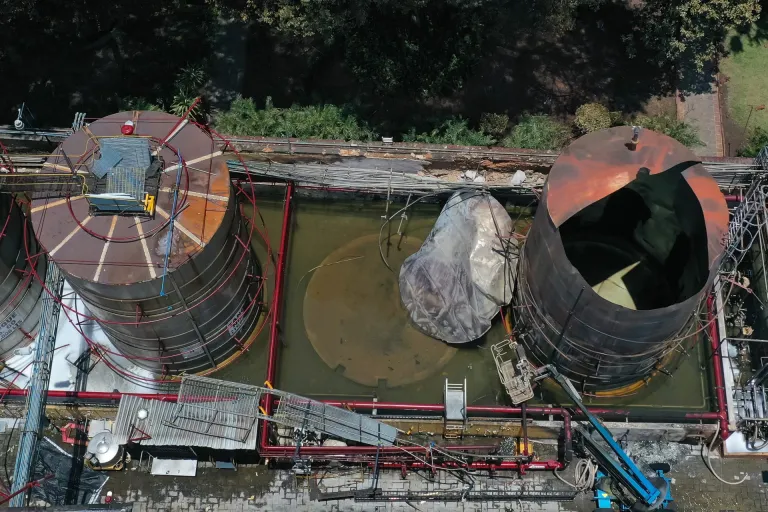
The number of people killed by the explosion in a tequilera company rose to six, the Civil Protection and Firefighters Unit of Jalisco, a state of western Mexico, reported on Wednesday, which also reported a second fire in the factory that left no injuries.
The agency stated in a statement that municipal and state firefighters found a sixth victim during the cooling work of the area after Tuesday’s east.
He also revealed that on Wednesday morning there was a new fire in a cardboard storage that reached a 200-liter container with tequila waste, but it was already controlled and left no victims.
The death of six people and two more injured, one of them seriously, after the explosion of a tank and the subsequent fire that reached three other containers, has overshadowed the celebrations of International Tequila Day that were scheduled for this Wednesday.
In addition, it has forced the authorities to stop tourist activities in the town of Tequila, where the drink with a designation of origin is produced.











The National Chamber of the Tequila Industry canceled the presentation of a commemorative bottle and the Tequila Regulatory Council did the same with the tastings and the celebration ceremony that it would do in conjunction with the Government of the State of Jalisco.
The mayor of the municipality of Tequila, José Alfonso Magallanes, assured that the companies José Cuervo y Sauza, which have their main headquarters in the town, stopped their production and the tourist and administrative activities of the municipality were also suspended until they were assured that there is no risk of new incidents.
Magallanes told a local media that, according to the first investigations, the explosion could have originated because some workers were welding one of the stills (utensil for distilling), which was combined with an accumulation of gases.
Even so, he warned that they will wait for the expert opinions of the specialists of the Jalisco Institute of Forensic Sciences who are still working on the spot.
“What we know is that, when it comes to welding, maybe the gases make this giant tank move through the air with everything and the person who was welding and was fastened with a harness,” he said in an interview.
It was also assured that the deceased people are part of the companies that the tequilera outsources to carry out maintenance work, although on Tuesday they first identified themselves as employees of José Cuervo.
In a statement, José Cuervo reported that they evicted the distillery and its surroundings to prioritize the safety of workers and neighbors, and that they help the authorities to investigate the causes of the accident.










International
U.S. to Limit Visa Duration for Foreign Students and Journalists
The United States has announced new limits on the legal length of stay for foreign students and journalists, marking the latest tightening of immigration policies under President Donald Trump.
The changes, outlined in an administrative rule published on Thursday, are expected to take effect in September, unless Congress blocks the measure.
Under the new policy, holders of student visas will be allowed to remain in the United States for no more than four years.
Foreign journalists will be limited to 240-day stays—approximately eight months—with the possibility of applying for extensions of the same duration.
The policy imposes even stricter rules on Chinese journalists, whose visas will be capped at 90 days.
More than 100 international news organizations and press freedom groups, including Agence France-Presse (AFP), criticized the measure in an open letter, arguing that it would reduce both the quantity and quality of international coverage of events in the United States.
The Republican Party, led by President Trump, currently holds a majority in Congress and has pledged to curb both illegal immigration and certain forms of legal immigration.
Previously, the United States generally issued student visas for the full duration of an academic program, while foreign journalists could receive visas valid for up to five years.
Central America
Nicaragua Cuts Diplomatic Ties With Italy Over Red Brigades Dispute

The Nicaraguan government announced on Thursday that it is severing diplomatic relations with Italy following criticism from the Italian government over Nicaragua’s long-standing decision to shelter Alessio Casimirri, a former member of the Red Brigades convicted in Italy for the 1978 kidnapping and murder of former Prime Minister Aldo Moro.
Italian Foreign Minister Antonio Tajani criticized the administration of co-presidents Daniel Ortega and Rosario Murillo on Wednesday for continuing to provide refuge to Casimirri, who was sentenced in Italy to six life terms for his role in Moro’s abduction and killing.
In a statement issued Thursday, Nicaragua’s Foreign Ministry said it was ending all diplomatic relations with Italy, describing Tajani’s remarks as “unjustified, aggressive, and irresponsible.”
Tajani made the comments during a gathering of conservative leaders from Europe and Latin America held in Madrid.
“We have absolutely nothing in common with the positions of extremist governments such as Nicaragua, a country that continues to harbor dangerous Red Brigades terrorists like Alessio Casimirri,” Tajani said, according to Italian media.
The diplomatic break marks a new escalation in tensions between the two countries over the decades-old case involving Casimirri, who has lived in Nicaragua for many years despite repeated calls from Italy for his extradition.
International
U.S. Strikes Hit Areas Near Strait of Hormuz as Tensions With Iran Escalate
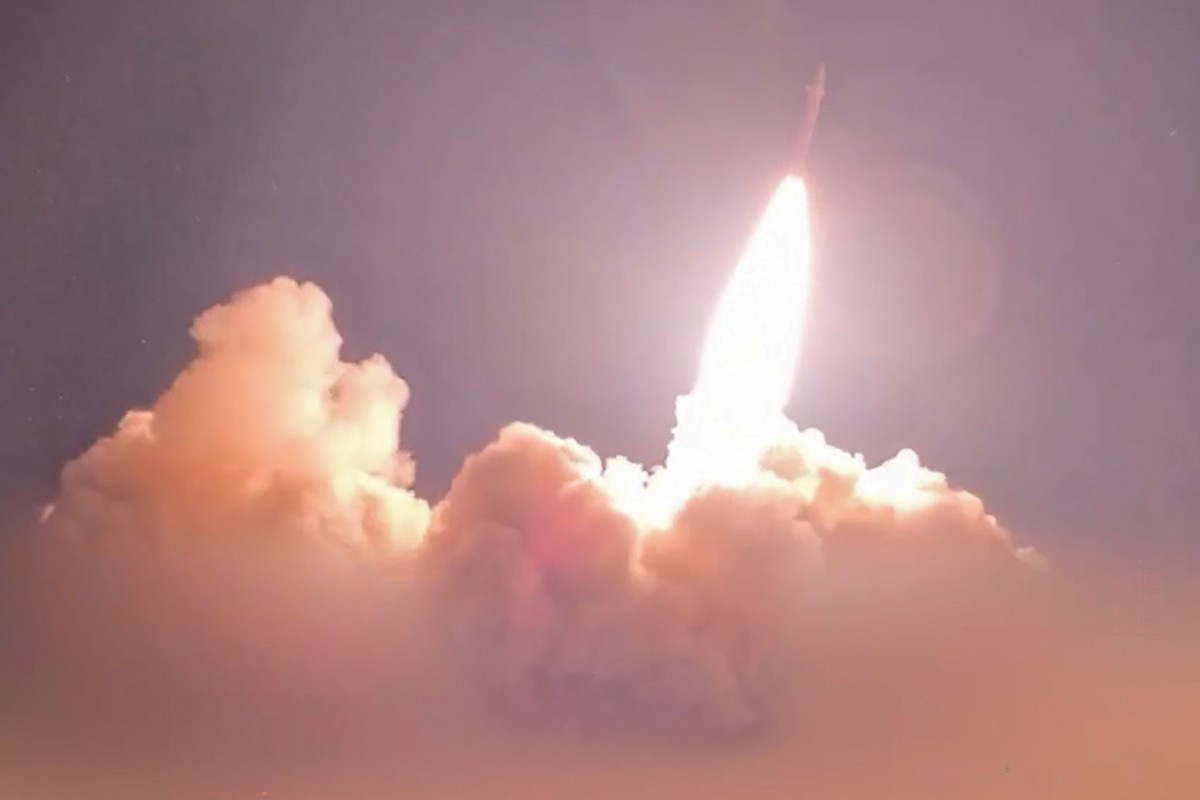
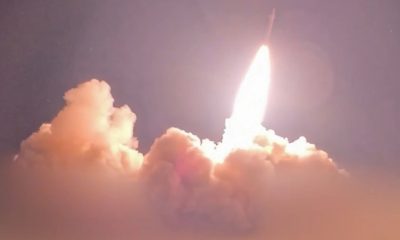
Several U.S. strikes targeted areas near the Strait of Hormuz on Thursday, according to Iranian state media citing local authorities, as hostilities between the United States and Iran intensified.
Officials in Iran’s Hormozgan Province said the island of Qeshm was struck multiple times by what they described as U.S. missiles during the evening. The reports were carried by the Iranian news agencies Fars and Tasnim.
Iranian state television also reported that the Bandar Abbas region, located on the Iranian coast overlooking the Strait of Hormuz, was the target of what authorities described as an “enemy U.S. air attack.”
According to local officials quoted by state television, no casualties have been reported following the strikes.
The reported attacks come amid renewed military tensions between Washington and Tehran, although U.S. authorities had not immediately commented on the reported operations.

U.S. to Limit Visa Duration for Foreign Students and Journalists

Nicaragua Cuts Diplomatic Ties With Italy Over Red Brigades Dispute

U.S. Strikes Hit Areas Near Strait of Hormuz as Tensions With Iran Escalate
Tec de Monterrey honors one of its students for his contribution to nanotechnology in medicine

Defense Minister commends salvadoran soldier for Central American Cross Country victory

Extension of the state of emergency approved in southern Chile
-
 International3 days ago
ICE reverses course and moves forward with New Jersey migrant detention facility project
-

 International3 days ago
Judge rules Trump’s IRS lawsuit was a “bad faith” attempt to manipulate the judicial process
-

 International3 days ago
Marco Rubio launches U.S. campaign to “dismantle” the International Criminal Court
-

 International3 days ago
France Holds Largest Bastille Day Military Parade as Europe Highlights Strategic Defense
-

 International3 days ago
President Noboa Declares New Security Strategy as Ecuador Faces Record Violence Levels
-
 International12 hours ago
U.S. Strikes Hit Areas Near Strait of Hormuz as Tensions With Iran Escalate
-
 International4 days ago
Venezuela Earthquake Death Toll Rises to 4,490 as Rescue Efforts Continue
-
 International3 days ago
Foreign Medical Teams Race to Prevent Health Crisis in Venezuela Earthquake Camps
-

 International2 days ago
Latin Music Stars Unite in Miami to Raise Aid for Victims of Venezuela’s Devastating Earthquake
-
 International2 days ago
Trump Administration Seeks Global Action Against “Resurgent” Left-Wing Terrorism
-
 International12 hours ago
U.S. to Limit Visa Duration for Foreign Students and Journalists
-
 International12 hours ago
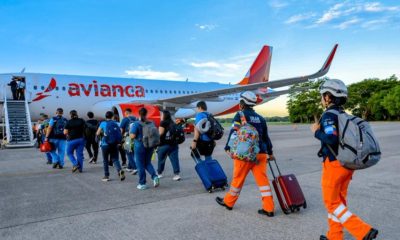
El Salvador Sends Eighth Humanitarian Flight to Earthquake-Hit Venezuela
-
 Central America12 hours ago
Nicaragua Cuts Diplomatic Ties With Italy Over Red Brigades Dispute