
International
The collapse of a bridge in Baltimore due to the crash of a freighter causes six missing persons
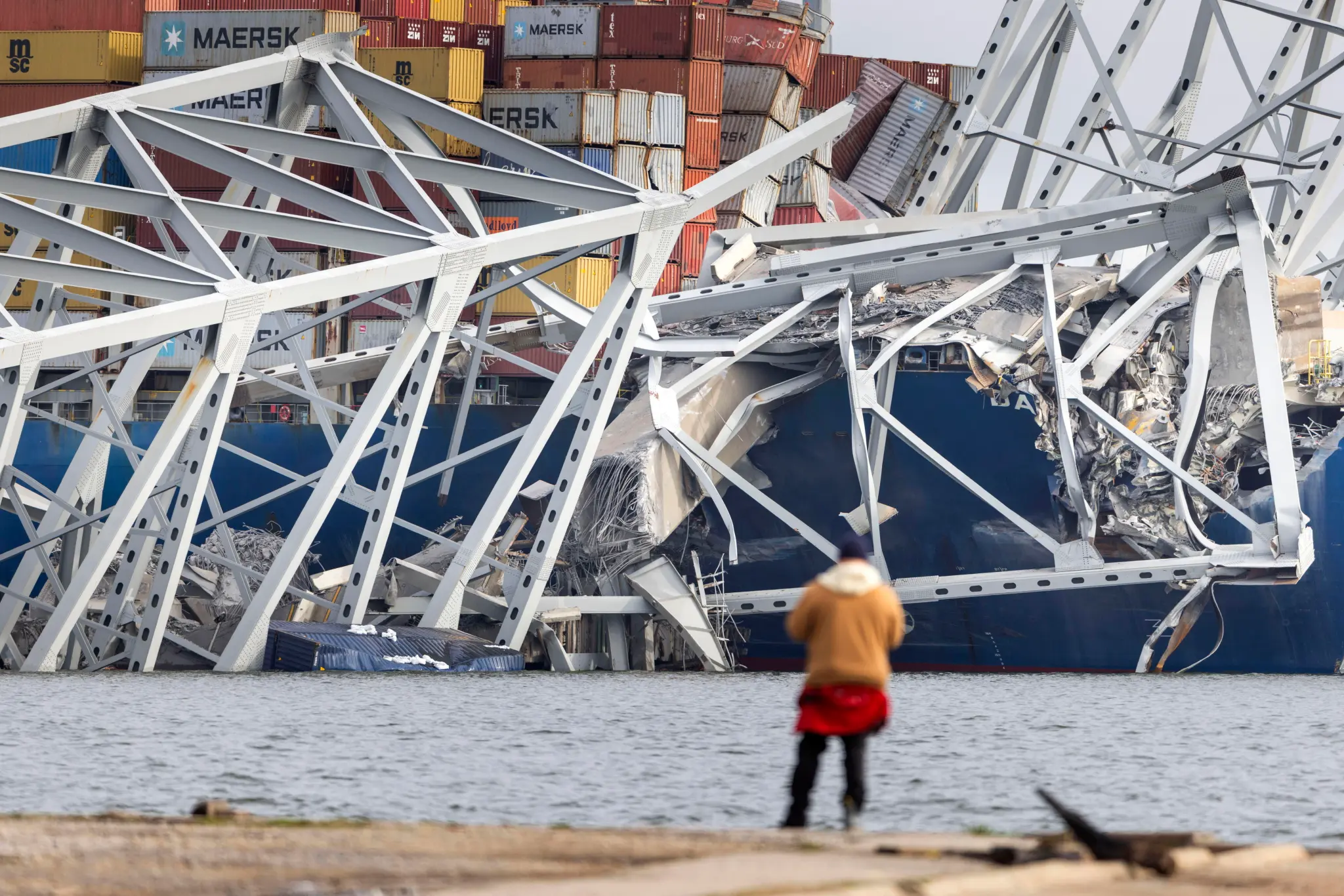
The collision this Tuesday of a container ship against Baltimore’s Francis Scott Key Bridge caused the total collapse of that structure that crosses the Patapsco River and so far leaves six missing, in whose search federal, state and local agents are involved.
The event took place around 1:30 local time (5:30 GMT). The freighter Dali lost propulsion, according to the first indications, and ended up being embedded against the bridge, built in 1977, through which about 35,000 vehicles a day cross and which rose to fame in the past as the setting for the series ‘The Wire’.
The alert given by the ship itself allowed the entry of vehicles into the area to be stopped and lives were saved, but there were workers on the spot who were repairing the asphalt: two were injured, one of them serious, and six others are still missing.
At first there was talk of 20 people with unknown whereabouts, but that figure was lowered shortly after. In their search, a helicopter, three boats of the coast guard and teams of divers participate.
The Secretary of Transport of Maryland, Paul Wiedefeld, indicated that the low temperature of the water, its depth, of about 15 meters, and the darkness when the event occurred make the work difficult.











The priority is to find the missing, the mayor of Baltimore, Brandon Scott, told the press in one of the many appearances organized throughout the day to offer the latest details about what happened.
It is already known that there are no signs of a terrorist attack. The FBI is involved in the investigation, as every time there are events of this scope, and its special agent Bill Delbagno specified that there is no “specific or credible information that suggests that there are links to terrorism.”
Everything indicates that it was an accident. The Singaporean company Synergy Group, which operates the ship, announced that none of its 22 crew members were injured, while the Danish multinational Maersk confirmed that it had temporarily rented the ship, named Dali, and that it was transporting cargo from the company.
The Dali has a gross load capacity of 95,000 tons and 300 meters in length. In 2016, it hit the pier in the port of Antwerp (Belgium), according to Vessel Finder.
The port was paralyzed and only the loading and unloading activity of the trucks is allowed. The area is also blocked to traffic and the press, which can only be accessed about 1.6 kilometers away, from where you can see the ship blocked with its containers and the bridge turned into a tangle of steel.
The local authorities do not yet want to talk about the economic cost of the impact. “A bridge can be rebuilt, our focus is on the people,” said the mayor, while the governor of Maryland specified that not only will it be built again, but it will be made in memory of those affected.
The bridge that collapsed is the largest in the state of Maryland. It is 2,632 meters long and owes its name in honor of the poet Francis Scott Key, author of the lyrics of the American anthem.
Its construction began in 1972, its structure crosses the lower part of the Patapsco River between Hawkins Point and Sollers Point and runs through it the I-695 highway, whose traffic was diverted this Tuesday until further notice.
The governor of Maryland, who declared a state of emergency in the area, stressed today that the entire state is in “shock.”
Baltimore is its most populous city, with just over 600,000 inhabitants in the urban center and 2.7 million in its metropolitan area, and its port, located in Chesapeake Bay, is the most important in the United States for the trade in vehicles and agricultural equipment.
The president of the United States, Joe Biden, ordered the reconstruction of the collapsed bridge and the reopening of the port, now blocked, as soon as possible.
“I have ordered my team to move heaven and earth to reopen the port and rebuild the bridge as soon as humanly possible,” Biden said in an address.
The president also announced that the federal government will advance the funds to pay for the reconstruction of the bridge.
“We will send all the federal resources you need while we respond to this emergency. And I mean all federal resources. And we are going to rebuild this port together,” said the US president.
“My intention,” he added, “is for the federal government to pay the total cost of the reconstruction of that bridge. And I hope that Congress will support my effort.”
Biden later clarified that the idea is for the Government to advance the money until the responsibility of the container carrier is determined.
An inspection last June in the Chilean port of San Antonio found problems in the “propulsion and auxiliary machinery” of the Dali cargo engine, with the Singaporean flag and that on Tuesday caused the collapse of the Francis Scott Key Bridge in the port of Baltimore, according to the Equasis database consulted by EFE.
The inspection, dated June 27, 2021, found deficiencies in propulsion and more specifically in “measuring devices, thermometers, etc.”
Those problems caused two subsequent inspections, but the freighter, with 300 meters in length and capacity to carry 95,000 tons, was not stopped and was able to continue operating, after solving the deficiencies.
The Dali, which began operating in 2015, had another problem in its history, when in July 2016 it collided with a mooring in the port of Antwerp (Belgium) and suffered damage to the hull.












International
Actress Hayden Panettiere Dies at 36, Representative Confirms

Actress Hayden Panettiere has died at the age of 36, her representative confirmed to CNN.
“It is with profound sadness that we share the tragic passing of our beloved Hayden. She was an incredible light and a force of nature who brought immeasurable love and joy to everyone who knew her, and to the millions who saw her on screen,” her father, Skip Panettiere, said in a statement to CNN.
The circumstances surrounding her death were not immediately known. ABC was the first outlet to report the news.
Panettiere rose to prominence in the late 2000s with her role as Claire Bennet in the television series “Heroes.” Her character was a cheerleader with the ability to heal herself, becoming one of the show’s most recognizable figures.
She later starred in the musical drama series “Nashville,” portraying Juliette Barnes, a young country music star whose career and personal life were central to the series.
Panettiere also appeared in the 2011 horror film “Scream 4” as Kirby Reed. She later returned to the franchise more than a decade later in “Scream VI.”
Her other notable film credits included “I Love You, Beth Cooper” and “Remember the Titans.”
Panettiere’s career spanned television and film, with roles that made her a familiar face to audiences from the 2000s onward.
International
Luigi Mangione Pleads Guilty to Killing UnitedHealthcare CEO Brian Thompson
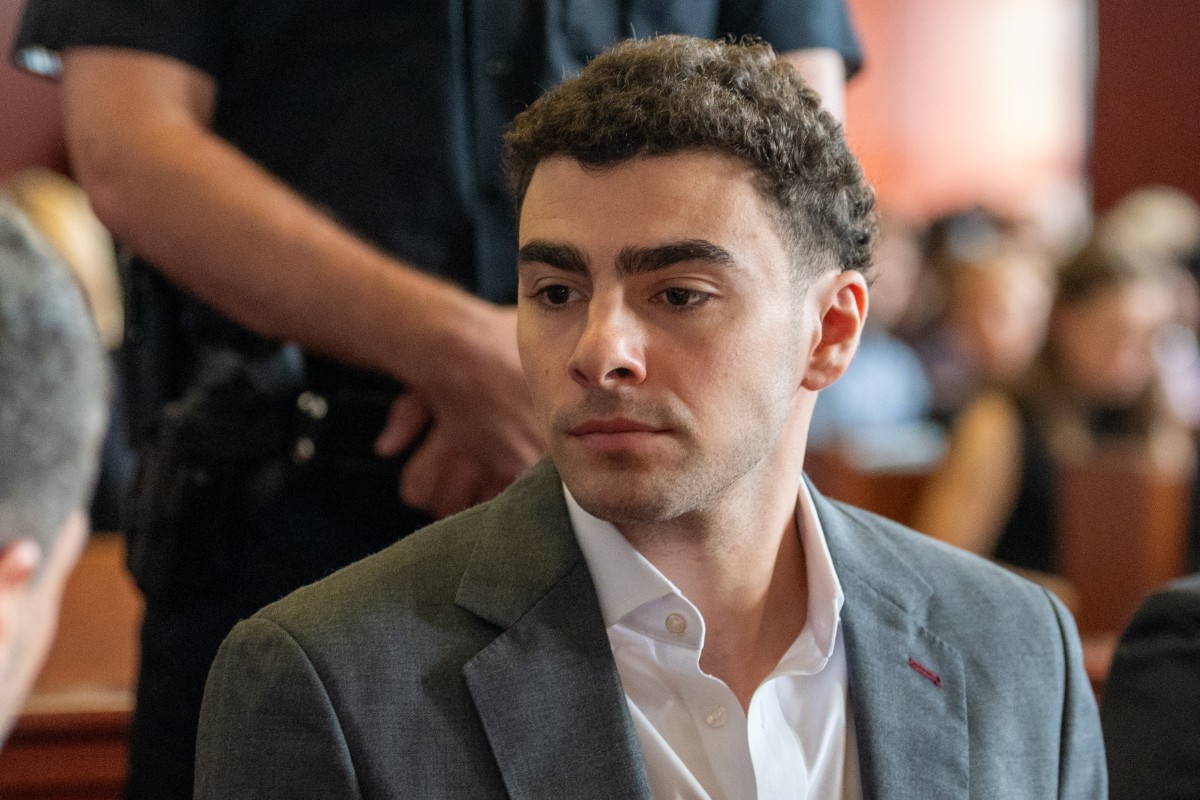
Luigi Mangione admitted Friday to fatally shooting Brian Thompson, the CEO of UnitedHealthcare, the largest health insurance group in the United States, during an appearance before a federal judge.
The case shocked the U.S. business community and dates back to December 2024, when Mangione opened fire on Thompson, 50, on a Manhattan street. Prosecutors have described the attack as being motivated by Mangione’s opposition to the U.S. health insurance system.
“On the morning of December 4, I shot Mr. Thompson in Manhattan and he died,” Mangione said as he pleaded guilty to a federal stalking charge related to his pursuit of the executive.
Mangione, 28, is scheduled to be sentenced on December 18, and prosecutors have indicated that they will seek a life sentence.
In addition to the federal charges related to stalking Thompson, Mangione also faces a murder case brought by the state of New York.
Following his guilty plea in federal court, Mangione’s defense asked a state court to dismiss the state charges, arguing that prosecuting him again for the same conduct would violate protections against double jeopardy.
“We have just filed our motion in state court to explain why the charges should be dismissed under New York’s protections against double jeopardy,” Mangione’s attorney, Karen Friedman Agnifilo, said Friday.
Both the federal and state cases could result in a life sentence. Two other federal charges that initially carried the possibility of the death penalty were dismissed by a judge earlier this year.
International
ICE Plan to Equip Agents With Electric Shock Gloves Raises Abuse Concerns

Plans to equip U.S. immigration agents with gloves capable of delivering electric shocks are raising concerns over potential abuses by a law enforcement agency that critics accuse of using excessive force and providing inadequate training to its personnel.
The plan involves the potential purchase of electric-shock gloves for agents with U.S. Immigration and Customs Enforcement (ICE), the agency primarily responsible for carrying out President Donald Trump’s campaign to deport millions of undocumented immigrants.
Democratic Representative Maxwell Frost criticized the proposal on X, arguing that the agency has already faced accusations of excessive force during immigration enforcement operations.
“As if assaulting and shooting people in the streets wasn’t enough,” Frost wrote. He also criticized the reported $20 million potential expenditure on the devices and called for greater restrictions on ICE.
The agency has faced growing scrutiny following a series of deadly shootings during immigration enforcement operations. Among the incidents were the deaths of two U.S. citizens in Minnesota in January who were participating in protests against the agency.
Critics have focused on the tactics used by ICE agents when detaining immigrants, as well as allegations that training standards for newly recruited personnel have been lowered.
According to a procurement plan first reported by the Associated Press, the Department of Homeland Security (DHS), which oversees ICE, could spend between $10 million and $20 million on the devices.
The gloves are described by the agency as tools intended for “distraction and de-escalation,” rather than lethal weapons. The system, known as GLOVE, stands for “Generated Low-Output Voltage Emitter.”
The device is manufactured by Compliant Technologies, a Kentucky-based company that describes its products as advanced non-lethal tools designed to protect and assist law enforcement and other personnel.
The proposal comes amid an intensifying national debate over ICE’s enforcement methods and the use of force during the Trump administration’s immigration crackdown.


Actress Hayden Panettiere Dies at 36, Representative Confirms

Luigi Mangione Pleads Guilty to Killing UnitedHealthcare CEO Brian Thompson

ICE Plan to Equip Agents With Electric Shock Gloves Raises Abuse Concerns

Three U.S. Executions Set for Same Day as Trump Pushes to Expand Death Penalty

Colombia Earthquake Death Toll Reaches 265 as Rescue Teams Race Against Time

German Authorities Investigate More Than 100 New Cases Against Convicted Nurse

Venezuela Raises Earthquake Death Toll to 6,301

CEAPI Backs Colombia’s New Government and Calls for Greater Public-Private Cooperation
Three U.S. Executions Set for Same Day as Trump Pushes to Expand Death Penalty
Colombia Earthquake Death Toll Reaches 265 as Rescue Teams Race Against Time
Actress Hayden Panettiere Dies at 36, Representative Confirms
Luigi Mangione Pleads Guilty to Killing UnitedHealthcare CEO Brian Thompson
ICE Plan to Equip Agents With Electric Shock Gloves Raises Abuse Concerns
-
 International3 days ago
Three U.S. Executions Set for Same Day as Trump Pushes to Expand Death Penalty
-
 International3 days ago
Colombia Earthquake Death Toll Reaches 265 as Rescue Teams Race Against Time
-
 International44 minutes ago
Actress Hayden Panettiere Dies at 36, Representative Confirms
-
 International2 days ago
Luigi Mangione Pleads Guilty to Killing UnitedHealthcare CEO Brian Thompson
-
 International2 days ago
ICE Plan to Equip Agents With Electric Shock Gloves Raises Abuse Concerns