
International
President of Brazil arrives in Portugal on official visit
April 21 |
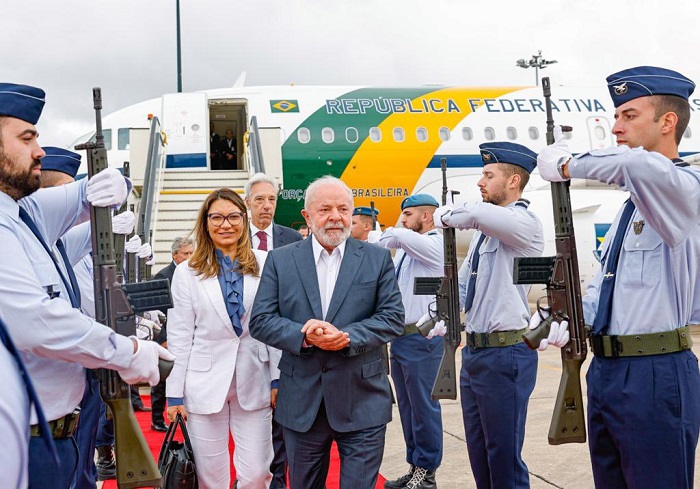
The president of Brazil, Luiz Inácio Lula da Silva, arrived this Friday in Lisbon, capital of Portugal, to begin an official visit to that country that will last until the 25th of this month.
The president was received at the Figo Maduro military airport, in the outskirts of the main city, by the leader of the Portuguese Parliament, Augusto Santos Silva, and a delegation that includes seven of his ministers, among them those of Culture, Defense, Transport and Health.
The announcement of his arrival provoked a political controversy in the European nation due to the rejection of the right wing for his participation in the events of April 25, commemorating the anniversary of the Carnation Revolution, and not coinciding with his position on the situation in Ukraine.
Meanwhile, Santos downplayed the differences between the positions of Lula and the Portuguese government on the Eastern European country’s conflict with Russia.












“Portugal and Brazil have extremely close relations and have a bilateral summit tomorrow and there they will be able to exchange points of view on the most diverse issues”, assured the parliamentarian.
The Brazilian president will begin his official agenda this Saturday with this meeting, which will address issues related to migration and trade agreements between the European Union (EU) and the countries of the Southern Common Market (Mercosur). Likewise, in his profile in the social network Twitter, he assured that he intends to sign at least 13 agreements.
After his stay in Brazil, the head of state will travel to Madrid on an official visit. According to the Brazilian Foreign Ministry, Lula has chosen Portugal and Spain as the first territories he will visit in Europe during his new mandate because for his nation they are the “natural gateways” to the continent, and because of the close cultural and political ties that unite it with the Iberian Peninsula.
















































International
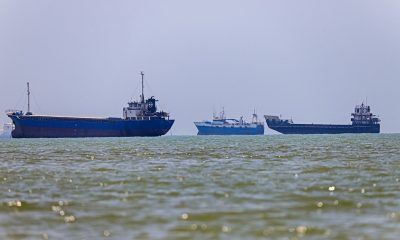
Iran Rejects Negotiations With U.S. as Strait of Hormuz Remains Blocked Amid New Attack
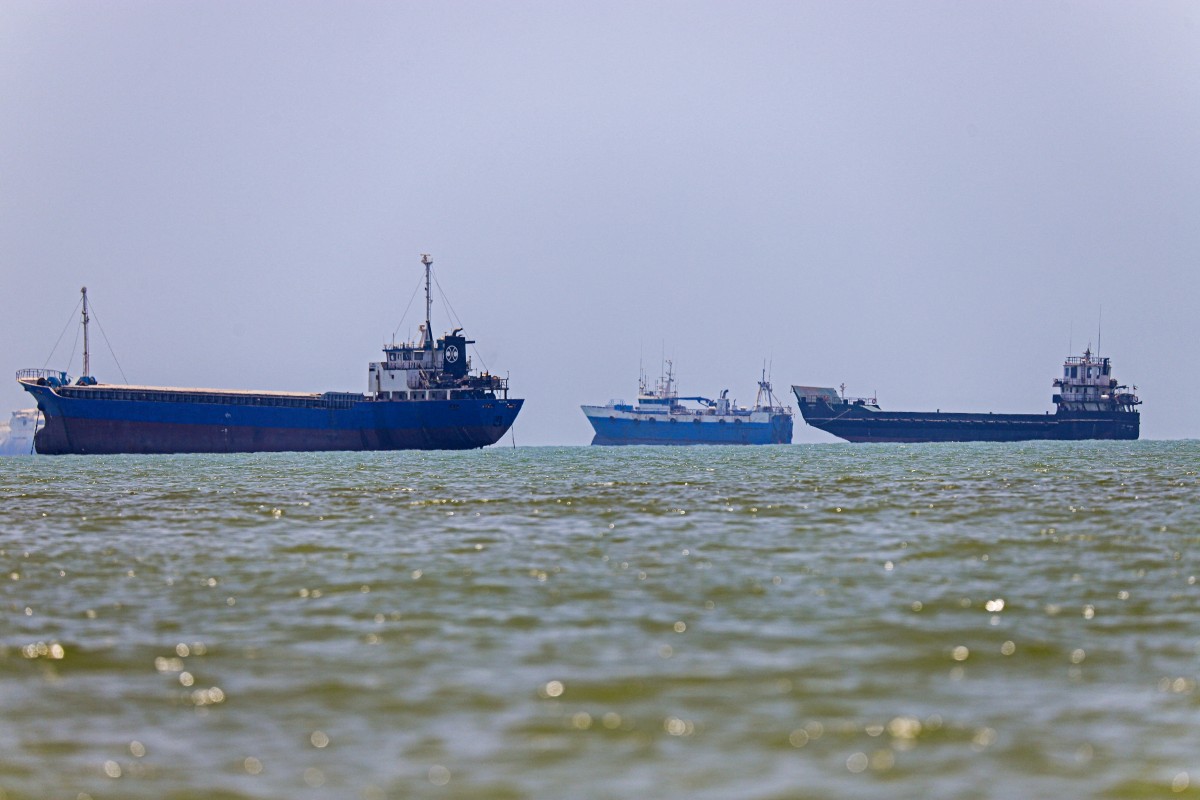
Tensions remained high in the Strait of Hormuz on Monday after a vessel was hit by a projectile, despite U.S. President Donald Trump’s claims that negotiations with Iran were moving forward and that the strategic maritime route could reopen as early as Tuesday.
Tehran denied that direct talks were taking place, but Trump insisted that discussions were underway and described the situation as a final opportunity for Iran to reach an agreement.
“This is the last chance they have to sign a good document,” Trump told reporters at the White House, adding that the reopening of the Strait of Hormuz could happen “literally tomorrow” Tuesday.
The comments came after another escalation in rhetoric from Washington. Last week, Trump threatened Iran with military strikes before unexpectedly changing course on Sunday and announcing that negotiations with Tehran would resume.
Iranian Foreign Ministry spokesman Esmail Baqai rejected the U.S. president’s version of events, stating that Tehran was not holding negotiations with Washington.
“At this moment, we are not negotiating with the United States. We are negotiating with Oman to guarantee safe passage through the Strait of Hormuz,” Baqai said.
Earlier, the Iranian official said that Tehran was close to reaching an agreement with Oman, which lies across the Strait of Hormuz, to reopen the crucial waterway that plays a key role in global energy trade.
The maritime route has remained blocked by Iran since the outbreak of hostilities following U.S. and Israeli strikes against the Islamic Republic on February 28.
Meanwhile, Yemen’s Houthi rebels announced Tuesday that they had launched an attack against an airport in Saudi Arabia. The Iran-backed group had previously disrupted the passage of Saudi vessels through the Red Sea, an alternative route used for crude exports by the world’s largest oil producer.
The continued instability in the region has raised concerns over global energy supplies, as the Strait of Hormuz remains one of the most important chokepoints for international oil shipments.
International
Lula Launches Re-Election Campaign Amid Rising Tensions With Trump
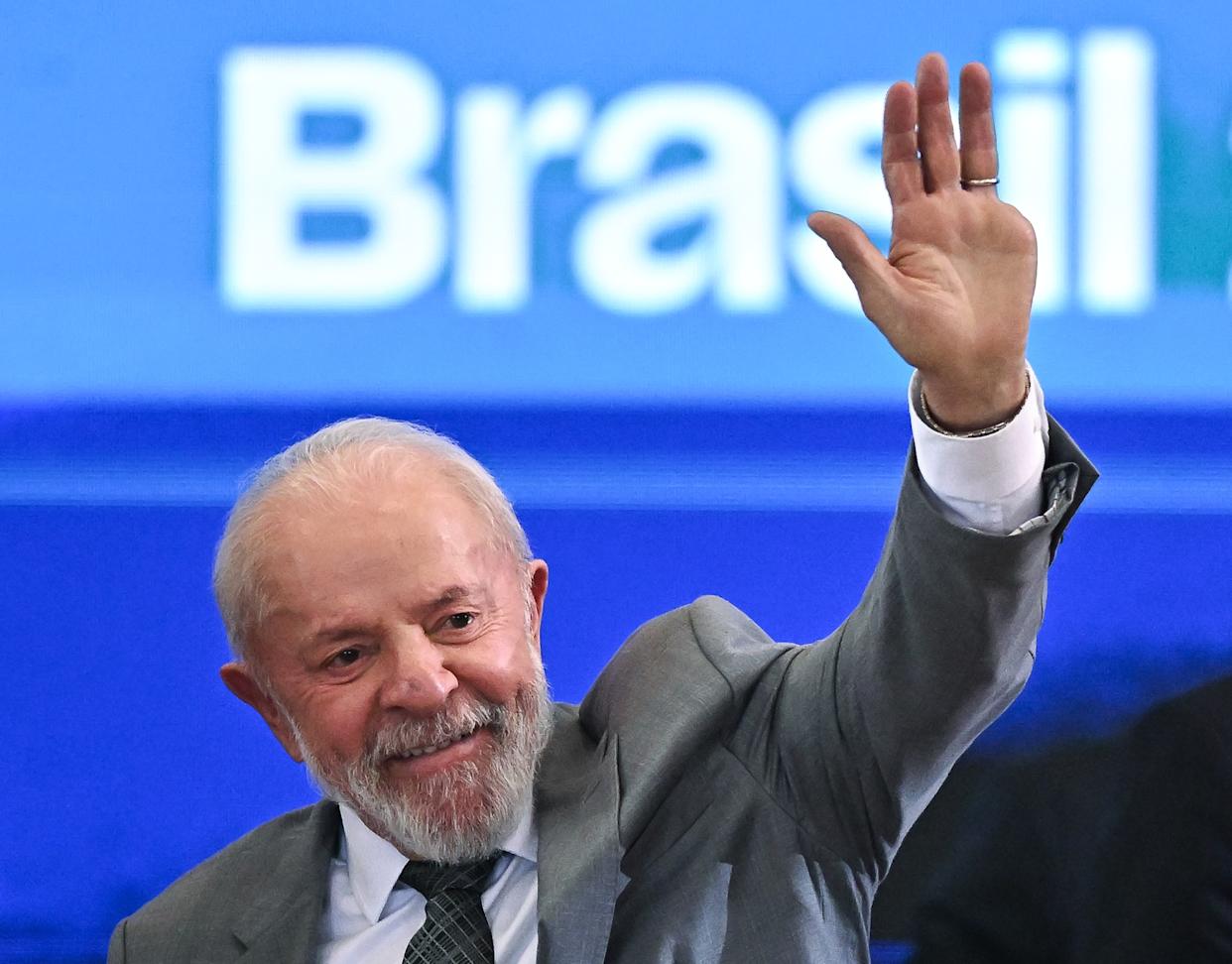
Brazilian President Luiz Inácio Lula da Silva is set to be officially nominated for re-election by his Workers’ Party (PT), marking the start of his campaign for a fourth presidential term.
The nomination takes place during the party’s national convention in São Paulo, Brazil’s economic hub, where around 3,000 supporters gathered to back the veteran leftist leader.
“Today I’m here because Lula’s policies changed my life and my family’s. Thanks to him, we finally own a home after eight generations without one,” said Cristiane Rosa Julho, a 51-year-old social worker attending the event dressed in the PT’s signature red.
Seeking the presidency for the seventh time in his political career, Lula is expected to face Senator Flávio Bolsonaro in next year’s election.
The 45-year-old senator is the son of former far-right President Jair Bolsonaro, who has been jailed over his alleged role in an attempted coup following his defeat to Lula in the 2022 election.
The party convention opened with videos highlighting Lula’s social initiatives and speeches by four women praising his leadership, while supporters waved PT flags and held signs reading “We Want Lula as President” and “Brazil Is Not for Sale.”
The campaign begins amid growing tensions with the United States and President Donald Trump, a close ally of the Bolsonaro family who has openly backed several conservative candidates across Latin America.
Last week, Lula warned against foreign interference, declaring, “In Brazil, we do not accept anyone sticking their nose where it doesn’t belong.”
In July, the United States imposed two rounds of tariffs on Brazilian products, accusing the country of unfair trade practices. The measures followed earlier restrictions introduced in 2025, encouraged by Jair Bolsonaro’s son Eduardo Bolsonaro, in response to legal proceedings against the former president.
Lula has vowed to wage what he called a “war of truth against lies” in response to Washington’s pressure and accused Flávio Bolsonaro of undermining Brazil’s interests by allegedly helping the United States damage the country’s economy. The senator has denied the accusations.
The Brazilian president also claims Washington is attempting to influence the country’s political landscape in an effort to prevent his re-election.
International
Truck bomb attack near police station in Colombia leaves 14 injured ahead of presidential inauguration
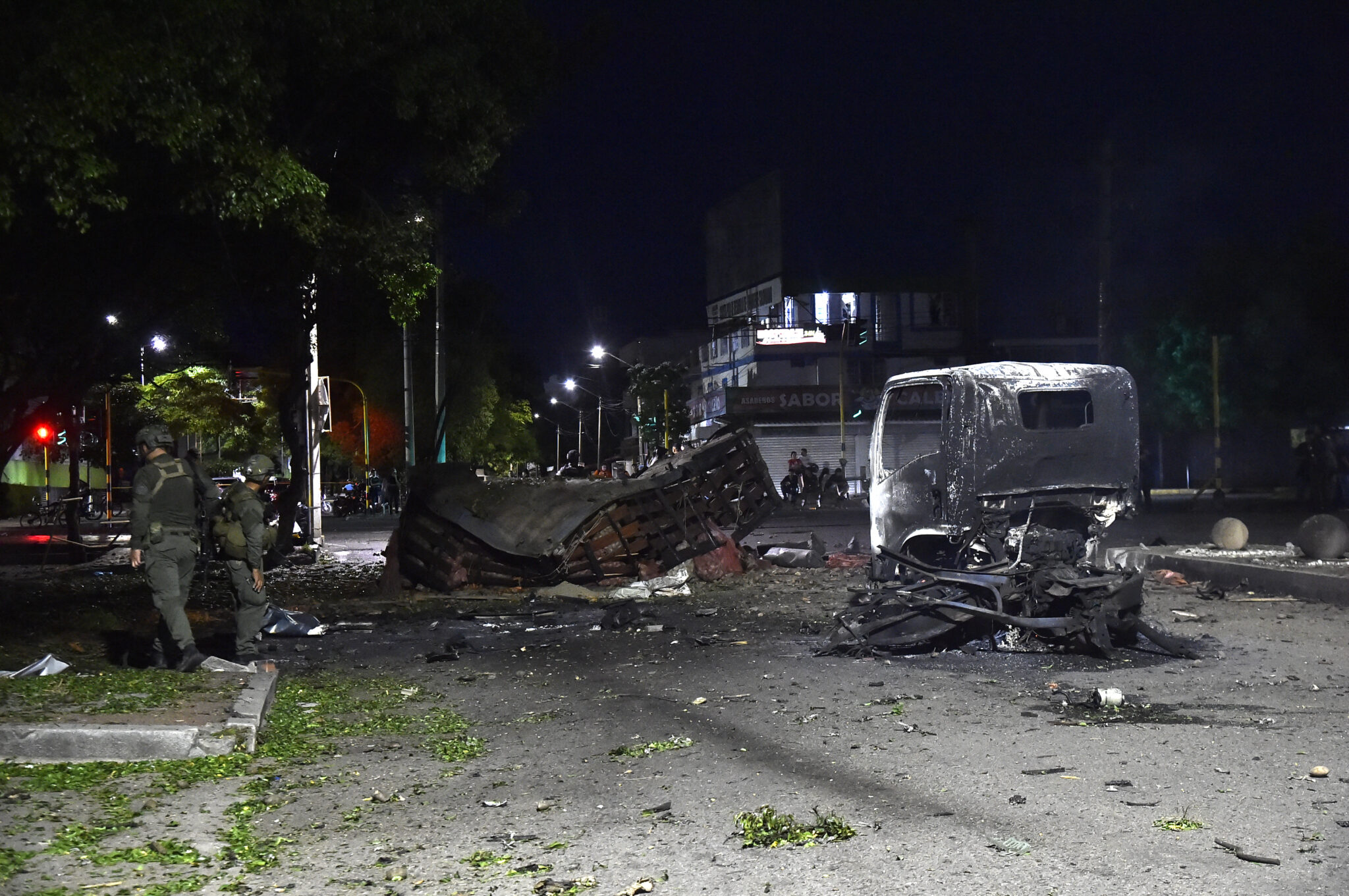
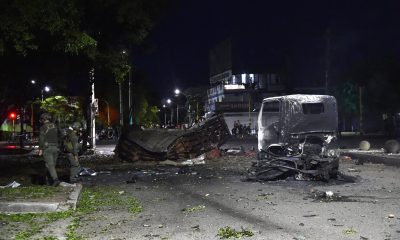
A truck loaded with explosives exploded on Saturday near a police station in the Colombian city of Cúcuta, close to the Venezuelan border, leaving 14 people injured in an attack that occurred six days before president-elect Abelardo de la Espriella’s inauguration.
The blast took place in the early hours of the morning and was allegedly carried out by members of the National Liberation Army (ELN), who detonated a vehicle packed with explosives. According to the latest report from the Colombian Army, the attack injured 11 police officers and three civilians.
The explosion involved around 15 explosive devices, and two of the wounded officers are in critical condition and “fighting for their lives,” said William Villamizar, governor of Norte de Santander, the region where the attack occurred.
The incident comes amid Colombia’s worst wave of violence in the past decade, with armed groups expanding their presence in several areas of the country.
“I strongly condemn the cowardly terrorist attack carried out in Cúcuta against our National Police. Terrorism will not intimidate Colombia or break the determination of Colombians to live in peace and security,” De la Espriella said in a post on X.
The conservative lawyer, who has been described as a far-right figure, will take office on August 7, replacing Gustavo Petro, Colombia’s first left-wing president. The inauguration ceremony will be held in Cali, the country’s third-largest city and a frequent target of attacks by armed groups.
The United Nations condemned what it described as an “indiscriminate attack” that caused not only injuries but also “fear and distress among the population.”
De la Espriella has repeatedly warned about an alleged plot against his life. Meanwhile, President Gustavo Petro, who is currently visiting Cuba, has not commented on the attack. During his visit, Petro met with Cuban President Miguel Díaz-Canel to discuss what Havana describes as the United States’ “policy of suffocation” toward the island.

Iran Rejects Negotiations With U.S. as Strait of Hormuz Remains Blocked Amid New Attack

U.S. Defense Secretary to Close Multinational Military Exercises in Panama to Protect Canal

Lula Launches Re-Election Campaign Amid Rising Tensions With Trump
Tec de Monterrey honors one of its students for his contribution to nanotechnology in medicine

Defense Minister commends salvadoran soldier for Central American Cross Country victory

Extension of the state of emergency approved in southern Chile
-
 International4 days ago
EU Faces Migration Crisis After 60,000 Migrants Arrive in Spain’s Ceuta Enclave
-
 International21 hours ago
Iran Rejects Negotiations With U.S. as Strait of Hormuz Remains Blocked Amid New Attack
-
 International3 days ago
Truck bomb attack near police station in Colombia leaves 14 injured ahead of presidential inauguration
-
 International2 days ago
Lula Launches Re-Election Campaign Amid Rising Tensions With Trump
-
 Central America21 hours ago
U.S. Defense Secretary to Close Multinational Military Exercises in Panama to Protect Canal