
International
Guatemalans in the U.S. denounce bias in candidate registration in their country’s elections
March 18 |
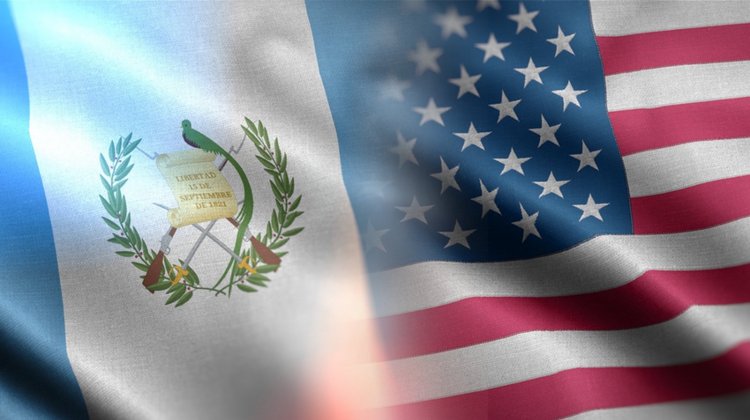
Guatemalans in the United States are concerned about the transparency and credibility of the elections in their country, with only a few days left before the deadline to register to vote abroad, on March 25.
A little more than 100,000 Guatemalans in the U.S. could vote in the next general elections on June 25. But Carlos Lam, leader of the Guatemalans Without Borders Association, told the Voice of America that to date the number of his countrymen in the United States eligible to vote does not reach 100,000.
In Washington, a group of Guatemalans working to achieve a greater number of registrations met this week to fine tune details of the strategy of “mobilization” of their countrymen in the final stretch of registration in the metropolitan area of the U.S. capital.
Lam said that with the Platform of Guatemalans Abroad they have tried to increase the number of registered voters.











Guatemala’s Supreme Electoral Tribunal (TSE), which is organizing the elections, plans to set up six voting centers in the U.S., and this will be the only country outside Guatemala where people can vote, Lam said.
The TSE has said that the process is progressing successfully and that thanks to the registration campaigns, inside and outside the country, “the registration of the registered population, as of March 12, is 9,206,866 citizens”.
Lam and other activists point out that the electoral process began to lose credibility due to alleged irregularities in the registration of candidates.
“We have seen with great concern the partiality of the TSE regarding the registration of candidates,” he said.
Lam pointed out that peasant leader Thelma Cabrera and former human rights ombudsman Jordán Rodas, two attractive figures among indigenous peoples and the opposition, “were denied participation as presidential candidates”.
Thelma Cabrera is an indigenous leader and human rights defender who with the Movement for the Liberation of the Peoples (MLP) won in the 2019 presidential elections more than 400,000 votes, 10% of the votes cast in the first round, which placed her in fourth position.
Jordan Rodas, who in August 2022 completed his mandate as Human Rights Ombudsman, joined the MLP as Cabrera’s running mate.
The binomial was rejected by the TSE in a first ruling on January 28. After a review and appeal before the Constitutional Court, it was rejected again.
The TSE has not given explanations about the refusal to register the candidates except for the “invalidity” in the validity of the termination of one of the candidates, which was promoted by one of the magistrates, local media reported.
The TSE did not respond to a request for comment from Voice of America on the candidate registrations.
Concerns about lack of transparency have permeated the citizenry, Lam explained, and residents abroad are following closely and there have been multiple protests against the TSE.
The platform of Guatemalans Abroad has denounced inconsistencies in the process, including the refusal to register certain candidates while others, including questionable figures, have been approved.










International
German Authorities Investigate More Than 100 New Cases Against Convicted Nurse
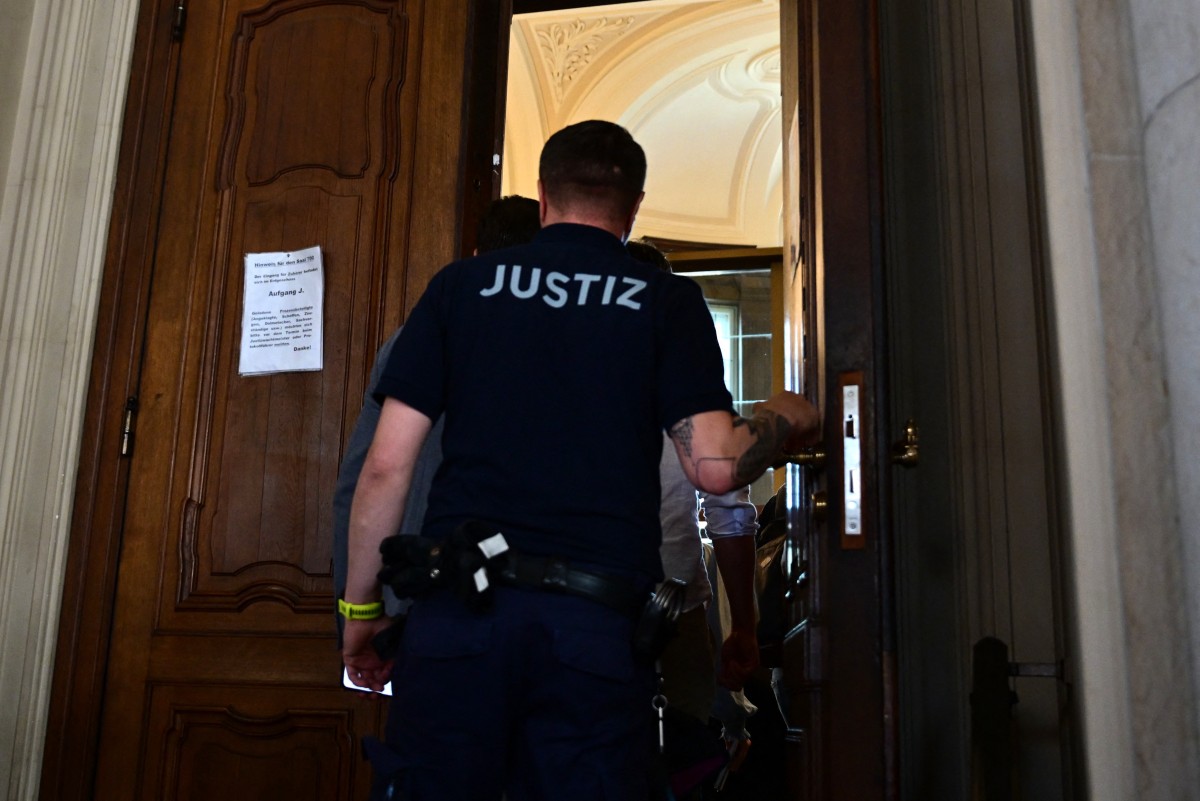
German authorities announced Monday that they are investigating more than 100 additional cases involving a nurse who was sentenced to life in prison in November for the murder of 10 patients.
The man, who was 44 at the time of his conviction, worked in palliative care at a hospital in Würselen, near Aachen. He was also found guilty of 27 attempted murders.
Aachen prosecutors are now examining 121 new cases, a spokesperson for the office said.
Prosecutors leading the investigation are preparing a new indictment that could be filed next year. Nearly 40 bodies have so far been exhumed as part of the investigation, which covers alleged incidents dating back to September 2022.
Meanwhile, prosecutors in the city of Cologne are investigating 18 additional cases. According to a spokesperson, the oldest case dates back to 2010.
Before working at the Würselen hospital, the nurse is believed to have worked at a clinic in eastern Cologne, according to local media reports.
At the time of his November conviction, the court ruled that the severity of his crimes was particularly serious, a finding that would make it difficult for him to obtain early release after 15 years in prison.
Between December 2023 and May 2024, the nurse administered overdoses of sedatives or painkillers to terminally ill patients, most of them elderly, according to the indictment in the original case.
His alleged motive was to sedate patients who required care so that he could minimize his workload during night shifts, prosecutors said.
According to the indictment, the nurse worked «without enthusiasm» and «without motivation». When faced with patients requiring extensive care, he allegedly became «irritated» and showed a lack of empathy.
The case has revived painful memories in Germany of Niels Högel, a former nurse and serial killer who was sentenced to life imprisonment in June 2019 for the murders of at least 85 patients.
International
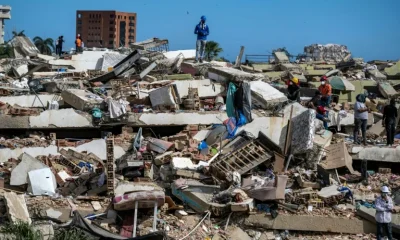
Venezuela Raises Earthquake Death Toll to 6,301
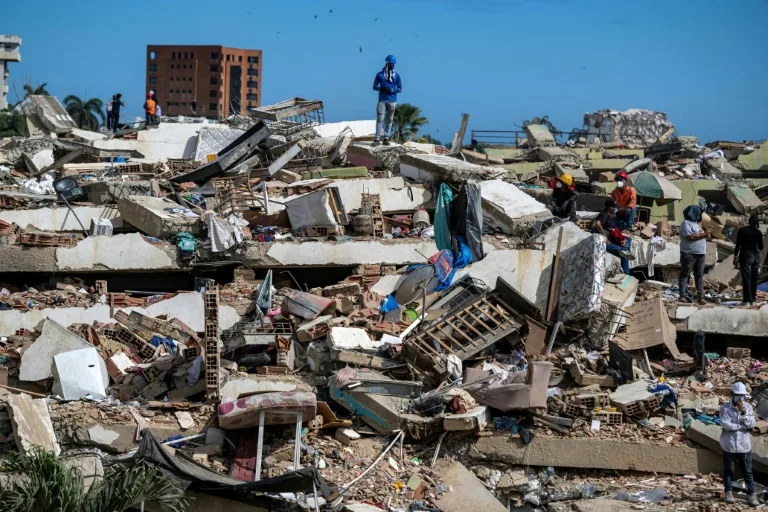
The death toll from the earthquakes that struck Venezuela on June 24 has risen to 6,301, while relatives continue searching for missing people among the rubble of collapsed buildings, parliamentary leader Jorge Rodríguez said Monday.
So far, the Venezuelan government has not released an official figure for the number of people missing after the magnitude 7.2 and 7.5 earthquakes, which caused around 190 buildings to collapse, most of them in the coastal state of La Guaira, about 25 miles (40 kilometers) from Caracas.
The latest figure represents an increase from the 6,125 deaths reported by Venezuelan authorities on August 3.
According to statements made to local media by La Guaira Governor José Alejandro Terán, around 1,400 people were still missing just over a week ago.
Thousands of homes remain at risk
In addition to buildings that completely collapsed, authorities have classified another 9,567 structures as being at «high risk». Meanwhile, 12,411 homes remain under a «restricted» classification.
As a result, many families who lived in these properties have been relocated to temporary shelters or have sought accommodation with relatives and friends.
Nearly 24,000 people left homeless by the disaster are currently living in camps in Caracas and La Guaira, a popular tourist destination whose economy has been severely affected by the earthquakes.
The situation sparked renewed concern among Venezuelans on Monday after a magnitude 7.4 earthquake, with its epicenter in Colombia, was felt across several regions of Venezuela.
The earthquake in Colombia left at least 111 people dead and dozens injured, according to preliminary figures released by authorities in that country.
International
CEAPI Backs Colombia’s New Government and Calls for Greater Public-Private Cooperation

The Ibero-American Business Alliance Council (CEAPI), led by its president, Núria Vilanova, participated in the inauguration ceremony of Abelardo de la Espriella as Colombia’s new president. The events were held on August 7 in Cali and brought together heads of state and institutional representatives from numerous countries.
CEAPI maintains a strong relationship with Colombia as part of its mission to serve as a meeting point between Ibero-American business leaders and the region’s main institutions and governments. The organization has more than 25 members in Colombia, including Jaime Gilinski, Luis Carlos Sarmiento, Omar González and Diego Urrea. In addition, Colombia hosted the seventh CEAPI Ibero-American Congress, held in Cartagena de Indias in 2024.
During his inauguration speech, President De la Espriella identified confidence and economic stability as key pillars of his administration and emphasized the role of private enterprise in Colombia’s future.
He also reaffirmed his intention to govern for all Colombians and strengthen institutional dialogue, while referring to Spain’s democratic transition and the leadership of former Prime Minister Adolfo Suárez.
Vilanova said she has seen this commitment firsthand during meetings with members of the new government, who have expressed their willingness to work closely with business leaders and the private sector to promote economic growth.
According to CEAPI, the government is considering measures aimed at strengthening legal certainty and business confidence, encouraging investment and promoting formal employment.
For Vilanova, Colombia’s new political and economic stage represents an opportunity to demonstrate that «when the public and private sectors are aligned, they can achieve more».
«Colombia has everything it needs to make it happen. And Ibero-American business leaders are ready to support it», she said, adding that CEAPI is already working with the government to organize a future investment delegation to the country.
The organization said the planned visit would seek to strengthen business ties and identify new investment opportunities in Colombia, reinforcing the role of the private sector in the country’s economic development.

German Authorities Investigate More Than 100 New Cases Against Convicted Nurse

Venezuela Raises Earthquake Death Toll to 6,301

CEAPI Backs Colombia’s New Government and Calls for Greater Public-Private Cooperation
Tec de Monterrey honors one of its students for his contribution to nanotechnology in medicine

Defense Minister commends salvadoran soldier for Central American Cross Country victory

Extension of the state of emergency approved in southern Chile
-

 International5 days ago
Abelardo de la Espriella sworn in as Colombia’s president for 2026-2030
-
 International2 days ago
Colombia Earthquake Leaves at Least 22 Dead as Rescue Efforts Continue
-
 International3 days ago
Joe Biden’s Prostate Cancer Has Spread to His Bones, Son Hunter Reveals
-
 International4 days ago
US announces $1 billion security assistance package for Colombia under new government
-
 International1 day ago
Venezuela Raises Earthquake Death Toll to 6,301
-

 International2 days ago
Record 230 Migrants Cross English Channel to UK in Single Boat
-
 International1 day ago
CEAPI Backs Colombia’s New Government and Calls for Greater Public-Private Cooperation
-
 International1 day ago
German Authorities Investigate More Than 100 New Cases Against Convicted Nurse