
International
Argentine president testifies for deputy in corruption trial

AFP
Argentine President Alberto Fernandez came to the defense Tuesday of his deputy Cristina Kirchner, testifying in a trial for alleged corruption committed when she was at the country’s helm from 2007 to 2015.
Fernandez appeared as a defense witness in a court in Buenos Aires, giving evidence of events that occurred when Kirchner was president and he her chief of staff.
The president could have provided testimony in writing, but opted to attend the hearing in person in what is interpreted as a show of support for his deputy.
The partnership of Fernandez and Kirchner was severely tested when their center-left Frente de Todos (Everyone’s Front) coalition suffered a battering in parliamentary primary elections in September.











Kirchner pressured her boss into a cabinet reshuffle in the hopes of appeasing an electorate increasingly frustrated with escalating economic woes.
But in a vote in November, their coalition lost control of the Senate — the upper house of Congress. The lower house was already in opposition control.
The pair have a bit more than a year left in office until the next presidential election in 2023.
– Several investigations –
Kirchner is on trial for the alleged fraudulent awarding of public works contracts in her fiefdom in the Patagonian province of Santa Cruz, which allegedly benefited businessman Lazaro Baez.
Prosecutors say Baez overcharged for the projects, several of which remain unfinished.
Kirchner, 68, is the target of about a dozen investigations for crimes including bribe-taking, money laundering and obstruction of justice.
Some cases have been thrown out, but at least five are at the trial phase.
She claims political persecution and abuse of a politicized and right-leaning judicial system that her and Fernandez’s coalition have set out to reform.
Fernandez told the court Tuesday there had been no “arbitrary” spending under Kirchner’s presidency.
“Those decisions that were made in budgetary matters and in public works, were never arbitrary,” he testified.
Asked about decisions made to benefit Baez, Fernandes replied: “I am not aware that this is the case.”
He also argued it was impossible for a president to know the nitty gritty of each spending decision.
Fernandez left the court after three hours, without talking to waiting journalists.
Last year, a court dismissed a case alleging that Kirchner, as president, had obstructed an investigation into an attack on a Jewish center in 1994 that killed 85 people.










International
Three U.S. Executions Set for Same Day as Trump Pushes to Expand Death Penalty

The death penalty has been abolished in 23 of the 50 U.S. states, while three others —California, Oregon and Pennsylvania— currently have moratoriums in place.
The United States is set to carry out three executions on the same day, a rare occurrence that has not happened since 2010, according to the nonprofit Death Penalty Information Center.
President Donald Trump has sought to expand the use of capital punishment for what he describes as “the most heinous crimes.” In April, the Department of Justice proposed expanding execution methods to include firing squads, lethal gas and electrocution.
Tennessee is scheduled to execute Anthony Darrell Dugard Hines, 66, on Thursday. He was sentenced to death for the 1985 murder of a woman, according to local media.
In Oklahoma, Carlos Cuesta-Rodríguez, 70, is scheduled to be executed for a 2003 murder.
Meanwhile, Alabama plans to execute Jeremy Williams, 42, who was sentenced to death for the rape and murder of a five-year-old girl.
The United States carried out 47 executions in 2025, the highest number since 2009, when 52 executions were recorded.
Florida conducted the largest number of executions last year, with 19, followed by Alabama, South Carolina and Texas, with five each.
Of the executions carried out in 2025, 39 were conducted by lethal injection. Three were carried out by firing squad and five through nitrogen hypoxia, a method that involves forcing nitrogen gas into a face mask, depriving the prisoner of oxygen.
The United Nations has condemned nitrogen gas as a cruel and inhumane method of capital punishment.
International
Colombia Earthquake Death Toll Reaches 265 as Rescue Teams Race Against Time
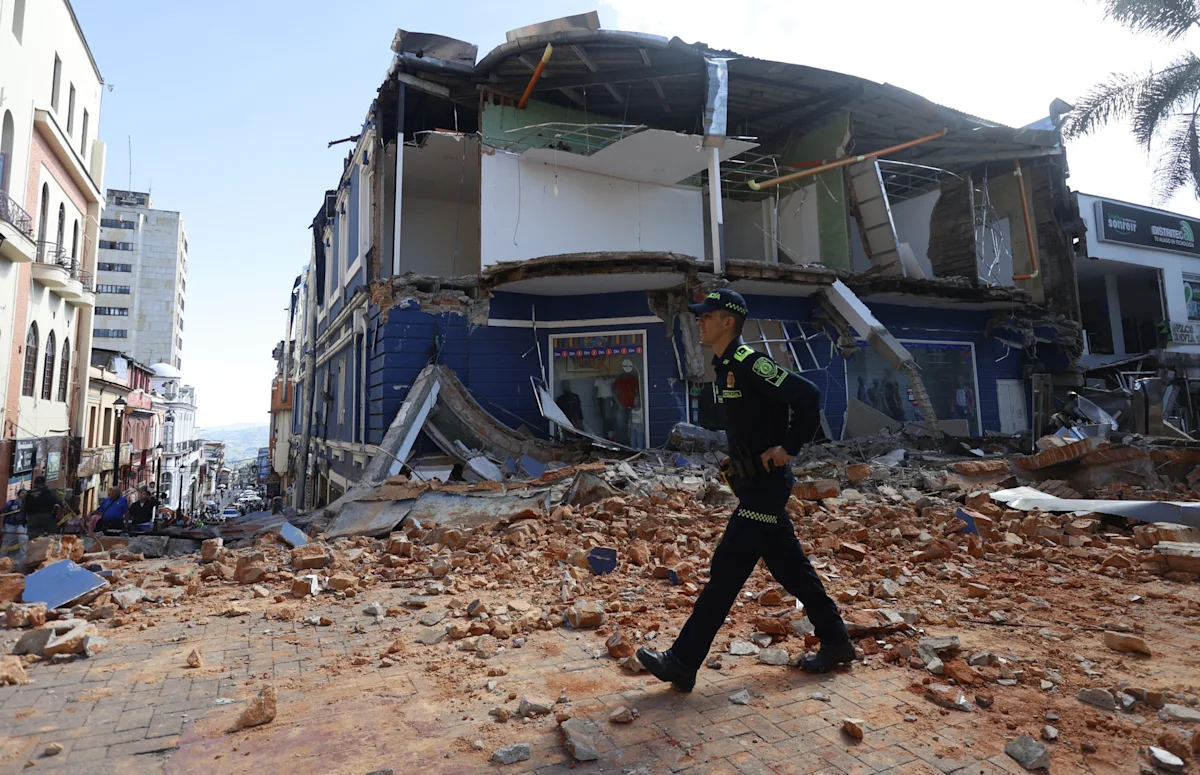
The 7.4-magnitude earthquake that struck Colombia on Monday, the strongest to hit the country this century, has so far left 265 people dead and around 3,500 injured.
In Cali, Pereira and other cities in western Colombia, rescue teams are working around the clock as they search for survivors. The first 72 hours following the earthquake will be reached at 7:34 a.m. local time (12:34 GMT), a critical window for rescue efforts as the chances of finding survivors generally decline significantly after that point.
Among those anxiously awaiting news is Valeria Cardona, a 26-year-old student searching for two of her cousins in Cali.
“We have some suspicions about their location, but there are no signs of life,” she said. “Hope is the last thing you lose, but we are anxious about receiving news we don’t want to hear.”
A team of members from the Topos Aztecas, the renowned Mexican volunteer rescue group, has also arrived in Cali to join the search. The rescuers had been working in neighboring Venezuela, where a double earthquake on June 24 left more than 6,000 people dead.
“We all came from Venezuela, from La Guaira. The 41 days we spent working there made us stronger because we overcame hunger, pain and sleepless nights,” said Héctor Méndez, 80, president of Topos Aztecas.
Méndez encouraged those affected by the disaster not to lose hope and emphasized the commitment required from rescue teams during an emergency.
“Do not feel like victims. This is not an office or workshop schedule. This is real life, where the best part of the human spirit emerges. These are things of nature that happen,” he said.
International
German Authorities Investigate More Than 100 New Cases Against Convicted Nurse

German authorities announced Monday that they are investigating more than 100 additional cases involving a nurse who was sentenced to life in prison in November for the murder of 10 patients.
The man, who was 44 at the time of his conviction, worked in palliative care at a hospital in Würselen, near Aachen. He was also found guilty of 27 attempted murders.
Aachen prosecutors are now examining 121 new cases, a spokesperson for the office said.
Prosecutors leading the investigation are preparing a new indictment that could be filed next year. Nearly 40 bodies have so far been exhumed as part of the investigation, which covers alleged incidents dating back to September 2022.
Meanwhile, prosecutors in the city of Cologne are investigating 18 additional cases. According to a spokesperson, the oldest case dates back to 2010.
Before working at the Würselen hospital, the nurse is believed to have worked at a clinic in eastern Cologne, according to local media reports.
At the time of his November conviction, the court ruled that the severity of his crimes was particularly serious, a finding that would make it difficult for him to obtain early release after 15 years in prison.
Between December 2023 and May 2024, the nurse administered overdoses of sedatives or painkillers to terminally ill patients, most of them elderly, according to the indictment in the original case.
His alleged motive was to sedate patients who required care so that he could minimize his workload during night shifts, prosecutors said.
According to the indictment, the nurse worked «without enthusiasm» and «without motivation». When faced with patients requiring extensive care, he allegedly became «irritated» and showed a lack of empathy.
The case has revived painful memories in Germany of Niels Högel, a former nurse and serial killer who was sentenced to life imprisonment in June 2019 for the murders of at least 85 patients.

Three U.S. Executions Set for Same Day as Trump Pushes to Expand Death Penalty

Colombia Earthquake Death Toll Reaches 265 as Rescue Teams Race Against Time

German Authorities Investigate More Than 100 New Cases Against Convicted Nurse
Tec de Monterrey honors one of its students for his contribution to nanotechnology in medicine

Defense Minister commends salvadoran soldier for Central American Cross Country victory

Extension of the state of emergency approved in southern Chile
-
 International4 days ago
Colombia Earthquake Leaves at Least 22 Dead as Rescue Efforts Continue
-

 International5 days ago
Joe Biden’s Prostate Cancer Has Spread to His Bones, Son Hunter Reveals
-
 International3 days ago
Venezuela Raises Earthquake Death Toll to 6,301
-

 International4 days ago
Record 230 Migrants Cross English Channel to UK in Single Boat
-

 International3 days ago
CEAPI Backs Colombia’s New Government and Calls for Greater Public-Private Cooperation
-
 International3 days ago
German Authorities Investigate More Than 100 New Cases Against Convicted Nurse
-
 International18 hours ago
Three U.S. Executions Set for Same Day as Trump Pushes to Expand Death Penalty
-
International18 hours ago
Colombia Earthquake Death Toll Reaches 265 as Rescue Teams Race Against Time