
Central America
Detained Nicaraguan opposition figures’ health suffering, say families
AFP
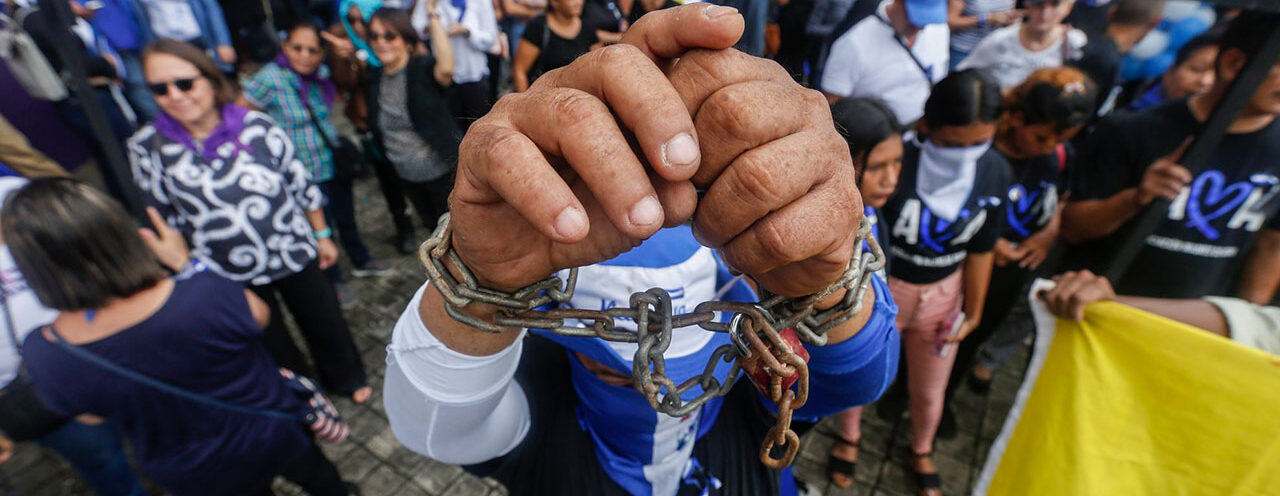
Opposition figures jailed in the run-up to November’s presidential election in Nicaragua are suffering from serious health issues including blackouts and loss of teeth, family members said on Monday.
The more than 40 people detained since June last year are suffering from “physical and psychological deterioration … due to imbalanced nutrition, lack of regular access to sunlight and most of all isolation and solitary confinement,” said the family members in a statement.
They published the statement after being allowed to visit their loved ones at a police cell in Managua on January 21 and 23.
Prisoners are also suffering from depression, anxiety, weight loss and fainting.









The government launched a clampdown on opposition figures in June and jailed seven potential presidential candidates amongst the more than 40 detained on charges of unspecified attacks on Nicaragua’s “sovereignty.”
It led to President Daniel Ortega, alongside his Vice President wife Rosario Murillo, winning a fourth consecutive term in office in a vote branded a “farce” and “pantomime” by many in the international community.
It came just over three years after an even more brutal clampdown against protesters that claimed more than 300 lives.
Amongst the worst affected prisoners are lawyer Roger Reyes, who is suffering from “depression, anxiety and memory loss,” and former deputy foreign minister Jose Pallais, 68, who has lost almost 40 kilograms (88 pounds), rendering him weak and prone to fainting.
Sociologist and opposition activist Violeta Granera, 70, “is losing her teeth, has difficulty eating and has red marks on her face due to a lack of sun.”
Former diplomat Mauricio Diaz, 70, fainted twice and has had blackouts, while former ambassador Edgar Parrales, 79, has suffered nightmares.
Authorities have not commented on the accusations.
The detainees are amongst around 170 opposition figures arrested in the last three years.






Central America
El Salvador and Chile Mark 150 Years of Relations With Expanded Bilateral Cooperation
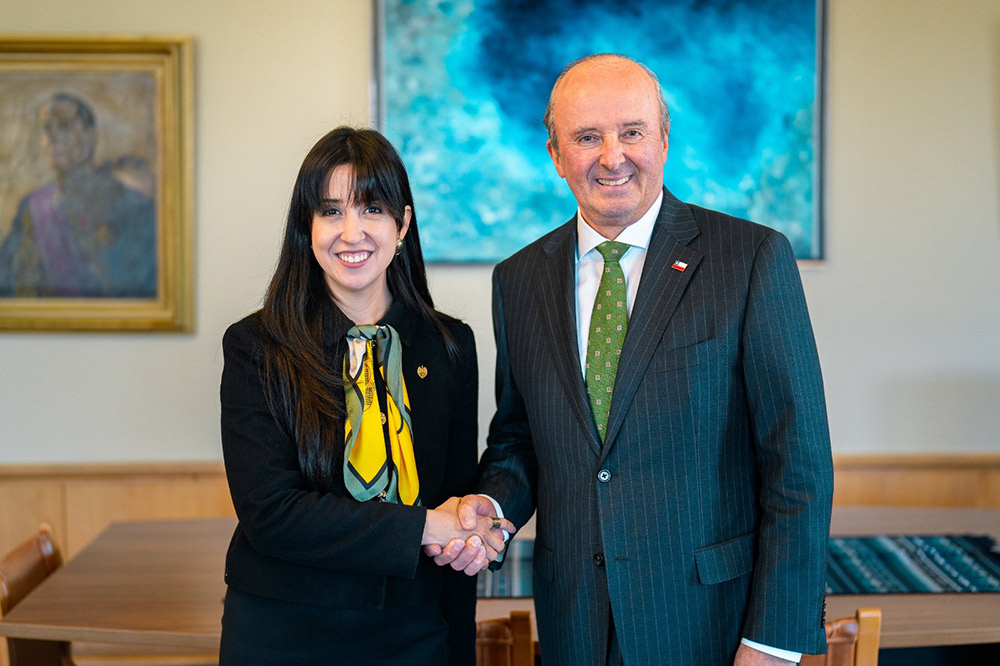
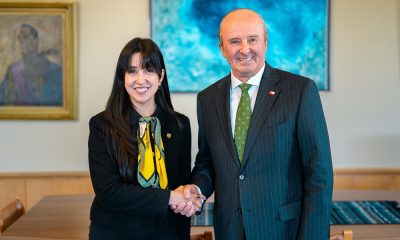
El Salvador and Chile are strengthening their diplomatic and cooperation ties through the official visit of Salvadoran Deputy Foreign Minister Adriana Mira to the South American country.
The purpose of the visit is to expand economic exchanges, promote new cooperation opportunities, and strengthen the bonds of friendship between both nations, according to El Salvador’s Foreign Ministry.
During her visit, Mira held a meeting with her Chilean counterpart, Patricio Torres, where they discussed issues of common interest and actions aimed at further advancing bilateral relations.
The agenda included initiatives to promote trade, encourage investment in strategic sectors, and strengthen joint efforts in different areas of cooperation.
As part of this process, both countries are preparing the 5th Meeting of the Joint Commission for Technical and Scientific Cooperation, where they are expected to establish a new framework for bilateral collaboration aimed at creating mutual benefits.
The meeting also carried a historic significance, as El Salvador and Chile are commemorating 150 years of diplomatic relations in 2026.
Representatives from both governments highlighted the importance of continuing to deepen their ties of friendship and cooperation to support shared development goals.
El Salvador’s Foreign Ministry emphasized that the relationship between both countries seeks to advance greater economic, commercial, and technical integration while taking advantage of new opportunities for collaboration.
International
Cristiano Ronaldo Makes History as First Player to Score in Six World Cups
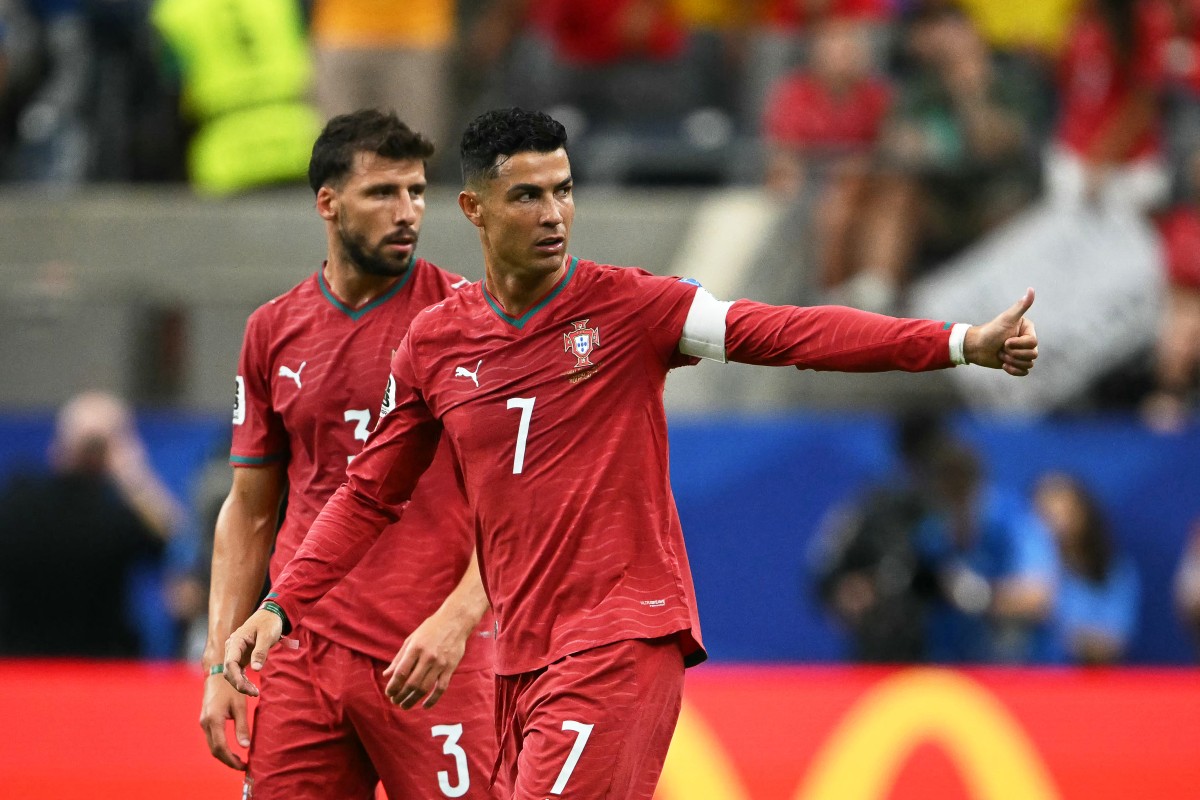
Cristiano Ronaldo made football history on Tuesday by becoming the first player ever to score in six different editions of the FIFA World Cup.
The Portuguese forward opened the scoring in Portugal’s Group K match against Uzbekistan in Houston. Just six minutes into the game, Ronaldo found the back of the net with a right-footed strike from inside the box, sending the Portuguese fans into celebration.
The “Commander” sparked excitement throughout the stadium with his iconic celebration, as supporters joined in with his famous “Siuuu!” chant to honor another milestone in the career of one of football’s greatest stars.
At 41 years old, Ronaldo has now scored in Germany 2006, South Africa 2010, Brazil 2014, Russia 2018, Qatar 2022, and North America 2026. With his two goals in this tournament, he has surpassed Lionel Messi’s record, as the Argentine has scored in every World Cup he played except South Africa 2010.
The Portuguese captain has also reached nine World Cup goals, matching Eusébio as Portugal’s all-time top scorer in the history of the tournament.
Ronaldo’s achievement came just one day after Messi also made history by becoming the outright leading scorer in World Cup history, reaching 18 goals after scoring twice in Argentina’s 2-0 victory over Austria.
With his appearance at the 2026 World Cup, Cristiano Ronaldo has also extended another remarkable record by becoming the first player to participate in six consecutive editions of the tournament, further cementing his legacy as one of the most influential players in football history.
Central America
Costa Rica Launches Largest Police Operation in History, Dismantles Major Drug Cartel
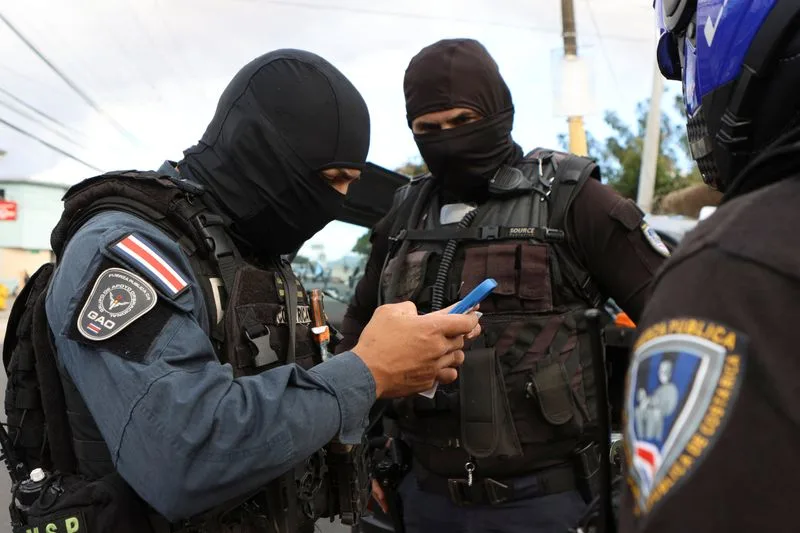
Costa Rican judicial authorities on Tuesday announced the largest police operation in the country’s history, resulting in the dismantling of a major local drug trafficking organization allegedly led by a man who was extradited to the United States earlier this year.
More than 1,500 law enforcement officers carried out 97 raids across different regions of the country, targeting 41 suspects and seizing assets valued at nearly $22 million, according to Michael Soto, director of the Judicial Investigation Agency (OIJ).
Speaking in a video statement, Soto described the operation as unprecedented in scale and coordination.
“This is the largest operation we have ever conducted. Never before have we carried out so many raids with our officers working alongside prosecutors from the Public Ministry and security forces from the Executive Branch. It is historic,” Soto said.
The operation, dubbed “Riverside,” was the result of months of investigations conducted with support from the U.S. Drug Enforcement Administration (DEA).
Authorities said the large-scale crackdown dismantled one of the country’s most significant criminal organizations involved in international drug trafficking, a major contributor to the security crisis affecting the Central American nation, long known for its stability and tourism industry.
According to investigators, the operation focused on uncovering the multimillion-dollar business activities of a Costa Rican criminal network allied with a Colombian group known as “Los Costeños.”
The alleged leader of the organization was identified as Edwin Pérez, also known as “Pecho de Rata,” who was extradited to the United States on March 20 alongside former Security Minister and former Supreme Court magistrate Celso Gamboa.
Both men were arrested on June 23, 2025, shortly after a legislative reform came into effect allowing Costa Rican citizens suspected of drug trafficking to be extradited to foreign jurisdictions.
Among those detained during the operation were two prison officers, two former professional football players and a model. Prosecutors indicated that the suspects could face charges including domestic and international drug trafficking, arms trafficking, possession of explosives, smuggling drugs into correctional facilities, money laundering and participation in organized criminal activities.
Authorities stated that the investigation remains ongoing and that additional arrests and asset seizures could follow as prosecutors continue to examine the network’s operations and financial structure.

United Nations Coordinates Relief Efforts as Venezuela Death Toll Rises After Twin Quakes

OAS Secretary General Pledges Regional Assistance Following Venezuela Quake Disaster

Bill Gates Says Jeffrey Epstein Made “Veiled” Threats Over Extramarital Affairs
Tec de Monterrey honors one of its students for his contribution to nanotechnology in medicine

Defense Minister commends salvadoran soldier for Central American Cross Country victory

Extension of the state of emergency approved in southern Chile
-

 International4 days ago
Cristiano Ronaldo Makes History as First Player to Score in Six World Cups
-
 International4 days ago
UNHCR Urges U.S. Deportation Agreements to Uphold Asylum Rights and International Law
-
 Central America2 days ago
El Salvador and Chile Mark 150 Years of Relations With Expanded Bilateral Cooperation
-
 International2 days ago
OAS Secretary General Pledges Regional Assistance Following Venezuela Quake Disaster
-
 International2 days ago
WHO Expects Deadly Hantavirus Outbreak on Cruise Ship to End by July 2
-
 International2 days ago
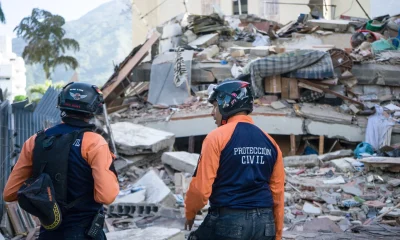
United Nations Coordinates Relief Efforts as Venezuela Death Toll Rises After Twin Quakes
-

 International4 days ago
Mbappé Ties Klose on All-Time World Cup Scoring List After Brace Against Iraq
-
 International4 days ago
U.S. Proposes Higher Citizenship Fees and Limits on Immigration Fee Waivers
-
 International2 days ago
Bill Gates Says Jeffrey Epstein Made “Veiled” Threats Over Extramarital Affairs
-

 Central America4 days ago
Costa Rica Launches Largest Police Operation in History, Dismantles Major Drug Cartel
-
 Central America4 days ago
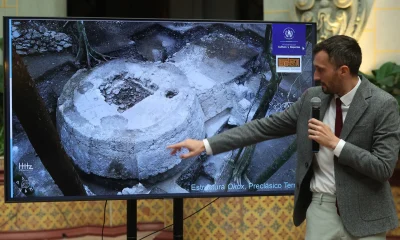
Ancient Maya Ceremonial Site Reveals New Clues About Preclassic Ritual Practices