
International
Honduras elections: the top three candidates
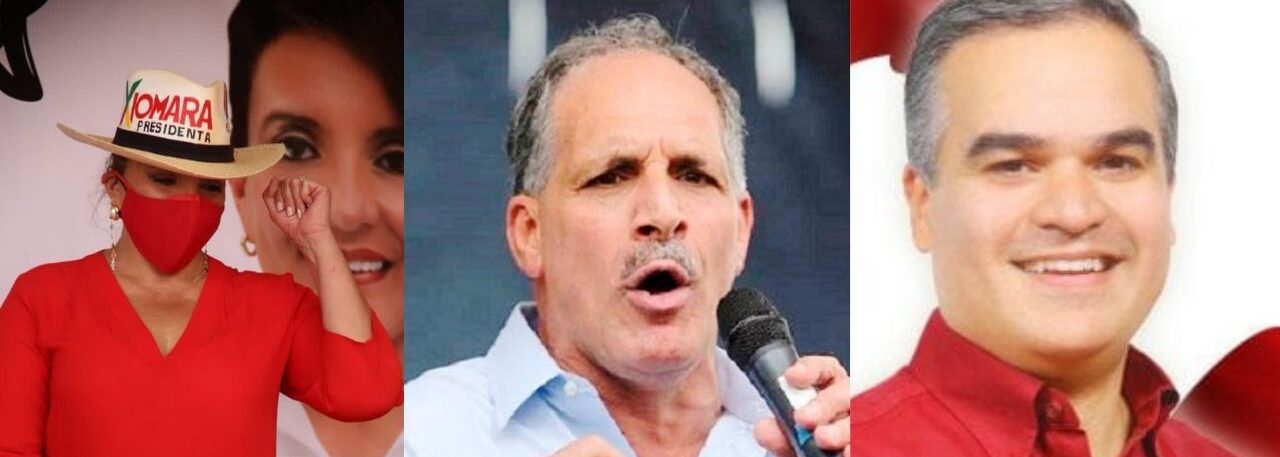
AFP
Thirteen candidates will contest Honduras’s razor-tight presidential election on Sunday to see who will succeed scandal-tainted Juan Orlando Hernandez.
Here are short profiles of the top three challengers.
– Left –
Xiomara Castro was never meant to run for president, but she is the front runner to become her country’s first female leader.
As the wife of Manuel Zelaya, she was first lady in 2009 when her husband was deposed in a coup supported by the military, business elites and the political right.












She made her name leading mass street protests against the coup and there began her own rise to presidential hopeful.
Tough but softly spoken, her popularity stems from her defense of the poor.
But in a deeply conservative and macho country, she faces the twin difficulties of opponents branding her a communist and a puppet for her husband.
“The shadow of Zelaya weighs heavily on her, and in Honduran society it can be assumed that Zelaya is the power behind the throne,” sociologist Eugenio Castro told AFP.
The ruling party has also tried to discredit her proposals to legalize abortion and same-sex marriage — touchy issues in much of Central America.
Often seen wearing denim jeans, and always with a white cowboy hat, the 62-year-old insists she stands for a “Honduran-style democratic socialism” and has tried to distance herself from the leftist models in Cuba and Venezuela that scare many voters.
Already an unsuccessful candidate in 2013, when she narrowly lost to Hernandez, Castro has some heavyweight backing this time — not least in Salvador Nasralla, a television host who lost out to Hernandez in 2017 amidst accusations of fraud.
Castro was born into a middle-class Catholic family and married Zelaya aged just 16. The couple have four children.
Zelaya says the children have a mix of Spanish, Basque, indigenous, Arab and Senegalese blood.
– Right –
Tall, slim and always seen in jeans, a long-sleeved blue shirt and farming boots, Nasry Asfura likes to present himself as a rural worker allergic to offices.
The 63-year-old of Palestinian descent, the current mayor of Tegucigalpa, is the candidate for the ruling right-wing National Party (PN).
With that comes the benefit of the political machinery that has kept the PN in power for a dozen years, but also the stigma of being linked to drug trafficking and corruption.
“I have never spent a single day sat in my office in the town hall, every day I go out into the streets to serve and see where there are problems,” he said, vowing to generate jobs if elected.
He is credited with improving the traffic congestion in Tegucigalpa by building many bridges, tunnels and roundabouts in the capital during his two four-year terms as mayor.
The father of three is a graduate in civil engineering and created a construction company that became one of the biggest in the country.
Although styled as the law-and-order candidate, Asfura has not escaped the accusations of corruption blighting many Honduran politicians.
“He has been accused not just in Honduras, (but also) the Pandora Papers and in Costa Rica. That’s not a good sign,” said Eugenio Sosa, a professor of sociology at the National University.
Asfura was accused in October 2020 by the public prosecutor of embezzling $700,000, while he was linked in the Pandora Papers to influence peddling in Costa Rica.
And while he has not been linked himself to drug trafficking, “he’s been compromised by protecting Hernandez,” said Sosa.
– Center –
The centrist candidate, Yani Rosenthal, is a convicted drug trafficker.
He spent three years in a US jail after admitting laundering drug trafficking money. He was released in August 2020, just in time to run for president.
He is the son of the late Jaime Rosenthal, one of the richest people in Honduras — and prison time was tough on someone used to a silver spoon.
“I learned to wash myself from the waist up in the sink and from the waist down in the toilet,” said the 56-year-old.
Despite his criminal record, in March he won the primaries to be the center-right Liberal Party’s candidate.
The law graduate has his work cut out as his beaten rival, Luis Zelaya, refused to support him and is instead backing Castro.
He has presented himself as the centrist candidate against “left-wing extremism” and PN corruption.
“We don’t want a radical leftist path, nor a corrupt right-wing one, we want a liberal path down the center,” he said.
He claims to be the only candidate able to present “viable” economic solutions and has vowed to give every adult a $60 monthly voucher.
A father of four, he was minister of the presidency for two years under Zelaya and says he has a track record of creating jobs.










International
Afghan man sentenced to life in prison for deadly Munich vehicle attack
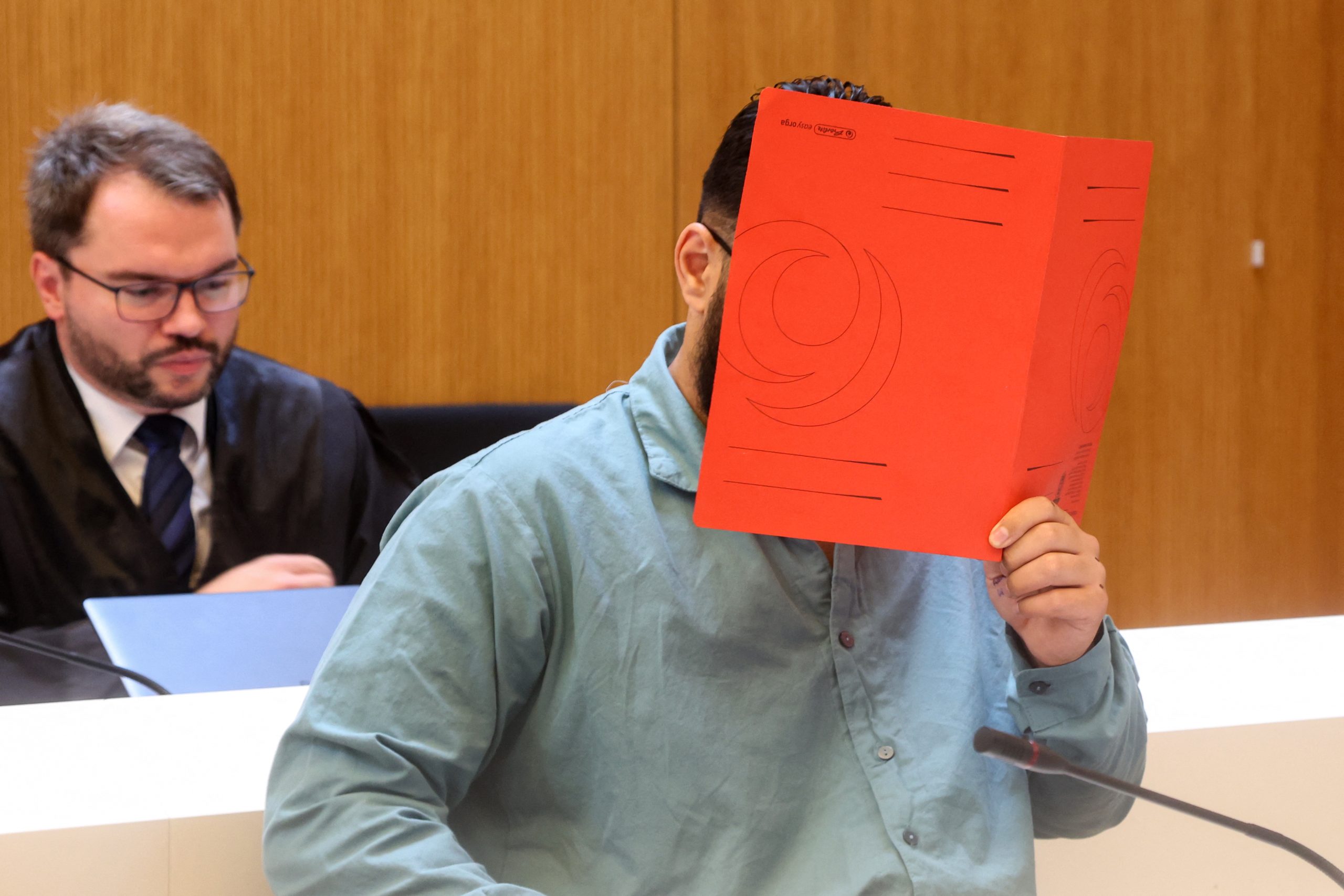
A German court on Thursday sentenced an Afghan man to life imprisonment for a 2025 attack in which he drove a vehicle into a trade union demonstration in Munich, killing two people and injuring around 40 others.
The Munich Higher Regional Court ruled that the 25-year-old man, identified only as Fahrad N. under German privacy laws, committed a particularly serious crime.
Presiding judge Michael Höhne said the court was convinced that the defendant deliberately drove his vehicle into the protesters from behind. He described the scene of the attack as a “real field of destruction.”
The verdict followed the request of federal prosecutors, while the defense had sought a 15-year prison sentence and admission to a psychiatric hospital.
Fahrad N. was convicted of two counts of murder and 23 counts of attempted murder, one more charge than prosecutors had requested. He was also found guilty of 19 counts of serious bodily harm and three counts of intentional injury.
The attack occurred on February 13, 2025, as Munich prepared to welcome international leaders attending the Munich Security Conference, while Germany was entering the final stage of its parliamentary election campaign.
That morning, around 1,400 people were marching through the city center in a demonstration organized by the services union Verdi. According to investigators, the Afghan national drove a BMW Mini past police officers escorting the march before intentionally crashing into the crowd.
The vehicle traveled approximately 23 meters before coming to a stop.
Fahrad N., who was interested in bodybuilding, arrived in Germany at the age of 15 as an unaccompanied minor and had his residence permit renewed. Authorities had previously considered him “well integrated” into local society.
Investigators said he later became radicalized under the influence of Afghan clerics he followed on social media in the months before the attack.
According to prosecutors, the defendant believed Western countries were responsible for the suffering of Muslim populations in Afghanistan and the Middle East, and concluded that he should “kill randomly selected people in Germany.”
International
Mexican TikTok Influencer Shot Dead While Livestreaming in Sinaloa
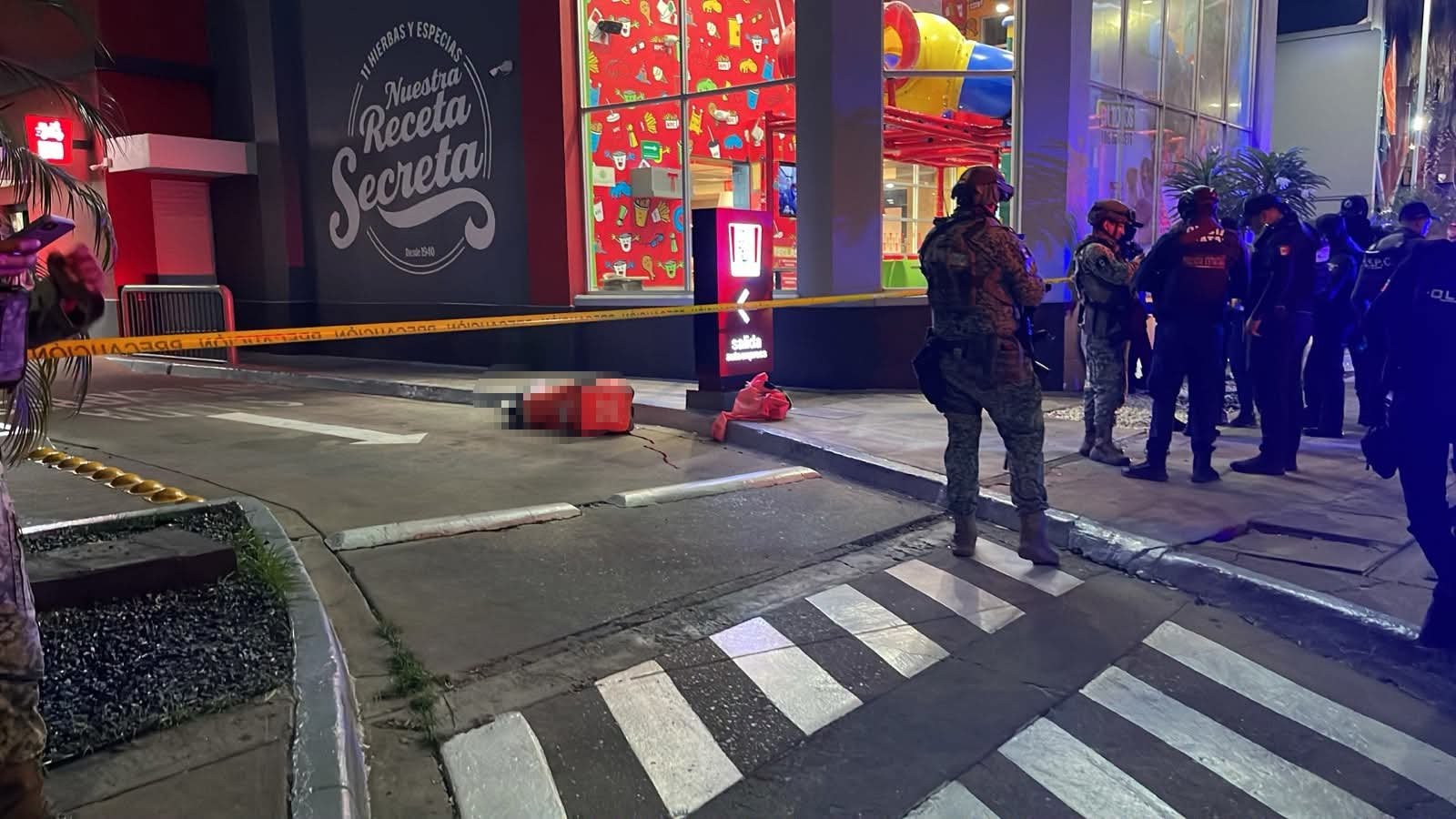
A Mexican influencer was shot dead Tuesday night while livestreaming on social media outside a restaurant in the violence-plagued state of Sinaloa, in northwestern Mexico.
César Gastelum, who had more than 500,000 followers on TikTok, was broadcasting live with two friends while taking part in a challenge in which they dressed as food delivery workers. During the livestream, a motorcycle carrying two individuals stopped beside them, and the driver shot Gastelum in the head.
The broadcast was interrupted immediately after the attack and was later removed by the platform. However, several news outlets preserved parts of the footage and shared images of the incident.
Initial reports from local police indicated that a delivery worker had been killed. However, after reviewing the recording and gathering witness statements, authorities identified the victim as Gastelum, who was approximately 25 years old, according to local media reports. The influencer was known for sharing lifestyle-related content.
The attack took place in a busy shopping area near the Sinaloa Attorney General’s Office in Culiacán, the state capital. Military and police forces were deployed to the scene, while forensic experts collected evidence and removed the victim’s body, according to local television reports.
Sinaloa has been experiencing a wave of violence for the past two years due to internal disputes within the powerful local drug cartel.
Local media have reported that around a dozen influencers, some allegedly linked to criminal groups, have been killed in recent years in the state.
International
Iran Rejects Negotiations With U.S. as Strait of Hormuz Remains Blocked Amid New Attack

Tensions remained high in the Strait of Hormuz on Monday after a vessel was hit by a projectile, despite U.S. President Donald Trump’s claims that negotiations with Iran were moving forward and that the strategic maritime route could reopen as early as Tuesday.
Tehran denied that direct talks were taking place, but Trump insisted that discussions were underway and described the situation as a final opportunity for Iran to reach an agreement.
“This is the last chance they have to sign a good document,” Trump told reporters at the White House, adding that the reopening of the Strait of Hormuz could happen “literally tomorrow” Tuesday.
The comments came after another escalation in rhetoric from Washington. Last week, Trump threatened Iran with military strikes before unexpectedly changing course on Sunday and announcing that negotiations with Tehran would resume.
Iranian Foreign Ministry spokesman Esmail Baqai rejected the U.S. president’s version of events, stating that Tehran was not holding negotiations with Washington.
“At this moment, we are not negotiating with the United States. We are negotiating with Oman to guarantee safe passage through the Strait of Hormuz,” Baqai said.
Earlier, the Iranian official said that Tehran was close to reaching an agreement with Oman, which lies across the Strait of Hormuz, to reopen the crucial waterway that plays a key role in global energy trade.
The maritime route has remained blocked by Iran since the outbreak of hostilities following U.S. and Israeli strikes against the Islamic Republic on February 28.
Meanwhile, Yemen’s Houthi rebels announced Tuesday that they had launched an attack against an airport in Saudi Arabia. The Iran-backed group had previously disrupted the passage of Saudi vessels through the Red Sea, an alternative route used for crude exports by the world’s largest oil producer.
The continued instability in the region has raised concerns over global energy supplies, as the Strait of Hormuz remains one of the most important chokepoints for international oil shipments.

Afghan man sentenced to life in prison for deadly Munich vehicle attack

Guatemala Declares Highest Alert in Areas Affected by Fuego Volcano Eruption

Mexican TikTok Influencer Shot Dead While Livestreaming in Sinaloa
Tec de Monterrey honors one of its students for his contribution to nanotechnology in medicine

Defense Minister commends salvadoran soldier for Central American Cross Country victory

Extension of the state of emergency approved in southern Chile
-

 International2 days ago
Iran Rejects Negotiations With U.S. as Strait of Hormuz Remains Blocked Amid New Attack
-
 International4 days ago
Truck bomb attack near police station in Colombia leaves 14 injured ahead of presidential inauguration
-

 International3 days ago
Lula Launches Re-Election Campaign Amid Rising Tensions With Trump
-
 International1 day ago
Mexican TikTok Influencer Shot Dead While Livestreaming in Sinaloa
-
 Central America1 day ago
Guatemala Declares Highest Alert in Areas Affected by Fuego Volcano Eruption
-
 Central America2 days ago
U.S. Defense Secretary to Close Multinational Military Exercises in Panama to Protect Canal
-
 International4 hours ago
Afghan man sentenced to life in prison for deadly Munich vehicle attack