
International
New prison riot in Ecuador leaves 68 dead
AFP
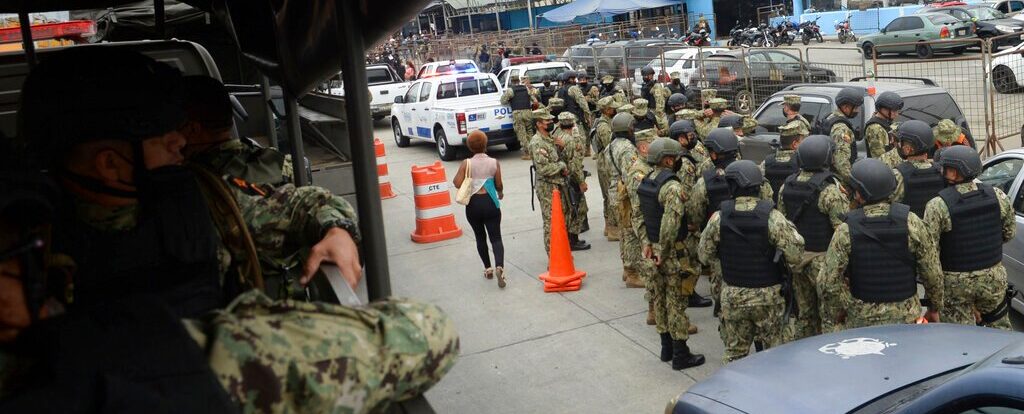
Prison inmates from rival gangs in Ecuador fought each other with guns, explosives and blades in a bloodbath that left at least 68 dead in the same prison where a riot in September claimed 119 lives, officials said Saturday.
Hours after the government said it had regained control of the prison in Guayaquil, President Guillermo Lasso’s spokesman said inmates from rival gangs tied to drug trafficking rings were fighting again in a new surge in violence.
In the initial riot that began Friday night prisoners fought with “savagery,” said Pablo Arosemena, governor of the province of Guayas where the prison is located.
The riot began around 7:00 pm Friday (0001 GMT) when prisoners tried to enter Block 2 of the jail where their rivals were held, firing gunshots, detonating explosives and swinging machetes, and prompting police to move in.









At least 68 prisoners were killed and another 25 were wounded, according a statement which the Ecuador Prosecutor’s Office posted on Twitter.
In the new outbreak of fighting, inmates from two other blocks were attacking each other, said presidential spokesman Carlos Jijon.
Lasso has appealed to civil society groups to try to establish contact with prisoners and end the bloodshed, Jijon said,
Officials said the violence started when one of the gangs inside the prison, the Tiguerones, was left without their leader because he was released after serving part of his sentence for stealing auto parts.
Other groups, sensing weakness in the Tiguerones with that man gone, went on the attack to try to crush that gang, Arosemena said.
He said their goal was “to go in and carry out a total massacre.”
Earlier Saturday, police officers in riot gear were seen climbing up the blood-stained prison walls, while the body of an inmate in an orange prison jumpsuit lay on the roof of the jail encircled by barbed wire.
Images posted on social networks, whose authenticity has not been confirmed by the authorities, showed a pile of bodies in a night-time prison courtyard being consumed by flames while inmates standing nearby beat the bodies with sticks.
In another video, a prisoner from the block that was being attacked says, “We are locked in our pavilion. They want to kill us all.”
“Please share this video. Please help us!” the inmate implores, as repeated bangs are heard the background.
Dozens of people gathered outside the prison gates Saturday morning, fainting or weeping as they tried to learn the fate of their loved ones inside.
“They are human beings, help them”, read a banner held by one of the families, held back by a deployment of police and soldiers supported by a tank.
A group of women with one cell phone shouted prisoners’ names to an inmate who was inside the prison and on the line, hoping to know if those men were still alive.
“Here there are relatives from block two and they need to know about the boys,” the woman holding the phone said.
A crackly voice was heard from the phone but the signal was spotty and then there was just silence.
At a coroner’s office in the city, Felix Gonzalez showed up holding his imprisoned son’s ID card and asked if his body was there. “It is not fair for him to die for stealing a cell phone,” Gonzalez told AFP.
More than 300 prisoners have been killed this year in Ecuador’s criminal detention system, where thousands of inmates tied to drug gangs square off in violent clashes that often turn into riots.
September’s unrest was one of the worst prison massacres in Latin American history, and the latest deadly violence in Guayaquil only reaffirmed the broken state of Ecuador’s jails.
Rival drug gangs have been waging a bloody feud in the Guayas 1 prison in Guayaquil, a facility that was designed for 5,300 inmates, but houses 8,500.
But even after a crackdown in the wake of the September 28 tragedy that killed 119, the unrest has persisted, with at least 15 more inmates dying prior to Friday’s deadly burst of violence.
Two weeks after the September disaster, President Guillermo Lasso declared a 60-day state of emergency in a bid to tame Ecuador’s surging drug-related unrest.
Violence has spiked dramatically in recent months in Ecuador, where the economy is ailing.
Between January and October this year, the country registered almost 1,900 homicides, compared to about 1,400 in all of 2020, according to the government.






International
Looting Spreads in Venezuela’s Hardest-Hit Areas After Deadly Earthquakes
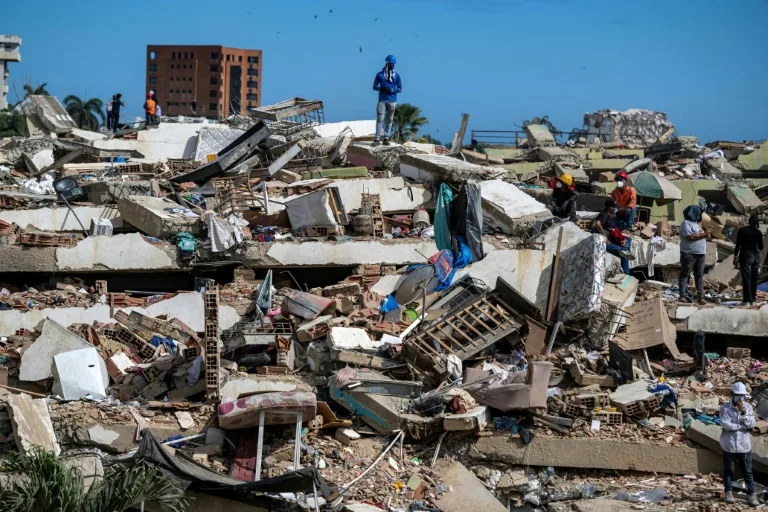
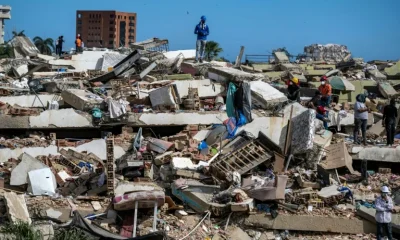
Not even the wires were left behind at a small grocery store. Before the ground had even stopped shaking, looting and theft began in the areas hardest hit by the double earthquake that struck Venezuela.
Reports of robberies have multiplied in the coastal state of La Guaira, located near Caracas and now transformed into a landscape of collapsed buildings and debris.
Videos circulating on social media show groups of people removing boxes of household appliances from a damaged store. Other images show similar boxes being carried on top of vehicles and motorcycles.
Social media platforms have also been filled with accusations against police officers and military personnel who allegedly stole from homes and even from victims who died during the disaster.
A branch of a major pharmacy chain was looted, along with supermarkets and other businesses. Some residents have described the situation as “disaster tourism,” while others say the looting reflects hunger and desperation among people who lost everything in a country already facing a prolonged economic crisis.
“Is it fair that our own people turn against our own people?” said María Esther Bernal, 71, who rented commercial spaces to Chinese merchants, all of which were looted. “They left nothing behind, not even the wallpaper. They even took the cables,” she said.
“Next door, a man died. He was Chinese. People walked over his body while they looted the place. It was a supermarket,” she added.
An AFP journalist witnessed looting in La Guaira since Thursday, following the earthquakes.
Jenifer Mayora, 34, defended some of the actions, saying that “the things people took were because the owners of the stores allowed us to take them.”
However, she criticized the limited response from authorities. “I have been waiting for a mattress so my children can sleep,” she said.
Residents have expressed anger over what they describe as a slow and insufficient response from authorities after the double earthquake, which has left around 1,450 people dead and tens of thousands missing.
Communities are demanding not only faster rescue operations in La Guaira, but also stronger security measures and urgent assistance with food, water, and medicine.
International
UN warns Venezuela earthquakes could affect up to 6.76 million people
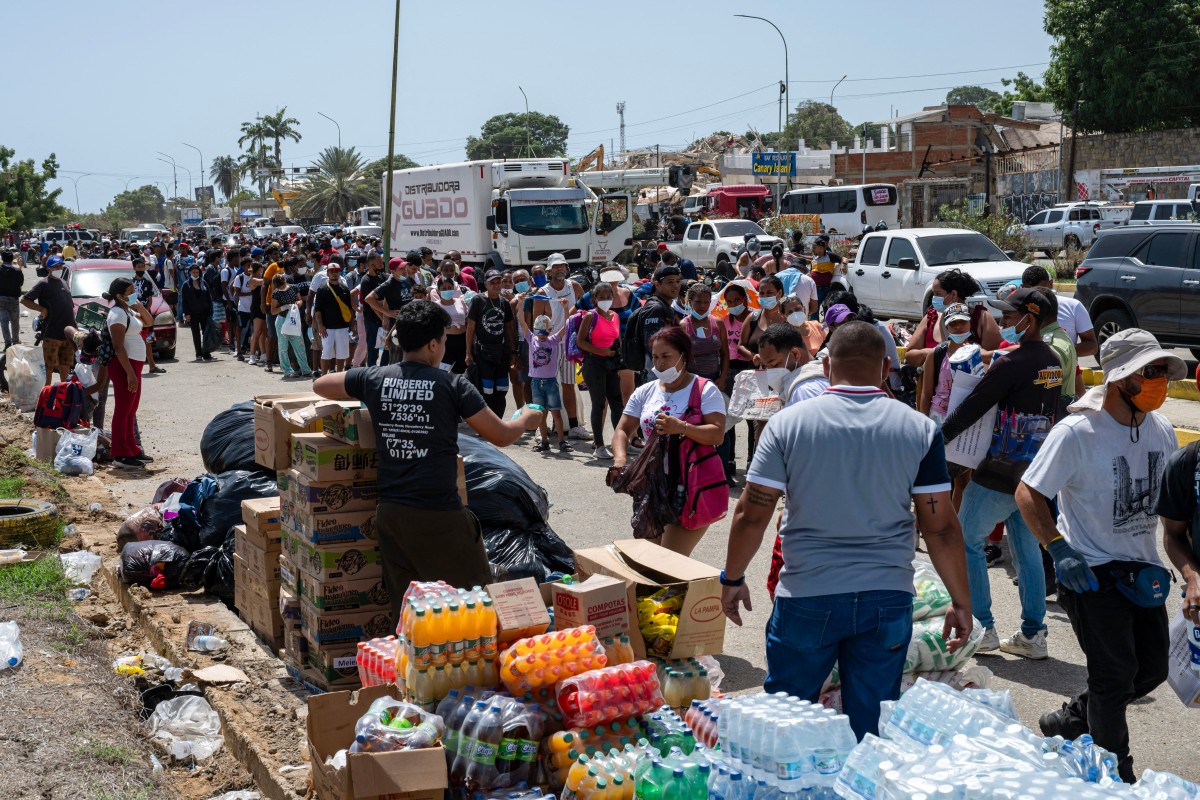
Up to 6.76 million people could be affected by the devastating earthquakes that struck Venezuela on June 24, according to an assessment released by the International Organization for Migration (IOM), a United Nations agency.
The organization said the projections are based on available population data and damage assessments, and include up to two million people living in Caracas, the country’s capital.
The estimates highlight the potentially massive humanitarian impact of the disaster, the IOM warned.
Entire buildings collapsed in La Guaira, a coastal area north of Caracas, following the powerful twin earthquakes that reached magnitudes of 7.2 and 7.5 on Wednesday.
The national death toll has risen to 920, while rescue teams continue searching for people trapped beneath the rubble in coastal regions and other affected areas.
UN humanitarian chief Tom Fletcher told AFP on Friday that more than 50,000 people were reported missing.
The IOM also revealed that it worked with Microsoft’s artificial intelligence laboratory on an initial satellite mapping analysis, which showed that 31.5% of buildings in the town of Catia La Mar had suffered damage.
Authorities and international rescue teams continue operations as Venezuela faces one of its largest humanitarian emergencies in recent years.
International
United Nations Coordinates Relief Efforts as Venezuela Death Toll Rises After Twin Quakes
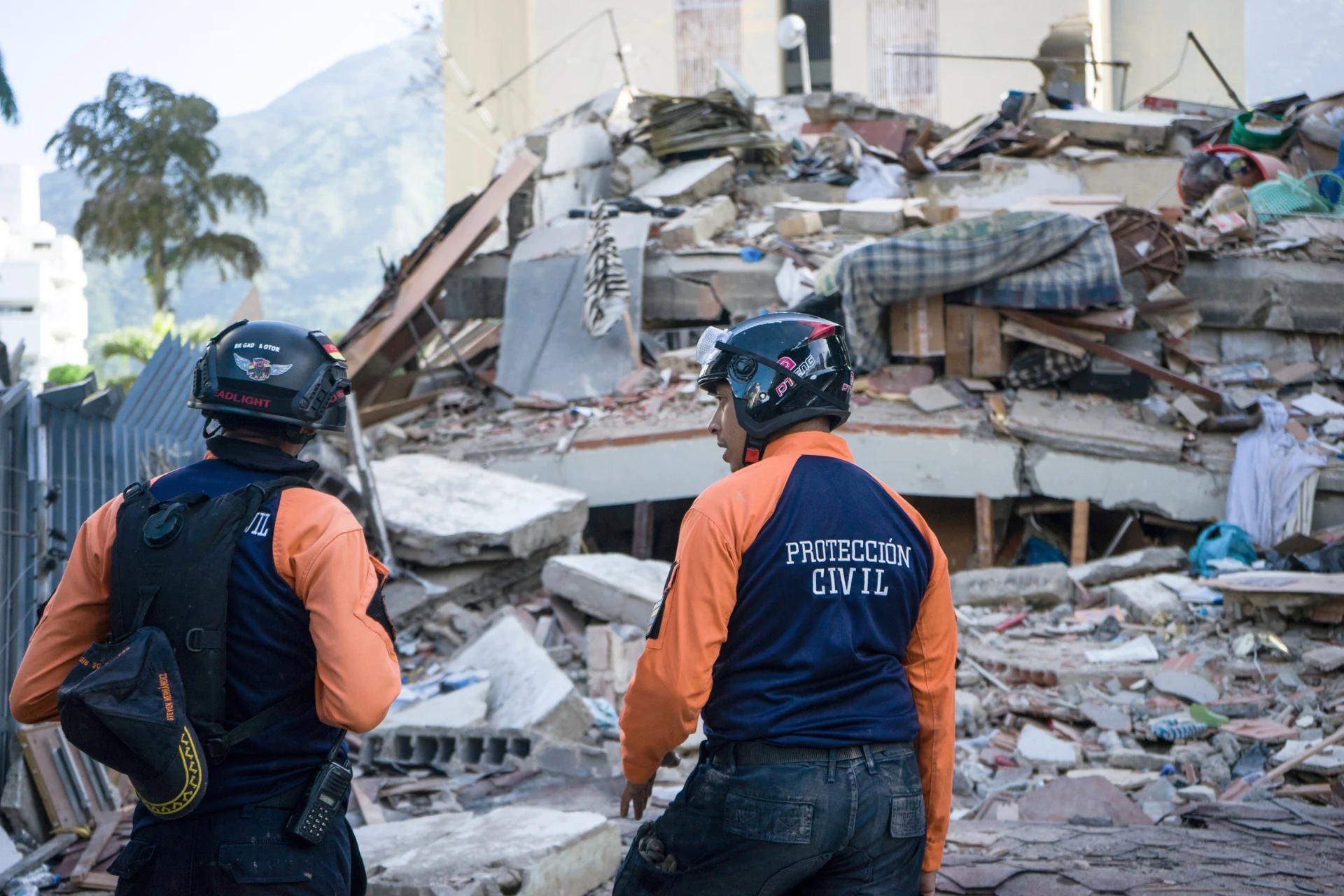
United Nations Secretary-General António Guterres on Thursday expressed his condolences to the people of Venezuela following the two devastating earthquakes that struck the country and highlighted the ongoing coordination between UN humanitarian teams and interim President Delcy Rodríguez.
Speaking during the UN’s daily press briefing, spokesperson Stéphane Dujarric said Guterres was deeply saddened by the loss of life and widespread destruction caused by the disaster.
“The Secretary-General is deeply distressed by the loss of life and the widespread devastation caused by the earthquakes that struck Venezuela yesterday. He extends his heartfelt condolences to the families of the victims and wishes a speedy recovery to those injured,” Dujarric stated.
Venezuela was struck on Wednesday by two powerful earthquakes measuring 7.2 and 7.5 in magnitude. According to official figures, the disaster has left at least 164 people dead and 971 others injured.
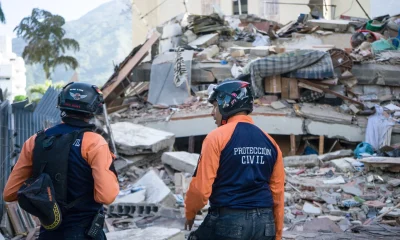
Dujarric noted that preliminary reports indicate significant damage across several states, including the capital, Caracas. Numerous casualties have been reported, while other individuals remain trapped beneath collapsed structures or are still missing.
“Critical infrastructure has been damaged and essential services have been disrupted,” the spokesperson said.
The United Nations confirmed that its humanitarian team remains in close contact with interim President Delcy Rodríguez and other relevant authorities as emergency operations continue.
To support relief efforts, the UN has established a coordination center in Caracas and is assisting local authorities to ensure that humanitarian aid reaches affected communities as quickly and efficiently as possible.
Guterres also welcomed the expressions of solidarity and offers of assistance from countries around the world that responded following news of the disaster, underscoring the importance of international cooperation in addressing the humanitarian emergency.

Looting Spreads in Venezuela’s Hardest-Hit Areas After Deadly Earthquakes

UN warns Venezuela earthquakes could affect up to 6.76 million people

United Nations Coordinates Relief Efforts as Venezuela Death Toll Rises After Twin Quakes
Tec de Monterrey honors one of its students for his contribution to nanotechnology in medicine

Defense Minister commends salvadoran soldier for Central American Cross Country victory

Extension of the state of emergency approved in southern Chile
-
 International13 hours ago
Looting Spreads in Venezuela’s Hardest-Hit Areas After Deadly Earthquakes
-
 Central America5 days ago
El Salvador and Chile Mark 150 Years of Relations With Expanded Bilateral Cooperation
-
 International4 days ago
OAS Secretary General Pledges Regional Assistance Following Venezuela Quake Disaster
-
 International4 days ago
United Nations Coordinates Relief Efforts as Venezuela Death Toll Rises After Twin Quakes
-
 International5 days ago
WHO Expects Deadly Hantavirus Outbreak on Cruise Ship to End by July 2
-

 International5 days ago
Bill Gates Says Jeffrey Epstein Made “Veiled” Threats Over Extramarital Affairs
-
 International2 days ago
UN warns Venezuela earthquakes could affect up to 6.76 million people