
International
María Corina Machado’s attempted return to Venezuela reportedly halted amid US political concerns

The administration of U.S. President Donald Trump reportedly pressured Venezuelan opposition leader and Nobel Peace Prize laureate María Corina Machado and disrupted her planned return to Venezuela following recent earthquakes, amid concerns over a potential political crisis, according to The Wall Street Journal.
Sources familiar with the matter told the newspaper that a private jet carrying Machado from the United States to Curaçao was ordered to turn back last week after U.S. officials concluded she intended to continue onward to Venezuelan territory, effectively reversing her earlier departure route from December.
The opposition figure had reportedly spent months preparing to re-enter Venezuela in an effort to renew pressure for new elections, following the detention of then-president Nicolás Maduro under an order issued by Trump. The U.S. president has since stated that Washington’s relationship with Venezuela’s acting leadership, headed by Delcy Rodríguez, is “excellent.”
According to The Wall Street Journal, intermediaries close to the White House warned Machado that proceeding with her return plan could jeopardize her support from Trump and undermine broader U.S. strategy toward Venezuela, potentially delaying electoral plans.
Despite these warnings, Machado reportedly attempted a second route back through Panama. However, Copa Airlines declined to transport her to Venezuela, citing concerns over possible retaliation from Caracas against the airline, according to unnamed sources.











From Panama City, Machado stated on Monday that the Venezuelan government had closed commercial airspace to prevent her return, calling it “urgent” to go back to the country to “face this catastrophe together,” without addressing reports of U.S. pressure.
Axios reported that Trump administration officials viewed Machado’s attempted return as “grotesque political opportunism” in the aftermath of recent earthquakes that have left at least 2,595 people dead and thousands injured, while also delaying reconstruction efforts and potential electoral processes.
Since Maduro’s detention on January 3, President Trump has reportedly expressed support for Rodríguez, the former vice president, who has agreed to trade, mining, and oil agreements demanded by Washington. Trump has described Venezuela as effectively operating under U.S. oversight and has claimed the country is improving economically through increased oil production and exports.
Venezuelan opposition groups based in the United States have urged the Trump administration to reconsider its relationship with Rodríguez and criticized Washington’s stated satisfaction with reconstruction efforts following the June 24 earthquakes.










International
Heat wave puts more than 70 million Americans under alerts as temperatures near 46°C

More than 70 million people remained under heat alerts Monday as an intense heat wave continued across the southern United States, particularly Florida and states along the Mexican border, where temperatures and heat indexes could reach as high as 46 degrees Celsius, according to the National Weather Service (NWS).
Several cities recorded or tied temperature records over the weekend and into Monday, including Miami and Fort Lauderdale in Florida; Laredo, Borger and Austin’s airport in Texas; Atlanta, Georgia; Raleigh and Charlotte, North Carolina; and Memphis, Tennessee.
The NWS warned that the heat wave will continue affecting the southern and southeastern United States, with maximum temperatures expected to remain near 38°C to 40°C for several days. The heat index, which combines temperature and humidity to estimate how hot conditions feel, could reach 46°C.
The extreme heat is also spreading into the Southwest, where temperatures began rising again between Monday and Tuesday. Forecast highs in the region range from about 38°C to 43°C.
Heat alerts remain in effect across Nevada, Arizona and California, including areas in southern Arizona and California near the Mexican border, as authorities warn of the risks posed by prolonged extreme temperatures.
The NWS urged residents to limit outdoor activity, stay hydrated, ensure access to air conditioning or cooling centers, and check on vulnerable friends, neighbors and family members.
The United States is experiencing a summer marked by above-average temperatures and repeated heat waves. One of the most intense episodes occurred during the July 4 weekend, when extreme heat was blamed for roughly 30 deaths.
July was the hottest month ever recorded in the United States since measurements began, with the average temperature across the contiguous country approaching 25°C, according to the National Oceanic and Atmospheric Administration (NOAA).
The combination of extreme heat and drought conditions has also fueled wildfires. Nearly 3 million hectares have burned across the country so far in 2026, making it the largest area affected by wildfires in a decade.
International
Trump warns Iran over nuclear ambitions as U.S.-Iran ceasefire deadline passes
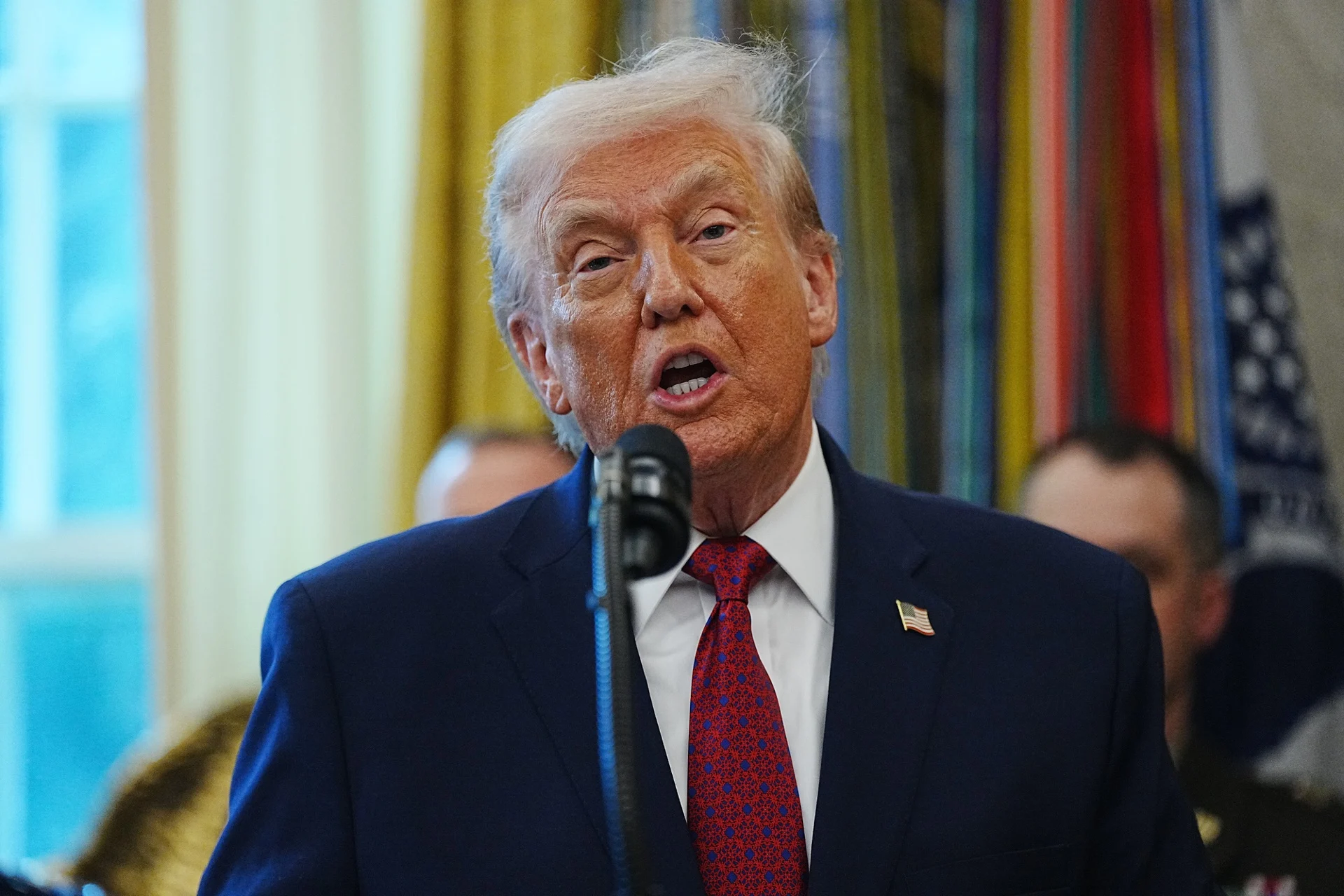
U.S. President Donald Trump reiterated Monday that Iran must never be allowed to obtain a nuclear weapon, as a 60-day deadline set under a memorandum of understanding between Washington and Tehran expired without an agreement to end the conflict in the Middle East.
“The number one goal is, and always will be, that Iran cannot have, in any way or under any circumstances, a nuclear weapon,” Trump wrote in a post on his Truth Social platform.
The memorandum, signed on June 17, called for an “immediate and permanent cessation of military operations on all fronts” as part of a broader negotiation process aimed at ending the conflict. However, the deadline expired Monday without a peace agreement, while both Washington and Tehran continued to maintain their respective positions.
The expiration is largely symbolic, as military clashes resumed during the 60-day period. The Strait of Hormuz also remains blocked, contributing to elevated global oil prices.
Trump escalated his rhetoric toward Tehran last Friday, saying he planned to declare the Strait of Hormuz U.S. territory after defeating Iran.
“After we finish defeating Iran, which is being very badly defeated, very soon I will essentially declare the Strait of Hormuz U.S. territory,” Trump said during a political rally in Long Island, New York. He also claimed that the United States currently controls the passage of vessels through the strategic waterway.
Meanwhile, U.S. Treasury Secretary Scott Bessent said Washington is preparing additional economic measures against Iran that he described as unprecedented.
“Stay tuned for new announcements next week because we are going to implement measures unlike anything ever seen in the history of the economic isolation of a country,” Bessent said.
The Treasury secretary indicated that the measures would form part of a broader “double hit” strategy that could also involve maintaining the blockade of Iranian ports.
International
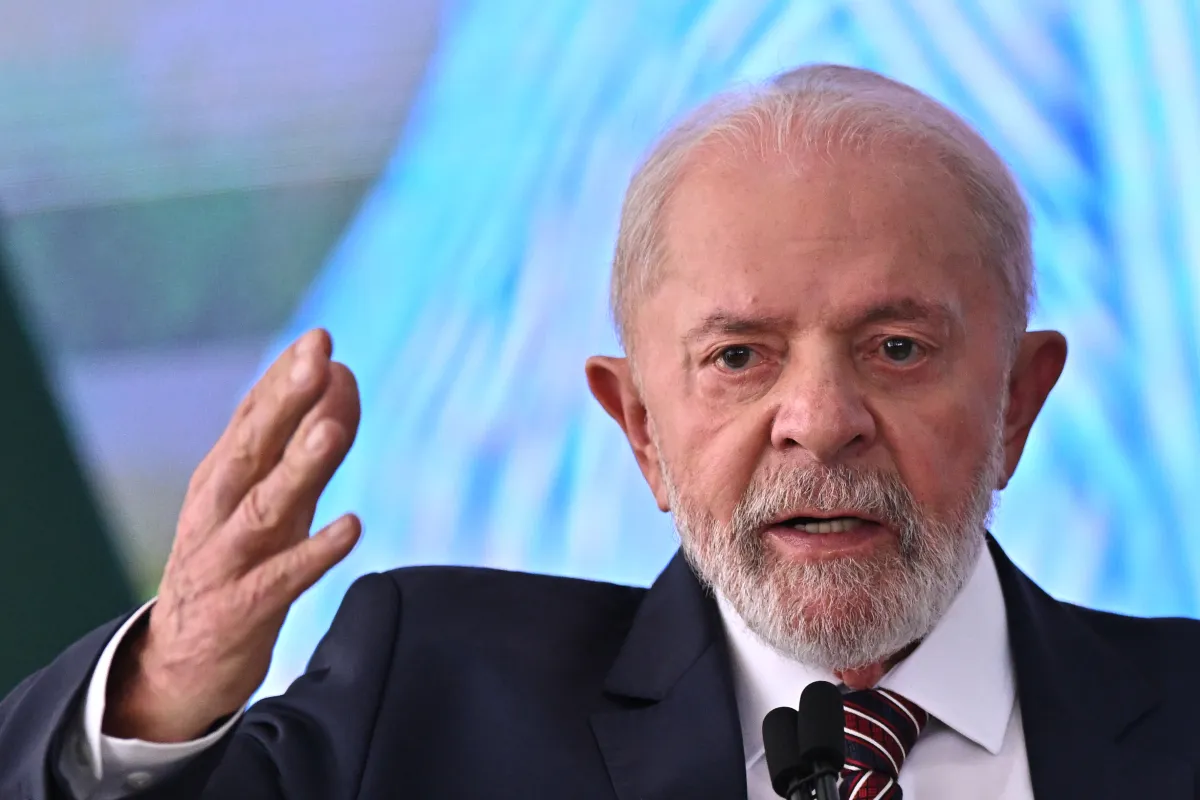
Brazil’s Lula and Flávio Bolsonaro kick off election campaigns amid focus on crime

Heat wave puts more than 70 million Americans under alerts as temperatures near 46°C

Trump warns Iran over nuclear ambitions as U.S.-Iran ceasefire deadline passes

Brazil’s Lula and Flávio Bolsonaro kick off election campaigns amid focus on crime

Actress Hayden Panettiere Dies at 36, Representative Confirms

Luigi Mangione Pleads Guilty to Killing UnitedHealthcare CEO Brian Thompson

ICE Plan to Equip Agents With Electric Shock Gloves Raises Abuse Concerns

Three U.S. Executions Set for Same Day as Trump Pushes to Expand Death Penalty

Colombia Earthquake Death Toll Reaches 265 as Rescue Teams Race Against Time
Actress Hayden Panettiere Dies at 36, Representative Confirms
Three U.S. Executions Set for Same Day as Trump Pushes to Expand Death Penalty
Colombia Earthquake Death Toll Reaches 265 as Rescue Teams Race Against Time
Trump warns Iran over nuclear ambitions as U.S.-Iran ceasefire deadline passes
Heat wave puts more than 70 million Americans under alerts as temperatures near 46°C
ICE Plan to Equip Agents With Electric Shock Gloves Raises Abuse Concerns
Brazil’s Lula and Flávio Bolsonaro kick off election campaigns amid focus on crime
Luigi Mangione Pleads Guilty to Killing UnitedHealthcare CEO Brian Thompson
-
 International1 day ago
Actress Hayden Panettiere Dies at 36, Representative Confirms
-
 International4 days ago
Three U.S. Executions Set for Same Day as Trump Pushes to Expand Death Penalty
-
 International4 days ago
Colombia Earthquake Death Toll Reaches 265 as Rescue Teams Race Against Time
-
 International11 hours ago
Trump warns Iran over nuclear ambitions as U.S.-Iran ceasefire deadline passes
-
 International11 hours ago
Heat wave puts more than 70 million Americans under alerts as temperatures near 46°C
-
 International3 days ago
ICE Plan to Equip Agents With Electric Shock Gloves Raises Abuse Concerns
-
 International11 hours ago
Brazil’s Lula and Flávio Bolsonaro kick off election campaigns amid focus on crime
-
 International3 days ago
Luigi Mangione Pleads Guilty to Killing UnitedHealthcare CEO Brian Thompson