
Central America
Costa Rican President Presents Security Reform Package to Fight Crime and Strengthen Prisons

Costa Rican President Laura Fernández on Monday submitted a package of legislative proposals to the National Assembly aimed at strengthening public security, combating organized crime, and reforming the country’s prison system.
The president said the measures are designed to reinforce the government’s response to rising criminal violence and provide law enforcement authorities with stronger tools to confront growing security challenges.
Among the key initiatives is the proposed “Firm Hand Against Repeat Offenders Law,” which would establish mandatory pretrial detention for suspects accused of repeat criminal offenses, limiting judges’ ability to impose alternative precautionary measures.
The legislative package also includes the “Law to Combat Criminal Organizations,” which would impose prison sentences ranging from one to six years for individuals who participate in criminal groups. Penalties could increase to as much as 20 years for those linked to organizations involved in terrorism, drug trafficking, kidnapping, human trafficking, arms trafficking, or organ trafficking.











Another proposal, known as the “Zero Idleness in Prisons Law,” seeks to expand vocational training and paid work opportunities for inmates. Under the initiative, earnings generated by prisoners would help cover incarceration costs, support their families, and contribute to compensation for crime victims.
Fernández also introduced legislation aimed at expanding legal protections for police officers acting in self-defense and increasing penalties for individuals who assault or resist law enforcement personnel.
“It is now up to you, members of Congress, to make the decisions that our police officers and the families of crime victims have been waiting for,” the president told lawmakers as she urged them to support the reforms.
The president additionally highlighted progress on the construction of the High Containment Center Against Organized Crime (CACCO), a maximum-security prison modeled after the strategy implemented by Salvadoran President Nayib Bukele.
According to Fernández, the project is currently 36 percent complete and forms part of a broader effort to strengthen Costa Rica’s capacity to confront organized crime and improve public safety.
The proposed reforms now move to the Legislative Assembly, where lawmakers will debate the measures and determine whether they will become part of Costa Rica’s legal framework in the coming months.










Central America
Guatemala Declares Highest Alert in Areas Affected by Fuego Volcano Eruption

Guatemalan authorities declared a red alert, the highest level of danger, on Tuesday in areas affected by the eruption of the Fuego Volcano, located about 35 kilometers from the country’s capital.
The most active volcano in Central America entered an eruptive phase on Monday morning, and its activity intensified overnight with lava emissions and large columns of gas and ash.
No fatalities have been reported, but the volcanic activity forced the evacuation of around 500 people as a precautionary measure.
The National Coordination for Disaster Reduction (Conred) declared a state of emergency in the departments of Sacatepéquez, Chimaltenango and Escuintla, the agency announced through its official X account.
The affected regions are home to approximately 1.6 million people. However, ashfall has so far impacted only about five municipalities.
Despite the increase in the alert level, authorities reopened a road leading to the city of Antigua, the country’s main tourist destination, after evaluating safety conditions in the area.
The Fuego Volcano is one of Guatemala’s most active geological formations and has a history of frequent eruptions, requiring continuous monitoring by national emergency agencies.
Central America
U.S. Defense Secretary to Close Multinational Military Exercises in Panama to Protect Canal
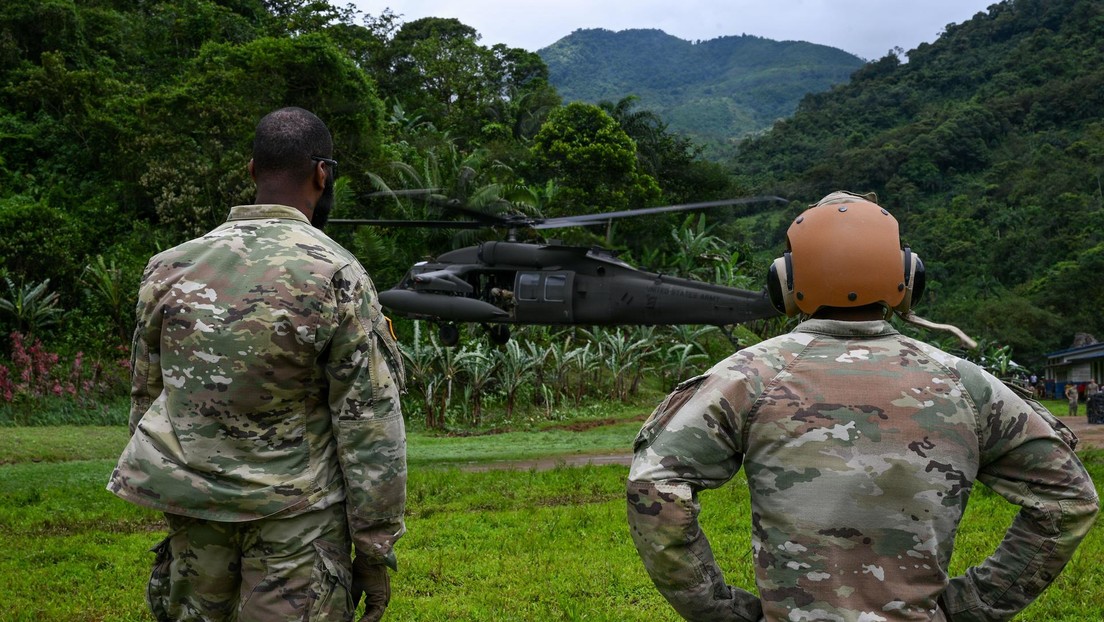
U.S. Secretary of Defense Pete Hegseth will travel to Panama next week to close multinational military exercises involving more than 20 countries aimed at strengthening security measures for the Panama Canal against potential threats, a Panamanian government official announced Monday.
This will mark Hegseth’s second visit to Panama. The U.S. defense chief is expected to arrive on August 13 for the closing ceremony of the military drills, which began this week and have been conducted in the Central American country for more than two decades to support the protection of the interoceanic waterway, according to Panama’s Security Minister Frank Ábrego.
The exercises include participation from the United States, Argentina, Brazil, Chile, Colombia, Mexico, the Netherlands, Peru and the United Kingdom, among other nations.
“The canal is a strategic infrastructure that connects markets and supports global supply chains. Its security and uninterrupted operation are of fundamental importance for Panama, the United States and the international community,” said U.S. Ambassador to Panama Kevin Marino Cabrera.
The drills include maritime training operations, exercises in jungle areas surrounding the canal, as well as virtual simulations focused on cybersecurity and strategic planning.
The Panama Canal, one of the world’s most important trade routes, handles approximately 5% of global maritime commerce, making its security a priority for international trade and logistics networks.
Ábrego emphasized that preparedness and international coordination are essential to maintaining stability.
“The best way to preserve peace and guarantee the continuity of global trade is to be prepared to respond in a coordinated and effective manner to any threat,” the Panamanian official said.
Central America
Prosecutors Accuse Ex-Defense Minister of Undermining Press Freedom in Honduras
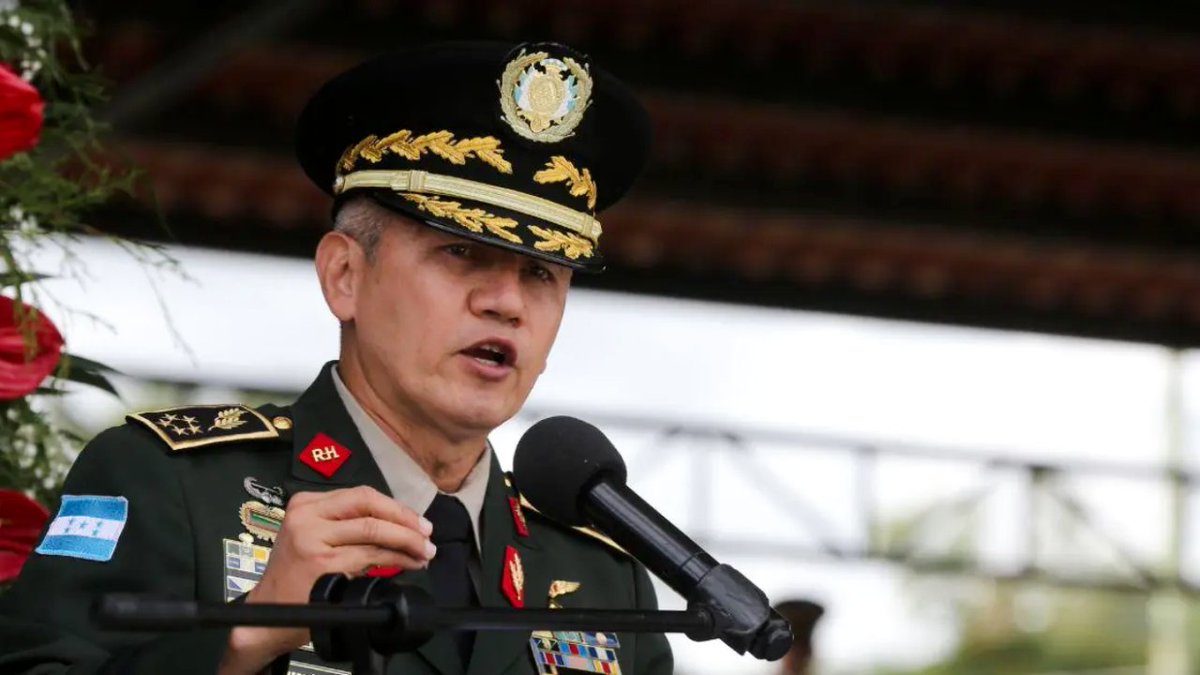
Honduras’ Public Prosecutor’s Office on Wednesday filed criminal charges against retired General Roosevelt Hernández, the country’s former defense minister and former chief of the Joint Chiefs of Staff, over his alleged role in actions that prosecutors say undermined press freedom and freedom of expression.
Prosecutors said the case was brought by the Special Prosecutor’s Office for the Protection of Journalists, Social Communicators, Human Rights Defenders and Justice Officials following an investigation into content published between 2025 and 2026 on a digital media platform operated by the Honduran Armed Forces.
According to the investigation, the publications were reported by journalists and the Honduran Journalists Association (CPH), which described them as part of an alleged campaign to discredit members of the press and media organizations.
The case dates back to May 2025, when the CPH filed complaints with national and international organizations after the Armed Forces referred to three journalists as “hitmen” in an article published by FF.AA. Digital. The association argued that the publication endangered the journalists’ safety and constituted an attack on press freedom.
The journalists identified in the publication as “hitmen of the truth” were Rodrigo Wong Arévalo, director of the television news program Abriendo Brecha; Dagoberto Rodríguez, director of Radio Cadena Voces; and Juan Carlos Sierra, president of the Honduran Journalists Association. The article also included photographs of the three journalists and the CPH’s logo.
The Public Prosecutor’s Office said the case file includes formal complaints, pretrial investigative proceedings, a specialized forensic analysis of audiovisual and digital material, and witness testimony gathered during the investigation to determine whether the publications violated freedom of expression and the exercise of journalism.
Authorities emphasized that freedom of the press and freedom of expression are protected under the Honduran Constitution as well as international treaties ratified by the country.

Three U.S. Executions Set for Same Day as Trump Pushes to Expand Death Penalty

Colombia Earthquake Death Toll Reaches 265 as Rescue Teams Race Against Time

German Authorities Investigate More Than 100 New Cases Against Convicted Nurse
Tec de Monterrey honors one of its students for his contribution to nanotechnology in medicine

Defense Minister commends salvadoran soldier for Central American Cross Country victory

Extension of the state of emergency approved in southern Chile
-
 International4 days ago
Colombia Earthquake Leaves at Least 22 Dead as Rescue Efforts Continue
-
 International5 days ago
Joe Biden’s Prostate Cancer Has Spread to His Bones, Son Hunter Reveals
-
 International3 days ago
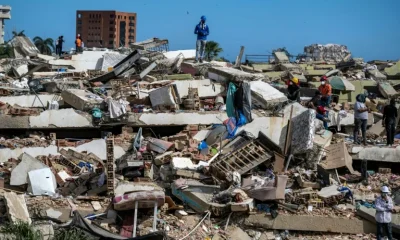
Venezuela Raises Earthquake Death Toll to 6,301
-
 International4 days ago
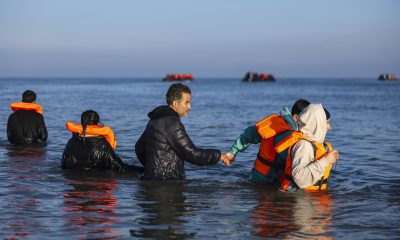
Record 230 Migrants Cross English Channel to UK in Single Boat
-

 International3 days ago
CEAPI Backs Colombia’s New Government and Calls for Greater Public-Private Cooperation
-
 International3 days ago
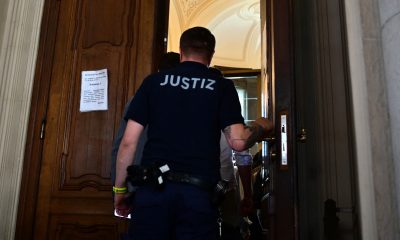
German Authorities Investigate More Than 100 New Cases Against Convicted Nurse
-
 International15 hours ago
Three U.S. Executions Set for Same Day as Trump Pushes to Expand Death Penalty
-
International15 hours ago
Colombia Earthquake Death Toll Reaches 265 as Rescue Teams Race Against Time