
Central America
El Salvador reports safest year in its history, security cabinet says
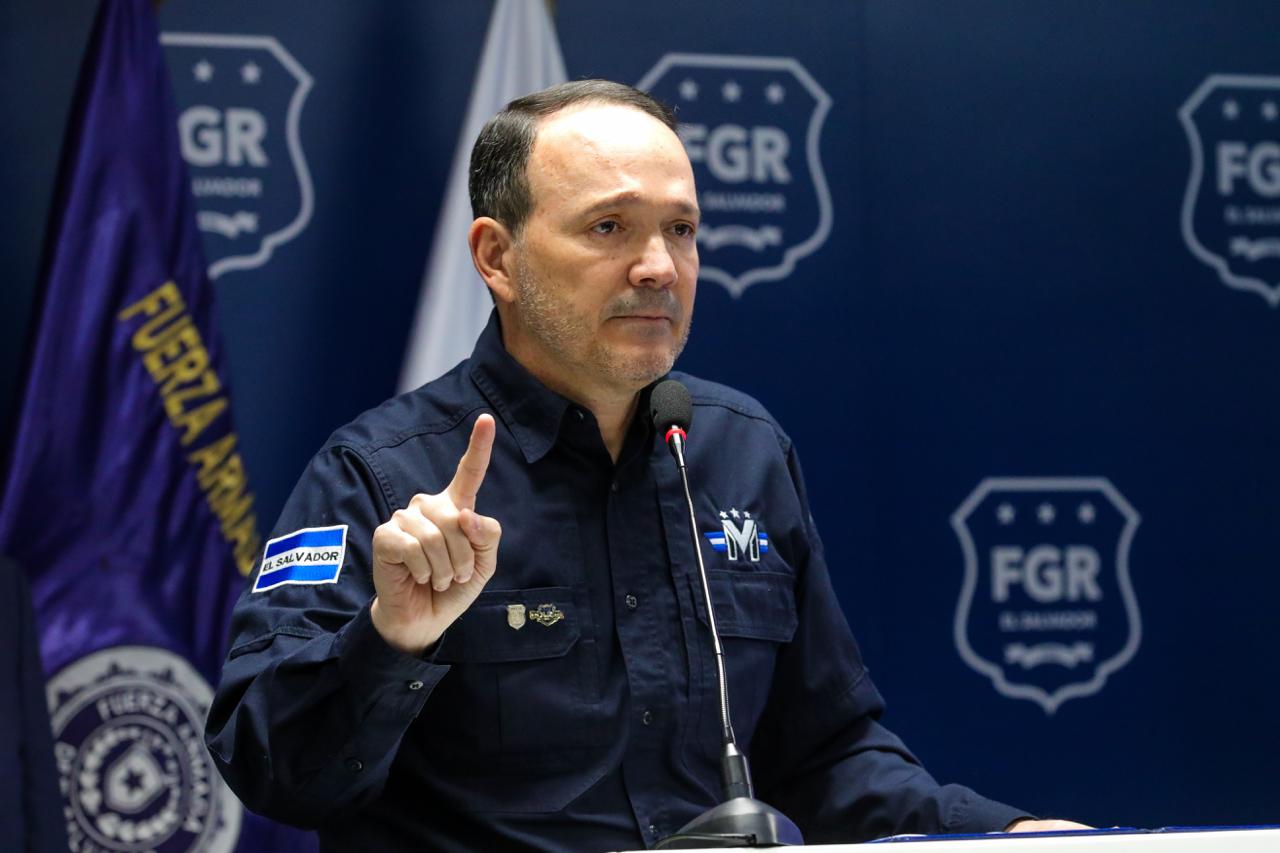
Officials from the institutions that make up El Salvador’s Expanded Security Cabinet on Monday, January 5, presented the results achieved through the country’s security strategies during 2025.
Authorities highlighted a significant reduction in homicides, the arrest of all perpetrators involved in killings, and the seizure of millions of dollars’ worth of illegal drugs throughout the past year.
“We have reached the day when, as the Expanded Security Cabinet, we present the national security report,” said Minister of Security Gustavo Villatoro.
Villatoro detailed the number of days with zero homicides recorded during the administration of President Nayib Bukele, as well as during the state of exception in 2025.
“We have accumulated 1,102 days without homicides during President Nayib Bukele’s administration, of which 988 occurred during the state of exception,” Villatoro explained.









The security minister underscored the government’s fight against impunity, noting that in 2025 authorities arrested those responsible for every homicide reported during the year.
“We closed 2025 with 82 homicides, all of which have been solved. That means we achieved a 100% homicide clearance rate and 0% impunity in homicide cases,” Villatoro said.
“These figures clearly show that the security measures promoted by the government were exactly what the country needed, and today we can say with full authority that we are the safest country in the entire Western Hemisphere,” he added.
Villatoro also reported the homicide rate per 100,000 inhabitants at the end of the year.
“In 2024, we closed with a homicide rate of 1.9 per 100,000 inhabitants. In 2025, we reduced it to 1.3, which represents 32 fewer homicides compared to the previous year,” he said.
According to official data, of the 82 homicides recorded in 2025, 43 were linked to social intolerance, 31 to family-related disputes, and eight to criminal activity. Villatoro emphasized that El Salvador is the only country able to report a reduction of more than 50% in street and violent crimes, including theft, assault, rape, extortion, vehicle theft and robbery.
“2025 represents the safest year in our national history, and all of this is due to the daily efforts of thousands of men and women in uniform and in public service,” Villatoro stated.
Meanwhile, Defense Minister René Francis Merino Monroy noted that another key factor behind the country’s low crime figures has been the strengthened security shield implemented by authorities in the fight against drug trafficking.






Central America
Seven arrested in Guatemala over disappearance of six near Mexico border
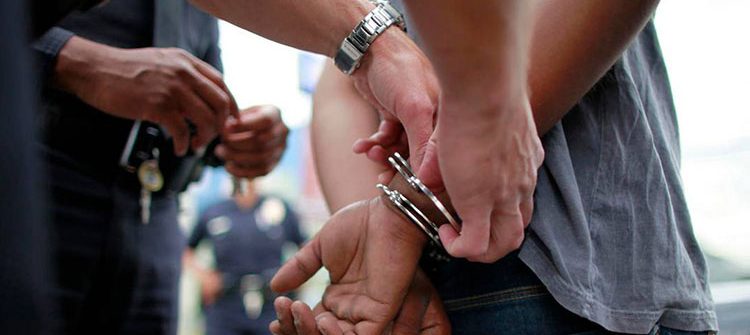
Authorities in Guatemala arrested seven individuals allegedly linked to the disappearance of six Guatemalans, including a 16-year-old minor, according to a police statement.
The arrests took place in the border city of Malacatán, near the nearly 1,000-kilometer frontier shared with Mexico, a region increasingly affected by criminal activity.
Police reported that ten firearms were seized from the suspects, who are believed to be connected to the disappearance of the six victims. According to witness accounts, the missing individuals worked on a farm in Malacatán and were taken away in a vehicle whose license plate matches that of the one used by those detained.
The border area has seen escalating violence involving organized crime groups. In August 2024, following the unprecedented displacement of Mexican farmers into Guatemala to escape clashes between rival drug cartels, both countries agreed to carry out joint security operations along the shared border.
Despite this cooperation, tensions have arisen. On June 8, security forces from the Mexican state of Chiapas crossed into Guatemalan territory during an anti-crime operation that left four suspected criminals dead. The incident prompted a formal protest from Guatemala, after which Mexico issued an apology.
Central America
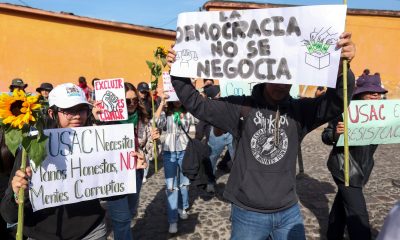
Gunfire and protests mark controversial rector reelection at Guatemala’s USAC
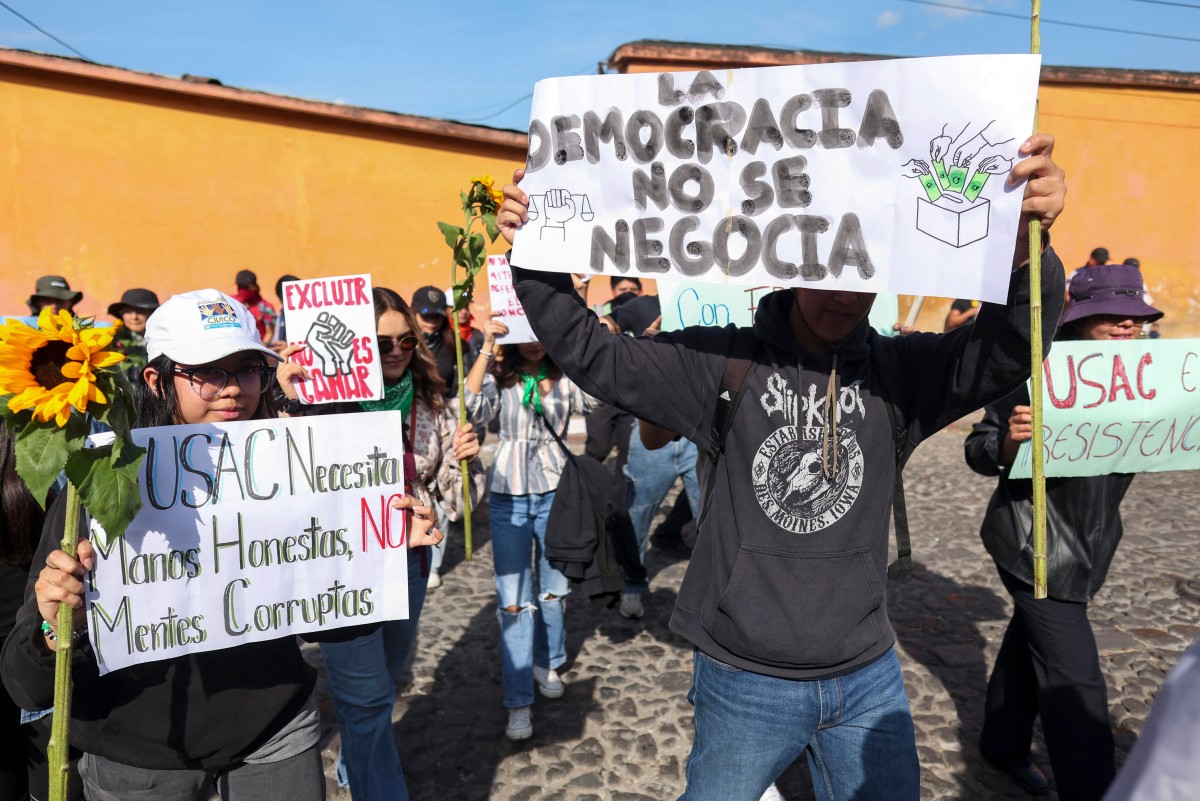
University of San Carlos of Guatemala (USAC), which serves around 200,000 students, plays a key role in the selection of top judicial authorities in Guatemala, including positions within the prosecutor’s office and other institutions often questioned over corruption.
The reelection of the university’s rector on Wednesday was marred by gunfire and clashes outside the hotel where the vote took place in Antigua Guatemala, west of the capital. Authorities reported no injuries following the unrest.
The electoral process, which granted a new term to Walter Mazariegos, was criticized by the Organization of American States, which described it as a “flawed process.”
USAC holds significant influence in Guatemala’s institutional framework, as it appoints two magistrates to the Constitutional Court—the country’s highest judicial body—and participates in the selection of members of the Supreme Electoral Tribunal, both processes carried out earlier this year.
Videos shared by local media showed an individual firing a weapon into the air inside the hotel during the vote. Academic representatives and students gathered at the venue, while hundreds of protesters demonstrated outside, denouncing the exclusion of some delegates in what they claimed was an effort to favor Mazariegos.
The unrest escalated after alleged security personnel used fire extinguishers against police officers attempting to enter the hotel alongside a judge, who sought to verify reports that opposition voters were being held inside, according to local press reports.
“The election was illegitimate,” said Rodolfo Chang through a loudspeaker after being declared “legitimate rector” in a separate vote held outside the venue.
A day earlier, the Organization of American States had urged authorities to act to “prevent the completion of a flawed process.”
Central America
Honduras coffee exports jump nearly 30% in March despite price drop
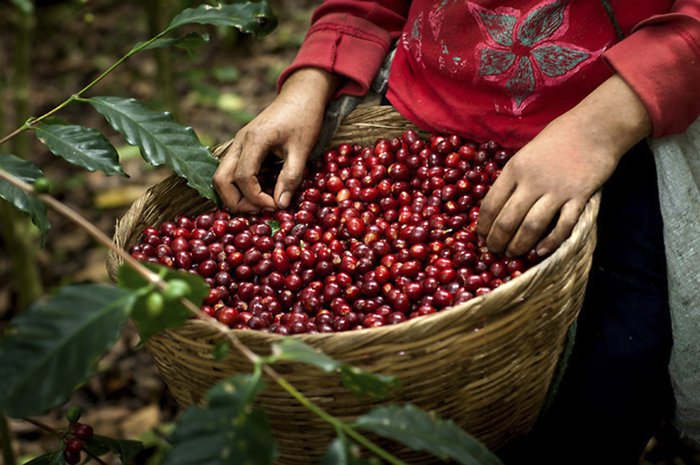
Coffee exports from Honduras rose by 29.6% year-on-year in March, according to data released Monday by the Instituto Hondureño del Café.
During the third month of the 2025–2026 harvest season, Honduras exported 1,373,817 46-kilogram bags of coffee, up from 1,059,744 bags shipped in March of the previous cycle.
Despite the increase in volume, the average price per bag fell to $307.55, compared to $364.70 recorded in the prior harvest.
Between October and March, total export revenues reached $1.36 billion, representing a 32% increase from the $1.032 billion reported during the same period of the 2024–2025 season.
The United States remained the main destination for Honduran coffee, accounting for 36.5% of total shipments. It was followed by Germany with 16.1% and Belgium with 12.4%.
In regional terms, Europe absorbed 52% of exports, while North America accounted for 42%, according to the institute’s report.
Honduras remains the largest coffee producer in Central America and ranks among the top six producers worldwide.

Seven arrested in Guatemala over disappearance of six near Mexico border

Gunfire and protests mark controversial rector reelection at Guatemala’s USAC

Bill Gates to testify before Congress over Epstein connections
Tec de Monterrey honors one of its students for his contribution to nanotechnology in medicine

Defense Minister commends salvadoran soldier for Central American Cross Country victory

Extension of the state of emergency approved in southern Chile
-
 Central America3 days ago
Guatemala extends state of prevention and expands it to new regions
-
 International2 days ago
Trump pauses strikes on Iran, extends ultimatum by two weeks
-
 International2 days ago
Former Trump allies call for removal, cite 25th Amendment amid Iran threats
-
 Central America3 days ago
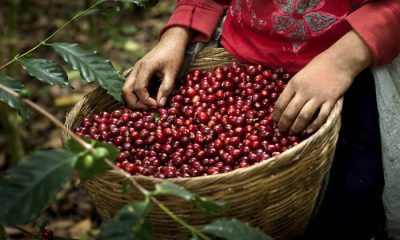
Honduras coffee exports jump nearly 30% in March despite price drop
-

 International3 days ago
NASA’s Orion sets record as farthest crewed mission from Earth
-
 International3 days ago
WHO worker killed as Israeli forces fire on Gaza medical convoy
-
 Central America1 day ago
Gunfire and protests mark controversial rector reelection at Guatemala’s USAC
-
 Central America4 days ago
Costa Rica urges China to halt actions against Panama-flagged vessels
-
 International1 day ago
Bill Gates to testify before Congress over Epstein connections
-
 International4 days ago
Petro accuses top guerrilla leader of bribing officers to evade military strikes
-
 Central America1 day ago
Seven arrested in Guatemala over disappearance of six near Mexico border