
Internacionales
Rodrigo Paz takes office in Bolivia, ending 20 years of Socialist Rule
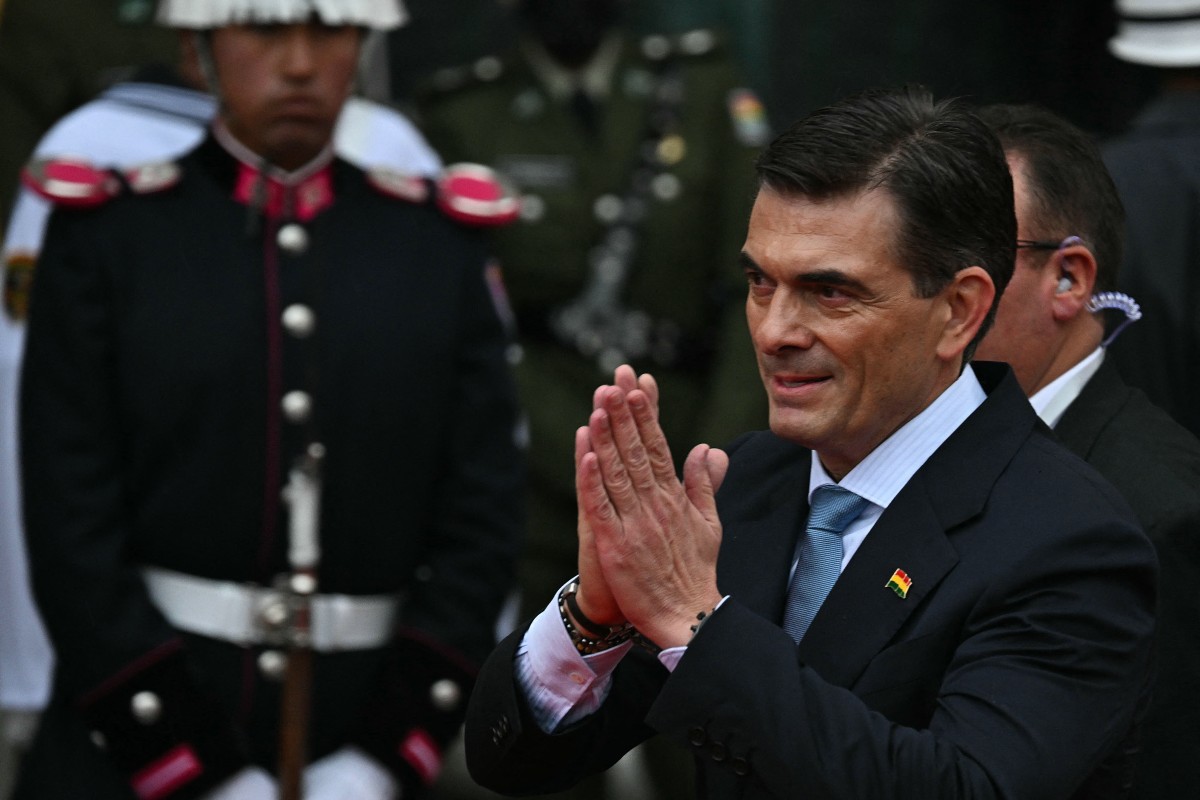
Bolivia’s center-right leader Rodrigo Paz was sworn in as president on Saturday, marking the end of two decades of socialist administrations as the country faces its worst economic crisis in 40 years.
The 58-year-old president, son of former leader Jaime Paz (1989–1993), was welcomed with applause inside Bolivia’s legislative palace in downtown La Paz by lawmakers and international delegations.
A torrential downpour over the high-altitude capital set the tone for the official ceremony, while the main government square — home to both the Presidential Palace and Parliament — remained under tight police security.
“God, family and homeland: I do solemnly swear!” declared Paz, taking the oath administered by his vice president, Edmand Lara, a former police officer.
After winning the October runoff as the candidate of the Christian Democratic Party, Paz takes office amid a severe economic downturn driven by shortages of U.S. dollars and fuel.











Outgoing president Luis Arce nearly depleted the country’s foreign currency reserves to sustain universal gasoline and diesel subsidies.
Annual inflation in October reached 19%, after peaking at 25% in July.
Paz has pledged to slash fuel subsidies by more than half and implement a “capitalism for all” strategy focused on formalizing the economy, cutting red tape and reducing taxes.
More than 50 international delegations attended the inauguration ceremony in the Andean capital, situated 3,600 meters above sea level. Notable guests included U.S. Deputy Secretary of State Christopher Landau and the presidents Gabriel Boric of Chile, Javier Milei of Argentina and Yamandú Orsi of Uruguay, among others.










Internacionales
Rubén Gallego says U.S. policy may push for Cuba regime change under Trump administration
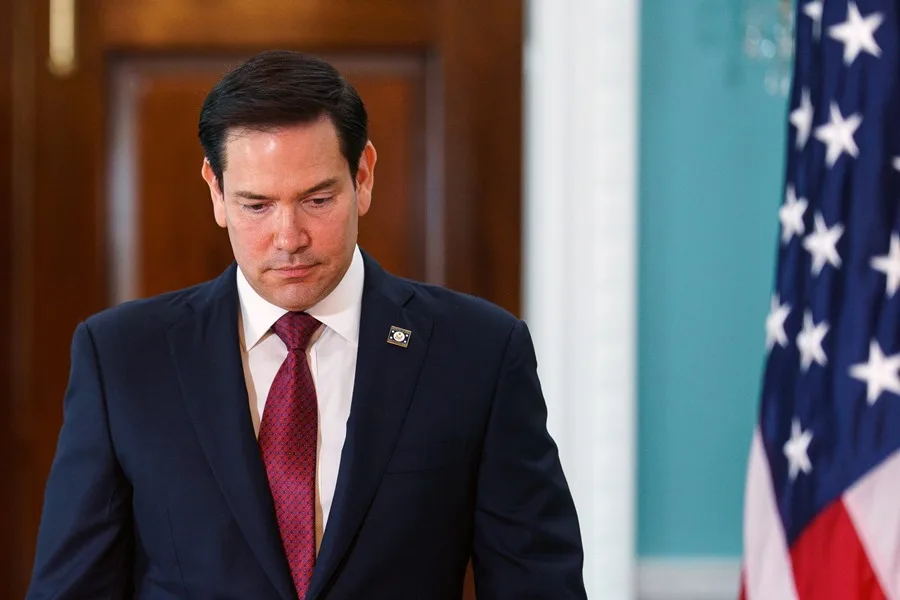
Democratic Senator Rubén Gallego said on Friday in Madrid that U.S. Secretary of State Marco Rubio has an “obsession” with Cuba and suggested that the administration of President Donald Trump is determined to change the Cuban government by any means necessary.
Speaking in Spanish during a meeting with journalists at the Elcano Royal Institute for International and Strategic Studies, Gallego said he believes there could be an attempt to alter the Cuban government, potentially through military or other non-democratic means.
“I think there will be an attempt to change the government of Cuba, it could be through the military or in another way,” said Gallego, who is of Mexican-Colombian origin.
The Arizona senator argued that Cuba does not represent a threat to the United States, describing it as “a very poor island of nine million people.” However, he acknowledged the significant political influence of Cuban-Americans and of Secretary of State Marco Rubio within the current Trump administration.
Gallego also expressed opposition to U.S. military interventions aimed at overthrowing foreign governments, stating that such actions are unacceptable, particularly when their objective is regime change.
He noted that “almost 99% of Democrats” oppose any military intervention in Cuba.
The senator also referred to the U.S. operation to capture Venezuelan President Nicolás Maduro on January 3, stating that although Maduro is “a horrible and very corrupt man,” this does not justify overthrowing governments through force.
“If we start arguing that a president is a criminal, what prevents China from saying the same about Taiwan or other nations?” he warned.
Gallego further described the political transition process in Venezuela as a “failure,” arguing that little has changed in terms of governance outcomes.
“We went from one dictator to another, so from a geopolitical and strategic point of view it has been a failure, until we see whether Venezuela achieves a real democratic transition,” he said, referring to Maduro’s replacement by Delcy Rodríguez.
Internacionales
Ecuador extends state of emergency amid escalating violence and crime crackdown
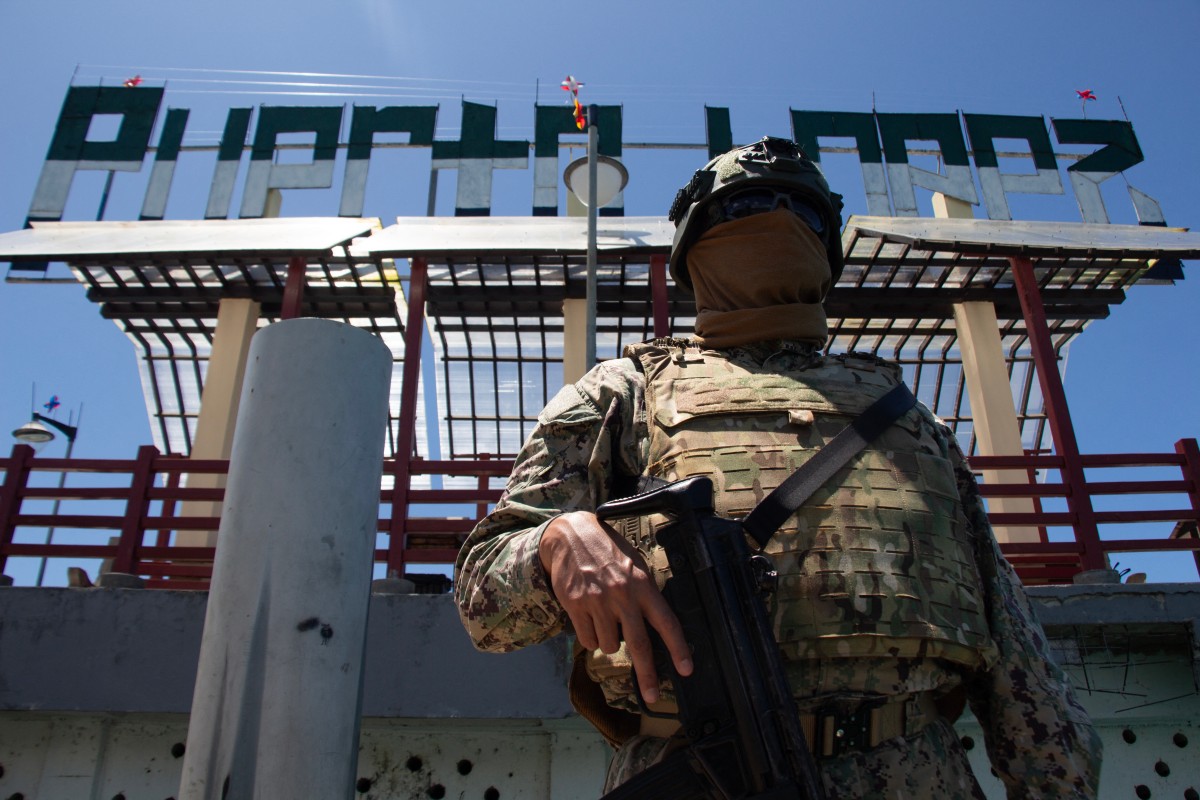
Since taking office in November 2023, Ecuador’s president Daniel Noboa has repeatedly declared states of emergency as part of his campaign against organized crime groups, which have turned Ecuador into one of the most violent nations in Latin America, with a homicide rate of 54 per 100,000 inhabitants in 2025, according to official data.
In response to rising insecurity, Noboa declared an “internal armed conflict” in 2024, allowing the military to be deployed on the streets. The move has drawn criticism from human rights organizations, which have raised concerns over alleged abuses by security forces.
Through a decree issued on Thursday, the president extended the state of emergency in several coastal provinces — Guayas, Manabí, Esmeraldas, Santa Elena, and El Oro — key transit routes along the Pacific where around 70% of cocaine shipments from Colombia and Peru pass through.
The measure also applies to nine provinces in total, including Pichincha, home to the capital Quito, as well as four additional areas where violence remains concentrated.
Under the decree, the government has suspended certain constitutional rights, including the inviolability of the home and private correspondence.
Earlier this week, a nighttime curfew imposed in Guayas, Los Ríos, Santo Domingo de los Tsáchilas, and El Oro came to an end. The curfew had been part of a broader offensive against organized crime, supported by United States.
Internacionales
Major winter storm threatens “catastrophic” ice and snow across much of the U.S.
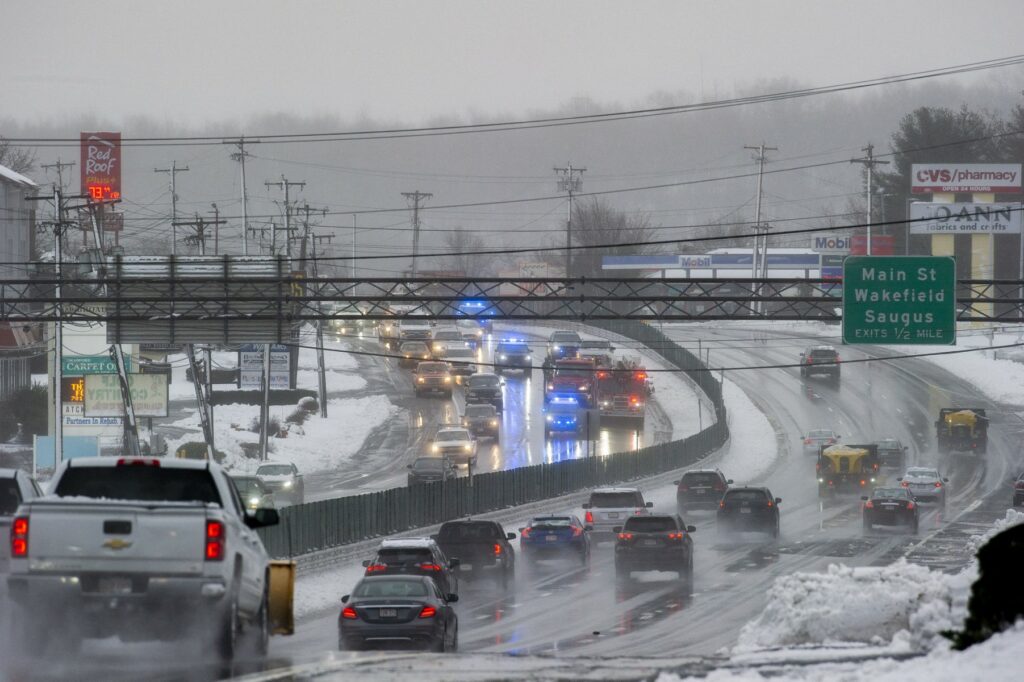
A major winter storm is threatening to blanket large portions of the United States with a dangerous mix of freezing rain and heavy snowfall, potentially creating “catastrophic” conditions across areas home to nearly 160 million people.
Several U.S. states have declared a state of emergency as the Arctic blast advances from the California coast across much of the continental United States, affecting central regions, including the Rocky Mountains and the Great Plains, according to forecasts.
The National Weather Service warned the storm could cause a “catastrophic accumulation of ice,” leading to prolonged power outages, widespread tree damage, and extremely dangerous or impassable travel conditions.
Meteorologist Ryan Maue cautioned that “the next 10 days of winter will be the worst in 40 years in the United States.”
“Think about where you can go, what you can do, and who may need even more help to survive the coming week. This is not an exaggeration or a joke,” Maue said.
He urged residents to prepare for temperatures dropping below -18°C (0°F).
More than 1,500 weekend flights had already been canceled, according to flight tracker FlightAware, including numerous flights in Texas.
In the southern state, many residents still recall the devastation caused by a similar storm in February 2021, which resulted in more than 200 deaths linked to hypothermia, carbon monoxide poisoning, and traffic accidents.
Texas authorities have assured the public that the power grid, which suffered widespread failures during that storm and left millions without electricity, is better prepared to withstand the extreme weather this time.

Luigi Mangione Pleads Guilty to Killing UnitedHealthcare CEO Brian Thompson

ICE Plan to Equip Agents With Electric Shock Gloves Raises Abuse Concerns

Three U.S. Executions Set for Same Day as Trump Pushes to Expand Death Penalty
Tec de Monterrey honors one of its students for his contribution to nanotechnology in medicine

Defense Minister commends salvadoran soldier for Central American Cross Country victory

Extension of the state of emergency approved in southern Chile
-
 International4 days ago
Colombia Earthquake Leaves at Least 22 Dead as Rescue Efforts Continue
-
 International3 days ago
Venezuela Raises Earthquake Death Toll to 6,301
-

 International4 days ago
Record 230 Migrants Cross English Channel to UK in Single Boat
-

 International3 days ago
CEAPI Backs Colombia’s New Government and Calls for Greater Public-Private Cooperation
-

 International3 days ago
German Authorities Investigate More Than 100 New Cases Against Convicted Nurse
-
 International24 hours ago
Three U.S. Executions Set for Same Day as Trump Pushes to Expand Death Penalty
-
International24 hours ago
Colombia Earthquake Death Toll Reaches 265 as Rescue Teams Race Against Time
-
 International43 minutes ago
ICE Plan to Equip Agents With Electric Shock Gloves Raises Abuse Concerns
-
 International36 minutes ago
Luigi Mangione Pleads Guilty to Killing UnitedHealthcare CEO Brian Thompson