
International
The Chief Builder: Trump and his remodeling of the White House
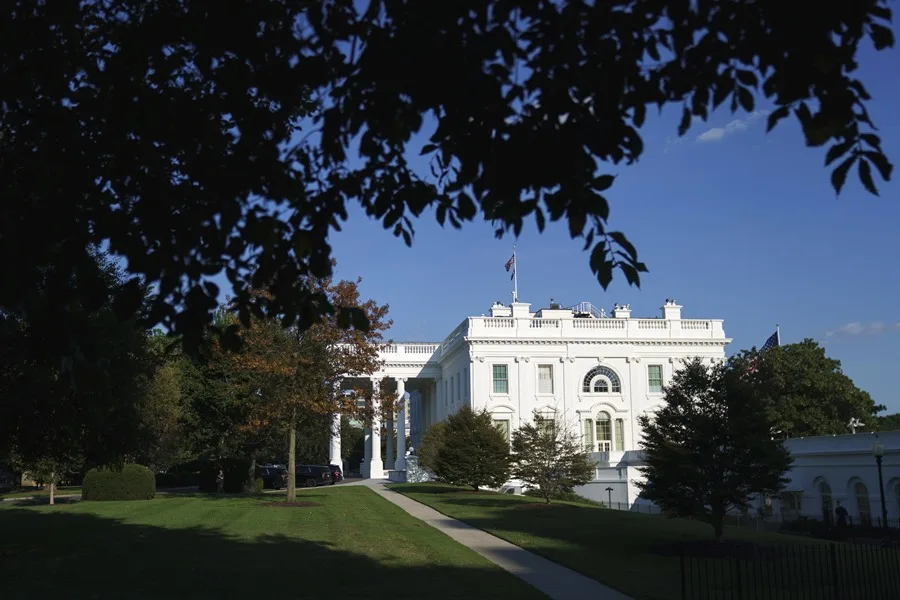
The President of the United States, Donald Trump, has become – during his current administration – the “chief builder” of a renovated White House, with multiple renovation plans ranging from replacing bathrooms that he does not like or planning an Arc de Triomphe in Washington to building a giant ballroom financed by tycoons who have contributed to his campaigns.
Since his return to power last January, Trump has dedicated himself to remodeling the headquarters of the US Executive. A parade of gold-plated objects on each ledge, on the chimneys, on the door handles and on the lamps – almost identical to those of his private club in Florida, in Mar-a-Lago – are visible at every public event.
“I have always been a builder and now I am building a nation that is respected again,” Trump said this week during a dinner he sponsored for two dozen tycoons who have decided to finance, with two hundred million dollars, a ballroom for nine hundred people that the president offered as part of the 250th anniversary of the country’s founding.
Trump said that “they had always wanted a ballroom” and joked that “they didn’t have a real estate agent,” referring to himself as a project manager.
Regarding the expensive construction, Trump said that “it is the price of having access to the president,” in front of donors he described as “legends,” including the oil company Harold Hamm, a prominent financier of the Republican’s campaigns.









At that dinner, Trump showed his guests three scale models of the new monument he plans to build, the “Trump Arc”, an arch inspired by that of Paris, located at the end of the Memorial Bridge that connects downtown Washington with Arlington.
In addition, the head of state suggested that the project could be financed with the surplus funds from the renovation of the ballroom.
However, this is a project that still needs to be approved by various state agencies and it is not clear whether the applications have been submitted.
In the quest to leave his mark on the residence of US presidents, last August, Trump premiered the new Rose Garden, a historic space on the west wing of the White House, built in 1913 and renovated by First Lady Jacqueline Kennedy in 1962.
The Republican removed the lawn from the garden and placed stone, turning it into a courtyard similar to the Mar-a Lago club, where Trump spends his breaks and holds his business events.
The new Garden has been used for dinners with allies and recently to deliver recognitions such as the Presidential Medal of Freedom, which Trump posthumously awarded to the ultra-conservative activist, Charlie Kirk, murdered in September.
But the renovations have not been limited to common areas, Trump described the design of the Kennedy bathroom of the presidential suite as “not adequate”, complained about the green tones of the space and changed the Art Deco style tile for statuary marble, which – according to the president – now “better reflects the aesthetics of the civil war era.”
The renovations headed by Trump have been the subject of public scrutiny and questions about the legality of his actions in the White House, as well as his method of raising private funds for his plans, although the president and his Administration have defended themselves with a 1964 law that allows him to make aesthetic and structural changes.
The American Institute of Architects published in August its concern about Trump’s renovations, especially for the ballroom, and urged the National Capital Planning Commission to carry out rigorous controls to ensure that the project does not deviate or alter the neoclassical design of the White House.






International
Mexico, Brazil and Colombia left out of Trump’s “Shield of the Americas” summit
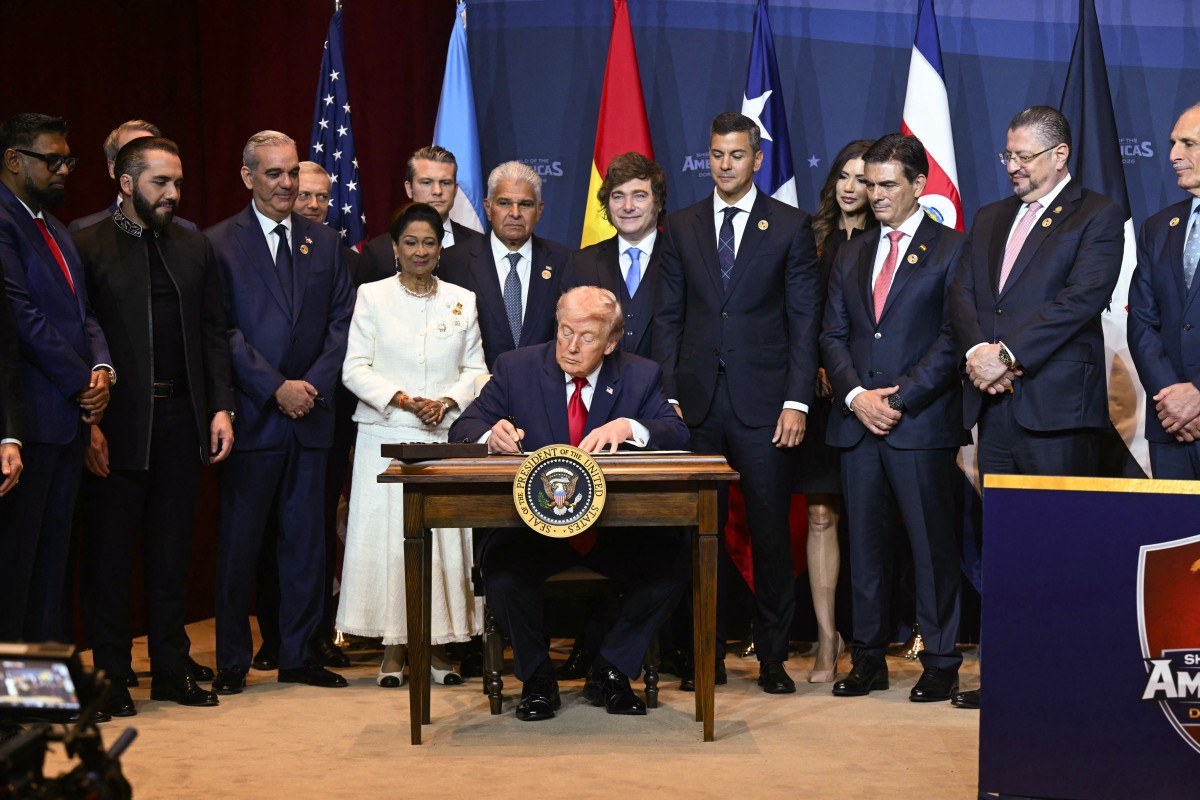
Left-wing governments in Latin America, including Mexico, Brazil and Colombia, were excluded from the “Shield of the Americas” summit convened by U.S. President Donald Trump.
The meeting, held in Miami, Florida, brought together 12 presidents from across the continent to discuss strategies to combat drug cartels and organized crime.
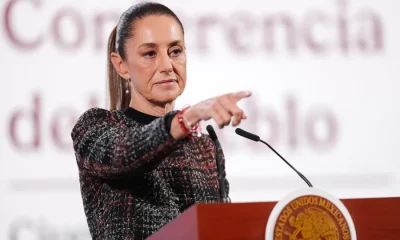
In Mexico’s case, President Claudia Sheinbaum had recently rejected the use of military force as a solution to the drug trafficking problem. She has argued that her administration’s security strategy is producing results and emphasized that force alone is not the answer.
During the summit, Trump said that most narcotics entering the United States come through Mexico and referred to his previous conversations with Sheinbaum on the issue.
“I like the president very much, she’s a very good person,” Trump said. “But I told her: ‘Let me eradicate the cartels.’ And she said, ‘No, no, no, please, president.’ We have to eradicate them. We have to finish them.”
The remarks highlighted ongoing differences between Washington and Mexico over how to confront drug trafficking networks operating across the region.
International
Trump announces 17-nation alliance in the Americas to “destroy” drug cartels
U.S. President Donald Trump announced on Saturday the creation of a 17-nation alliance across the Americas aimed at dismantling drug cartels, during a regional summit held at his golf club in Doral.
Speaking to a group of allied leaders at the Shield of the Americas Summit, Trump said the initiative would rely on military force to eliminate powerful criminal networks operating throughout the hemisphere.
“The heart of our agreement is the commitment to use lethal military force to destroy these sinister cartels and terrorist networks. Once and for all, we will put an end to them,” Trump told the assembled heads of state.
The Republican leader argued that large portions of territory in the Western Hemisphere have fallen under the control of transnational gangs and pledged U.S. support to governments seeking to confront them. He even suggested the potential use of highly precise missiles against cartel leaders.
Before making the announcement, Trump greeted the roughly twelve leaders attending the summit, including close allies such as Javier Milei, Daniel Noboa and Nayib Bukele, whom he described as a “great president.”
The meeting forms part of Trump’s broader regional strategy inspired by his reinterpretation of the Monroe Doctrine, which seeks to reinforce Washington’s influence in the Americas, strengthen security cooperation and counter the growing presence of powers such as China.
Trump pointed to recent U.S. actions in the region as examples of his administration’s approach, including the operation that led to the capture of former Venezuelan president Nicolás Maduro earlier this year.
The summit also takes place amid escalating international tensions following the conflict launched last week by the United States and Israel against Iran.
International
Trump replaces Homeland Security Secretary Kristi Noem with Senator Markwayne Mullin
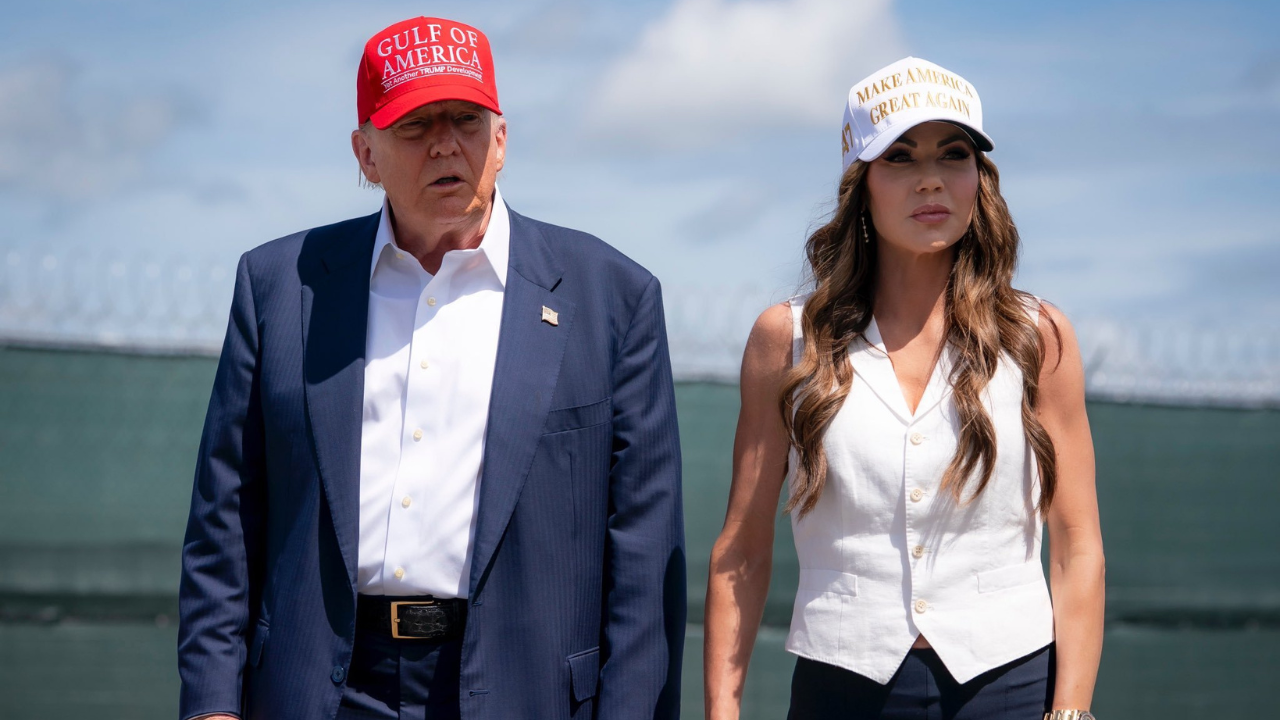
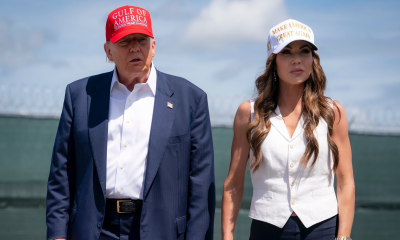
U.S. President Donald Trump announced Thursday the departure of Kristi Noem as Secretary of Homeland Security, one of the key architects of the administration’s policy of deporting undocumented immigrants.
Noem, who has been assigned a new role as a “special envoy” to Latin America, will be replaced starting March 31 by Republican Senator Markwayne Mullin, the president said in a message posted on his social media platform Truth Social.
According to media reports, Trump made the decision after Noem’s recent hearings in Congress, during which she faced tough questions regarding the awarding of a major public contract.

Mexico, Brazil and Colombia left out of Trump’s “Shield of the Americas” summit
Trump announces 17-nation alliance in the Americas to “destroy” drug cartels

Trump replaces Homeland Security Secretary Kristi Noem with Senator Markwayne Mullin
Tec de Monterrey honors one of its students for his contribution to nanotechnology in medicine

Defense Minister commends salvadoran soldier for Central American Cross Country victory

Extension of the state of emergency approved in southern Chile
-
 International2 days ago
Trump announces 17-nation alliance in the Americas to “destroy” drug cartels
-
 International3 days ago
Young Woman Will Represent Mexico at 2026 World Cup Opener, Says President Sheinbaum
-
International1 day ago
Mexico, Brazil and Colombia left out of Trump’s “Shield of the Americas” summit
-
 International3 days ago
Trump replaces Homeland Security Secretary Kristi Noem with Senator Markwayne Mullin