
International
Mexico and the US launch an unprecedented joint border plan to stop arms trafficking
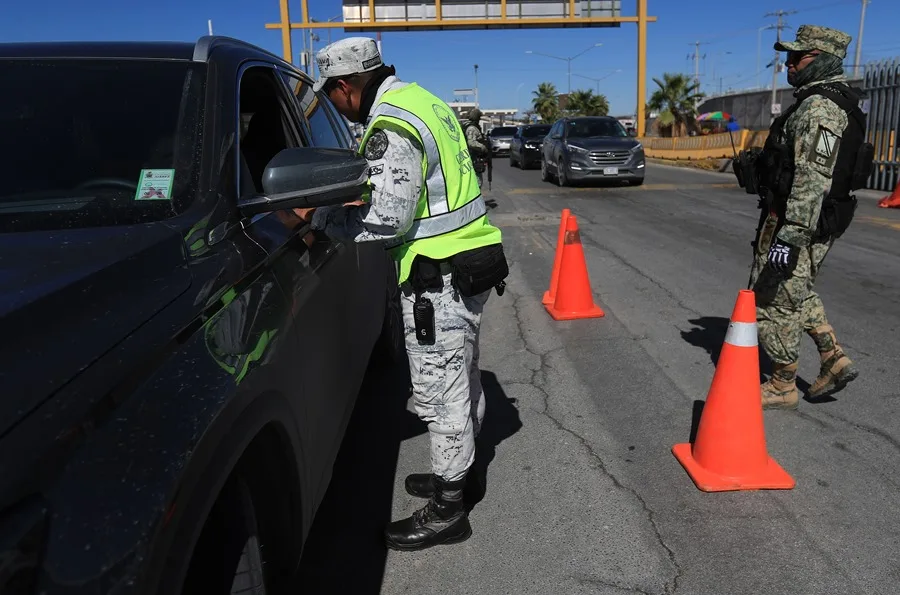
Mexico and the United States launched a new joint initiative to stop arms trafficking to Mexican territory, in an attempt to attack one of the main sources of violence in the country: the illegal entry of weapons from the north to the south, something that EFE was able to verify this Monday on the Ciudad Juárez border.
The plan contemplates bilateral operations and stricter controls at international crossings, such as the one recently installed on the Córdoba-Americas Bridge, one of the busiest on the binational border and that connects Ciudad Juárez with the American El Paso, where elements of the Mexican Army check vehicles for weapons and ammunition.
Mexican authorities stressed that the objective is to “safeguard national security on both sides of the border.”
The urgency of the agreement was evident after the murder of Héctor René Rocha González, lawyer and former employee of the Municipality of Juárez, which recently occurred in the San Antonio neighborhood of the border town.
The man was chased by hitmen while driving a Jeep Wrangler and died while trying to escape running away; the aggressors shot him with an AK-47 rifle, a weapon that, according to authorities, smuggled from the United States.
For research professor Ricardo Melgoza Ramos, from the Autonomous University of Ciudad Juárez, the agreement opens a window of opportunity after failed experiences in the past.









“There was already talk of an arms trafficking agreement, we will remember the failed process of ‘Fast and Furious’. However, we believe that this new attempt may be positive,” Melgoza told EFE about the weapons tracking initiative agreed between Washington and Mexico City between 2006 and 2011.
“It must be remembered that 200,000 weapons cross from the United States to Mexico: 43% from Texas, 22% from Arizona and 9% from California. Now it will be possible to use the E-Trace platform to quickly detect the origin of the weapon. If this materializes, the flow of weapons will be reduced and criminal groups will be strangled with the financial part,” he said.
Likewise, Melgoza added that the change of security policy under the government of President Claudia Sheinbaum represents a break with the motto of ‘no bullet hugs’ by former Mexican President Andrés Manuel López Obrador (2018-2024).
“Now more is being fought, although there are still regions, such as the Chihuahua mountain range, where organized crime has control. To achieve peace, joint work and purification of police corporations are needed,” he said.
Border operations are part of a mission that arises after the visit of US Secretary of State, Marco Rubio, to Mexico City, in which he held meetings with President Sheinbaum to strengthen cooperation between both countries on security.
“We reached an agreement that the United States will reinforce the operations (…) to control the passage of weapons from the United States to Mexico, an agreement of this type had never been reached,” the president remarked after the meeting with Rubio last September.
For his part, the lawyer and former public security official Fernando Rubalcaba highlighted the positive aspects of binational cooperation.
“The benefit is more positive thanks to these agreements, because they allow a climate of collaboration and understanding of a common cause such as public security. How good that a way to avoid the introduction of weapons is being sought, given that almost all high-impact crimes are committed with firearms,” he said.
Rubalcaba stressed that tools such as the IBIS ballistic system in Mexico and Interpol’s international IBIN program can be strengthened with this type of agreement.
“It will allow us to make cross-checks of intelligence information and better track weapons. Military filters on bridges inhibit crime and generate security, although some may perceive the opposite,” he said.






International
Mexico, Brazil and Colombia left out of Trump’s “Shield of the Americas” summit
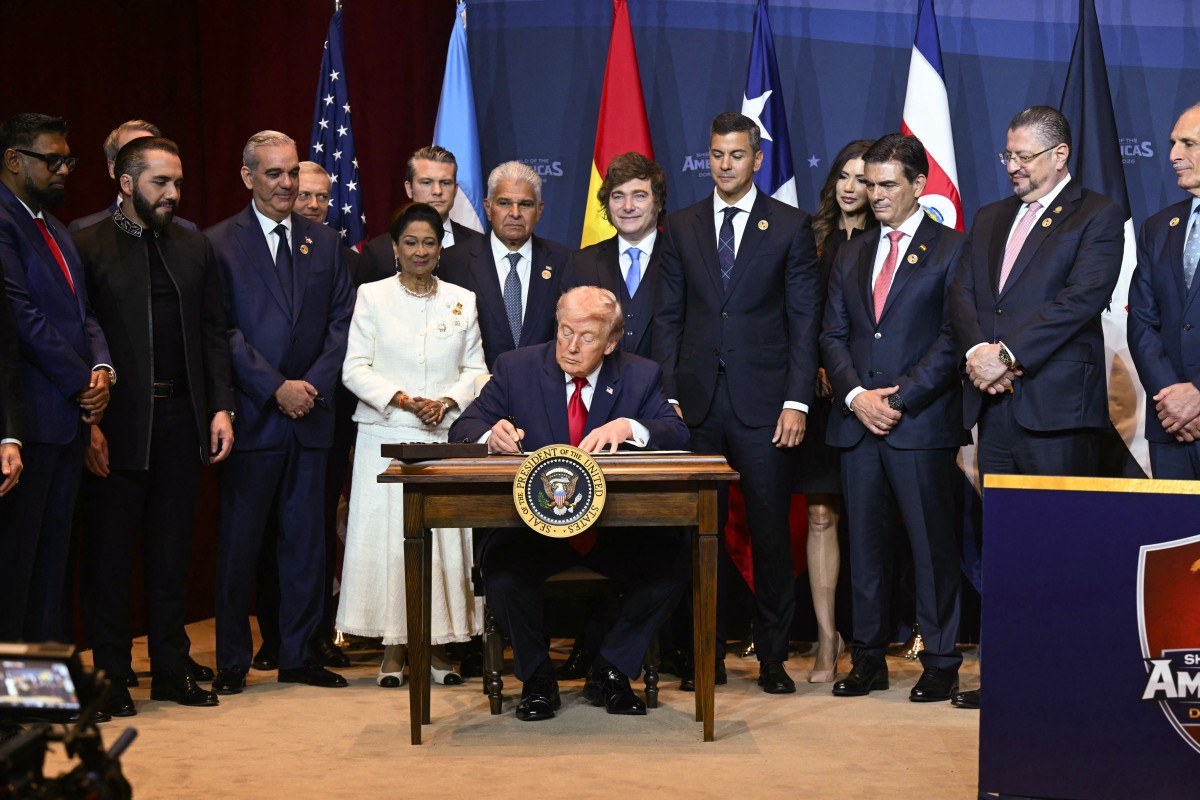
Left-wing governments in Latin America, including Mexico, Brazil and Colombia, were excluded from the “Shield of the Americas” summit convened by U.S. President Donald Trump.
The meeting, held in Miami, Florida, brought together 12 presidents from across the continent to discuss strategies to combat drug cartels and organized crime.
In Mexico’s case, President Claudia Sheinbaum had recently rejected the use of military force as a solution to the drug trafficking problem. She has argued that her administration’s security strategy is producing results and emphasized that force alone is not the answer.
During the summit, Trump said that most narcotics entering the United States come through Mexico and referred to his previous conversations with Sheinbaum on the issue.
“I like the president very much, she’s a very good person,” Trump said. “But I told her: ‘Let me eradicate the cartels.’ And she said, ‘No, no, no, please, president.’ We have to eradicate them. We have to finish them.”
The remarks highlighted ongoing differences between Washington and Mexico over how to confront drug trafficking networks operating across the region.
International
Trump announces 17-nation alliance in the Americas to “destroy” drug cartels
U.S. President Donald Trump announced on Saturday the creation of a 17-nation alliance across the Americas aimed at dismantling drug cartels, during a regional summit held at his golf club in Doral.
Speaking to a group of allied leaders at the Shield of the Americas Summit, Trump said the initiative would rely on military force to eliminate powerful criminal networks operating throughout the hemisphere.
“The heart of our agreement is the commitment to use lethal military force to destroy these sinister cartels and terrorist networks. Once and for all, we will put an end to them,” Trump told the assembled heads of state.
The Republican leader argued that large portions of territory in the Western Hemisphere have fallen under the control of transnational gangs and pledged U.S. support to governments seeking to confront them. He even suggested the potential use of highly precise missiles against cartel leaders.
Before making the announcement, Trump greeted the roughly twelve leaders attending the summit, including close allies such as Javier Milei, Daniel Noboa and Nayib Bukele, whom he described as a “great president.”
The meeting forms part of Trump’s broader regional strategy inspired by his reinterpretation of the Monroe Doctrine, which seeks to reinforce Washington’s influence in the Americas, strengthen security cooperation and counter the growing presence of powers such as China.
Trump pointed to recent U.S. actions in the region as examples of his administration’s approach, including the operation that led to the capture of former Venezuelan president Nicolás Maduro earlier this year.
The summit also takes place amid escalating international tensions following the conflict launched last week by the United States and Israel against Iran.
International
Trump replaces Homeland Security Secretary Kristi Noem with Senator Markwayne Mullin
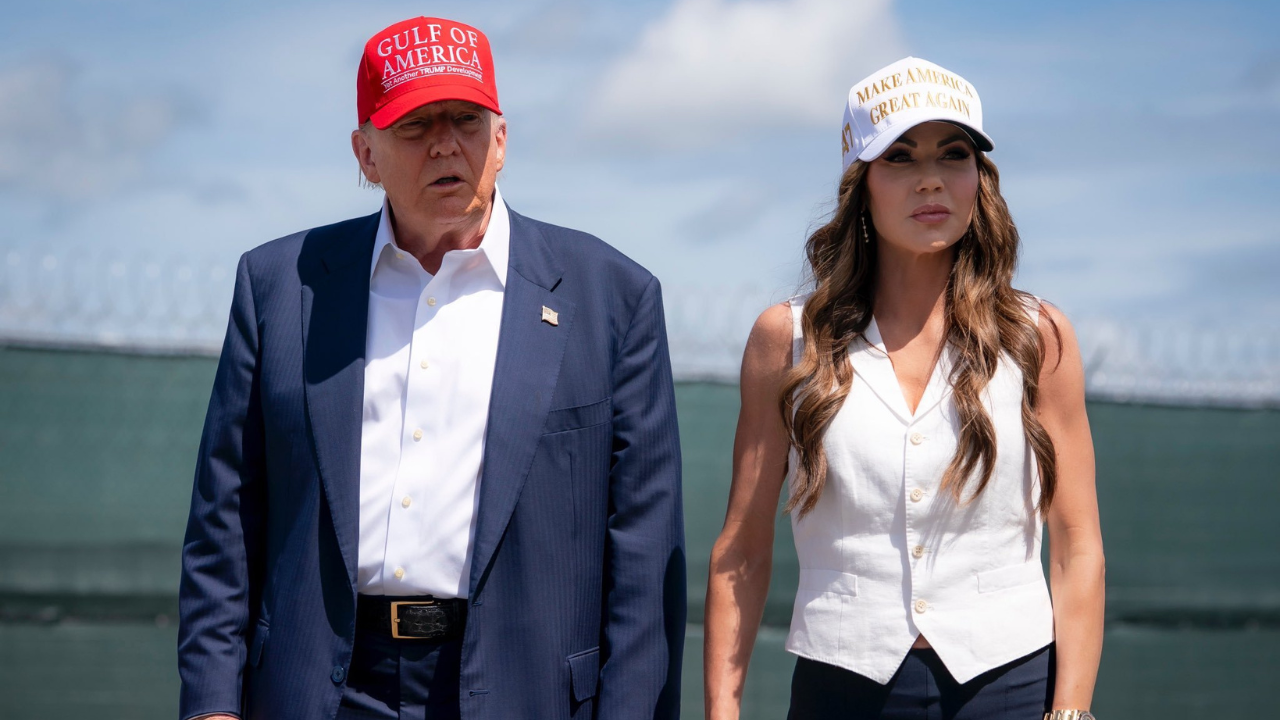
U.S. President Donald Trump announced Thursday the departure of Kristi Noem as Secretary of Homeland Security, one of the key architects of the administration’s policy of deporting undocumented immigrants.
Noem, who has been assigned a new role as a “special envoy” to Latin America, will be replaced starting March 31 by Republican Senator Markwayne Mullin, the president said in a message posted on his social media platform Truth Social.
According to media reports, Trump made the decision after Noem’s recent hearings in Congress, during which she faced tough questions regarding the awarding of a major public contract.

Mexico, Brazil and Colombia left out of Trump’s “Shield of the Americas” summit
Trump announces 17-nation alliance in the Americas to “destroy” drug cartels

Trump replaces Homeland Security Secretary Kristi Noem with Senator Markwayne Mullin
Tec de Monterrey honors one of its students for his contribution to nanotechnology in medicine

Defense Minister commends salvadoran soldier for Central American Cross Country victory

Extension of the state of emergency approved in southern Chile
-
 International2 days ago
Trump announces 17-nation alliance in the Americas to “destroy” drug cartels
-
 International4 days ago
Young Woman Will Represent Mexico at 2026 World Cup Opener, Says President Sheinbaum
-
International1 day ago
Mexico, Brazil and Colombia left out of Trump’s “Shield of the Americas” summit
-
 International4 days ago
Trump replaces Homeland Security Secretary Kristi Noem with Senator Markwayne Mullin