
Central America
Four honduran presidential candidates sign anti-corruption pact ahead of 2025 elections
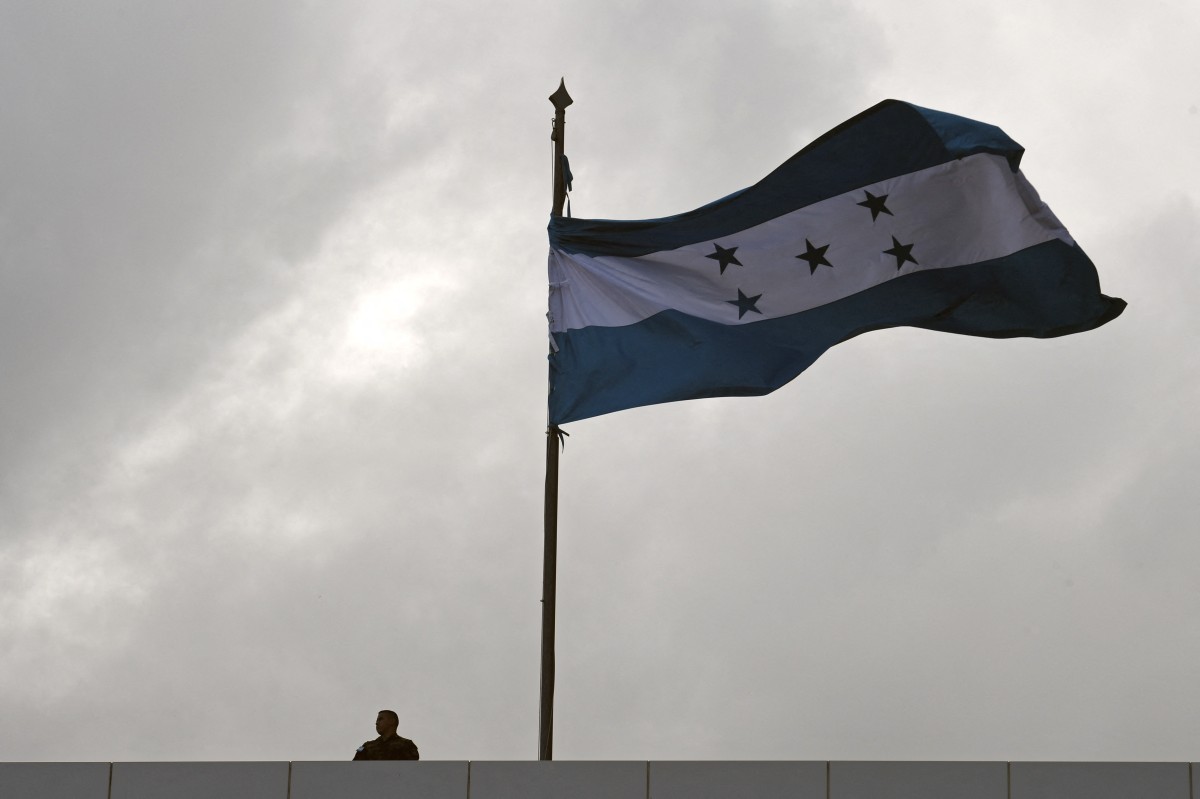
In a key step toward the November 2025 general elections, four presidential candidates in Honduras signed an agreement on Tuesday pledging to advance a national anti-corruption agenda. The commitments include creating an international commission, reinstating the extradition treaty with the United States, and implementing a comprehensive system for corruption prevention.
The only candidate who did not sign the declaration was Rixi Moncada of the ruling Liberty and Refoundation Party (Libre). In contrast, the pact was endorsed by Nasry Asfura (National Party), Salvador Nasralla (Liberal Party), Mario Rivera (Christian Democracy), and Nelson Ávila (PINU-SD). The initiative was spearheaded by the National Anti-Corruption Council (CNA) under the slogan “Honduras First: A Promise That Must Be Kept, A Duty That Must Be Fulfilled.”
During the event, Liberal Party candidate Salvador Nasralla vowed to establish the International Commission Against Corruption and Impunity in Honduras (CICIH) within his first year in office, ensuring its autonomy and independence. “Honduras loses 100 billion lempiras —$3.81 billion— each year to theft. A single administration can steal up to $15.25 billion. I will put a stop to that,” Nasralla declared.
Mario Rivera of the Christian Democracy Party described the declaration as a “moral pact” and a “declaration of war against the corrupt and shameless individuals who have looted the country.” Nelson Ávila of PINU-SD called for the creation of a national unity government and warned against imposing “dictatorial or exclusionary attitudes.”
The agreement also calls for reactivating the extradition treaty with the U.S., currently suspended, as a key tool in combating drug trafficking and transnational organized crime. It further proposes a national anti-corruption strategy embedded in the state’s structural design, with concrete actions aimed at strengthening transparency and accountability.









CNA Director Gabriela Castellanos described the commitment as a “turning point,” stressing that the next administration “will have no margin for error or indifference.” She emphasized that leading Honduras will require “moral courage to dismantle power networks that perpetuate looting and impunity,” beyond mere technical capacity.
“The anti-corruption discourse cannot be an excuse for inefficiency in governance,” Castellanos warned, adding that the CNA will continue to expose and monitor “the looting of public resources” with names, faces, and figures.
In the November general elections, Hondurans will elect a president, three vice presidents, 128 members of Congress, 20 representatives to the Central American Parliament, and 298 municipal mayors.






Central America
Panama seizes over 1,200 drug packages in container bound for Lithuania
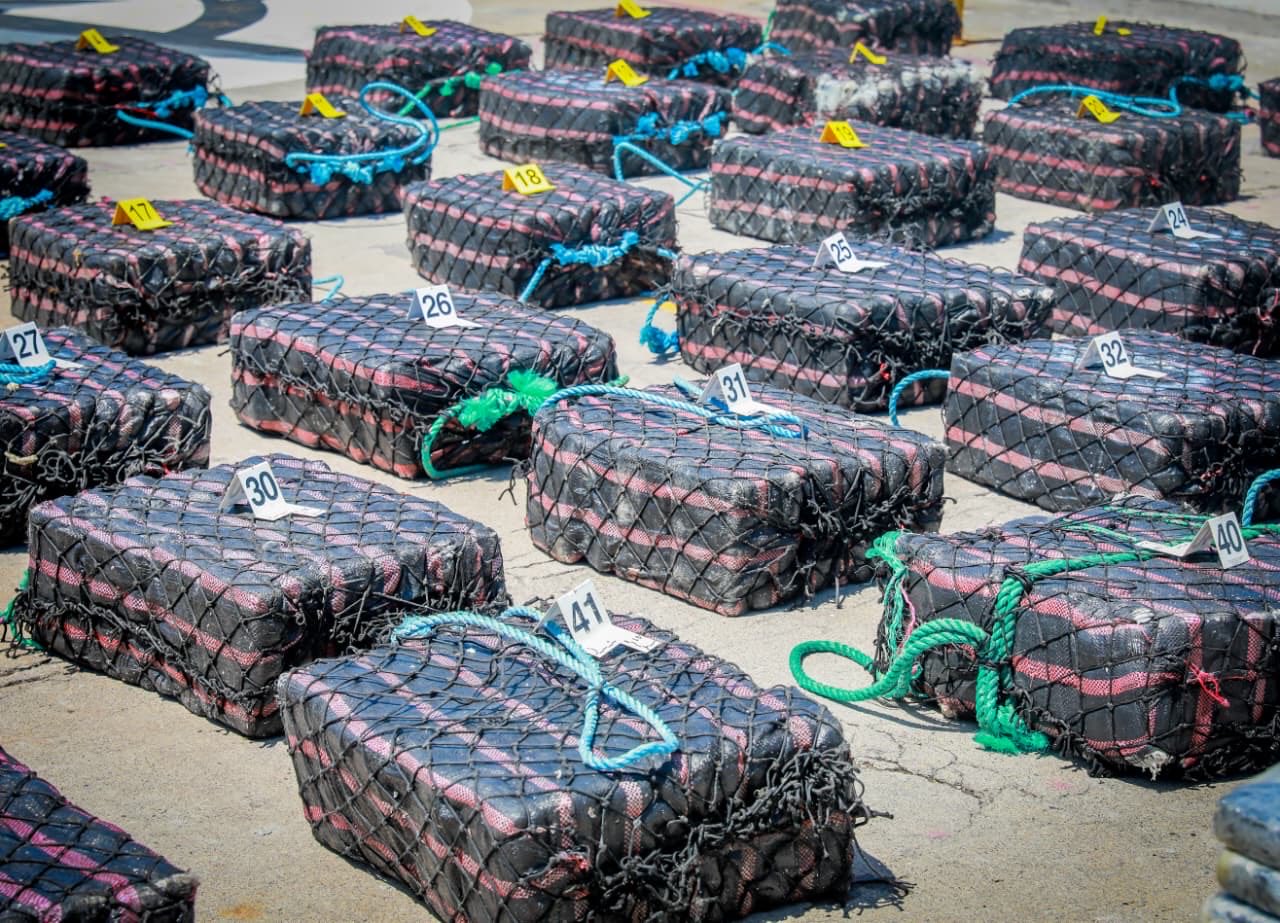
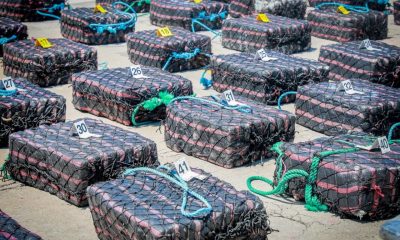
Authorities in Panama reported the seizure of 1,251 packages of suspected drugs hidden inside a shipping container bound for Lithuania, just days after intercepting another shipment of similar size headed to the same destination.
The Panama Public Prosecutor’s Office stated on social media that, through its Colón Drug Prosecutor’s Office and in coordination with the National Anti-Drug Directorate, authorities carried out the operation. The illicit substance was discovered inside a container scheduled for export.
Last Friday, officials also seized 1,506 packages of drugs in another container destined for Lithuania.
While authorities have not specified the type or exact weight of the seized substance, drug packages in Panama typically weigh around one kilogram each, and cocaine remains the most commonly confiscated narcotic in the country.
So far this year, Panamanian authorities have reported multiple drug seizures. Among them was a shipment of 5,356 packages intercepted on January 17, when agents of the National Aeronaval Service (SENAN) stopped a vessel near the Pearl Islands archipelago in the Pacific.
According to official figures, in 2025 Panama seized 129 tons of drugs and 47.8 tons of chemical precursors, highlighting ongoing efforts to combat international drug trafficking.
Central America
Guatemala narrows emergency measures to hardest-hit gang violence areas
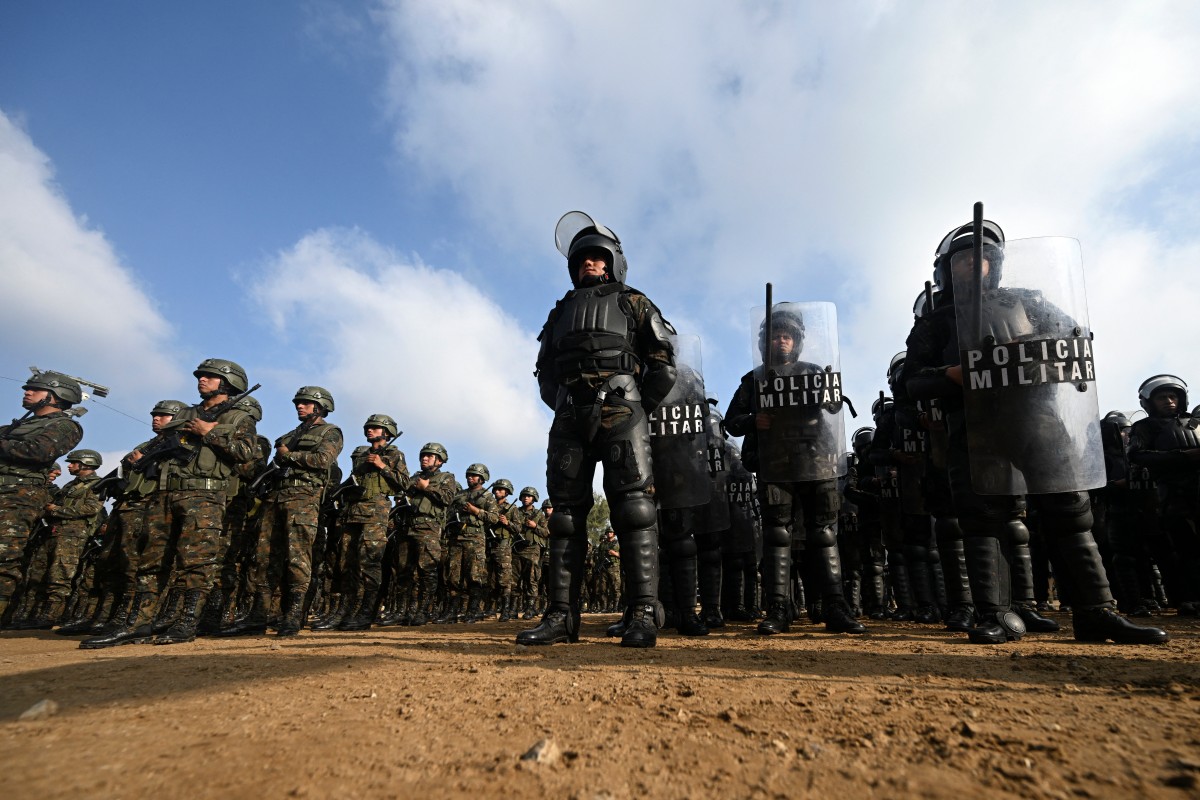
The government of Guatemala has narrowed the scope of its state of emergency to the areas most affected by gang violence, Interior Minister Marco Antonio Villeda announced on Thursday.
The measure comes two months after coordinated attacks attributed to the Barrio 18 left 11 police officers dead.
President Bernardo Arévalo initially imposed a state of siege in mid-January following the violence, which was reportedly in retaliation for government intervention in three prisons where gang leaders had staged uprisings.
That measure, which allowed arrests without a warrant, expired after one month. It was then replaced by a less restrictive “state of prevention,” alongside an increased security deployment in Guatemala City and surrounding areas.
According to Villeda, the state of prevention has been extended for two additional weeks but will now apply primarily to the central department of Guatemala — home to the capital — and Escuintla, which have recorded the highest levels of homicides and criminal activity.
“We need to continue these joint operations between the police and the military to maintain control,” the minister said.
The measure will also remain in effect in border departments including Petén, San Marcos and Huehuetenango, which border Mexico, as well as Izabal, which borders Honduras and Belize, in an effort to prevent the entry of criminal groups linked to drug trafficking.
Villeda added that in the past two weeks, homicides have dropped by 25% and extortion cases by 33% compared to the same period in 2025.
Central America
Costa Rica closes embassy in Cuba, citing human rights concerns
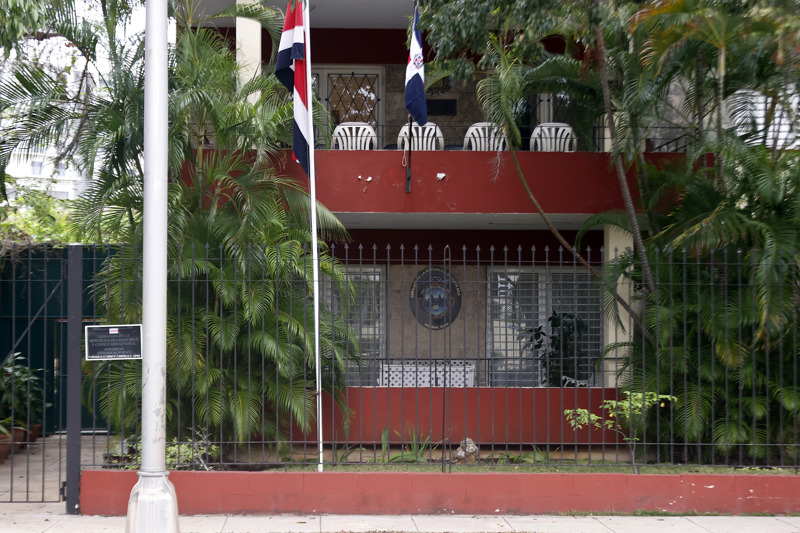
The government of Costa Rica announced on Wednesday the closure of its embassy in Cuba, a move that signals a further deterioration in diplomatic relations between the two nations.
Foreign Minister Arnoldo André confirmed that Costa Rica has also requested the withdrawal of Cuban diplomatic personnel from San José, leaving only consular representation in place.
According to André, the decision is driven by concerns over the worsening human rights situation on the island, including increased repression against citizens and opposition figures.
He also noted that Cuba’s ongoing economic and social crisis—marked by shortages of food, medicine, and basic services—has made the operation of the embassy increasingly difficult.
President Rodrigo Chaves backed the measure, stating that his administration does not recognize the legitimacy of Cuba’s political system.
In response, the Cuban government rejected the decision, calling it a “unilateral” move taken under pressure from United States.
“Under pressure from the United States, Costa Rica has limited its relations with Cuba to consular matters,” Cuba’s Foreign Ministry said, describing the action as “arbitrary.”
Despite the diplomatic setback, Cuban authorities stated that historical ties between the two nations would endure.

Panama seizes over 1,200 drug packages in container bound for Lithuania

IEA warns Middle East conflict could spark worst energy crisis in decades

Colombian Air Force Hercules plane crashes during takeoff with troops onboard
Tec de Monterrey honors one of its students for his contribution to nanotechnology in medicine

Defense Minister commends salvadoran soldier for Central American Cross Country victory

Extension of the state of emergency approved in southern Chile
-
 Central America5 days ago
Costa Rica closes embassy in Cuba, citing human rights concerns
-
 Central America3 days ago
Guatemala narrows emergency measures to hardest-hit gang violence areas
-
 International3 days ago
US panel backs Trump-themed coin amid controversy
-

 International4 days ago
Meningitis outbreak in England rises to 27 cases with two deaths reported
-
 International4 days ago
U.S. lowers travel advisory for much of Venezuela but keeps high-risk zones under warning
-

 International4 days ago
EU lawmakers move to ban AI tools that generate non-consensual nude images
-
 International4 days ago
Brazil offers to mediate Colombia-Ecuador tensions, calls for restraint
-
 International3 days ago
Fed’s Waller warns of rising inflation risks amid Middle East conflict
-
 International5 days ago
Hiroshima survivor who embraced Obama dies at 88
-
 International5 days ago
Colombia seeks ‘total suffocation’ of armed groups with regional support
-
 Sin categoría4 hours ago
Tehran engulfed in toxic cloud after strikes on fuel facilities
-
 International1 day ago
Netanyahu vows to target Iran’s leadership after missile strikes in southern Israel
-
 Central America5 days ago
Costa Rica closes Cuba embassy as president escalates rhetoric
-
 International1 day ago
Paris prosecutors alert U.S. over alleged deepfake strategy linked to Elon Musk
-
 Central America4 hours ago
Panama seizes over 1,200 drug packages in container bound for Lithuania
-
 International4 hours ago
Colombian Air Force Hercules plane crashes during takeoff with troops onboard
-
 International4 hours ago
IEA warns Middle East conflict could spark worst energy crisis in decades