
International
Von der Leyen asks Zelensky for explanations for the reform on anti-corruption agencies
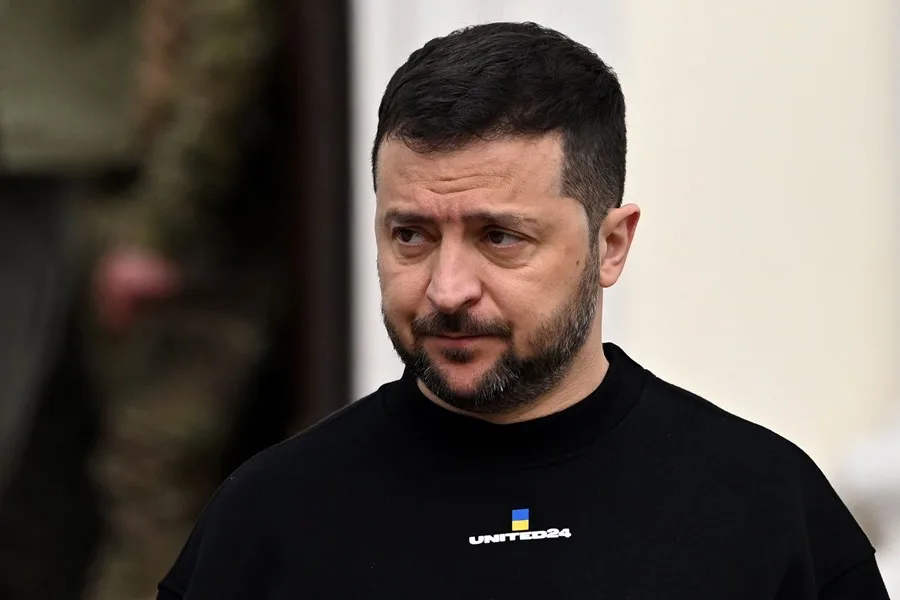
The European Commissioner for Democracy, Justice and the Rule of Law, Michael McGrath, said on Wednesday that the president of the European Commission (EC), Ursula von der Leyen, has asked Ukrainian President, Volodymyr Zelenski, for explanations for the controversial reform that places Ukrainian anti-corruption agencies under the control of the State prosecutor’s office.
“Von der Leyen conveyed (to Zelenski) her deep concern and asked for explanations,” McGrath said during a press conference after an informal meeting of the Council of Ministers of Justice of the European Union (EU) in Copenhagen.
The National Anti-Corruption Office (NABU) and the Special Anti-Corruption Prosecutor’s Office (SAP) are “pillars” of the rule of law in Ukraine, “crucial” for the reform agenda in that country, and must maintain their independence to be effective in their task and preserve the confidence of the population, the commissioner said.
The standards that the EC demands from EU countries and candidates for access must be “consistent”, he remarked, despite the circumstances in which Ukraine finds itself.
In addition, McGrath stressed that the approach of the accession process involves first meeting the fundamental requirements and that the path to EU entry begins with a commitment to democracy, the rule of law and a strong anti-corruption regime.
“We do not want to see a setback in the progress made by Ukraine with hard work over the past few years,” said the commissioner, who described it as “very worrying” that the two agencies may be subordinate to the attorney general, who is appointed by the president’s office.
“We expect Ukraine to fully comply with (European) standards,” said the commissioner, according to whom there can be no “commitment” in this regard.











Many NGOs denounced the passage as a process of erosion of the mechanisms of control of the Executive.
Several European ministers, including those from Germany and Sweden, have also expressed concern about the measure, which removes independence from Ukraine’s anti-corruption agencies.
Hundreds of Ukrainians took to the streets again in Kiev and other cities across the country on the second day of protests against a law approved on Tuesday by Parliament and later initialed by Zelenski that gives power to the attorney general appointed by the Executive over two anti-corruption agencies and thus deplens their independence.
Images broadcast live on Ukrainian public television show citizens, especially young people, who concentrate in squares and streets throughout Ukraine, shout slogans against corruption and abuses of power and show banners demanding Zelenski to repeal the law.
In his evening address to the nation on Wednesday, Zelenski stated that he is listening to the message he receives from the street and announced that he will propose to Parliament a bill to preserve the powers of investigative agencies while eliminating Russian influence in these structures.
Previously, Zelenski had announced that he will present a plan to fight corruption within two weeks.
The need to remove Russian influence is the reason invoked by the Security Service of Ukraine (SBU) to justify the dozens of raids against detectives of the National Anti-Corruption Office of Ukraine (NABU) carried out this Monday, which were interpreted by the NABU itself and by much of civil society as an attack on the institution.
Ukraine’s main international partners have expressed concern about both the legal reform and the SBU operation, in which two senior NABU officials were arrested for alleged collaboration with Russia.










International
Luigi Mangione Pleads Guilty to Killing UnitedHealthcare CEO Brian Thompson
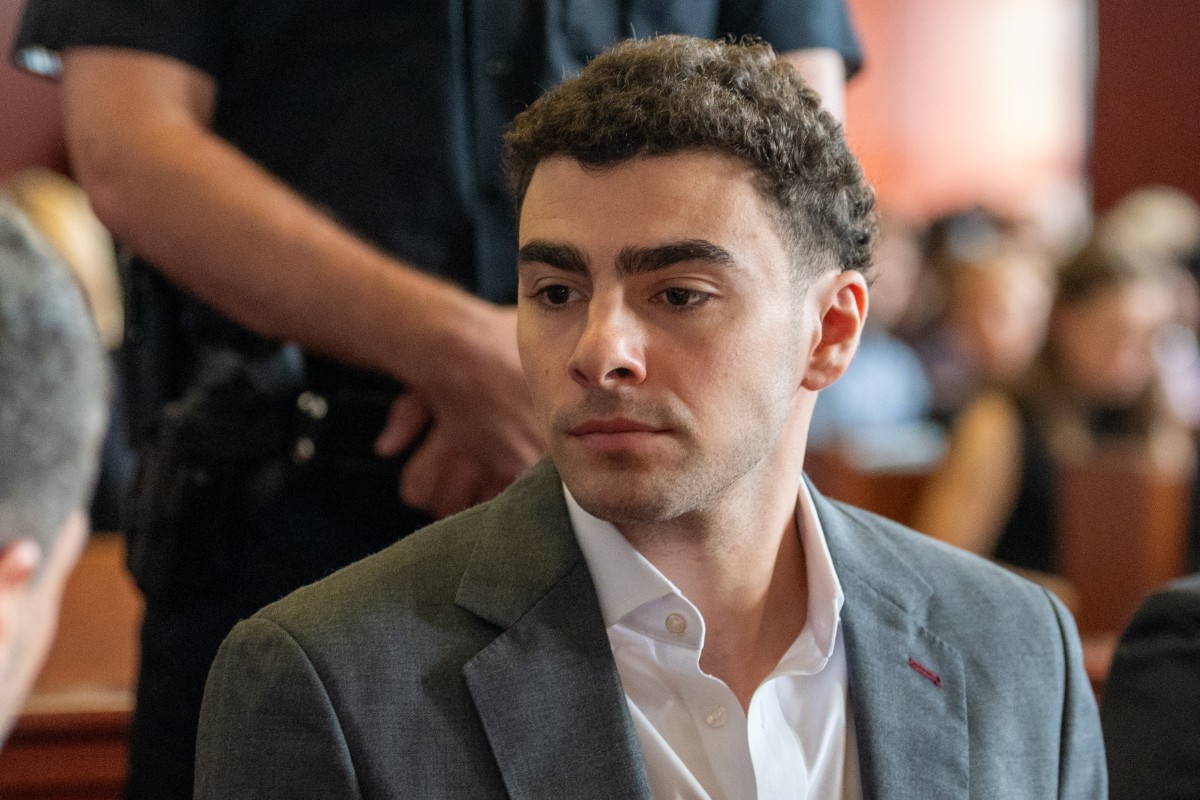
Luigi Mangione admitted Friday to fatally shooting Brian Thompson, the CEO of UnitedHealthcare, the largest health insurance group in the United States, during an appearance before a federal judge.
The case shocked the U.S. business community and dates back to December 2024, when Mangione opened fire on Thompson, 50, on a Manhattan street. Prosecutors have described the attack as being motivated by Mangione’s opposition to the U.S. health insurance system.
“On the morning of December 4, I shot Mr. Thompson in Manhattan and he died,” Mangione said as he pleaded guilty to a federal stalking charge related to his pursuit of the executive.
Mangione, 28, is scheduled to be sentenced on December 18, and prosecutors have indicated that they will seek a life sentence.
In addition to the federal charges related to stalking Thompson, Mangione also faces a murder case brought by the state of New York.
Following his guilty plea in federal court, Mangione’s defense asked a state court to dismiss the state charges, arguing that prosecuting him again for the same conduct would violate protections against double jeopardy.
“We have just filed our motion in state court to explain why the charges should be dismissed under New York’s protections against double jeopardy,” Mangione’s attorney, Karen Friedman Agnifilo, said Friday.
Both the federal and state cases could result in a life sentence. Two other federal charges that initially carried the possibility of the death penalty were dismissed by a judge earlier this year.
International
ICE Plan to Equip Agents With Electric Shock Gloves Raises Abuse Concerns

Plans to equip U.S. immigration agents with gloves capable of delivering electric shocks are raising concerns over potential abuses by a law enforcement agency that critics accuse of using excessive force and providing inadequate training to its personnel.
The plan involves the potential purchase of electric-shock gloves for agents with U.S. Immigration and Customs Enforcement (ICE), the agency primarily responsible for carrying out President Donald Trump’s campaign to deport millions of undocumented immigrants.
Democratic Representative Maxwell Frost criticized the proposal on X, arguing that the agency has already faced accusations of excessive force during immigration enforcement operations.
“As if assaulting and shooting people in the streets wasn’t enough,” Frost wrote. He also criticized the reported $20 million potential expenditure on the devices and called for greater restrictions on ICE.
The agency has faced growing scrutiny following a series of deadly shootings during immigration enforcement operations. Among the incidents were the deaths of two U.S. citizens in Minnesota in January who were participating in protests against the agency.
Critics have focused on the tactics used by ICE agents when detaining immigrants, as well as allegations that training standards for newly recruited personnel have been lowered.
According to a procurement plan first reported by the Associated Press, the Department of Homeland Security (DHS), which oversees ICE, could spend between $10 million and $20 million on the devices.
The gloves are described by the agency as tools intended for “distraction and de-escalation,” rather than lethal weapons. The system, known as GLOVE, stands for “Generated Low-Output Voltage Emitter.”
The device is manufactured by Compliant Technologies, a Kentucky-based company that describes its products as advanced non-lethal tools designed to protect and assist law enforcement and other personnel.
The proposal comes amid an intensifying national debate over ICE’s enforcement methods and the use of force during the Trump administration’s immigration crackdown.
International
Three U.S. Executions Set for Same Day as Trump Pushes to Expand Death Penalty

The death penalty has been abolished in 23 of the 50 U.S. states, while three others —California, Oregon and Pennsylvania— currently have moratoriums in place.
The United States is set to carry out three executions on the same day, a rare occurrence that has not happened since 2010, according to the nonprofit Death Penalty Information Center.
President Donald Trump has sought to expand the use of capital punishment for what he describes as “the most heinous crimes.” In April, the Department of Justice proposed expanding execution methods to include firing squads, lethal gas and electrocution.
Tennessee is scheduled to execute Anthony Darrell Dugard Hines, 66, on Thursday. He was sentenced to death for the 1985 murder of a woman, according to local media.
In Oklahoma, Carlos Cuesta-Rodríguez, 70, is scheduled to be executed for a 2003 murder.
Meanwhile, Alabama plans to execute Jeremy Williams, 42, who was sentenced to death for the rape and murder of a five-year-old girl.
The United States carried out 47 executions in 2025, the highest number since 2009, when 52 executions were recorded.
Florida conducted the largest number of executions last year, with 19, followed by Alabama, South Carolina and Texas, with five each.
Of the executions carried out in 2025, 39 were conducted by lethal injection. Three were carried out by firing squad and five through nitrogen hypoxia, a method that involves forcing nitrogen gas into a face mask, depriving the prisoner of oxygen.
The United Nations has condemned nitrogen gas as a cruel and inhumane method of capital punishment.

Luigi Mangione Pleads Guilty to Killing UnitedHealthcare CEO Brian Thompson

ICE Plan to Equip Agents With Electric Shock Gloves Raises Abuse Concerns

Three U.S. Executions Set for Same Day as Trump Pushes to Expand Death Penalty
Tec de Monterrey honors one of its students for his contribution to nanotechnology in medicine

Defense Minister commends salvadoran soldier for Central American Cross Country victory

Extension of the state of emergency approved in southern Chile
-

 International5 days ago
Colombia Earthquake Leaves at Least 22 Dead as Rescue Efforts Continue
-

 International4 days ago
Venezuela Raises Earthquake Death Toll to 6,301
-

 International5 days ago
Record 230 Migrants Cross English Channel to UK in Single Boat
-

 International4 days ago
CEAPI Backs Colombia’s New Government and Calls for Greater Public-Private Cooperation
-
 International4 days ago
German Authorities Investigate More Than 100 New Cases Against Convicted Nurse
-
 International2 days ago
Three U.S. Executions Set for Same Day as Trump Pushes to Expand Death Penalty
-
International2 days ago
Colombia Earthquake Death Toll Reaches 265 as Rescue Teams Race Against Time
-
 International14 hours ago
Luigi Mangione Pleads Guilty to Killing UnitedHealthcare CEO Brian Thompson
-
 International14 hours ago
ICE Plan to Equip Agents With Electric Shock Gloves Raises Abuse Concerns