
International
Pope Leo XIV asks journalists: Let’s disarm the words and help disarm the Earth
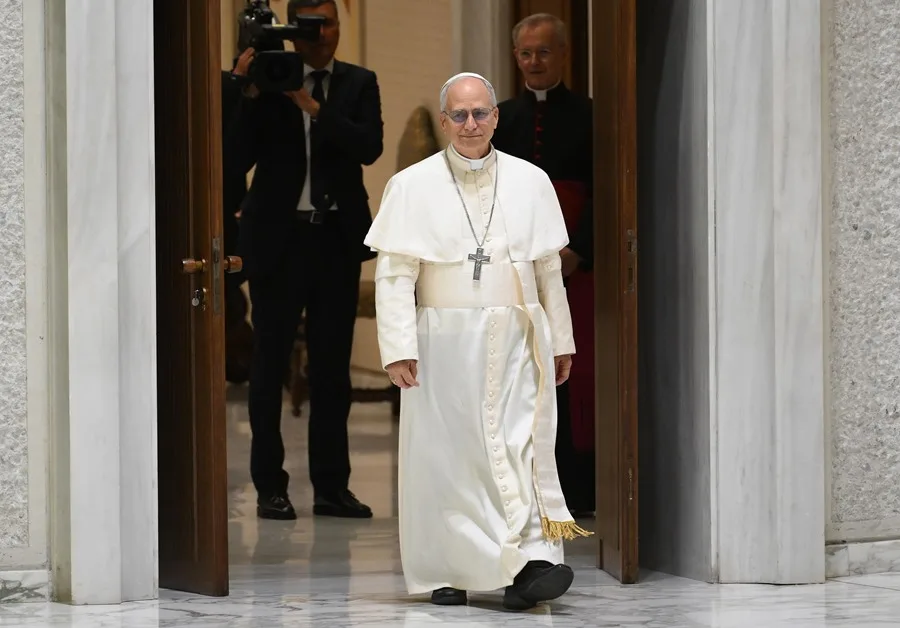
Pope Leo XIV asked the media on Monday to choose “with conscience and courage the path of a communication of peace” and added: “Let’s disarm the words and help disarm the Earth,” in the audience he granted to journalists who have reported on the conclave in which he was elected.
In the first audience he celebrates, as Francis also did at the beginning of his pontificate, the first American pope gathered in the Paul VI classroom of the Vatican several thousand communicators to whom he pointed out that “we live in difficult times to navigate and count, which pose a challenge for all of us and from which we must not escape.”
And, he stressed, that “on the contrary, they ask each of us, in our different roles and services, to never surrender to mediocrity.”
Leo XIV said that “what is needed is not a noisy and muscular communication, but a communication capable of listening, of collecting the voice of the weak who have no voice.”
“Let’s disarm the words and help disarm the Earth. Unarmed and disarming communication allows us to share a different vision of the world and act in a manner consistent with our human dignity,” said the pope, who in his first speech after being elected on May 8 also called for “an unarmed and disarming peace.”









And he added: “You are on the front line narrating conflicts and hopes for peace, situations of injustice and poverty, and the silent work of many for a better world. For this I ask you to choose with conscience and courage the path of a communication of peace.”
“There can be no communication or journalism outside of time and history,” he said and recalled St. Augustine’s phrase, since he is Augustinian: “Let’s live well and times will be good. We are the times.”
To the journalists, who applauded at various moments of the speech, he explained that today, “one of the most important challenges is to promote a communication capable of helping us escape from the ‘Tower of Babel’ in which we sometimes find ourselves, from the confusion of loveless languages, often ideological or biased”
And therefore he stressed that “the words they use and the style they adopt, is important.” Communication, in fact, is not only the transmission of information, but the creation of a culture, human and digital environments that become spaces for dialogue and confrontation,” he added.
And above all, he stressed the technological evolution and artificial intelligence “that with its immense potential, which requires, however, responsibility and discernment to guide the tools to the good of all, so that they can produce benefits for humanity.”
Leo XIV was greeted at the entrance of the Paul VI classroom with a loud applause by the journalists and joked saying that he hoped that the applause would also come at the end of his speech.
Pope Leo XIV after his message greeted some of them in a relaxed way, confirmed some news such as the trip to Nicea and, in dubious moments of protocol, responded jokingly: “I’m still learning.”
When asked if he wanted to participate in a charity tennis tournament that the Pontifical Mission Societies is preparing, Leo XIV jokingly said that he could participate “as long as you don’t bring (Jannick) Sinner”, about the double meaning both because the Italian is number one in the world and because his English surname means ‘sinner’.
While to others who proposed a double, he confessed: “I’m not that good.”
Leo XIV showed his sense of humor when he wanted a photo taken with a journalist who had dressed in white without “intention of wanting to be a pope,” although she refused to take a ‘selfie’ with another communicator.
The pope also called for the release of imprisoned journalists and urged to “safeguard the precious good of freedom of expression and press.”
Before several thousand journalists gathered in the Paul VI classroom, in which it is the first audience of his pontificate, the first American pope wanted to “reiterate the solidarity of the Church with the imprisoned journalists for seeking and reporting the truth” and “asking for their release.”
“The Church recognizes in these testimonies – I think of those who tell the war even at the cost of their own lives – the courage of those who defend the dignity, justice and the right of peoples to be informed, because only informed peoples can make free decisions,” said Robert Francis Prevost in his message.
And he added: “The suffering of these imprisoned journalists challenges the conscience of nations and the international community and calls on us all to safeguard the precious good of freedom of expression and of the press.”
In addition, Leo XIV confirmed that the trip that Francis had planned to Nicea, Turkey, at the end of May to celebrate the 1,700th anniversary of the Christian Council is being prepared.






International
Two killed in shooting at restaurant near Frankfurt Airport
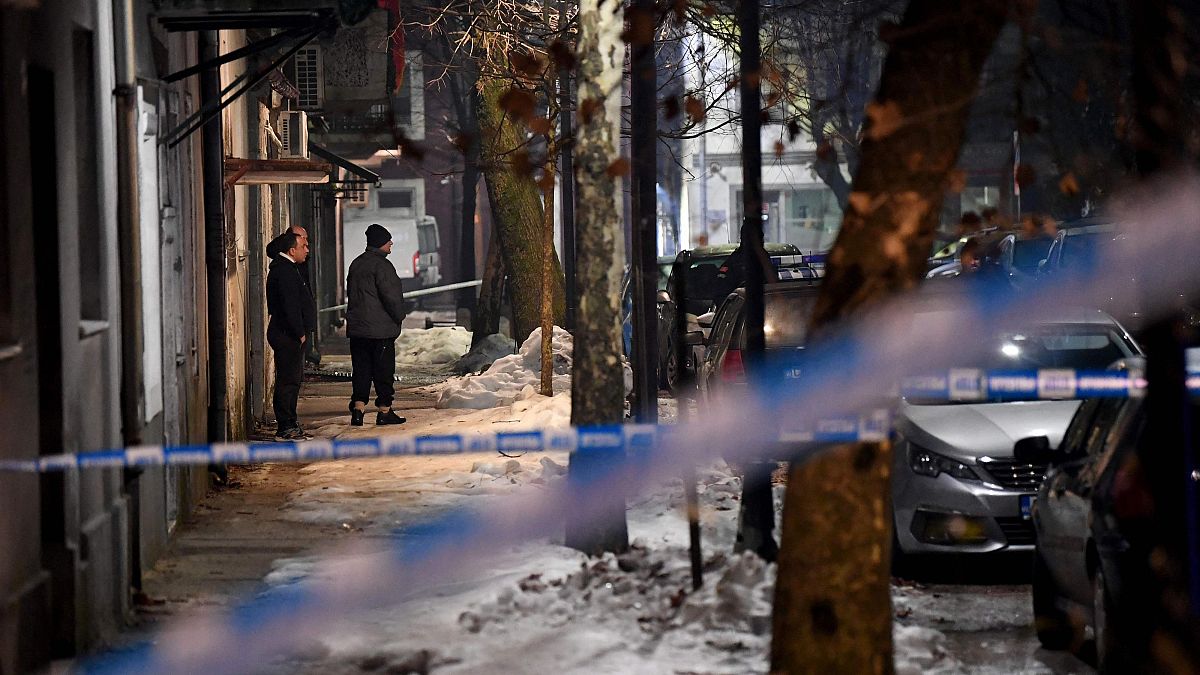
Two people were shot dead early Tuesday at a restaurant in Raunheim, near Frankfurt Airport, according to local police.
Preliminary findings indicate that an armed individual entered the establishment at around 03:45 local time (02:45 GMT) and opened fire on the victims, who died at the scene from their injuries.
The suspect fled and remains at large, while the motive behind the shooting is still unclear, German media reported. Authorities have launched a large-scale search operation.
International
U.S. counterterrorism chief resigns over opposition to war in Iran
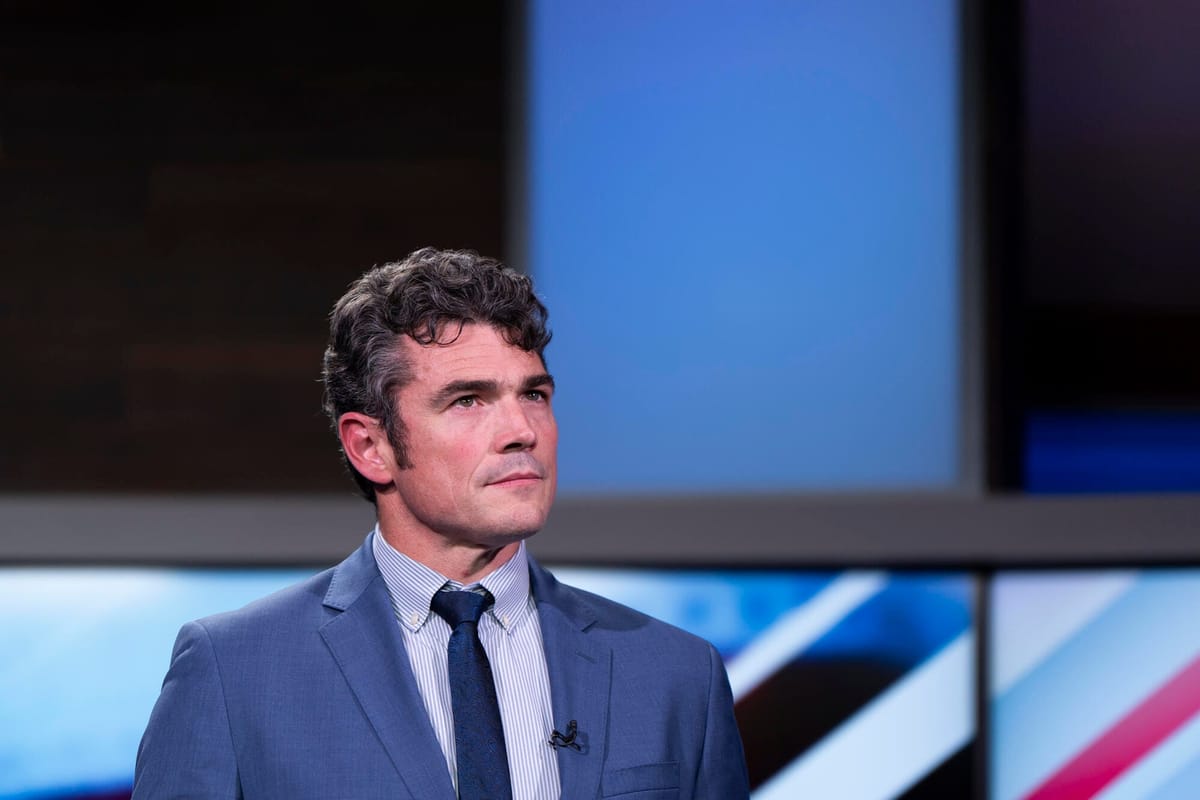
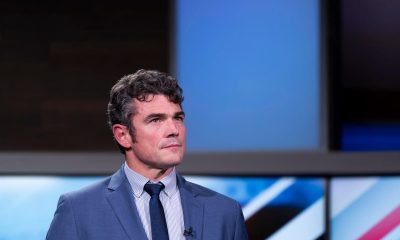
Joe Kent, director of the National Counterterrorism Center, announced Tuesday that he has resigned from his post, citing his opposition to the ongoing war in Iran.
In a post on X, Kent said he could not, “in good conscience,” support the conflict, arguing that Iran did not pose an imminent threat to the United States. He also claimed that the war was driven by pressure from Israel and its lobbying influence in Washington.
In a resignation letter addressed to Donald Trump, Kent alleged that at the start of the current administration, senior Israeli officials and influential figures in U.S. media carried out a disinformation campaign that undermined the “America First” platform and fostered pro-war sentiment aimed at triggering a conflict with Iran.
Kent further stated that he could not support sending a new generation of Americans to “fight and die in a war that provides no benefit to the American people and does not justify the cost in American lives.”
Since the United States and Israel launched attacks against Iran on February 28, at least 13 U.S. service members have been killed, while 10 others have been seriously wounded and around 200 have sustained minor injuries, according to a report published by The Wall Street Journal.
International
German president warns Iran war could spread and disrupt Strait of Hormuz
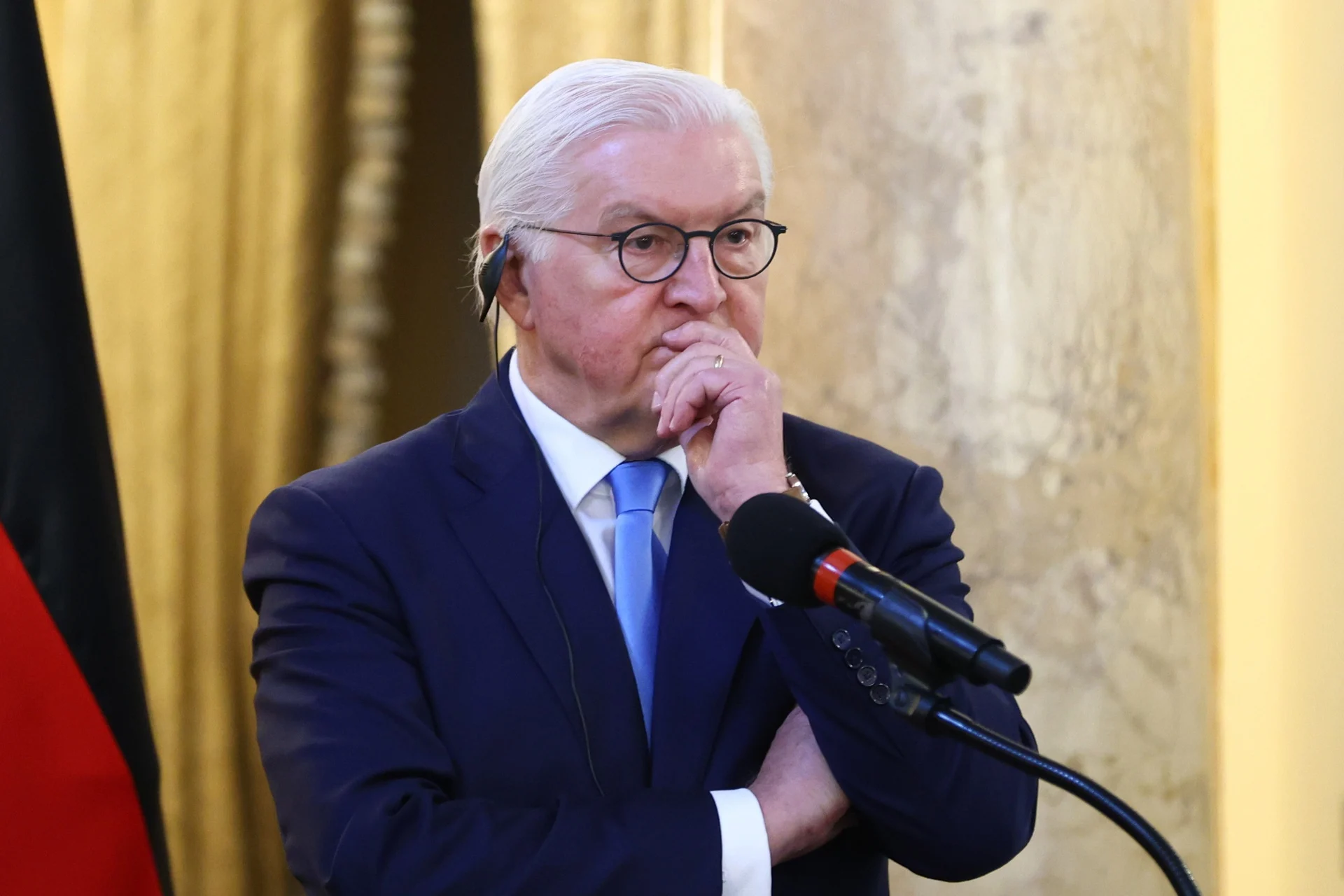
The president of Germany, Frank-Walter Steinmeier, warned Monday that the war involving Iran could expand and further disrupt shipping through the strategic Strait of Hormuz. He urged a swift end to hostilities between Iran, United States and Israel.
Speaking in Panama City during a joint appearance with Panamanian President José Raúl Mulino, Steinmeier said available information suggests Iran has significant capacity to disrupt maritime traffic through the key oil route.
“Iran has considerable potential to interfere with shipping through the Strait of Hormuz,” Steinmeier said through an interpreter. “We should therefore reach an end to the hostilities as soon as possible and call on all parties involved to make that happen.”
The remarks came during Steinmeier’s visit to Panama, the first by a German president to the Central American nation.
The German leader described the possibility of the conflict spreading as “very dangerous,” saying recent developments indicate that such a scenario cannot be ruled out.
Over the weekend, U.S. President Donald Trump urged allied nations to help ensure safe passage for ships through the Strait of Hormuz after Iran moved to block the waterway in response to U.S. strikes. However, several allies—particularly in Europe—have shown little support for the proposal.
“Some are very enthusiastic, others are not, and some are countries we have helped for many years,” Trump told reporters at the White House. “We have protected them from terrible external threats, and they’re not that enthusiastic. And the level of enthusiasm is important to me.”
Meanwhile, Kaja Kallas, the European Union’s top diplomat, said the Strait of Hormuz falls “outside NATO’s scope” and stressed that “the war involving Iran is not Europe’s war.”

Two killed in shooting at restaurant near Frankfurt Airport

U.S. counterterrorism chief resigns over opposition to war in Iran

Analyst questions IACHR role over report on El Salvador emergency measures
Tec de Monterrey honors one of its students for his contribution to nanotechnology in medicine

Defense Minister commends salvadoran soldier for Central American Cross Country victory

Extension of the state of emergency approved in southern Chile
-
 International1 day ago
Two killed in shooting at restaurant near Frankfurt Airport
-
 International2 days ago
German president warns Iran war could spread and disrupt Strait of Hormuz
-
 International4 days ago
FBI: Man who attacked Michigan synagogue died from self-inflicted gunshot
-
 Central America1 day ago
El Salvador destroys $166 million worth of cocaine seized from Tanzanian vessel
-
 International3 days ago
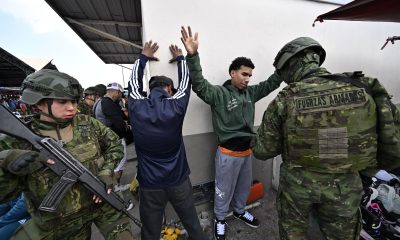
Noboa intensifies anti-cartel crackdown as violence persists in Ecuador
-
 International1 day ago
U.S. counterterrorism chief resigns over opposition to war in Iran
-
 International4 days ago
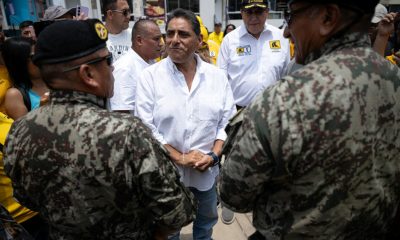
Peruvian presidential candidate proposes death penalty amid crime surge
-
 International2 days ago
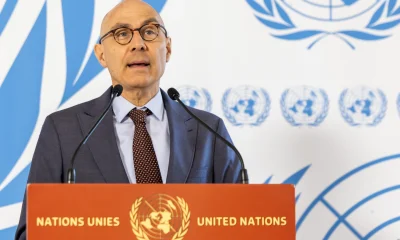
Venezuela’s foreign minister accuses UN rights chief of “immoral bias”
-
 International2 days ago
Mexico security chief meets DEA director in Washington to boost anti-drug cooperation
-
 International3 days ago
Peruvian presidential candidate Napoleón Becerra dies in campaign road accident
-
 Central America1 day ago
Analyst questions IACHR role over report on El Salvador emergency measures