
Central America
U.S. Homeland Security Secretary urges Mexico to strengthen Guatemala border
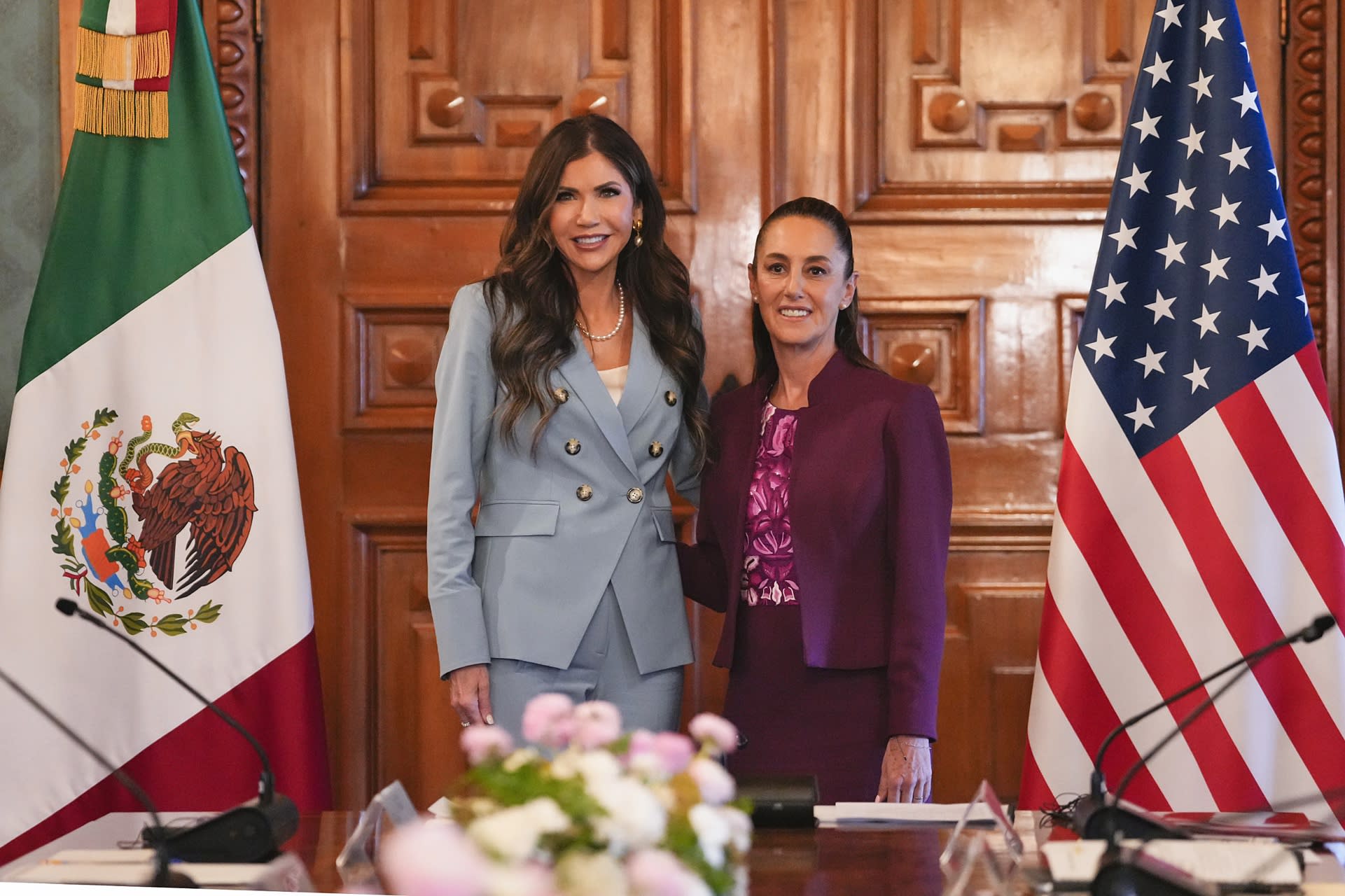
U.S. Homeland Security Secretary Kristi Noem revealed on Monday that during last week’s meeting with Mexican President Claudia Sheinbaum, she urged Mexico to reinforce its border with Guatemala and share biometric datawith U.S. authorities.
“I gave her a list of things that President Trump would love to see. And it was exceptional. It was supposed to be a half-hour meeting, but we talked for nearly two hours. It was very productive,” Noem said in an interview with Fox News.
The Homeland Security Secretary requested that Sheinbaum, who has already deployed 10,000 National Guard troopsalong Mexico’s northern border with the U.S., also secure Mexico’s southern border with Guatemala.
Noem added that she also asked the Mexican president to share biometric data with the U.S., to which Sheinbaum responded that she was “willing to discuss it,” although she acknowledged that it could be a controversial issue in her country.






Central America
Panama Canal Monitoring Trade as Middle East Conflict Disrupts Shipping
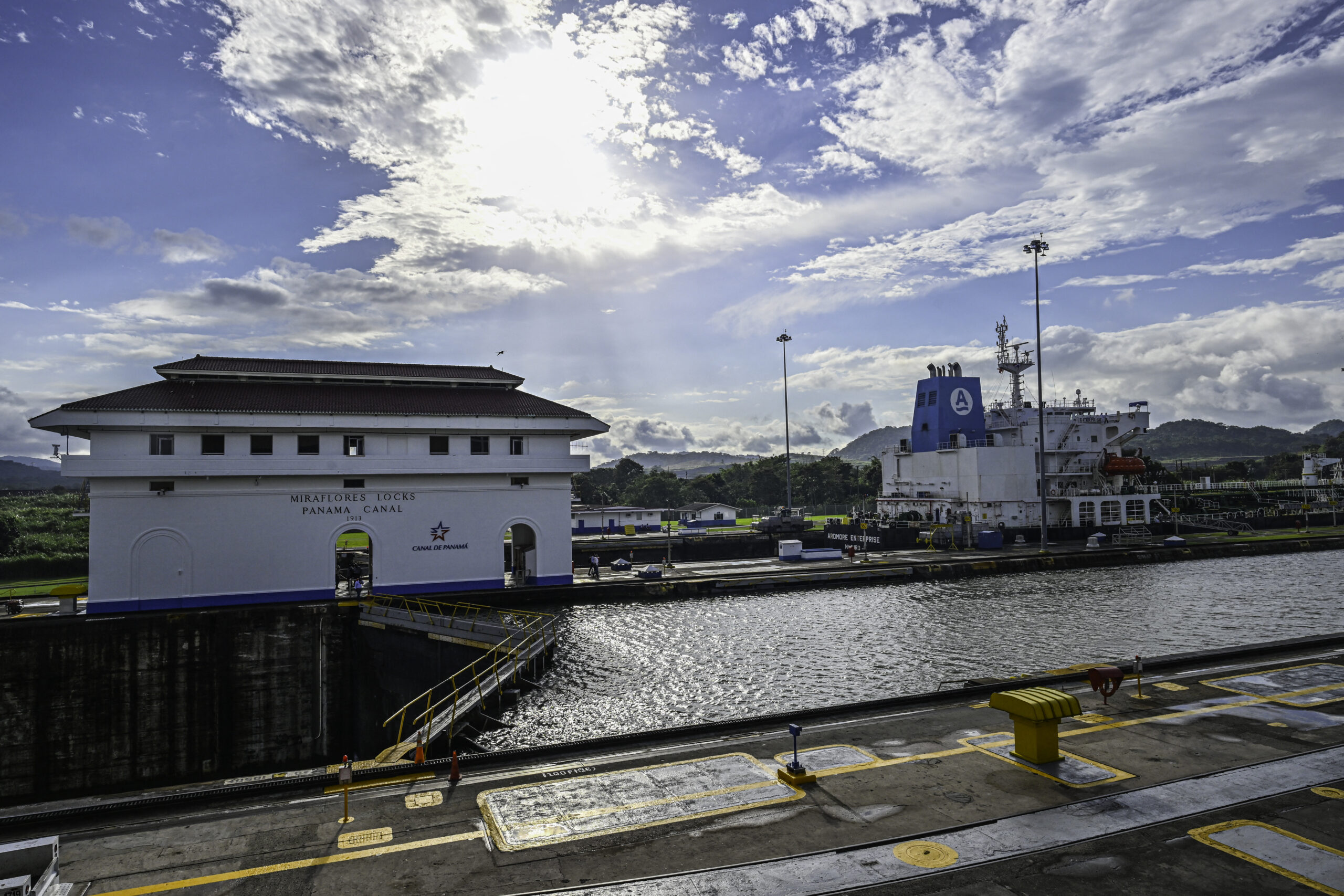
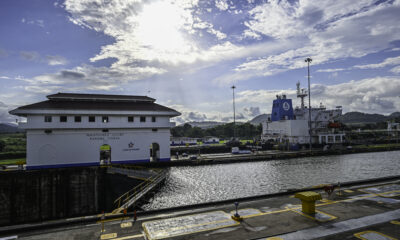
The Panama Canal Authority (ACP) said Monday it is closely monitoring global maritime trade developments following the conflict triggered by joint U.S. and Israeli strikes against Iran.
However, the ACP described it as “premature” to predict potential consequences for vessel traffic through the interoceanic waterway, which handles roughly 5% of global maritime trade.
“The Panama Canal continuously monitors the evolution of international maritime trade and the dynamics that may influence its flows,” the authority said in a statement. The canal’s main users are the United States and China, connecting primarily the U.S. East Coast with Asia, including South Korea and Japan.
The ACP emphasized that the canal “continues to operate safely, efficiently, and reliably,” providing uninterrupted service to the global maritime community.
Global Shipping Disruptions
The U.S.-Israeli military operation against Iran and Tehran’s retaliatory actions have disrupted global maritime traffic, particularly oil tanker routes.









Shipping giants Maersk and CMA CGM have suspended transits through the Strait of Hormuz as well as crossings via the Suez Canal, the key route linking the Mediterranean Sea and the Red Sea.
As a result, cargo vessels are now rerouting around Africa to reach Europe from the Middle East and Asia — a detour that adds several thousand kilometers and several days to voyages.
Central America
Washington Imposes Visa Ban on La Modelo Director Amid Crackdown in Nicaragua
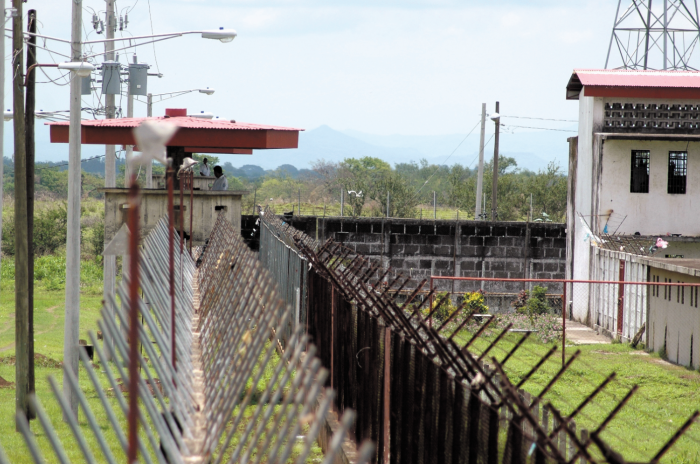
The United States government announced Wednesday that it has imposed visa restrictions on Roberto Clemente Guevara Gómez, director of Nicaragua’s largest prison, La Modelo, for his involvement in actions that violate human rights.
In a statement, U.S. Secretary of State Marco Rubio said the measure is intended to promote accountability for abuses committed under what he described as the “Murillo-Ortega dictatorship” against political prisoners.
Rubio specified that Guevara Gómez was designated for participating in “a gross violation of the human rights of a political prisoner.” The sanction was issued under the 2024 Department of State, Foreign Operations, and Related Programs Appropriations Act, which bars the sanctioned individual — and potentially immediate family members — from entering the United States.
“United States demands the immediate and unconditional release of all political prisoners unjustly detained in Nicaragua,” the statement added.
Ongoing tensions between Washington and Managua
Washington rejected Nicaragua’s November 2021 elections, in which President Daniel Ortega and his wife, now co-president Rosario Murillo, were reelected while seven potential challengers were in prison.
Relations between the two countries remain tense amid expanding U.S. sanctions and increasing diplomatic pressure on the Nicaraguan government.
On January 10, marking Ortega’s 19 years in power, Nicaragua released “dozens of detainees,” including political prisoners. The move came one day after the U.S. Embassy in Managua stated that “more than 60 people” remain “unjustly detained or disappeared” in the Central American nation.
U.S. officials have continued to push for the “unconditional release” of political prisoners rather than selective or temporary releases.
Ortega, 80, governs alongside Murillo with consolidated authority, having strengthened executive power through constitutional reforms and security measures, while the opposition has been weakened by imprisonment, exile, and the revocation of citizenship and property rights.
Central America
Guatemala’s Attorney General Consuelo Porras Loses Bid for Constitutional Court Seat
Guatemala’s attorney general, Consuelo Porras, who has been sanctioned by the United States over corruption allegations, lost a key vote on Monday in which a public university selected two of the 10 magistrates for the country’s highest constitutional court. However, she could still seek a seat through another nominating body.
The election of five full magistrates and five alternates to the Corte de Constitucionalidad (CC) is taking place gradually over more than two months and is considered crucial in the ongoing struggle for control of Guatemala’s judiciary, which critics say has long been influenced by a political and economic elite accused of corruption.
According to results announced at a press conference, the governing council of the Universidad de San Carlos de Guatemala (USAC) rejected Porras, who had applied as either a full or alternate magistrate, and instead chose two candidates aligned with the university rector. The vote was held at a hotel in Antigua, about 35 kilometers from the capital.
Despite the setback, Porras — whose term as attorney general ends on May 16 — could still be nominated to the Constitutional Court by the Corte Suprema de Justicia, which appoints two magistrates. The remaining six are selected by the president, the bar association and Congress.
“It’s always a possibility,” the 72-year-old lawyer said days earlier when asked by reporters whether she would seek nomination through another institution if she lost the USAC vote.
Porras has been sanctioned by Washington and the European Union for allegedly attempting two years ago to block the inauguration of President Bernardo Arévalo and for pursuing legal actions against anti-corruption prosecutors, judges, journalists and social leaders since taking office in 2018.
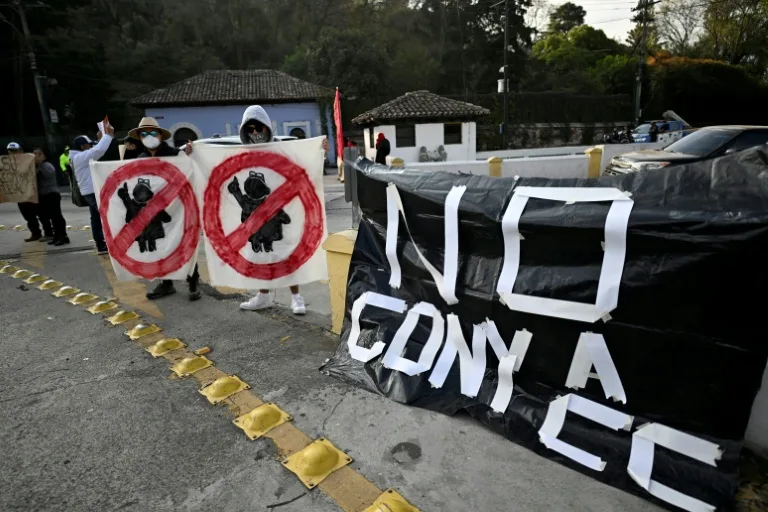
The USAC vote was controversial because most members of the university’s governing council are serving beyond the expiration of their terms. Students, academics and social activists staged protests against Porras’ candidacy.

Bolivia Orders Three Investigations Into Deadly Military Plane Crash

Panama Canal Monitoring Trade as Middle East Conflict Disrupts Shipping

Mexico Calls for Immediate Probe After National Dies in ICE Custody
Tec de Monterrey honors one of its students for his contribution to nanotechnology in medicine

Defense Minister commends salvadoran soldier for Central American Cross Country victory

Extension of the state of emergency approved in southern Chile
-

 International4 days ago
Cocaine Production Surges 34% in 2023 as Market Expands into Africa and Asia
-
 International3 days ago
Trump Floats “Friendly Takeover” of Cuba Amid Rising Tensions
-
 Sin categoría2 days ago
Trump: ‘We Think It’s True’ Amid Claims Iran’s Supreme Leader Was Killed
-
 International2 days ago
Security Council to Hold Emergency Meeting on Middle East Crisis
-
 International1 day ago
Iran Reports 201 Dead, 747 Injured After U.S. and Israeli Strikes
-
 International4 days ago
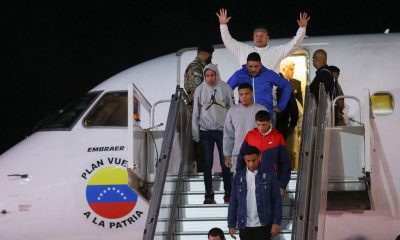
Federal Judge Blocks Trump Policy Allowing Deportations to Third Countries
-
 International3 days ago
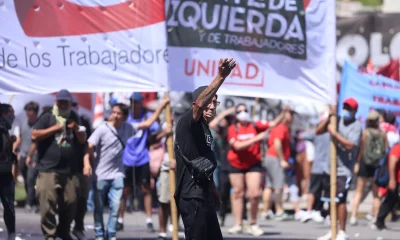
Argentina’s Senate Reviews Milei-Backed Labor Overhaul
-
 International1 day ago
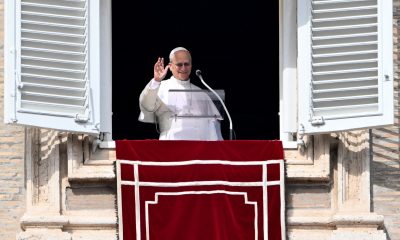
Pope Leo XIV Urges End to ‘Spiral of Violence’ in Middle East
-
 International4 days ago
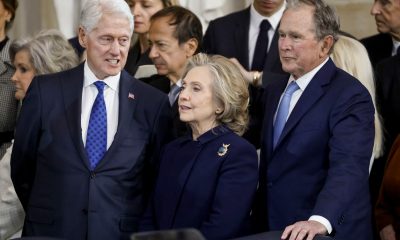
Clinton Accuses Republican Committee of Using Epstein Case to Shield Trump
-
 International2 hours ago
Anti-ICE Billboard Campaign Targets Immigration Spending in 31 U.S. Cities
-
 International3 hours ago
Brazil’s Supreme Court Rejects Bolsonaro’s Bid for House Arrest
-
 International2 hours ago
Trump Warns of ‘Major Wave’ of Attacks as Iran Conflict Escalates
-
 International2 hours ago
Mexico Calls for Immediate Probe After National Dies in ICE Custody
-
 Central America2 hours ago
Panama Canal Monitoring Trade as Middle East Conflict Disrupts Shipping
-
 International2 hours ago
Bolivia Orders Three Investigations Into Deadly Military Plane Crash