
International
Trump warns Iran and threatens the Houthis with being “annihilated” if the attacks do not cease
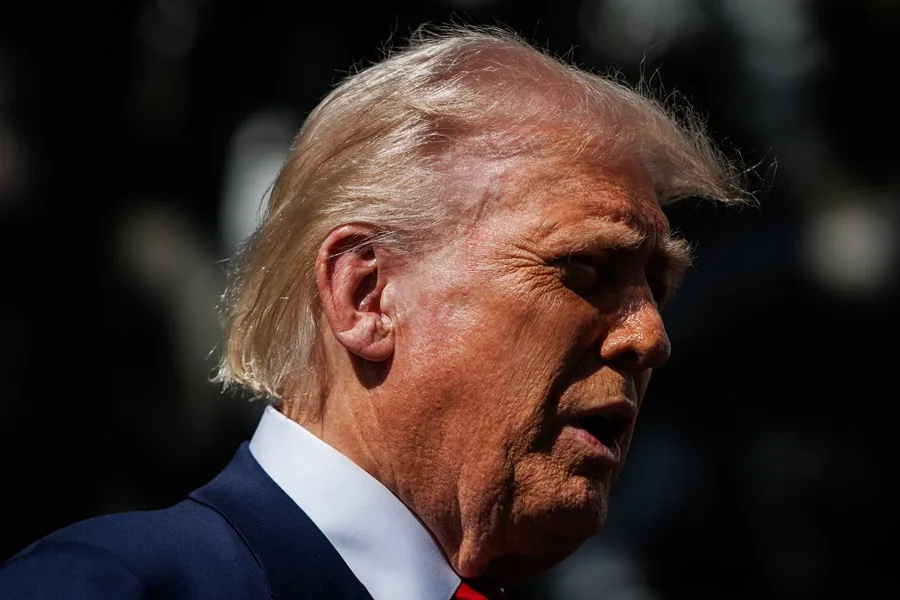
US President Donald Trump warned on Wednesday that Iran must completely and immediately cease its support for the Houthis, not just reduce it, and threatened the latter that they will be “completely annihilated” if the attacks do not cease.
The Republican leader estimated on his social network, Truth Social, that “tremendous damage” has already been inflicted on the Houthis and stressed that “the situation will progressively worsen.”
“It’s not even a fair fight and it never will be. They will be completely annihilated!” he said.
Trump added that although “there is news that, although Iran has decreased its intensity in the supply of military equipment and general support to the Houthis, it continues to send large amounts of supplies.”
“Iran must stop sending these supplies IMMEDIATELY. Let the Houthis manage on their own,” he said.









The United States launched a series of airstrikes over the weekend against different cities controlled by Houthi Shiite rebels in northern and central Yemen, as well as in the capital, Saná.
Those bombings, which according to the insurgents have left fifty dead, were ordered by Trump to stop the threat and attacks by the Houthis against navigation and international trade in the Red and Arabian Seas.
The Yemeni rebels, backed by Iran, had announced last week that they would resume their military operations on those maritime routes against Israeli or state-linked Israeli ships in support of the Palestinians in the Gaza Strip.
Trump, whose Administration classifies these Shiite rebels as a terrorist group, has recently promised them “hell” if they do not stop threatening international navigation, while the Executive insists that they will continue to attack the Houthis until maritime attacks cease.
The US government offered on Wednesday a reward of up to 15 million dollars for information that leads to the disruption of the financial mechanisms of the Islamic Revolutionary Guard Corps of Iran (IRGC) and its different branches, including the Quds Force, its outer arm.
The State Department indicated in a statement that the IRGC has financed numerous attacks and terrorist activities worldwide, including through its external allies such as Hamas, Hezbulah and Iranian-backed militias in Iraq.
According to his note, he finances his terrorist activities in part through the sale of military equipment, including drones.
Washington targeted four Chinese citizens for allegedly supporting the production and sale of IRGC weapons through the illegal acquisition and delivery to Iran of US-controlled dual-use technology for export.
They are Liu Baoxia, Li Yongxin, Yung Yiu Wa and Zhong Yanlai, also known, respectively, as Emily Liu, Emma Lee, Stephen Yung and Sydney Chung.
The State Department indicated that since May 2007 Liu and his associates have used various front companies in China to send dual-use electronic components of American origin to companies linked to the IRGC that could be used in the production of drones, ballistic missile systems and other military uses.
The US Executive pointed out that the IRGC and MODAFL, a logistics branch of the Iranian Ministry of Defense, have used the technology controlled by the United States to develop and manufacture weapons and weapons systems that are sold to governments and groups of allied countries such as Russia, Sudan and Yemen.






International
ICE to remain at airports amid DHS shutdown, Homan says

The U.S. “border czar,” Tom Homan, said Sunday that agents from U.S. Immigration and Customs Enforcement (ICE) will remain deployed at airports until operations return to “100% normal,” as the shutdown of the Department of Homeland Security (DHS) continues.
“We will maintain ICE presence until airports feel they are fully back to normal operations,” Homan said during an interview on Face the Nation on CBS.
Homan justified the deployment on security grounds, noting that the measure was ordered by President Donald Trumpamid widespread absenteeism among agents of the Transportation Security Administration, who have gone without pay for over six weeks due to the DHS shutdown.
According to acting TSA administrator Ha Nguyen McNeill, at least 460 TSA agents have resigned during the shutdown, while daily absenteeism has averaged 11%, exceeding 50% at some airports.
Homan warned that if TSA staffing levels do not recover after the shutdown, ICE agents will continue filling the gap. “ICE is there to support our TSA brothers and sisters. We will remain as long as needed to ensure airport security,” he said.
The DHS shutdown reached 44 days on Sunday, making it the longest government shutdown in U.S. history. The impasse stems from disagreements between Democrats and Republicans over ICE funding.
A recent bipartisan Senate proposal to fund DHS without including ICE failed after being blocked by House Republicans, who insist on full funding for the agency.
Amid the deadlock, Trump signed an executive order directing Homeland Security Secretary Markwayne Mullin to immediately pay TSA agents to address what he called an “emergency situation” and restore order at airports, with payments expected to begin Monday.
International
Oil prices surge again as Middle East tensions persist
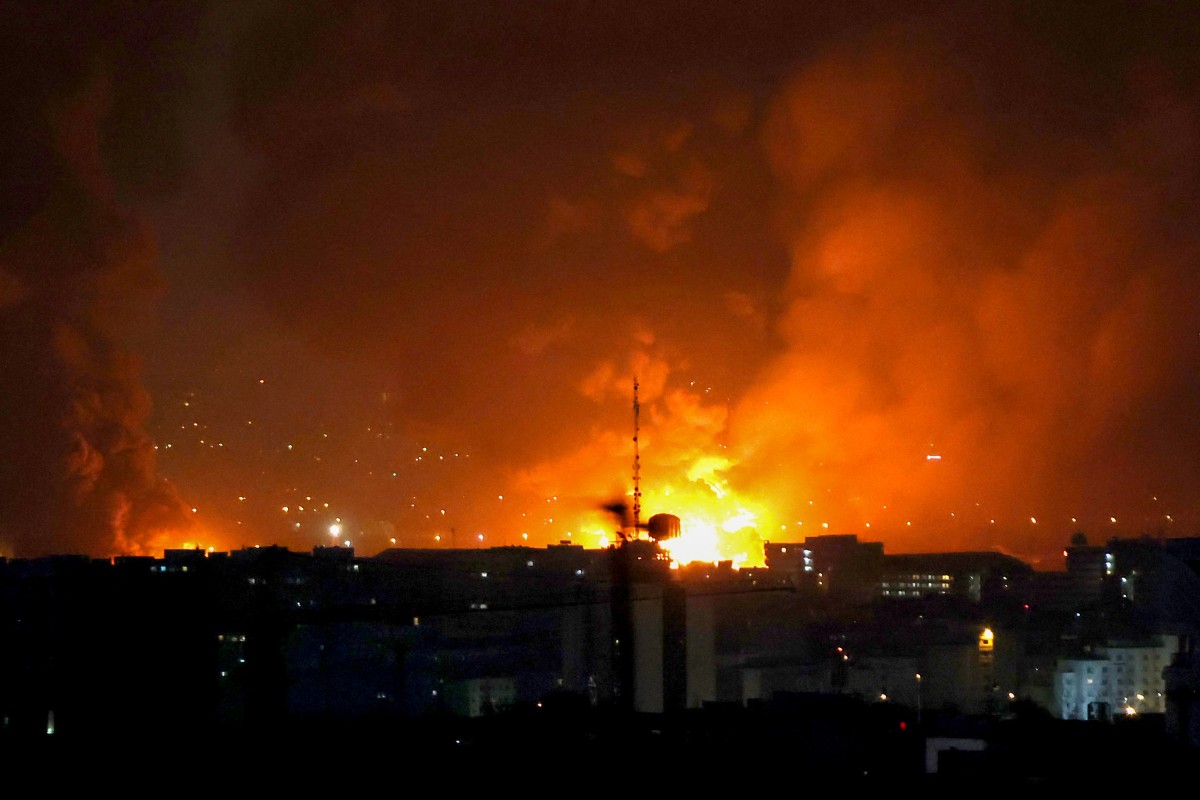
Oil prices climbed again on Friday for a second consecutive session, as markets remained concerned about a prolonged conflict in the Middle East with no tangible diplomatic progress.
North Sea Brent crude for May delivery rose 4.22% to close at $112.57 per barrel.
Meanwhile, U.S. West Texas Intermediate (WTI) approached the $100 mark, settling at $99.64, up 5.46%.
The decision by U.S. President Donald Trump to delay by ten days his ultimatum for the reopening of the Strait of Hormuz failed to reassure market participants.
“It means there will be ten additional days of disruptions in the Middle East for crude and refined product flows,” said Andy Lipow, of Lipow Oil Associates.
“For prices to come down, a resolution to the conflict is necessary,” Lipow added. “And even in the event of a ceasefire, it is not certain that Iran would allow oil shipments to pass through the Strait of Hormuz.”
International
Young Spanish Woman Receives Euthanasia After Legal Battle, Sparking Debate

A 25-year-old Spanish woman, Noelia Castillo, received euthanasia on Thursday following a prolonged legal dispute with her father.
She passed away at a care center in Sant Pere de Ribes, about 40 kilometers from Barcelona, where she had been living for some time, according to Spanish media reports.
In an interview broadcast a day earlier on Antena 3, Castillo expressed her exhaustion after enduring prolonged suffering. She indicated that her decision was influenced by a combination of personal circumstances and health-related challenges, including family conflicts and a condition of paraplegia following a previous incident that left her with lasting physical consequences.
Spain legalized euthanasia in 2021, becoming one of the few countries that allow patients under strict conditions to seek medical assistance to end their lives in order to avoid what the law defines as unbearable suffering.
The case has reignited debate in Spain over the ethical, legal, and family dimensions surrounding euthanasia, as well as the broader issue of support for individuals in vulnerable situations.

ICE to remain at airports amid DHS shutdown, Homan says

Oil prices surge again as Middle East tensions persist

Young Spanish Woman Receives Euthanasia After Legal Battle, Sparking Debate
Tec de Monterrey honors one of its students for his contribution to nanotechnology in medicine

Defense Minister commends salvadoran soldier for Central American Cross Country victory

Extension of the state of emergency approved in southern Chile
-
 International2 days ago
Over 300 U.S. Troops Wounded Since Start of Iran Conflict, CENTCOM Says
-
International2 days ago
Oil prices surge again as Middle East tensions persist
-
 International3 days ago
Iran rejects negotiations as tensions escalate with United States
-
 International2 days ago
Young Spanish Woman Receives Euthanasia After Legal Battle, Sparking Debate
-

 International3 days ago
Maduro appears again in New York court amid drug trafficking charges
-
 International9 hours ago
ICE to remain at airports amid DHS shutdown, Homan says